



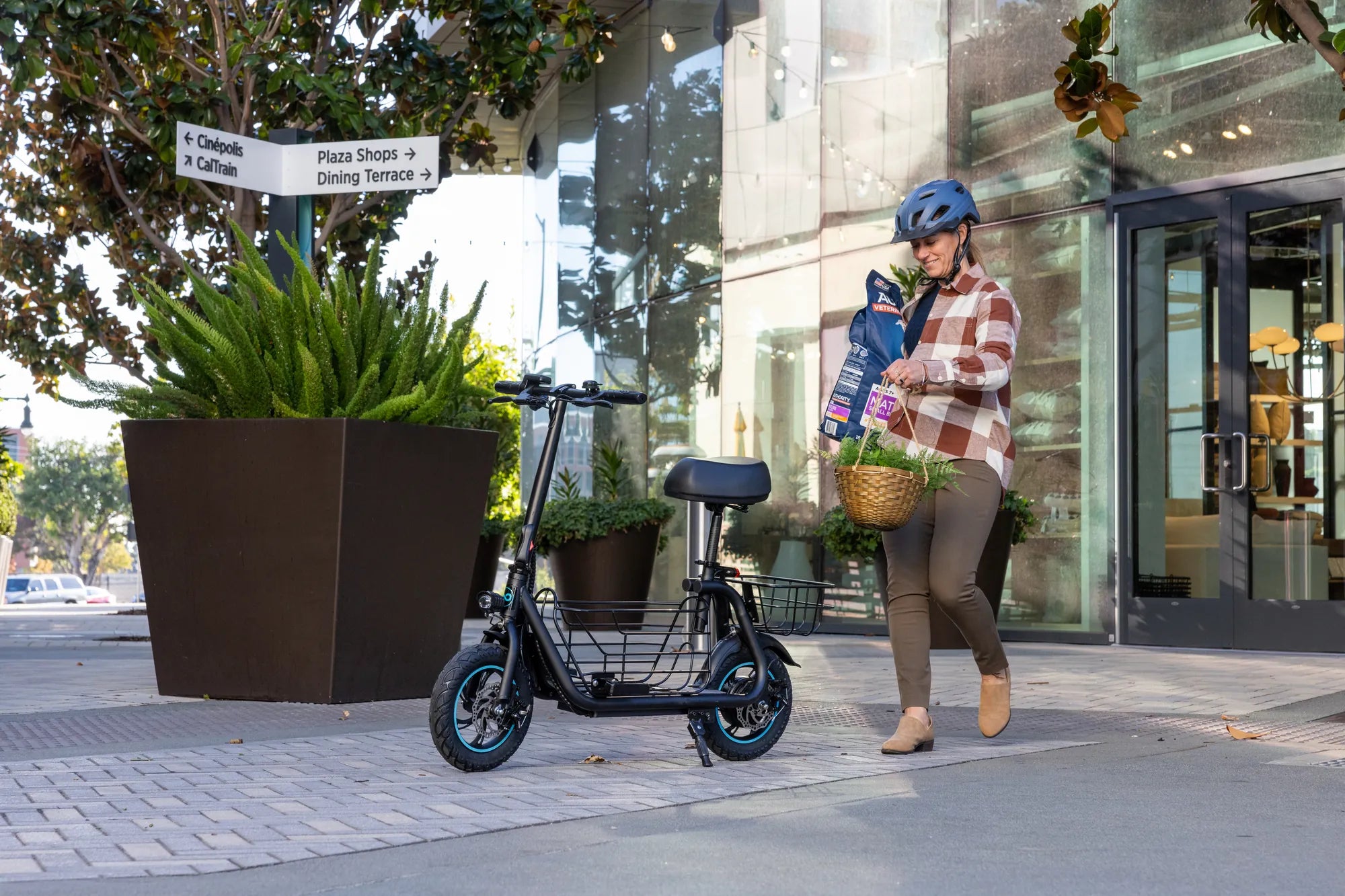
Redefining City Commutes with Scoot Electric Scooters
Urban transportation is undergoing a silent revolution, driven by a simple, agile vehicle: the scoot electric scooter. These compact, electric-powered devices are fundamentally changing how millions navigate congested city streets, offering a practical escape from car dependency, expensive rideshares, and unreliable public transit schedules. The shift represents more than a trend; it's a structural move towards efficient, sustainable personal mobility that directly tackles traffic congestion and urban emissions.
Scoot electric scooters excel at solving the 'last-mile' problem—the frustrating final leg of a commute between a transit stop and your final destination. Their rise is fueled by a convergence of technological advancement, growing environmental awareness, and the simple human desire for a quicker, more enjoyable daily journey. This isn't just about getting from A to B; it's about reclaiming time, saving money, and reducing your carbon footprint with every ride.
Leading this charge are innovative manufacturers committed to safety and reliability. Brands like Gyroor have built trust with a global community of over 100,000 riders across North America and Europe by engineering scooters that are not only powerful and fun but also rigorously tested for everyday urban use. This article will dissect why scoot electric scooters are dominating cityscapes, what features truly matter, and how to choose a model that delivers confidence for the long haul.
Why Scoot Electric Scooters Are Dominating City Streets
The explosive adoption of scoot electric scooters is no accident. It's a direct response to the chronic pain points of modern urban living. Cities are denser, traffic is worse, and the cost of traditional transportation keeps climbing. In this environment, the electric scooter presents an elegantly simple solution that delivers tangible benefits across several key areas, from your wallet to your daily schedule and the environment.
First and foremost is unparalleled convenience. A scoot electric scooter is always ready for your schedule. There's no waiting for a bus or paying surge pricing for a ride-share. It folds for easy storage in an apartment, under a desk, or in a car trunk. This door-to-door agility eliminates the multiple modes of transport often required for a single trip, streamlining the entire commuting experience.
Environmental impact is another major driver. With zero direct tailpipe emissions, every trip taken on a scooter instead of a car contributes to cleaner urban air and a reduction in greenhouse gases. As cities worldwide set ambitious carbon neutrality goals, scoot electric scooters are emerging as a key component of the sustainable urban mobility ecosystem, especially when charged via increasingly renewable energy grids.
Finally, there's the element of pure enjoyment. Riding a scooter is fun. It provides a sense of freedom and engagement with the city that is lost when sitting in traffic. The quiet hum of the electric motor, the breeze, and the ability to easily navigate and explore urban spaces add a quality-of-life benefit that purely utilitarian forms of transport lack.
The Commuter's Math: Cost & Time Savings
To understand the value proposition of a scoot electric scooter, a simple cost-benefit analysis is revealing. The upfront investment in a quality scooter is quickly offset by the dramatic savings on daily transportation costs. When you compare the per-mile expense, the scooter is in a league of its own.
Consider the average American car owner. The American Automobile Association (AAA) estimates the average cost to own and operate a new vehicle is well over $0.60 per mile when factoring in depreciation, insurance, fuel, maintenance, and finance charges. A 10-mile round-trip commute therefore costs over $6 daily just in vehicle expenses, not including parking fees, which can add $10-$30 or more in dense urban centers.
Rideshare services like Uber and Lyft offer convenience but at a significant premium. A typical 3-mile urban ride can easily cost $10-$15 before tips, especially during peak hours. Public transit is more affordable but often involves multiple transfers, waiting times, and inflexible routes.
A scoot electric scooter flips this equation. Electricity is cheap. The cost to charge a scooter battery for a 15-20 mile range is mere cents. Maintenance is minimal—primarily tire inflation and occasional brake adjustments. The following table illustrates a stark comparison for a regular 3-mile urban commute:
| Transport Mode | Avg. Cost (3-mile trip) | Avg. Time (Urban Traffic) | Notes |
|---|---|---|---|
| Personal Car | $3.00 + $10-30 Parking | 15-25 minutes | High variable cost; traffic & parking search heavy. |
| Rideshare (Uber/Lyft) | $10 - $18 | 10-20 minutes | Price surges during peak times; no parking hassle. |
| Public Transit | $2.50 - $5.00 | 25-40 minutes | Includes walk/wait/transfer time; fixed schedule. |
| Scoot Electric Scooter | ~$0.10 (electricity) | 12-15 minutes | Door-to-door; minimal traffic impact; free parking. |
The time savings are equally compelling. Scooters can use bike lanes and pathways, bypassing gridlocked car traffic. What often takes 30 minutes in a car or on a bus can be a consistent 15-minute scoot, making your daily commute predictable and efficient.
Key Features to Look for in a Reliable Scoot Electric Scooter
Not all scoot electric scooters are created equal. The market is flooded with options, but a successful, long-term ownership experience hinges on selecting a model built with quality, safety, and real-world use in mind. Understanding key specifications and their practical implications is crucial for making an informed purchase that won't leave you stranded or disappointed.
The core components to scrutinize are the motor, battery, build construction, and braking system. These elements define the scooter's performance, range, durability, and, most importantly, safety. Compromising on any of these to save on upfront cost often leads to higher long-term costs, frustration, and potential risk.
Brand reputation and customer support are intangible but critical features. A manufacturer that stands behind its product with a clear warranty and accessible support channels indicates confidence in their engineering and a commitment to the rider. This is where established brands with proven track records, like Gyroor, separate themselves from fly-by-night importers.
Your choice should be dictated by your primary use case. Is it for a short, flat commute? A hilly city? Multi-modal travel requiring a lightweight fold? Matching the scooter's capabilities to your specific needs ensures it becomes a reliable tool, not a burdensome gadget.
Motor Power & Range: Beating Range Anxiety
Motor power, measured in watts (W), determines your scooter's ability to accelerate and climb hills. A 250W motor is sufficient for flat terrain and lighter riders, but for typical urban environments with inclines and stop-and-go traffic, a 350W to 500W motor is the sweet spot. It provides the necessary torque to maintain speed on a gentle hill and offers a more confident merge into traffic from a stop.
Range is the most common concern for new riders. Manufacturers often advertise a maximum range under ideal conditions (light rider, flat ground, slow speed). Real-world range is typically 60-75% of that figure. Key factors include rider weight, terrain, wind, temperature, and riding style (frequent acceleration drains the battery faster).
To combat range anxiety, follow this simple rule: choose a scooter with a rated range that is at least double your longest daily commute distance. If your round-trip is 10 miles, look for a model advertised for 20+ miles. This buffer accounts for real-world conditions, battery degradation over time, and ensures you aren't charging to 100% every single day, which extends overall battery lifespan.
Battery capacity, measured in Amp-hours (Ah) or Watt-hours (Wh), is the fuel tank. A higher capacity (e.g., 10.4Ah vs. 7.8Ah) directly translates to longer range. Always check the battery specification alongside the motor power to get a complete picture of the scooter's performance potential.
Build Quality & Durability: Built for the Urban Jungle
The urban environment is tough. Potholes, curbs, vibrations, and weather exposure test a scooter's mettle every day. Build quality is paramount. The frame should be constructed from robust materials like aerospace-grade aluminum, which offers an excellent strength-to-weight ratio. Avoid plastic-heavy frames at critical stress points, as they are prone to cracking under repeated stress.
The folding mechanism deserves special attention. It should feel solid, lock securely into place both when open for riding and when folded for carrying, and show no signs of wobble or play. A wobbly stem is a major safety hazard and a sign of poor engineering.
Tires are your contact with the road. Air-filled (pneumatic) tires provide a much smoother ride and better shock absorption than solid tires, making them preferable for most city streets. However, they require periodic pressure checks and are susceptible to punctures. Some models offer tubeless pneumatic tires or foam-filled tires as a compromise.
Two non-negotiable features for durability and safety are a high water-resistance rating and certified battery technology. For peace of mind in everyday conditions, an IPX5 water-resistant rating is essential. It certifies the scooter can withstand low-pressure water jets from any direction, meaning riding through puddles or getting caught in a light rain won't cause immediate damage or a short circuit.
Gyroor Scoot Electric Scooters: Engineered for Confidence
In a market segment where quality can vary wildly, Gyroor has established itself as a leader by focusing on the pillars of safety, durability, and rider support. Trusted by over 100,000 riders, the brand's philosophy centers on building scoot electric scooters that are not just performance vehicles but reliable daily companions for the urban commuter.
Gyroor's product lineup is designed around real-world use cases, from compact commuter models to more powerful options for longer distances. Each model integrates the critical features discussed—robust motors, sufficient battery capacity, durable frames—but elevates them with industry-leading safety certifications and thoughtful design touches that enhance the riding experience.
What truly differentiates Gyroor is its transparent commitment to component quality. Rather than obscuring battery or motor origins, they highlight the use of premium, name-brand cells and UL-certified battery pack assemblies. This commitment provides a foundation of trust that allows riders to focus on the journey, not on worrying about equipment failure.
This engineering-first approach is backed by a customer-centric support system. The combination of superior hardware and reliable service creates a complete package that justifies investment and fosters a loyal rider community. It transforms the scooter from a disposable gadget into a dependable asset.
Safety First: The UL-Certification Advantage
The battery is the heart of an electric scooter and its most critical safety component. Gyroor's use of UL-certified lithium-ion battery packs is arguably its most significant differentiator. UL certification is not a marketing term; it is a rigorous, third-party testing standard conducted by Underwriters Laboratories, a global safety science leader.
A UL-certified battery has undergone extensive testing for electrical, mechanical, and environmental safety. Tests include overcharging, short-circuiting, crushing, impact, and exposure to extreme temperatures. This certification verifies that the battery management system (BMS) is designed to prevent dangerous conditions like thermal runaway, which can lead to fires.
Many budget scooters use uncertified, off-the-shelf battery packs to cut costs, introducing significant, hidden risk. By insisting on UL-certification, Gyroor ensures every battery pack meets the highest industry standards for safety and longevity. These batteries are rated for 500+ charge cycles while maintaining performance, ensuring the scooter retains its range for years of daily use.
For the rider, this means profound peace of mind. You can charge your scooter at home or the office without undue concern. It’s a foundational aspect of product integrity that reflects a brand’s priorities—putting rider safety above all else.
Ride Through the Elements: IPX5 Protection Explained
Urban commuting is unpredictable. A sunny morning can turn into a rainy evening. A scooter that must be hidden away at the first sign of moisture is impractical. Gyroor designs its core commuter models with a minimum IPX5 water-resistant rating, making them truly all-weather capable within reason.
The IP (Ingress Protection) code is an international standard. The first digit (X here means not rated for dust) and the second digit refers to liquid protection. An IPX5 rating certifies the scooter's electrical components are protected against water jets (6.3mm nozzle) from any direction at a pressure of 30 kPa for at least 3 minutes.
In practical terms, this means your Gyroor scoot electric scooter can handle riding on wet roads, through puddles, and in steady, light to moderate rain. It is not designed for submersion (that would require IPX7 or IPX8) or powerful pressure washing, but it provides robust protection against the conditions a commuter realistically faces. This feature ensures your mobility isn't halted by weather, adding crucial reliability to your daily routine.
Warranty & Support: Your Long-Term Ride Guarantee
A warranty is a manufacturer's promise. Gyroor backs its engineering with a 1-year comprehensive warranty on the entire scooter, supported by a responsive, US-based customer service team. This policy stands in stark contrast to many import brands that offer only 90 days of coverage or require shipping defective units overseas at the customer's expense, a process that can take months.
The 1-year warranty covers defects in materials and workmanship for critical components like the motor, battery, controller, and frame. It is a testament to the confidence Gyroor has in the durability and quality control of its products. When issues do arise, having direct access to support specialists who can provide troubleshooting, advice, or facilitate a swift replacement process is invaluable.
This commitment extends the scooter's value proposition. It’s not just a purchase for today; it’s an investment in reliable transportation for the foreseeable future, backed by a company that stands ready to help. This long-term partnership between rider and brand is essential for mainstream adoption and satisfaction.
Integrating Scoot Electric Scooters into Your Urban Lifestyle
Owning a high-quality scoot electric scooter is the first step; integrating it seamlessly and safely into your daily life is the next. The transition to becoming a regular e-scooter commuter involves some planning and new habits, but the payoff in efficiency and enjoyment is immense. This process involves route planning, safety practices, and basic maintenance.
Start by re-evaluating your regular routes. Apps like Google Maps now have a 'bike' or 'scooter' route option that prioritizes bike lanes, trails, and quieter streets. These routes are often more direct and scenic for a scooter than the main roads designed for cars. A test run on a weekend is a great way to familiarize yourself with the path, surface conditions, and any tricky intersections without time pressure.
Consider multi-modal commuting. One of the greatest strengths of a foldable scoot electric scooter is its compatibility with other transit. You can ride to the train or bus station, fold your scooter in seconds, and carry it aboard for the longer segment of your journey, then unfold and ride the final stretch. This hybrid approach combines the reach of public transit with the flexibility of personal micro-mobility.
Finally, think about storage at both ends of your trip. At home, a small corner or closet suffices. At work, under your desk or in a designated storage area is ideal. Always use a physical lock (a robust U-lock or heavy-duty folding lock) if you need to secure your scooter outside, even briefly. Theft prevention is a key part of responsible ownership.
Planning Your Route & Riding Safely
Safety is the responsibility of the rider. Always wear a helmet—it is the single most effective safety device. Invest in a multi-impact bicycle or skateboard helmet. High-visibility clothing or reflective accessories are also recommended, especially for dawn, dusk, or night riding. Ensure your scooter's front and rear lights are functional and use them at all times in low-light conditions.
Know and obey local laws. Regulations for scoot electric scooters vary by city and state. Common rules include: riding in bike lanes or on streets (not on sidewalks where prohibited), a minimum riding age (often 16+), speed limits (frequently capped at 15-20 mph), and possibly requirements for a helmet, bell, and lights. It is your duty to be informed.
Ride defensively and predictably. Assume cars and pedestrians do not see you. Use hand signals for turns and stops. Maintain a safe distance from vehicles, watch for opening car doors, and be extra cautious at intersections. Slow down in pedestrian-heavy areas and always yield the right of way. Your agility is an advantage, but it must be used with caution and respect for all other road and path users.
Storage, Charging, and Maintenance Basics
Proper care extends the life and performance of your scooter. For storage, keep it in a dry, temperate place. Avoid leaving it in direct sunlight for extended periods or in freezing temperatures, as extreme heat and cold can degrade the battery. If storing for several weeks or months, charge the battery to about 60-80% first.
Optimal charging practices are simple but important. Avoid regularly draining the battery to 0% before charging. It's better to recharge when it reaches 20-30%. Similarly, you don't need to charge to 100% every single time; stopping at 80-90% for daily use can reduce stress on the battery cells and prolong overall lifespan. Use only the manufacturer-provided charger.
Basic maintenance is minimal but crucial. Weekly, check tire pressure (for pneumatic tires) and inflate to the PSI rating on the tire sidewall. Inspect the brakes for wear and ensure they engage smoothly and firmly. Periodically check that all nuts and bolts, especially around the folding mechanism and stem, are tight. Wipe down the scooter with a damp cloth to keep it clean. This quick routine ensures your scoot electric scooter remains safe and reliable for thousands of miles.
FAQ: Your Scoot Electric Scooter Questions Answered
Q: How far can I really go on a single charge?
A: Real-world range is typically 60-75% of the manufacturer's advertised maximum. For example, a scooter rated for 20 miles will reliably deliver 12-15 miles for an average rider on mixed terrain. Factors like rider weight, hills, temperature, and riding speed significantly impact range. Choose a model with a buffer above your daily needs.
Q: Are they legal to ride on roads and bike paths?
A: Laws vary widely. In most U.S. cities, electric scooters are permitted in bike lanes and on streets with speed limits up to 25-35 mph. Riding on sidewalks is often prohibited in business districts. You must be at least 16 years old in many jurisdictions. Always check your specific city and state Department of Transportation or local police website for the most current regulations.
Q: What if it rains? Is the scooter truly water-resistant?
A: Scooters with an IPX5 rating, like key models from Gyroor, are designed to withstand water jets and steady rain. You can confidently ride on wet roads and in light to moderate rain. However, avoid deep puddles (which could submerge the deck) and torrential downpours. Never pressure-wash your scooter, as this can force water past seals. Always dry it off after a wet ride.
Q: How does Gyroor's warranty and support work?
A> Gyroor offers a 1-year comprehensive warranty covering defects in materials and workmanship. If an issue arises, you contact their US-based customer support team via email or phone. They will troubleshoot the issue and, if a part needs replacement under warranty, will typically ship the part to you directly with instructions. This process is designed to be swift and avoids the cost and delay of international returns.
Q: Can I take my scooter on a bus or train?
A> In most cases, yes, due to their compact fold. Policies are set by individual transit authorities. Generally, folded scooters are treated like folded bicycles or luggage. It's courteous to board during off-peak hours if possible, keep the scooter clean, and hold it securely to avoid obstructing aisles. Always check the specific rules of your local transit agency beforehand.
Your Ticket to a Smarter, Greener Commute
The evidence is overwhelming: scoot electric scooters are not a passing fad but a cornerstone of the future of urban mobility. They offer a pragmatic, exhilarating, and sustainable solution to the twin crises of urban congestion and climate change. By choosing a scooter for your daily travel, you are voting for a more efficient city, saving significant money, and reclaiming precious time lost to traffic.
This future, however, is built on reliability. The transformative experience hinges on owning a vehicle engineered for safety and durability, not just low cost. Prioritizing features like UL-certified batteries, IPX5 water resistance, and robust motor power ensures your investment enhances your life for years, rather than becoming a source of frustration or hazard.
Brands like Gyroor have risen to the forefront by understanding this fundamental truth. By combining rigorous safety standards, such as their UL-certified battery packs, with practical durability features and strong rider support, they provide the confidence needed to fully embrace this new mode of transport. With over 100,000 riders already part of this movement, the community and proof of concept are firmly established.
Your commute doesn't have to be a daily grind. It can be an efficient, enjoyable, and empowering part of your day. The road to a smarter, greener commute starts with a single decision. Explore the engineering, the specs, and the community behind trusted brands. See how a scoot electric scooter can redefine your relationship with your city. Browse the full collection of UL-certified, IPX5-rated models and join the future of urban mobility today at gyroorboard.com.
Electric Scooters Martha's Vineyard: The Ultimate Island Exploration Guide
Cheap Electric Scooters Under $300: Smart Urban Mobility Solutions