



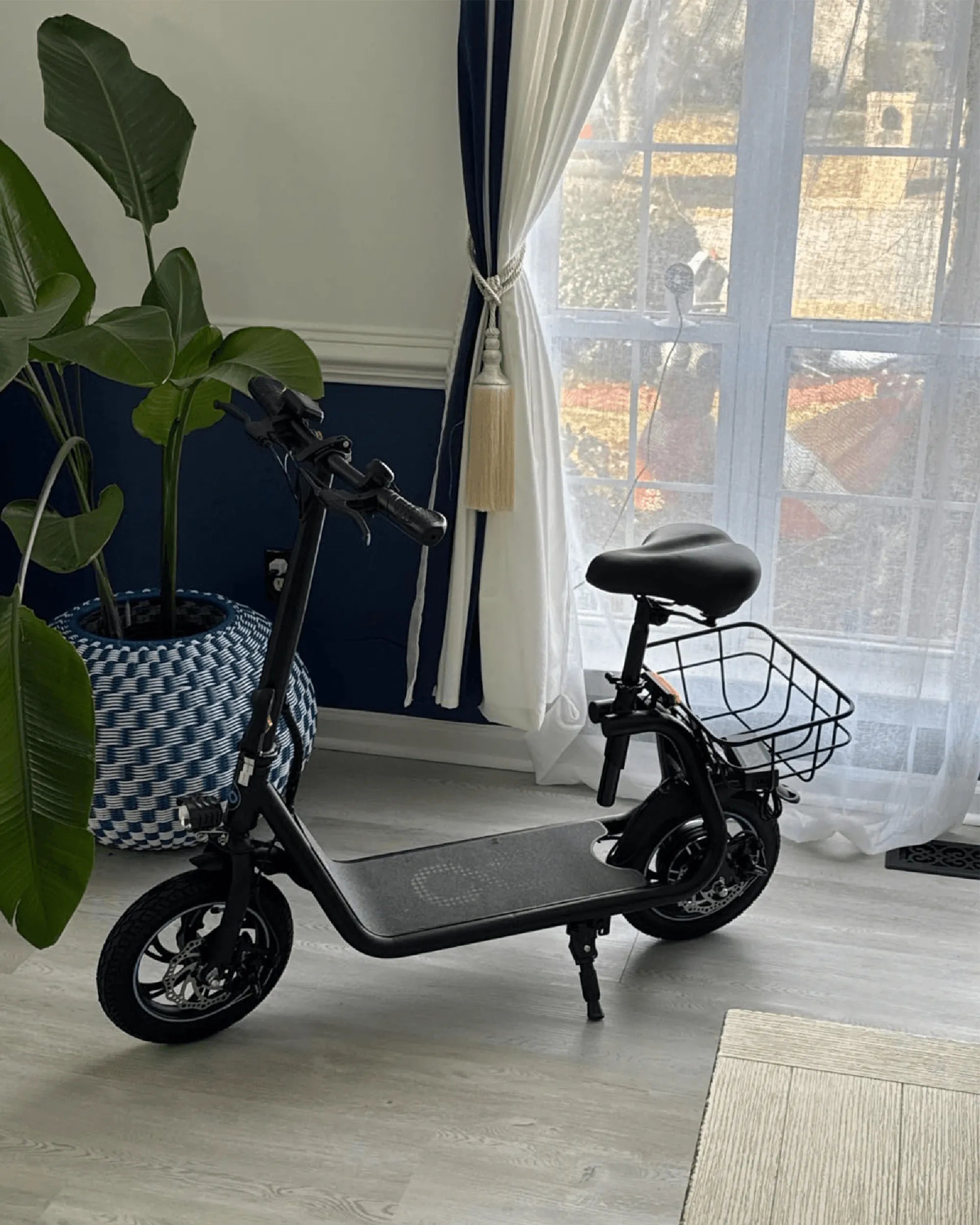
Forget gridlock. A scooter 45—an electric scooter capable of 45 miles per hour—represents a paradigm shift in personal urban mobility and recreational riding. This category bridges the gap between standard commuter scooters and premium electric vehicles, offering serious speed, extended range, and the robust power to conquer hills and varied terrain. This guide provides a data-driven, in-depth analysis of what defines a true 45 mph scooter, who it's for, and the critical engineering and safety features that separate a reliable performance machine from a mere spec sheet. We will dissect motor systems, battery safety, real-world range expectations, and the essential considerations for any rider looking to upgrade to this powerful class of personal electric vehicle.
Introduction to the 45 MPH Electric Scooter Category
The term scooter 45 specifically denotes electric kick scooters engineered to achieve and sustain speeds of approximately 45 mph (72 km/h). This performance tier is distinct from entry-level (15-20 mph) and mid-range (25-30 mph) models. Achieving this speed requires a significant power output, typically from dual motor systems or a single high-wattage motor, paired with a high-voltage battery pack.
These scooters are not merely faster; they are built to a different standard. Frames are constructed from reinforced aluminum alloys, braking systems are upgraded to hydraulic or high-performance mechanical discs, and suspension is mandatory for stability and rider comfort at high speeds. The 45 mph scooter market caters to experienced riders seeking to replace car trips, drastically reduce commute times, or explore beyond paved city paths.
The appeal is multifaceted. For the practical commuter, it means keeping pace with urban traffic flow, enhancing safety by not being the slowest vehicle on the road. For the enthusiast, it unlocks new possibilities for distance and terrain. However, this capability comes with increased responsibility, a higher price point, and greater scrutiny of component quality and manufacturer support, which are non-negotiable for safe operation.
Why Consider a 45 MPH Electric Scooter? Key Use Cases & Benefits
Investing in a scooter 45 is a decision driven by specific needs that lower-speed models cannot fulfill. The primary benefits are profound reductions in travel time, expanded operational range, and the ability to handle demanding routes with ease. This makes them a compelling alternative for a segment of riders for whom standard e-scooters are insufficient.
The most significant advantage is time efficiency. In metropolitan areas with consistent traffic congestion, a 45 mph scooter can often match or exceed average car speeds for trips under 10 miles. This transforms a 30-minute car commute into a 15-20 minute scooter ride, bypassing traffic entirely. Furthermore, the extended range—often 30-50 miles on a single charge—makes round-trip commutes and all-day errand running a practical reality without range anxiety.
Beyond commuting, the power reserve offers practical benefits. Steep hills that would cripple a 250W scooter are handled with authority by a dual-motor scooter 45. This expands viable living areas and routes. The robust construction also provides a more stable, confident ride at all speeds, increasing overall safety through better handling and braking performance compared to lighter, less powerful models.
For the Urban Commuter: Beating Traffic and Expanding Range
The urban commuter is the primary beneficiary of the scooter 45. The core value proposition is simple: reclaim time and increase flexibility. At 45 mph, your effective commute radius expands dramatically. A workplace 15 miles away becomes a feasible 20-minute ride on clear roads, a trip that could take an hour by car during rush hour.
This speed allows you to legally and safely use roads with higher speed limits, opening more direct routes that are off-limits to slower, sidewalk-bound scooters. The combination of speed and range means you can complete a full day's activities—commute to work, lunch errands, after-work socializing—all on a single charge. For those using multi-modal transport, a fast scooter efficiently covers the "first and last mile" to and from public transit hubs that are often just beyond comfortable walking distance.
For the Adventure Seeker: Beyond City Limits
For the recreational rider, a 45 mph scooter is a key to exploration. It enables weekend adventures on paved country roads, light trail riding in parks, and navigating sprawling suburban or industrial areas. The power and torque allow for confident handling of gravel paths, packed dirt, and mild off-road conditions, especially when paired with pneumatic, off-road-tread tires.
This capability transforms the scooter from a purely utilitarian device into a recreational vehicle. Group rides with other high-performance PEV owners become possible, covering significant distances to explore new areas. The thrill of acceleration and high-speed stability on open, safe paths is a primary draw. However, this use case demands even greater emphasis on protective gear, understanding local land-use laws, and choosing a scooter with appropriate suspension and tire options for variable surfaces.
Critical Features to Evaluate in a 45 MPH Scooter
Choosing a scooter 45 requires moving beyond top-line speed specs. The components that enable and safely manage that speed are paramount. A failure in a critical system at 45 mph can have severe consequences, making build quality, safety engineering, and reliable support the most important purchase criteria.
First, scrutinize the advertised speed. A true 45 mph scooter should sustain that speed under real-world conditions (e.g., a 165 lb rider on a slight incline), not just achieve it briefly in ideal lab conditions. Look for verified third-party reviews and real-world speed tests. The motor and battery system must work in harmony to deliver consistent power without excessive voltage sag, which can cause sudden drops in performance.
Second, evaluate the complete ecosystem: braking distance, suspension travel, deck size, and overall weight. A scooter that can go 45 mph but takes 50 feet to stop is dangerously unbalanced. The frame must feel rigid without flex at high speed. Water resistance is crucial; an IPX5 rating or higher ensures electronics and connectors are protected from rain and road spray, a common reality for daily riders.
Motor Power & Battery Performance: The Heart of the Machine
The propulsion system of a scooter 45 is its defining feature. Most models in this class utilize either a single high-wattage motor (e.g., 1500W-2000W) or, more commonly, dual motors (e.g., 2x1000W or 2x1200W). Dual motors provide superior acceleration, hill-climbing torque, and redundancy—if one motor fails, you can often limp home on the other.
The battery is equally critical. It must be a high-voltage system (typically 52V or 60V) to deliver the necessary power to the motors. Capacity, measured in Watt-hours (Wh), directly correlates with range. For a 45 mph scooter, expect a battery capacity of 1000Wh to 1500Wh+ for meaningful range. Most importantly, the battery pack must use certified, high-quality cells (like LG, Samsung, or Panasonic) and have UL certification for safety. Brands like Gyroor prioritize UL-certified battery packs, which undergo rigorous testing for overcharge, short circuit, and thermal stability, a non-negotiable for a device storing this much energy.
Build Quality & Safety Systems: Non-Negotiables at High Speed
At 45 mph, engineering tolerances shrink. The frame must be constructed from aerospace-grade aluminum or similar alloy to resist fatigue and torsional stress. Welds should be clean and consistent. The steering column must have a robust locking mechanism and minimal play.
Braking is the most critical safety system. Hydraulic disc brakes are the gold standard for this class, offering superior modulation, power, and consistency with less hand fatigue than mechanical discs. Some high-end models feature electronic regenerative braking (E-ABS) as a supplement. Suspension is mandatory—a combination of front and rear spring or hydraulic shocks with adequate travel (≥3 inches) to absorb bumps and maintain tire contact with the road.
Lighting must be comprehensive: a bright headlight (≥1000 lumens), rear brake light, and integrated deck or stem lighting for side visibility. An IP water-resistance rating is essential. Gyroor designs, for example, incorporate IPX5-rated water resistance, protecting the scooter's core electronics from sustained water spray from any direction, ensuring reliability in wet conditions.
Warranty and Support: Protecting Your Investment
A scooter 45 is a significant investment, often costing several thousand dollars. A strong warranty is your insurance against manufacturing defects. Look for a minimum of a 1-year comprehensive warranty covering the frame, motor, controller, and battery. The warranty terms should be clear and accessible.
Equally important is the quality of customer support. Can you easily reach the company? Do they have a track record of honoring warranties and providing timely parts? A brand with a established customer base, like Gyroor with over 100,000 riders, typically has the infrastructure and reputation for reliable post-purchase support. The availability of replacement parts (brake pads, tires, tubes) is also crucial for long-term ownership.
Gyroor's Approach to High-Performance Riding: Engineering the 45 MPH Experience
Gyroor approaches the scooter 45 category with a philosophy centered on certified safety, reliable performance, and rider-centric design. Understanding that high speed amplifies the consequences of component failure, Gyroor integrates its core brand promises directly into its performance scooter engineering.
The foundation is battery safety. Every Gyroor scooter utilizes UL-certified battery packs. These packs undergo testing for over 500 charge cycles and are built with premium cells and advanced Battery Management Systems (BMS) to prevent overcharging, overheating, and short circuits. This commitment provides peace of mind that the most energy-dense component on the scooter meets rigorous independent safety standards.
Durability is engineered for real-world use. An IPX5 water-resistant rating is standard, ensuring the scooter can handle rainy commutes and wet roads without compromising electronic function. The frames are designed for the stresses of high-speed travel, and critical components like motors and controllers are selected for their proven reliability under load. This is backed by a clear 1-year warranty, reflecting confidence in their product's longevity. For riders prioritizing safety-certified components and all-weather capability in their 45 mph scooter, Gyroor's engineering focus provides a compelling, trustworthy option.
Making the Right Choice: A Practical Comparison Framework
With numerous models on the market, a systematic comparison is essential. Do not choose based on speed alone. Create a balanced scorecard that weighs performance specs against practical ownership factors.
Start by defining your primary use case: pure commuting, mixed use, or recreational adventure. This will weight the importance of factors like portability (weight, foldability) versus off-road capability (tire type, ground clearance). Always cross-reference advertised range with real-world rider reviews, as range at top speed can be 40-50% lower than the "maximum" range advertised, which is usually calculated at a steady, slow pace.
Consider local laws and regulations. The legality of riding a scooter 45 on public roads varies widely by state, province, and country. Some jurisdictions limit e-scooters to 20-25 mph. It is the rider's responsibility to know and obey local laws, which may restrict where and how you can use a high-performance scooter.
| Comparison Factor | High Priority for Commuter | High Priority for Adventurer | What to Look For |
|---|---|---|---|
| Real-World Range @ Speed | Critical | Important | ≥25 miles at 30+ mph |
| Suspension & Comfort | Important | Critical | Dual suspension, ≥3" travel |
| Weight & Portability | Critical (if carrying) | Less Important | <75 lbs; efficient folding mechanism |
| Tire Type | Pneumatic (for comfort) | Pneumatic, Off-road tread | 10"+ diameter, tubeless preferred |
| Braking System | Critical | Critical | Hydraulic disc brakes (front & rear) |
| Water Resistance | Critical | Important | IPX5 rating or higher |
| Warranty Length | Critical | Critical | ≥1 year comprehensive |
Frequently Asked Questions (FAQs) About 45 MPH Scooters
1. Are 45 mph electric scooters street-legal?
Legality is complex and varies drastically. In the United States, most state and local laws classify e-scooters with speed capabilities above 20-28 mph as not legal for use on public roads, bike lanes, or sidewalks. They may be restricted to private property. In Europe, regulations are often stricter. Always check your specific local and state laws before purchasing or riding a scooter 45 on public thoroughfares.
2. What is the real-world range when riding at top speed?
Advertised "max range" is almost always achieved at a constant low speed (e.g., 15 mph). Riding consistently at 40-45 mph consumes battery power exponentially faster due to wind resistance. Expect real-world range at top speed to be 40-60% of the advertised maximum. For a scooter with a 50-mile max range, you might get 20-30 miles at full throttle.
3. Do I need prior experience to ride a 45 mph scooter?
Yes, emphatically. These are not beginner vehicles. It is strongly recommended to have significant experience on lower-powered electric scooters or electric bicycles to develop essential riding skills, balance, and road awareness. The acceleration, braking, and handling at high speeds require practice and respect. Always start in a low-power mode in a safe, open area.
4. What safety gear is mandatory?
Full-face motorcycle or downhill MTB helmet (DOT or CE certified), motorcycle or motocross gloves, armored jacket or separate elbow/knee pads, and sturdy, closed-toe shoes are the minimum. High-visibility clothing is also recommended. Regular bicycle helmets are insufficient for crashes at these speeds.
5. How important is water resistance for a performance scooter?
Extremely important if you plan to ride in anything but perfectly dry conditions. Road spray, puddles, and sudden rain are common. An IP rating (like IPX5) ensures the electronic controllers, battery compartment, and motor connections are sealed against water ingress, preventing short circuits, corrosion, and failure. It is a key indicator of overall build quality and all-weather reliability for your scooter 45.
Conclusion: Is a 45 MPH Electric Scooter Right for You?
A scooter 45 is a powerful, transformative tool for the right rider. It is an ideal solution for the experienced commuter seeking to obliterate traffic delays and expand their mobile radius, or for the enthusiast looking for thrilling, terrain-capable recreation. However, it demands a mature approach: a significant financial investment, a commitment to full safety gear, a thorough understanding of local laws, and a willingness to perform regular maintenance.
The decision ultimately hinges on your specific needs, riding environment, and readiness. If your daily life involves longer-distance travel on roads where keeping pace with traffic is safer, and you value the engineering and freedom that high performance offers, a 45 mph scooter could be a perfect fit. Prioritize models from brands that emphasize certified safety components like UL-listed batteries, robust warranties, and proven customer support. This ensures your high-speed investment is built on a foundation of reliability and safety. Explore the engineering and specifications of high-performance models designed for demanding riders. Browse the full Gyroor collection, featuring UL-certified, high-performance electric scooters, at gyroorboard.com.
20 Inch Trike: The Ultimate Guide to Stable, Practical Electric Transport
Scooter for 2.5 Year Old: The Ultimate Guide to Safe, Developmental First Wheels