



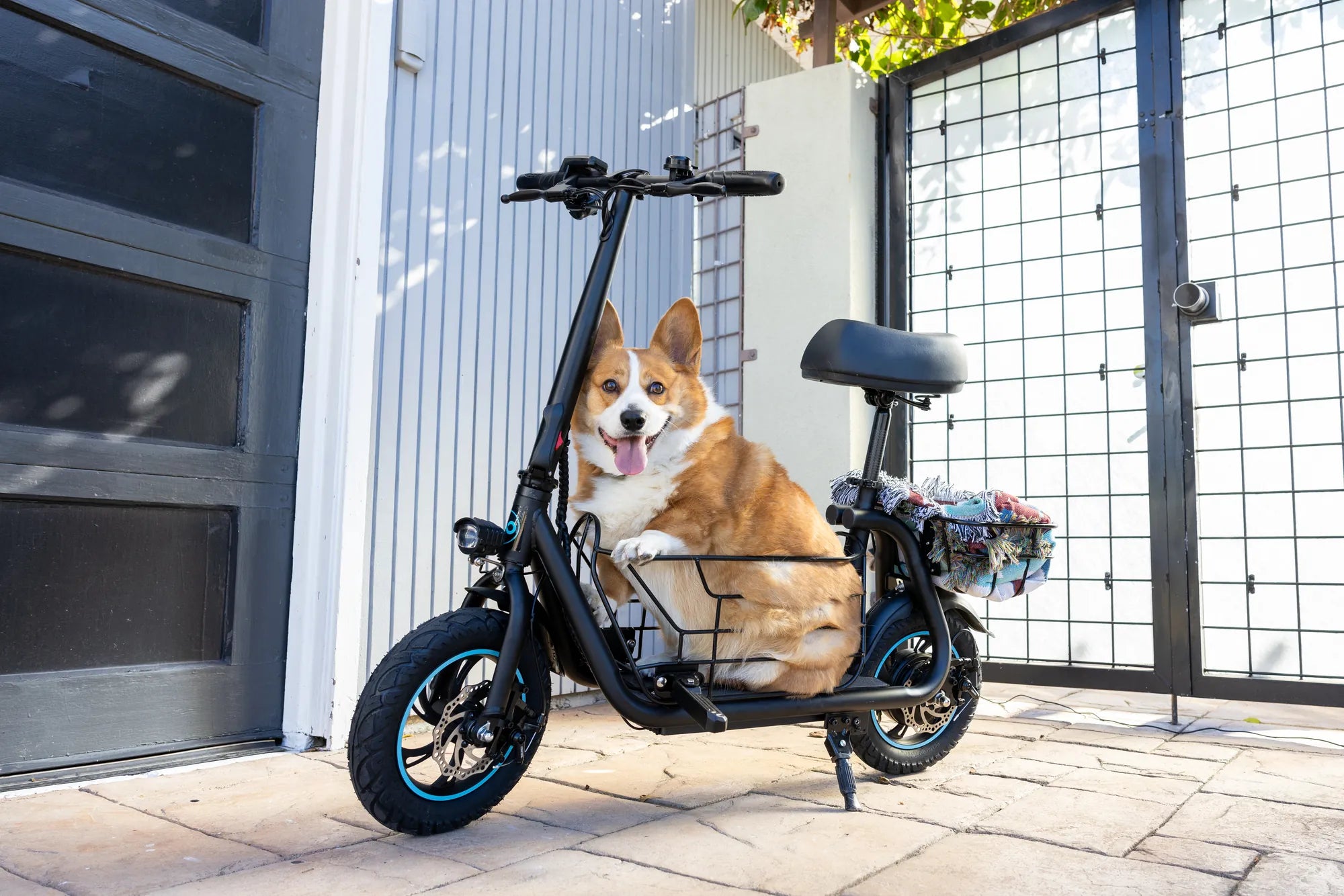
Navigating the Personal Mobility Landscape
Choosing between an electric scooter and an electric bike represents one of the most common decisions in modern urban transportation. The scooter and bike difference extends far beyond mere appearance, impacting everything from your daily commute to weekend adventures. With cities expanding bike lanes and micro-mobility options becoming mainstream, selecting the right vehicle requires understanding their distinct capabilities.
This guide provides a detailed, data-driven analysis of electric scooters versus electric bicycles. We'll examine performance specifications, practical applications, legal considerations, and total cost of ownership. Whether you're a last-mile commuter, a weekend explorer, or someone seeking an eco-friendly alternative to car trips, understanding these differences ensures your investment matches your lifestyle.
As a leading electric scooter and e-bike brand trusted by over 100,000 riders across North America and Europe, Gyroor brings firsthand expertise to this comparison. We engineer both vehicle types with UL-certified batteries, IPX5 water-resistant designs, and reliable 1-year warranties, giving you a trustworthy baseline for evaluation.
Defining the Core Machines: What Are We Talking About?
Before diving into comparisons, we must establish clear definitions. The modern "scooter" typically refers to an electric kick scooter, while "bike" in this context means an electric bicycle. These are fundamentally different vehicles with unique design philosophies, despite sharing battery-powered propulsion.
The Modern Electric Scooter
An electric scooter is a compact, stand-up vehicle featuring a narrow deck, vertical handlebars, and small wheels (usually 8-10 inches). Riders maintain a standing position while controlling speed via a thumb throttle or trigger on the handlebar. Most models fold for portability, making them ideal for mixed-mode commuting where you might carry them onto public transit or store them under a desk.
The typical electric scooter operates solely on motor power—you don't pedal. Balancing is required, similar to a non-motorized kick scooter. Modern versions feature regenerative braking, LED lighting, and increasingly sophisticated suspension systems. Their design prioritizes minimalism and urban agility over long-distance comfort or cargo capacity.
The Electric Bicycle (E-Bike)
An electric bicycle maintains the traditional bicycle frame, pedals, and riding position but integrates an electric motor and battery to assist your pedaling effort. You must pedal to activate the motor (in most classes), creating a hybrid human-electric experience. E-bikes typically feature larger wheels (20-29 inches) and full-sized frames, offering stability and comfort comparable to traditional bicycles.
E-bikes are categorized into three main classes in North America. Class 1 provides pedal-assist only (no throttle) up to 20 mph. Class 2 offers throttle-assisted propulsion up to 20 mph, even without pedaling. Class 3 delivers pedal-assist up to 28 mph. These classifications significantly impact where you can legally ride, a crucial aspect of the scooter and bike difference.
Head-to-Head Comparison: Key Factors for Your Decision
This comprehensive table outlines the fundamental scooter and bike difference across critical categories. Use it as a quick reference before we explore each dimension in detail.
| Comparison Factor | Electric Scooter | Electric Bike |
|---|---|---|
| Primary Riding Position | Standing | Seated |
| Propulsion Method | Throttle-only (typically) | Pedal-assist + optional throttle |
| Average Weight | 30-50 lbs | 45-70 lbs |
| Foldability & Portability | Excellent (most models fold) | Limited (some folding models) |
| Typical Wheel Size | 8-10 inches | 20-29 inches |
| Storage & Cargo Capacity | Minimal (backpack only) | High (racks, baskets, panniers) |
| Max Speed (Common) | 15-25 mph | 20-28 mph (Class 1-3) |
| Real-World Range | 15-40 miles | 20-60+ miles |
| Terrain Handling | Paved surfaces, smooth paths | Pavement, gravel, light trails |
| Typical Price Point | $500 - $1,500 | $1,000 - $3,000+ |
Commute & Practicality: Portability vs. Versatility
The scooter and bike difference is most apparent in daily utility. Electric scooters excel in ultra-portable, last-mile solutions. Their compact, foldable design lets you easily carry them onto buses, trains, or into office elevators. For apartment dwellers or those with limited storage, a scooter that tucks into a closet is a significant advantage. The standing position allows quick dismounts in traffic, but offers no cargo options beyond a backpack.
Electric bicycles trade some portability for substantial utility. You can't typically carry an e-bike onto a crowded subway, but it can replace a car for grocery runs, school drop-offs, or longer errands. Adding a rear rack, panniers, or a front basket transforms an e-bike into a capable cargo vehicle. The seated riding position is far more comfortable for distances over 2-3 miles, reducing fatigue on your commute.
Consider your complete journey chain. If your commute involves multiple modes of public transit, the scooter's advantage is clear. If you travel point-to-point for distances between 3 and 10 miles, an e-bike's comfort and speed often win. For mixed-use scenarios, Gyroor offers models in both categories designed for real-world reliability, featuring robust construction that withstands daily use.
Maintenance also differs practically. Scooters have fewer mechanical parts (no chain, derailleur, or complex gearing) but their smaller tires are more susceptible to punctures. E-bikes require traditional bicycle maintenance—chain lubrication, brake adjustments, gear tuning—but their larger tires provide more resilience against road debris. Your comfort with basic upkeep is part of the practical scooter and bike difference.
Performance & Range: Speed, Power, and Distance
Performance metrics reveal another layer of the scooter and bike difference. Electric scooters typically feature motors ranging from 250W to 1000W, with higher wattage providing better acceleration and hill-climbing ability. Top speeds generally cap between 15-25 mph due to stability concerns on small wheels. Range varies dramatically based on battery capacity, rider weight, terrain, and speed, with 15-25 miles being common for mid-tier models.
Electric bicycles often utilize more powerful motors, from 350W to 750W for mid-drive systems. Their true advantage lies in efficiency: the combination of pedal assistance and larger wheels creates greater distance per watt-hour. While you might exert some physical effort, the motor multiplies your input, enabling ranges of 30-60 miles on a single charge. Class 3 e-bikes can legally reach 28 mph, offering faster commute times where regulations allow.
Battery technology is crucial for both. Gyroor equips all models with UL-certified battery packs tested for 500+ charge cycles, ensuring safety and longevity. However, the scooter and bike difference appears in battery placement and capacity. Scooter batteries are integrated into the deck, limiting size due to space constraints. E-bike batteries mount on the downtube or rear rack, allowing for larger capacities (often 500Wh+) that directly enable longer ranges.
Real-world testing shows that rider behavior dramatically impacts range. Aggressive acceleration, frequent stops, and hill climbing drain batteries faster on both vehicles. An e-bike's pedal-assist system offers an advantage here: on flat terrain with moderate assist, you can extend range significantly by contributing modest pedaling effort. A throttle-only scooter provides no such option—every mile comes directly from the battery.
Terrain & Riding Experience: Pavement vs. Adventure
The riding experience highlights a profound scooter and bike difference. Electric scooters are engineered for smooth, paved urban environments. Their small, solid or air-filled tires transmit more road vibration, making rough pavement, cobblestones, or brick paths uncomfortable. Limited ground clearance means potholes and curbs are genuine hazards. The standing position demands constant core engagement for balance, which can be tiring over longer distances.
Electric bicycles offer a more traditional, stable cycling experience. The seated position distributes weight comfortably, and larger wheels (especially fat-tire models) roll over obstacles more easily. Many e-bikes feature front or full suspension, further smoothing out rough terrain. This makes them capable of handling gravel paths, packed dirt trails, and uneven urban landscapes that would challenge most scooters. The scooter and bike difference here is about capability versus agility.
Hill climbing presents another stark contrast. A scooter's small motor must directly overcome gravity, often slowing dramatically on steep inclines. E-bikes leverage both motor power and mechanical advantage through gears. Even a modest 250W mid-drive motor paired with low gears can conquer hills that would stall a more powerful scooter. If your route includes significant elevation changes, this aspect of the scooter and bike difference may decide your choice.
Weather handling also varies. Both Gyroor scooters and e-bikes feature IPX5 water resistance, protecting electronics from rain and splashes. However, the scooter's smaller wheels and lower stance make wet conditions trickier due to reduced traction and potential splashing. An e-bike's larger tires provide better wet-surface grip, and fenders can be added to minimize spray. For four-season commuting in variable climates, these experiential factors matter.
Regulations & Safety: Laws and Best Practices
Legal distinctions form a critical component of the scooter and bike difference. Regulations vary by municipality, but general patterns exist. Electric scooters often face more restrictive rules: they may be banned from sidewalks, prohibited on certain roads, or limited to specific bike lanes. Many cities cap scooter speeds at 15-20 mph and mandate helmet use for all riders. Some jurisdictions treat them similarly to motor vehicles, requiring registration or licensing.
Electric bicycles, particularly Class 1 (pedal-assist only, 20 mph max), are generally treated as bicycles under the law. This grants access to bike lanes, multi-use paths, and roads where bicycles are permitted. Helmet laws often align with traditional bicycle regulations (typically required for minors). Class 2 and 3 e-bikes may face additional restrictions, such as being excluded from certain trails or requiring rider age minimums. Always verify local ordinances before purchasing.
Safety considerations extend beyond legality. The scooter's smaller wheels and lower visibility to drivers present unique risks. Learning to balance while managing throttle and brake controls requires practice. E-bikes, with their higher speed potential and bicycle-like handling, demand cycling competence and defensive riding awareness. For both vehicles, Gyroor emphasizes integrated safety features: bright LED headlights and taillights, reliable disc or drum braking systems, and audible horns or bells.
Protective gear is non-negotiable. A properly fitted helmet is essential regardless of vehicle type. For scooters, consider wrist guards and knee pads, especially during the learning phase. For e-bikes cycling at higher speeds, additional visibility gear like reflective vests is advisable. Understanding the scooter and bike difference in accident dynamics—scooter riders tend to fall forward, while e-bike riders may fall sideways—informs your safety preparations.
The Gyroor Advantage: Engineered for Confidence in Both Worlds
Choosing between a scooter and bike becomes clearer when you trust the engineering behind both options. Gyroor designs across both categories with shared core principles: safety first, real-world durability, and rider-focused innovation. This commitment transforms the scooter and bike difference from a compromise into a curated choice between two excellent, reliable solutions.
Unmatched Safety and Reliability
Every Gyroor vehicle features a UL-certified battery pack—the industry gold standard for electrical fire prevention. These batteries undergo rigorous testing for thermal stability, overcharge protection, and short-circuit prevention across 500+ charge cycles. Combined with a robust 1-year comprehensive warranty and accessible customer support, this eliminates the anxiety associated with cheaper, uncertified alternatives. When comparing vehicles, battery safety should be a primary filter, not an afterthought.
Built for the Real World: Weather and Durability
An IPX5 water-resistant rating isn't just a specification; it's peace of mind. This engineering ensures critical electronics withstand rain, puddle splashes, and wet street conditions. The frame construction on Gyroor scooters and e-bikes uses reinforced aluminum alloys that resist daily wear, corrosion, and the stresses of urban riding. This durability directly impacts long-term value, reducing maintenance costs and extending the vehicle's lifespan regardless of which side of the scooter and bike difference you choose.
Matching the Right Model to Your Rider Profile
Your lifestyle dictates the optimal choice. For the urban apartment dweller with a multi-modal commute (bus/train + last mile), a foldable Gyroor electric scooter like the G3 or G5 offers perfect portability. For the suburban parent running errands, commuting 5-10 miles, or exploring weekend trails, a Gyroor electric bike like the C1 or a fat-tire model provides the necessary range, comfort, and cargo utility. Our lineup across both categories ensures there's a purpose-built vehicle for your specific needs.
Cost Analysis: Initial Investment and Total Ownership
Understanding the financial scooter and bike difference requires looking beyond the sticker price. Electric scooters generally have a lower entry cost, with quality models starting around $600-$800. This makes them an accessible entry point into electric mobility. However, consider replacement parts: scooter tires, though small, may wear faster and require specialized tools for changes. Battery replacement costs, while similar per watt-hour, come due sooner if used extensively due to smaller capacity.
Electric bicycles represent a higher initial investment, typically starting at $1,200 for reliable models. This premium buys greater versatility, comfort, and range. Ownership costs include traditional bicycle maintenance (chain, brakes, tires) but these components are standardized and often user-serviceable. The larger battery, while more expensive to replace, typically offers more charge cycles before degradation due to better thermal management in its frame-mounted housing.
Calculate your cost per mile. Divide the total purchase price plus estimated maintenance over 3-5 years by your anticipated annual mileage. For low-mileage urban use (under 500 miles yearly), a scooter often delivers lower cost per mile. For higher mileage commuting or replacement of car trips (1,000+ miles yearly), an e-bike's durability and efficiency frequently provide better long-term value. The scooter and bike difference here is about scale of use.
Don't forget ancillary costs. Scooters rarely need additional accessories beyond a helmet and maybe a carrying bag. E-bikes often benefit from added investments: a quality lock, fenders, a rack, lights, and panniers. These enhance utility but increase the total outlay. Some employers offer transit benefits or subsidies for e-bikes (less commonly for scooters), and certain regions provide purchase incentives—factors that can tip the financial balance.
Your Journey, Your Perfect Ride
The scooter and bike difference ultimately distills to a choice between optimized portability and expanded capability. Electric scooters win for sheer convenience in dense urban environments, multi-modal commuting, and minimal storage needs. Their simplicity and quick deployment are unmatched. Electric bicycles triumph for longer distances, varied terrain, cargo requirements, and a more traditional, comfortable riding experience that encourages regular use.
Your decision should weigh four key factors: primary use case (last-mile vs. primary vehicle), storage and portability constraints, typical terrain and distance, and local regulations. There is no universally superior option—only the right tool for your specific transportation needs. By understanding the detailed scooter and bike difference outlined here, you can invest confidently in a vehicle that genuinely enhances your daily life.
Ready to experience the difference with engineering you can trust? Explore Gyroor's full collection of UL-certified electric scooters and e-bikes, each built with IPX5 water resistance and backed by a 1-year warranty. Browse the full Gyroor collection at gyroorboard.com to find your perfect ride today.
Frequently Asked Questions (FAQ)
Q: Can I ride an electric scooter or e-bike in the rain?
A: Gyroor models with IPX5 water-resistant ratings are engineered to withstand wet conditions from rain and road splashes. Always exercise increased caution, reduce speed, avoid deep puddles that could submerge electronics, and dry your vehicle thoroughly after riding. Proper maintenance after wet rides extends component life.
Q: Which requires more physical effort, an e-bike or an e-scooter?
A: A throttle-operated electric scooter requires minimal physical effort—primarily standing balance and core engagement. An e-bike with pedal assist requires you to pedal, but the motor significantly reduces required effort, especially on hills. You can adjust the assist level on an e-bike to get more exercise or more assistance as desired.
Q: Are electric scooters or e-bikes allowed on bike paths?
A: Regulations vary locally. Generally, Class 1 e-bikes (pedal-assist only, 20 mph max) are permitted on most bike paths. Electric scooter laws are more fragmented—some cities allow them in bike lanes, others restrict them to roads. Always check your city's specific ordinances. The scooter and bike difference is significant in legal access.
Q: What's the real advantage of a UL-certified battery?
A: UL certification involves independent, rigorous testing for fire risk, electrical short prevention, thermal runaway protection, and durability. It's the highest safety standard for consumer lithium-ion batteries. Non-certified batteries pose higher risks of failure, fire, and premature degradation. For vehicles stored and charged in your home, this certification is non-negotiable for safety.
Q: How far can I realistically travel on a single charge?
A: Range depends on battery capacity, rider weight, terrain, speed, and temperature. A typical mid-tier electric scooter achieves 15-25 miles. A comparable e-bike using pedal assist can achieve 30-45 miles. To estimate your needs, map your regular routes and assume real-world range is 20-30% less than manufacturer estimates under ideal conditions.
Q: Is one easier to maintain than the other?
A: Electric scooters have fewer mechanical parts (no chain, gears) but often use proprietary components and smaller tires prone to punctures. E-bikes use more standardized bicycle parts (chains, brakes, derailleurs) that any bike shop can service, but require more frequent lubrication and adjustment. Your comfort with basic maintenance may influence which aspect of the scooter and bike difference matters most.
Small Scooter for Seniors: The Ultimate Guide to Safe, Stable Mobility
Get a Scooter: The Ultimate Guide to Smart, Sustainable Urban Mobility