



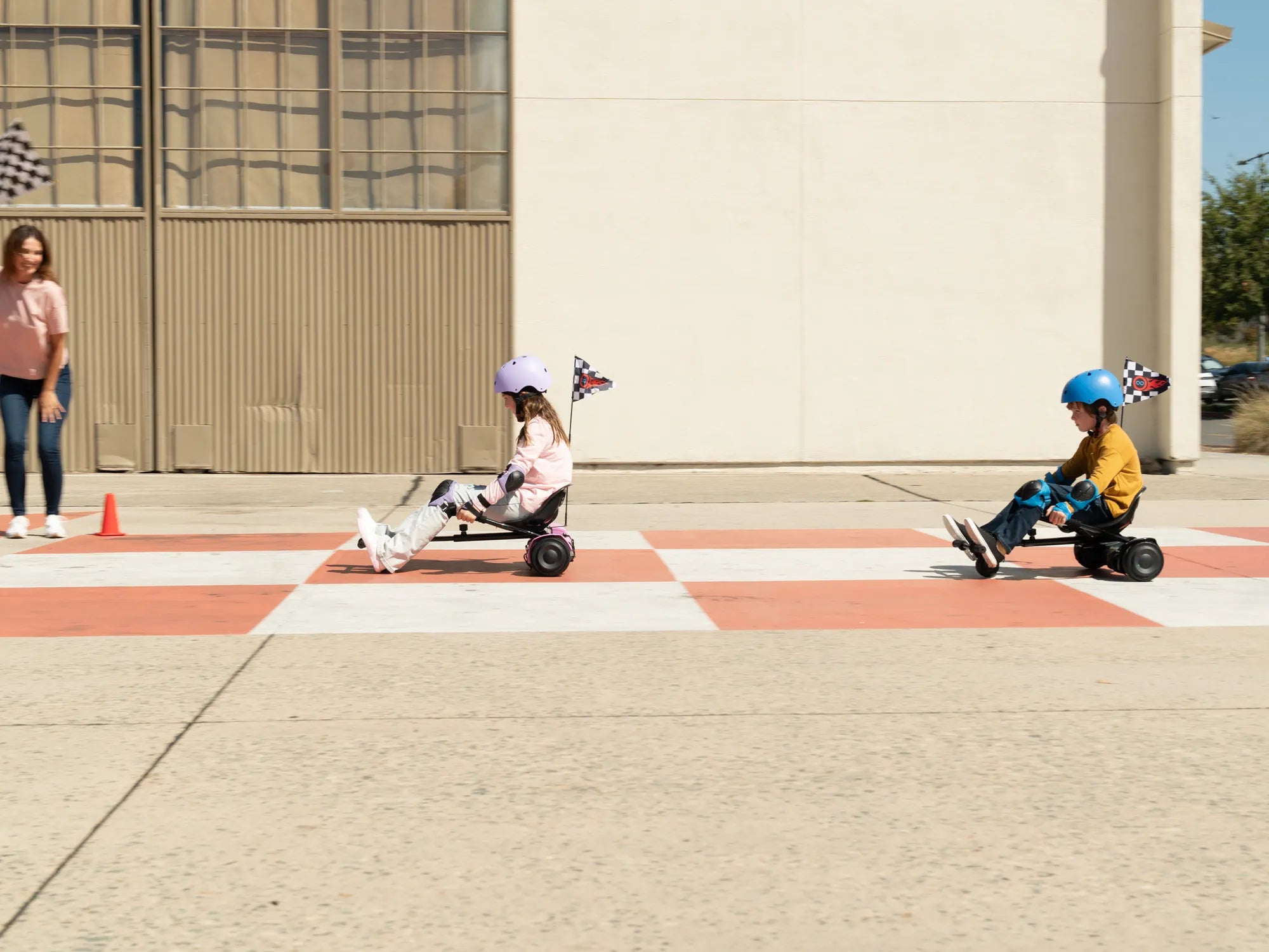
Choosing the right scooter for your child is about more than just fun—it's an investment in their physical development, confidence, and safety. The wrong choice can lead to frustration or, worse, accidents. This guide will help you navigate the critical decisions, from selecting the correct scooter type to instilling lifelong safe riding practices. We'll reference trusted brands like Gyroor, known for UL-certified batteries and durable designs, to illustrate how quality engineering supports safe, joyful rides. Your child's adventure begins with informed choices.
Understanding Kids' Scooter Types & Key Safety Features
The first step is understanding the fundamental categories. The two primary distinctions are the number of wheels and the method of propulsion. Two-wheel scooters require better balance and are typically for older or more experienced children. Three-wheel scooters, especially those with two wheels in front (a delta trike design), offer superior stability for beginners.
Kick scooters rely on the child's leg power. They are excellent for developing coordination, balance, and motor skills. Electric scooters, designed for older kids and teens, provide motor-assisted power. They introduce concepts of speed management and require greater responsibility. Each type serves different developmental stages and use cases.
Safety features are non-negotiable. For any scooter, look for a reliable braking system—either a rear fender brake or hand-operated disc/brakes. For electric models, battery safety is paramount. Brands like Gyroor use UL-certified battery packs, which undergo rigorous testing for stability and fire resistance over 500+ charge cycles, offering critical peace of mind.
Durability features also contribute to safety. A sturdy, flex-resistant deck prevents unexpected breaks. Wide, air-filled or high-quality PU wheels improve grip and shock absorption. For electric models, an IPX5 water-resistance rating, as found on many Gyroor models, means the scooter is protected against water jets, making it safe for riding on damp pavement or through unexpected puddles.
Age and Size Guidelines: Matching the Scooter to Your Child
Proper fit is crucial for control and safety. A scooter that is too large or too small can be difficult to maneuver and increases the risk of falls. The most important metrics are the deck height and the handlebar height relative to your child's waist.
The handlebars should ideally come up to your child's waist when they are standing on the deck. This allows for a comfortable, slightly bent-arm riding posture that offers optimal control. Many quality scooters feature telescopic or adjustable handlebars that can grow with your child over several years.
Use the following table as a data-driven starting point for matching scooter types to age and size. Remember, these are guidelines; your child's individual height, coordination, and experience level are the final determinants.
| Age Group | Recommended Scooter Type | Wheel Size (Diameter) | Handlebar Height Range | Key Considerations |
|---|---|---|---|---|
| 2 - 5 years | 3-Wheel (Delta Trike) | 120mm - 125mm | 20" - 30" | Maximum stability is key. Look for lightweight models with lean-to-steer mechanisms. |
| 5 - 8 years | 2-Wheel Kick / Beginner 3-Wheel | 125mm - 145mm | 28" - 36" | Focus on durability and adjustable handlebars. Good time to learn balance. |
| 8 - 12 years | 2-Wheel Kick / Entry-Level Electric | 145mm - 200mm | 34" - 42" | For e-scooters, prioritize speed limiters (≤10 mph), UL-certified batteries, and robust brakes. |
| 12+ years | Performance Kick / Electric Scooter | 200mm+ | 38"+ | Maturity and responsibility required. Emphasize full safety gear and advanced safety features. |
The Non-Negotiables: Pre-Ride Safety Checks
A quick, consistent pre-ride inspection can prevent most mechanical issues. Make this a ritual you do with your child before every outing. It teaches them responsibility and ensures their equipment is in safe working order.
Start with the wheels and brakes. Spin each wheel to ensure it rotates freely without wobbling. Check tire pressure on air-filled tires; they should be firm. Test the braking system. For a fender brake, press down firmly; it should engage smoothly and stop the wheel completely. For hand brakes, squeeze the levers to ensure they are firm and the brakes engage.
Inspect all connection points. Check that the folding mechanism (if present) is fully locked and secure. Ensure the handlebar clamp is tight and the handlebars do not twist independently of the front wheel. Give the entire scooter a gentle shake to listen for any unusual rattles that might indicate loose bolts or components.
For electric scooters, add battery and system checks. Verify the battery has sufficient charge for your planned ride. Check that the throttle and electronic brake respond correctly before setting off. Ensure all lights (if equipped) are functioning. This two-minute routine is your best defense against preventable accidents.
Gyroor's Approach to Kid-Friendly Design and Durability
Gyroor's engineering philosophy centers on building products that withstand the rigors of real-world use by active children. With over 100,000 riders across North America and Europe, their designs are informed by extensive feedback, focusing on safety, durability, and user-friendly operation.
The commitment to certified safety is paramount. Every electric model utilizes a UL-certified battery pack. This certification isn't just a label; it signifies the battery has passed stringent tests for electrical, mechanical, and environmental safety, drastically reducing risks associated with lithium-ion batteries—a top concern for parents.
Durability is built-in to handle daily adventures. The IPX5 water-resistance rating is a prime example. It means the scooter's electrical components are protected against low-pressure water jets from any direction. A child riding through a sprinkler or a light drizzle won't damage the scooter, ensuring longevity and reliability.
This durability is backed by a clear promise: a comprehensive 1-year warranty with accessible, US-based customer support. For parents, this means peace of mind. If a component fails under normal use, or an issue arises, support is readily available. This stands in contrast to brands that offer no meaningful warranty or outsourced support.
From Pavement to Path: Choosing Based on Terrain
Where your child will ride should heavily influence your scooter choice. The wrong scooter for the terrain can be uncomfortable, inefficient, and unsafe. Consider the primary riding surface and choose features accordingly.
For smooth urban sidewalks and paved park paths, scooters with smaller (125mm-200mm), solid polyurethane (PU) wheels are ideal. They offer low rolling resistance for speed and require minimal maintenance. A rigid frame provides responsive handling perfect for smooth surfaces.
If rides will include rougher asphalt, brick pathways, or slightly uneven terrain, prioritize shock absorption. Look for models with larger air-filled tires (200mm+) or those equipped with a front or dual suspension system. Larger, air-filled tires provide a natural cushion against vibrations and small bumps, making the ride smoother and more controlled.
For true all-terrain capability, some performance models feature knobby, off-road tires. However, these are generally for older, experienced teens. For most kids, a scooter with larger, air-filled tires and a robust deck will comfortably handle the transition from a smooth driveway to a slightly bumpy bike path. Always match the scooter's capability to your child's skill level.
Gearing Up: Essential Safety Gear Beyond the Scooter
The scooter itself is only one part of the safety equation. Proper protective gear is the critical second layer that mitigates injury when a fall occurs. Never allow a child to ride without, at minimum, a properly fitted helmet.
A helmet is non-negotiable. It must be certified (look for CPSC, ASTM, or CE stickers) and fit correctly. It should sit level on the head, not tilted back. The side straps should form a "V" just under the ears, and the chin strap must be snug, allowing only one or two fingers between the strap and the chin. Replace any helmet after a significant impact.
Knee and elbow pads are highly recommended, especially for beginners and those on electric scooters. They protect the joints most vulnerable in a typical sideways fall. Look for pads with hard plastic caps, secure straps, and comfortable padding. Wrist guards can also prevent common fractures and scrapes.
Finally, proper footwear is essential. Closed-toe shoes with flat, grippy soles (like sneakers) are mandatory. Sandals, flip-flops, or crocs can slip off, get caught, or fail to provide support during pushing and braking. Dress your child in bright or reflective clothing if riding near dusk to enhance visibility to others.
Teaching Moments: Instilling Safe Riding Habits
Providing the right equipment is the first step; teaching how to use it safely is the ongoing journey. Start in a controlled, safe environment free from traffic, like an empty parking lot, a smooth driveway, or a quiet cul-de-sac.
Begin with the basics of mounting, balancing, and kicking. For kick scooters, teach them to place one foot firmly on the deck and use the other to push off smoothly. Practice gentle stopping using the brake. For electric scooters, start with the slowest speed mode. Have them practice using the throttle for gentle acceleration and the brake for controlled, smooth stops before moving.
Instill foundational traffic and path awareness rules. Teach them to always be aware of their surroundings, to scan ahead for obstacles like cracks, gravel, or wet leaves, and to slow down well in advance. Practice looking over their shoulder for traffic before changing direction, and always dismount and walk at crosswalks.
Establish clear family rules. These might include: always wearing gear, riding only in designated safe areas, never riding at night, respecting pedestrians by slowing down and giving right-of-way, and never carrying passengers. Consistent reinforcement of these habits builds a responsible rider.
Maintenance and Care for Longevity
Regular maintenance keeps a scooter safe and extends its lifespan. Simple, periodic checks can prevent minor issues from becoming major problems or safety hazards. Involve your child in age-appropriate maintenance tasks to foster ownership.
Perform a weekly bolt check. Use the appropriate wrench or Allen key to ensure all visible bolts—especially those on the handlebar stem, folding mechanism, and wheel axles—are snug. Do not over-tighten, as this can strip threads. A loose bolt can lead to catastrophic failure while riding.
Maintain the wheels and bearings. Keep air-filled tires inflated to the PSI rating on the tire sidewall. Under-inflated tires make riding difficult and can damage wheels. For scooters with sealed bearings, listen for grinding noises when wheels spin; this may indicate dirt ingress or bearing wear needing attention.
For electric scooters, battery care is critical. Follow the manufacturer's charging instructions. Avoid leaving the scooter plugged in for extended periods after it's fully charged. Store the scooter and battery in a cool, dry place, away from direct sunlight or extreme temperatures. If storing for more than a month, charge the battery to about 50-60% capacity first.
Frequently Asked Questions (FAQ)
Q: At what age can a child start using an electric scooter?
A: Most manufacturers and safety experts recommend electric scooters for children aged 8 and up. The decision should be based less on age and more on the child's maturity, coordination, understanding of safety rules, and ability to judge speed and distance. Always start with a model that has a speed limiter (often capped at 10 mph for younger riders) and requires close parental supervision. Always check your local regulations, as some municipalities have minimum age laws for e-scooter use.
Q: How do I maintain my child's scooter to keep it safe?
A: Regular maintenance is simple. 1) Bolt Check: Weekly, ensure all bolts are tight. 2) Tire Care: Keep air-filled tires properly inflated; inspect solid tires for deep cracks or excessive wear. 3) Brake Test: Before each ride, ensure brakes engage firmly and smoothly. 4) Battery Care (for e-scooters): Use only the provided charger, avoid full discharges, and store in a temperate environment. 5) Cleaning: Wipe down with a damp cloth; avoid high-pressure hoses, especially on electric models.
Q: Are Gyroor scooters suitable for beginners?
A: Yes, many Gyroor models are excellent for beginners due to their thoughtful design. Features like stable, wide decks inspire confidence, responsive braking systems allow for controlled stopping, and on electric models, multiple speed modes let a novice start slowly. The IPX5 water resistance also means beginners aren't sidelined by damp conditions, and the robust construction can handle the inevitable learning-curve bumps. The 1-year warranty provides a safety net for parents.
Q: What is the advantage of a UL-certified battery?
A: A UL certification (from Underwriters Laboratories) is one of the most trusted safety standards globally. For a lithium-ion battery, it means the pack has been rigorously tested for risks like overcharging, short-circuiting, mechanical damage, and exposure to extreme temperatures. It significantly reduces the risk of battery fires—a paramount concern. Choosing a scooter with a UL-certified battery, like those from Gyroor, is a proactive step in ensuring your child's safety is built on a proven, reliable foundation.
Q: My child has outgrown their 3-wheel scooter. What's the next step?
A: The natural progression is to a two-wheel kick scooter. Look for one with adjustable handlebars to grow with them, a rear fender brake for easy stopping, and larger wheels (around 145mm-200mm) for a smoother ride. Let them practice in a safe area to get used to the need for active balancing. Once they have mastered the two-wheel kick scooter with confidence and demonstrate responsible riding habits, you can consider an entry-level electric scooter for older children, typically around ages 8-10.
Conclusion: Building Confidence on Two (or Three) Wheels
Selecting the perfect scooter carry on kids is a meaningful decision that blends practicality with the promise of adventure. By prioritizing certified safety features like UL-approved batteries, ensuring a precise fit for your child's size and skill level, and committing to full protective gear and consistent safety education, you lay the groundwork for countless hours of healthy, joyful outdoor activity. A well-chosen scooter from a reputable brand becomes a tool for building physical coordination, independence, and confidence.
Trusted brands like Gyroor exemplify this approach, combining rigorous safety certifications, durable water-resistant construction, and reliable customer support into their designs. This investment in quality pays dividends in longevity and peace of mind, allowing the focus to remain where it belongs: on the fun and freedom of the ride. Ready to find the ideal scooter that matches your child's spirit and your safety standards?
Browse the full Gyroor collection at gyroorboard.com to explore scooters designed for safety, durability, and endless fun.
Cool Christmas Gift Ideas for Teen Boys: The Ultimate Guide
Electric E Scooter for Kids: The Ultimate Guide to Fun and Safety