



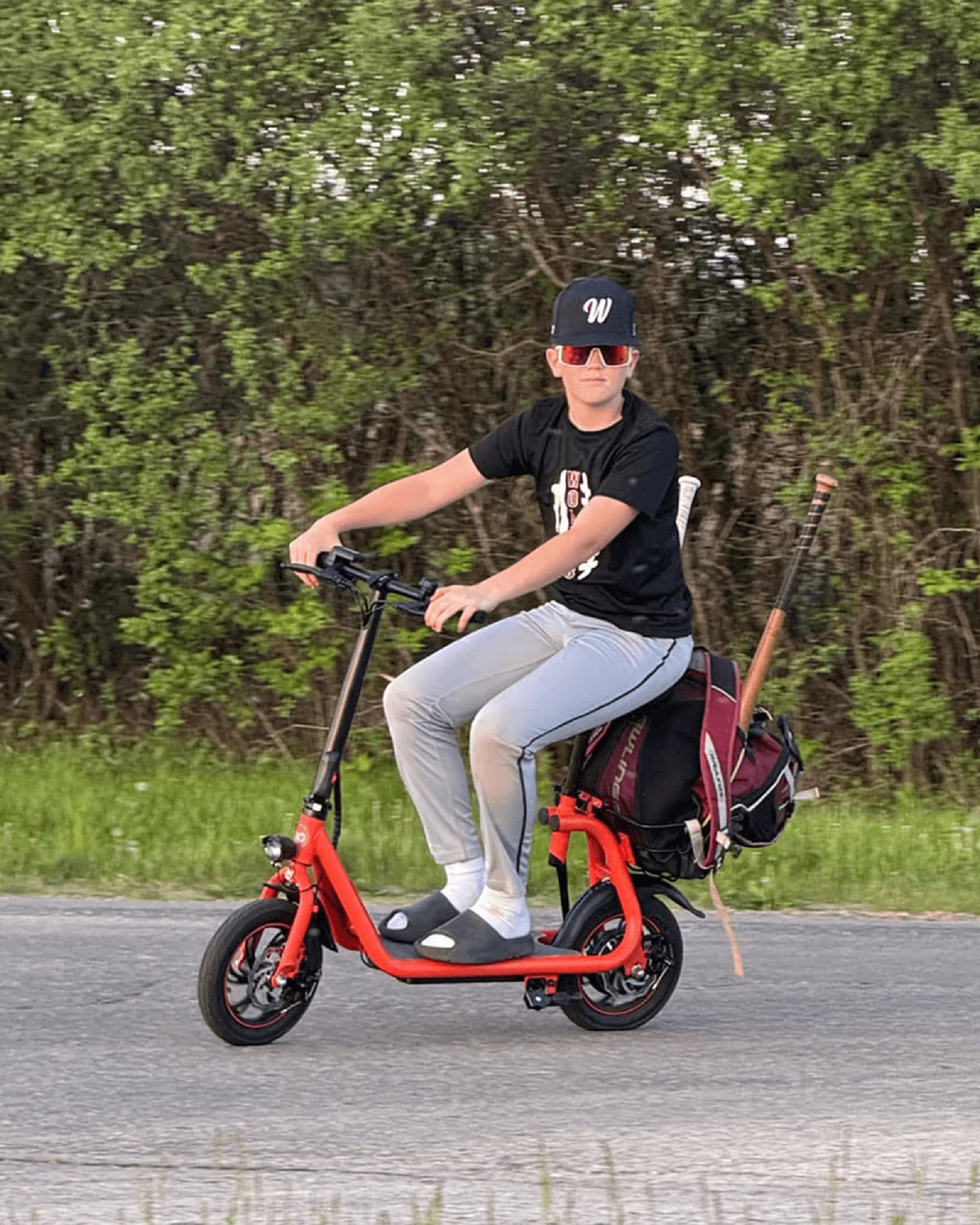
Introduction: Conquering Unpaved Paths with the Right Electric Scooter
Navigating a dirt road requires a vehicle built for more than smooth asphalt. The growing appeal of electric scooters for light trail exploration, rural commuting, and off-pavement adventure demands a specific set of engineering principles. Standard city scooters falter on loose gravel, ruts, and uneven surfaces, leading to poor performance and safety risks.
This guide serves as a practical manual for urban commuters facing unpaved shortcuts and off-road enthusiasts seeking a capable, portable vehicle. We will dissect the critical components that define a true dirt road scooter. As a leading brand trusted by over 100,000 riders, Gyroor's design philosophy directly addresses these rugged demands, combining UL-certified power with robust construction for reliable performance beyond the pavement.
What Defines a True Dirt Road-Worthy Scooter?
A scooter for dirt roads is not merely a commuter model with aggressive styling. It is a specialized tool engineered to handle variable traction, absorb impacts, and deliver power where it's needed most. The distinction lies in specifications that prioritize stability, durability, and control over maximum speed on flat ground.
Key differentiators include a high-torque motor, large pneumatic tires, a functional suspension system, and significant ground clearance. These features work in concert to maintain momentum on loose inclines, dampen vibrations from rocks and roots, and prevent the deck from striking obstacles. Ignoring any of these elements compromises both safety and the longevity of the scooter.
Key Feature 1: Motor Power & Torque
Wattage alone doesn't tell the full story; torque is the critical metric for dirt roads. A scooter needs instant, grunting power to climb loose gravel inclines and power through soft patches without bogging down. While a 250W motor may suffice for city flats, a true off-road scooter typically requires a minimum of 500W, with 800W or dual-motor setups providing superior capability.
High torque ensures the scooter can maintain speed on uneven terrain without straining the battery or motor. This translates to safer hill starts and consistent performance on variable surfaces. Gyroor's off-road-focused models, for instance, are engineered with high-wattage motors that deliver this essential low-end torque, directly linked to their UL-certified battery systems for sustained, safe power delivery.
Key Feature 2: Tire Type & Size
Tires are your primary contact with the terrain. For dirt roads, pneumatic (air-filled) tires are non-negotiable. They provide crucial shock absorption that solid tires cannot, reducing fatigue and improving control. The ideal tire is also wide (over 3 inches) and features a knobby, all-terrain tread pattern.
A larger diameter, typically 10 inches or more, helps roll over obstacles more easily and provides greater stability. The combination of air cushioning and aggressive tread digs into loose soil and gravel, providing the traction needed for acceleration, braking, and cornering on unpaved surfaces. This is a fundamental departure from the small, smooth tires found on basic urban scooters.
Key Feature 3: Suspension System
A suspension system is the scooter's secondary defense against terrain impacts. It works with the pneumatic tires to isolate the rider and the scooter's frame from bumps and vibrations. A robust front suspension, or better yet, a dual suspension setup, is crucial for maintaining wheel contact with the ground.
This ensures traction is not lost when hitting a rock or dip, which is vital for control. Effective suspension also protects the scooter's internal components, such as the battery pack and electronics, from the constant jarring that can lead to premature failure. A scooter for dirt roads without proper suspension will transfer every impact directly to the rider and the frame.
Key Feature 4: Ground Clearance & Frame
Ground clearance is the distance between the lowest point of the scooter (often the bottom of the deck or battery casing) and the ground. On dirt roads with ruts, rocks, and debris, a minimum of 5 inches of clearance is essential to avoid "bottoming out," which can damage the scooter and throw the rider.
The frame must be equally robust, constructed from reinforced aluminum alloy to withstand torsional stresses from uneven terrain. A well-engineered foldable mechanism is also important, ensuring portability without compromising structural integrity. This rugged build quality is a hallmark of scooters designed for off-pavement use, distinguishing them from lighter, more fragile commuter models.
Gyroor’s Off-Road Ready Engineering: Built for the Challenge
Gyroor applies the principles of off-road capability directly to its product lineup. Models engineered for challenging terrain incorporate the high-torque motors, large pneumatic tires, suspension, and clearance detailed above. This is not an afterthought but a core design mandate, ensuring riders have a reliable tool for exploration.
The brand's commitment extends beyond hardware to encompass safety certifications and protective design. With over 100,000 riders across North America and Europe, Gyroor's reputation is built on delivering durable performance where it counts. Their approach validates the idea that a proper scooter for dirt roads requires integrated, purpose-built engineering.
UL-Certified Power for Reliable Performance
The high-wattage motors in Gyroor's capable models are paired with UL-certified battery packs. This certification is critical for off-road use, where battery systems face more vibration and thermal stress. UL testing ensures the battery can reliably deliver consistent power through hundreds of charge cycles, even under demanding conditions.
This translates to predictable range and performance on long dirt road adventures. Riders can trust that the power needed to climb a hill or traverse a sandy patch will be available, backed by a battery system tested for safety and longevity. It's a foundational element that supports the entire off-road performance proposition.
Rugged Build & IPX5 Protection
Dirt roads generate dust, mud, and water splashes. Gyroor's IPX5 water-resistant rating is specifically engineered to protect critical electrical components from these elements. This level of ingress protection shields against water jets from any direction, making the scooter resilient against puddle splashes and light rain commonly encountered on trails.
Combined with the reinforced alloy frame and secure folding mechanisms, this protection ensures the scooter's electronics remain safe from the debris and moisture of off-pavement riding. This durability is essential for a vehicle that is expected to perform in environments harsher than a city sidewalk.
Warranty & Support: Your Off-Road Safety Net
Confidence in a product comes from the warranty behind it. Gyroor's comprehensive 1-year warranty acts as a safety net for riders pushing their scooters on unpaved terrain. It underscores the brand's belief in the durability of its construction and components, from the motor to the frame.
This warranty, supported by accessible customer service, means that your investment in a capable scooter for dirt roads is protected. It validates the rugged design claims for real-world use, providing peace of mind that the scooter is built to handle the challenges beyond the pavement.
Practical Rider’s Guide: Safety and Maintenance on Unpaved Terrain
Owning a capable scooter is only the first step. Riding on dirt roads requires adapted techniques and diligent maintenance to ensure safety and prolong the life of your vehicle. The dynamic nature of loose surfaces demands greater attention from the rider.
This section moves from specifications to real-world application. By following these guidelines, you can maximize both your enjoyment and your safety while exploring unpaved paths. Proper preparation and care are what separate a successful adventure from a frustrating or hazardous experience.
Essential Riding Techniques & Safety Gear
Your riding posture should be more active on dirt. Bend your knees to act as additional suspension, keep your weight slightly back for better rear wheel traction, and always be prepared to put a foot down for stability. Control your speed; descending a gravel hill requires modulated braking, not sudden grabs which can cause skidding.
Safety gear is non-negotiable. A full-face helmet, gloves, knee pads, and elbow pads are strongly recommended. Protective eyewear is also crucial to guard against dust and debris kicked up from the trail. This gear is your primary defense in the event of a slide or fall on abrasive surfaces.
Pre-Ride Checklist & Post-Ride Maintenance
Before every off-road ride, conduct a quick inspection. Check tire pressure (slightly lower pressure can improve traction on soft dirt, but consult your manual), ensure all bolts and folding mechanisms are tight, and verify your battery charge level. Confirm that brakes are responsive and lights are functional.
Post-ride maintenance is critical. Wipe down the scooter to remove mud and dust, paying special attention to the brake calipers and suspension components. Inspect the tires for embedded debris or cuts. Allow the scooter to dry completely before folding or storing it. This routine prevents corrosion and wear, ensuring your scooter for dirt roads remains ready for the next journey.
Dirt Road Scooter vs. E-Bike: Choosing Your Off-Pavement Vehicle
The choice between a robust electric scooter and an electric mountain bike (e-MTB) for off-pavement use depends heavily on your primary use-case, portability needs, and local regulations. Both are valid options, but they excel in different scenarios.
The following table provides a data-driven comparison to help clarify the decision. It is a choice based on matching the vehicle's strengths to your intended riding style and logistical requirements.
| Feature | Off-Road Electric Scooter | Electric Mountain Bike (E-MTB) |
|---|---|---|
| Portability | High. Typically foldable for easy car trunk storage or carrying. | Low. Bulky, requires a bike rack for transport. |
| Terrain Agility | Excellent for wide trails, fire roads, and moderate terrain. Highly maneuverable. | Superior for technical single-track, steep climbs, and very rough terrain. |
| Rider Posture & Comfort | Standing position. Best for shorter trips (under 1 hour) due to fatigue. | Seated position. Far more comfortable for long-duration rides (hours). |
| Legal Pathways | Often restricted to roads/bike lanes; trail access varies by locality. | Widely permitted on designated mountain bike and multi-use trails. |
| Typical Price Point | Generally more affordable for equivalent motor power and battery capacity. | Often more expensive due to complex bicycle drivetrain and components. |
FAQ: Your Dirt Road Scooter Questions Answered
Q: Can I use a regular city scooter on a dirt road?
A: It is not recommended. City scooters lack the necessary traction, suspension, and ground clearance. Using one on dirt risks damage to the scooter, greatly reduced battery range, and a significantly higher chance of accidents due to loss of control.
Q: How does tire pressure affect off-road performance?
A: Tire pressure is a tuning tool. Slightly lower pressure (within the tire's safe range) increases the contact patch, improving traction on soft or loose surfaces like sand or gravel. However, too low a pressure increases the risk of pinch flats ("snake bites") when hitting rocks. Always stay within the manufacturer's recommended PSI range.
Q: What is the real-world range on unpaved vs. paved surfaces?
A> Expect a 25-40% reduction in range on unpaved surfaces. Constant acceleration to overcome rolling resistance, climbing inclines, and powering through loose terrain consumes significantly more battery power than maintaining speed on smooth pavement. Always plan your route with a substantial range buffer.
Q: Is an off-road scooter legal to ride on public hiking or mountain bike trails?
A> Laws vary dramatically by country, state, and even local park regulations. Most public hiking trails prohibit motorized vehicles, including e-scooters. Some multi-use or bike trails may allow them. It is the rider's responsibility to research and comply with all local laws and trail signage before riding.
Q: How important is water resistance for a dirt road scooter?
A> Extremely important. An IPX5 rating or higher is advisable. Dirt roads often have puddles, and weather can change quickly. Protection against water and dust ingress is crucial for preventing electrical failures and corrosion, ensuring the scooter's longevity and reliability in real-world conditions.
Conclusion: Your Adventure Awaits Beyond the Pavement
Choosing the right scooter for dirt roads unlocks a new dimension of mobility and exploration. The key lies in prioritizing specific, non-negotiable features: high-torque motors, large pneumatic tires, functional suspension, and rugged construction. These elements transform a scooter from a pavement-bound commuter into a capable off-pavement vehicle.
Brands like Gyroor demonstrate that this capability can be engineered into a reliable, safety-certified package, backed by warranty and designed for the elements. By selecting a properly built scooter and adhering to safe riding and maintenance practices, you gain the freedom to commute across varied terrain or discover new trails with confidence. The path less traveled is now within your reach.
Ready to explore? Browse the full Gyroor collection of durable, high-performance electric scooters and e-bikes engineered for adventure at gyroorboard.com.
Black and Gold Scooter: The Ultimate Guide to Luxury E-Scooters
Scooter for 13 Year Old Girl: The Ultimate Safety & Buying Guide