



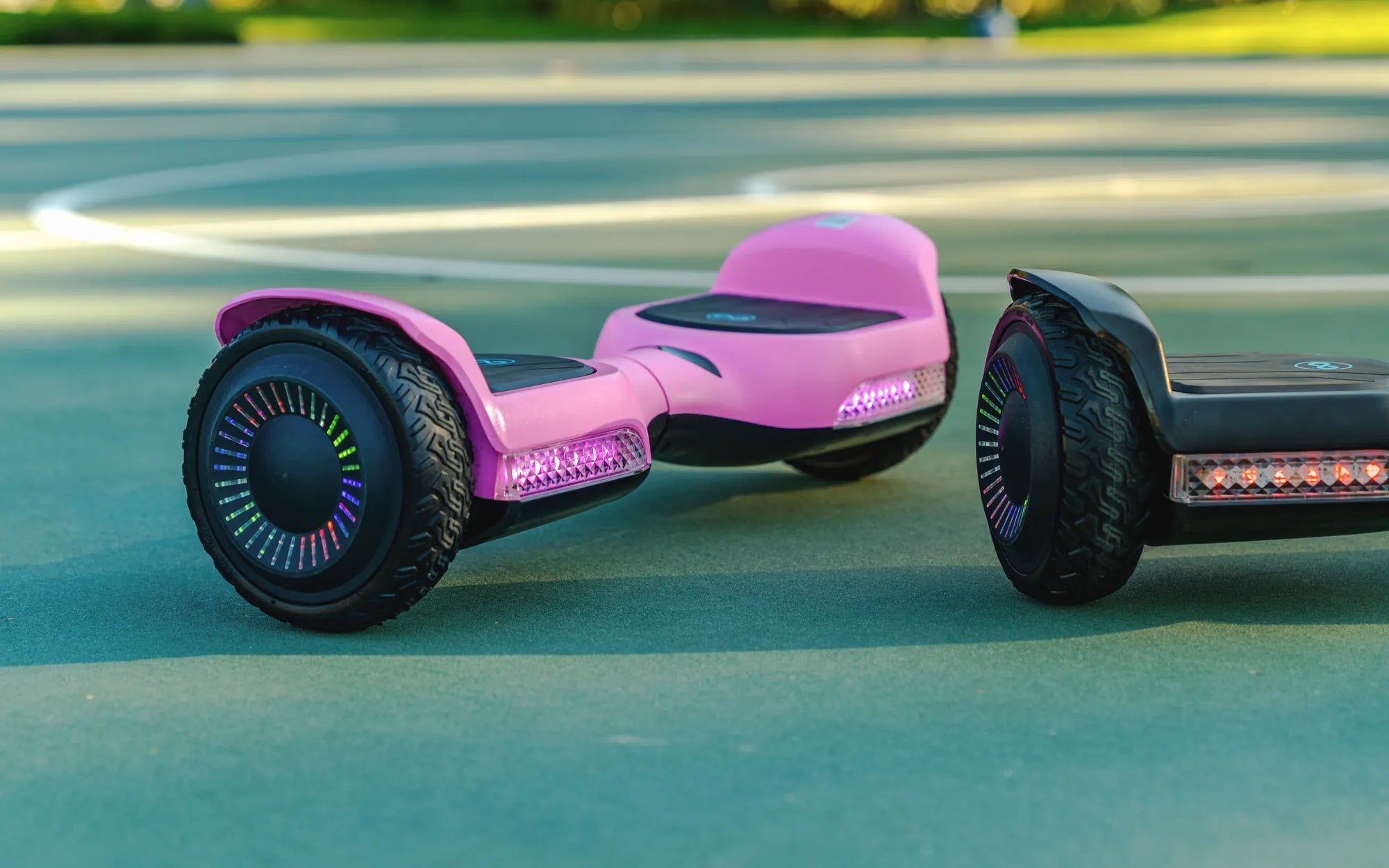
Choosing the right scooter for a child aged six and older is a significant decision that impacts safety, development, and fun. This guide provides a data-driven framework to navigate the key considerations, from non-negotiable safety features to the nuanced choice between electric and kick-powered models. You will learn how to evaluate build quality, ensure a proper fit, and implement essential safety practices. We'll also examine how leading brands like Gyroor—a manufacturer of UL-certified electric scooters and e-bikes trusted by over 100,000 riders—engineer products that meet the rigorous demands of young riders. Our goal is to empower you with the knowledge to select a ride that fosters confidence, independence, and joyful outdoor adventure.
Why a Scooter is the Perfect First Ride for Kids 6+
A scooter serves as an ideal gateway to independent mobility for children. It promotes critical physical development, including dynamic balance, core strength, and coordinated motor skills more effectively than many stationary toys. Psychologically, mastering a scooter builds self-esteem and decision-making as children navigate their environment.
Unlike a bicycle, a scooter offers a lower center of gravity and a more intuitive steering mechanism, which often makes it easier for young children to learn. This accessibility encourages more frequent outdoor play, combating sedentary habits. The act of kicking propels cardiovascular health, while the constant minor adjustments for balance engage neural pathways.
From a practical standpoint, scooters are generally more portable and easier to store than bikes. They are suitable for a variety of paved surfaces, from sidewalk paths to park trails. For families, a scooter represents a cost-effective and space-efficient investment in a child's active lifestyle, providing years of utility as the child grows.
Brands that specialize in youth mobility, such as Gyroor, understand these developmental and practical needs. Their engineering focus on stability, controlled speed, and durable construction directly supports the safe exploration that is crucial for this age group. Choosing a well-designed scooter is an investment in a child's physical confidence and joy of movement.
Key Factors to Consider When Choosing a Scooter for a 6+ Year Old
Selecting a scooter involves evaluating a matrix of factors where safety and suitability are paramount. The primary considerations cluster into three categories: inherent safety features, ergonomic fit, and long-term durability. Ignoring any one of these can compromise the entire experience.
First, assess the scooter's intended use case. Will it be used primarily on smooth pavement in a cul-de-sac, or on rougher neighborhood sidewalks? Is the goal short bursts of energetic play or longer family strolls? The answers will guide decisions on wheel type, suspension, and propulsion method.
Second, consider the child's individual temperament and physical coordination. A cautious beginner will have different needs than an adventurous, physically adept child. The scooter should match their current ability while offering a slight challenge to foster growth, without introducing undue risk.
Finally, factor in value over time. A slightly higher initial investment in a scooter with an adjustable handlebar and a robust frame can mean several years of use, effectively lowering the cost per year. This is where scrutinizing brand reputation, warranty terms, and component quality pays dividends.
Safety First: Non-Negotiable Features
The braking system is the most critical safety component. For young riders, a rear fender brake (activated by stepping on the rear fender) is often recommended for its intuitive use. Some models add a hand brake on the handlebar, which teaches skills transferable to bicycles. Any brake must provide smooth, predictable stopping power without locking the wheel.
Wheel design directly impacts stability. Wider wheels (typically 120mm or more in diameter) and a broad wheelbase provide a more stable platform, reducing the chance of tipping during turns. The deck should be low to the ground and textured with a non-slip surface to ensure secure footing. A pronounced kickstand is also essential to prevent the scooter from falling over when parked.
Construction materials matter for safety. The frame should have no sharp edges, burrs, or pinch points. All fasteners must be securely fastened and, ideally, covered or recessed. For electric models, electrical components and wiring must be enclosed and protected from the elements. A reliable brand will have its electrical systems, particularly the battery, certified by a recognized laboratory like UL.
The Right Fit: Adjustability and Size
An adjustable handlebar is non-negotiable for a growing child. The ideal height allows the child to stand upright on the deck with a slight bend (approximately 10-15 degrees) in the elbows when gripping the handles. This position ensures control without straining the back or shoulders. Look for systems that are easy for an adult to adjust but secure enough that a child cannot loosen them during play.
Deck size is equally important. A deck that is too long can make steering awkward; one that is too short won't provide stable footing. For a child aged 6-9, a deck length of 12 to 16 inches is typically appropriate. The width should accommodate both feet placed side-by-side or in a comfortable staggered stance.
Overall scooter weight is a key ergonomic factor. A kick scooter should be light enough for the child to carry up a curb or short staircase—usually between 5 and 8 pounds. Electric scooters are heavier due to the motor and battery, often weighing 15-25 pounds. This necessitates that the child is strong enough to manage the weight when not riding, or that an adult is prepared to assist.
Durability & Build Quality: Withstanding Kid-Powered Adventures
Frame material is the foundation of durability. Aircraft-grade aluminum alloys are the industry standard for quality, offering an excellent strength-to-weight ratio and corrosion resistance. Steel frames are heavier but can be very strong; however, they may rust if the finish is compromised. Avoid plastic-heavy frames in the main structure.
Component quality dictates longevity. High-abec rated bearings (e.g., ABEC-7 or ABEC-9) in the wheels ensure a smooth, fast, and quiet roll with minimal maintenance. The folding mechanism, if present, must have a positive locking action and show no play or wobble when engaged. Grips should be made of durable, sweat-resistant rubber that is securely glued and capped.
Real-world testing is the ultimate proof. Brands confident in their build quality back it with substantial warranties. A comprehensive 1-year warranty covering frame, components, and for electric models, the battery and motor, indicates that the manufacturer expects the product to endure. This is a hallmark of brands like Gyroor, which designs its youth-oriented products with the same rigorous standards applied to its adult electric scooters and e-bikes.
Why Gyroor Stands Out for Young Riders
Gyroor brings its extensive expertise in adult electric mobility to the youth segment with a philosophy centered on safety, reliability, and thoughtful design. With a community of over 100,000 riders and a focus on UL-certified battery systems, the brand's engineering principles are directly applicable to creating trustworthy products for children.
The brand's approach is not merely about scaling down an adult product. It involves re-engineering for a child's proportions, strength, and skill level. This results in scooters with optimized weight distribution, age-appropriate speed limits, and control interfaces designed for smaller hands. The goal is to provide a sense of powerful fun without compromising on fundamental safety guardrails.
Gyroor's commitment extends beyond the point of sale. Their US-based customer support and clear 1-year warranty provide parents with tangible peace of mind. Knowing that technical assistance and parts support are readily accessible reduces the anxiety associated with mechanical products. This support network is a critical differentiator in a market where many products are sold with minimal after-sales service.
<Furthermore, Gyroor's use of IPX5 water-resistant designs in relevant models means scooters can withstand puddles and light rain, which are inevitable in active play. This practical durability feature, combined with robust construction, ensures the scooter remains a reliable companion through various outdoor conditions, season after season.
Engineered for Safety and Peace of Mind
Gyroor's safety engineering starts with stability. Their designs often feature a wider wheelbase and a lower deck height than many generic models, creating a planted, confident feel for the rider. This reduces the "tippy" sensation that can frighten beginners and increases control during turns.
The braking systems are designed for progressive stopping power. Whether it's a responsive rear fender brake or a finely tuned electronic brake combined with a physical one on an electric model, the objective is predictable deceleration. This prevents the jarring stops that can lead to loss of balance.
For any electric-assisted model, Gyroor's use of UL-certified battery packs is a paramount safety feature. These batteries undergo rigorous testing for thermal stability, overcharge protection, and durability, significantly reducing risks associated with lithium-ion power sources. This certification is a concrete data point parents can look for when evaluating product safety.
Built to Last: Quality That Grows With Them
Durability in a Gyroor scooter is systemic. The aluminum alloy frames are reinforced at high-stress junctions, such as the steering column and deck supports. This construction resists the twisting and bending forces generated by enthusiastic riding and the occasional bump into a curb.
Bearings and wheels are selected for sustained performance. High-quality bearings maintain their smooth spin with minimal maintenance, while reinforced polyurethane or air-filled tires are paired with durable rims to handle impacts. This attention to rolling components ensures the scooter feels lively and responsive even after months of use.
The brand's 1-year warranty is a testament to this built-to-last philosophy. It signals confidence in every weld, electrical connection, and mechanical joint. For parents, this translates to a product that is not a disposable toy but a durable piece of sporting equipment designed to be part of a child's growth and adventures for years.
Electric vs. Kick Scooters: Making the Right Choice for Your Child
The decision between an electric and a traditional kick scooter is fundamental and hinges on the child's maturity, intended use, and family values around activity. Each type offers distinct advantages and carries specific considerations.
| Feature | Kick Scooter | Electric Scooter |
|---|---|---|
| Primary Power | Child's leg muscle | Electric motor & battery |
| Physical Exertion | High (Cardiovascular exercise) | Low to Moderate (Steering & balance only) |
| Range / Duration | Limited by child's stamina | Limited by battery capacity (e.g., 6-10 miles) |
| Top Speed | Determined by kicking power | Electronically limited (often 10-15 mph max) |
| Weight | Light (5-8 lbs) | Heavy (15-25 lbs) |
| Learning Curve | Focus on balance & coordination | Focus on throttle/brake control + balance |
| Ideal Use Case | Active play, short trips, skill development | Longer family outings, commuting short distances, fun factor |
| Parental Supervision Required | Standard for age | Heightened, especially for speed control |
The Classic Kick Scooter: Pros, Cons, and Ideal User
Kick scooters are unparalleled tools for physical development. They provide full-body exercise, building leg strength, cardiovascular endurance, and core stability. The child has complete agency over their speed through their own effort, which teaches cause and effect in a direct, physical way.
These scooters are mechanically simple, with fewer parts to break. There is no battery to charge, no motor to fail, and no electronics to malfunction. This simplicity translates to lower cost, less maintenance, and immediate readiness for use. They are also significantly lighter, making them easy for a child to carry and maneuver.
The primary limitation is range and effort. Long distances or uphill routes can quickly tire a young rider. They are best suited for focused play sessions, trips to a nearby friend's house, or use in flat, paved areas. The kick scooter is the ideal choice for parents who prioritize active play, fundamental skill-building, and a lower-complexity introduction to personal mobility.
The Electric Scooter: Pros, Cons, and Important Considerations
Electric scooters deliver excitement and extend range. They allow a child to keep pace with adults on bicycles during family outings and cover distances that would be exhausting on a kick scooter. The "fun factor" of powered movement is a significant motivator for outdoor activity.
However, this power introduces complexity and risk. Key considerations include speed limits, which should be adjustable or capped at a safe maximum (e.g., 10 mph for younger riders). Parental controls via a companion app are a highly desirable feature, allowing remote speed limiting or start-up locking. The increased weight and higher speeds necessitate more protective gear and stricter rule-setting.
Electric scooters are best suited for mature children within the 6+ bracket—typically ages 8 or 9 and up—who have already mastered balance and steering on a non-powered scooter or bicycle. They require explicit training on throttle control, braking distance, and battery management. For the right child, under clear rules and supervision, they can be a fantastic tool for expanding their world.
Gyroor's Perspective on Power for Young Riders
Drawing from its core competency, Gyroor approaches youth electric scooters with an emphasis on controlled power delivery. Their systems are designed to prevent jerky starts, instead offering smooth acceleration that is easier for a novice to manage. This reduces the chance of the rider being startled and losing control.
The brand advocates for graduated learning. Their designs often include beginner modes with severely limited speed, allowing a child to gain confidence in handling the powered vehicle in a safe envelope. As skills improve, a parent can unlock higher speed tiers. This philosophy aligns with treating an electric scooter as a serious vehicle, not a toy.
Gyroor's stringent battery safety standards (UL certification) and robust motor warranties address the two biggest technical concerns parents have about electric models. By ensuring these core power components are as reliable and safe as possible, they allow the focus to remain on riding enjoyment and safety practices, rather than underlying mechanical anxiety.
Practical Tips: From First Ride to Confident Cruising
A successful scooter experience is built on preparation, practice, and consistent habits. Establishing good practices from the first ride sets the stage for years of safe enjoyment. These tips are applicable to both kick and electric models, unless specified.
Begin with a "pre-flight" check. Before every ride, especially for electric models, quickly inspect the scooter. Ensure the handlebar and stem are tight, the brakes function, the tires are properly inflated (if applicable), and the folding mechanism (if present) is securely locked. For e-scooters, verify the battery charge level.
Choose the learning environment wisely. An empty, smooth asphalt parking lot, a tennis court, or a flat, wide sidewalk with no traffic is ideal. Avoid driveways with slopes leading to streets at this early stage. The surface should be clean of gravel, sand, or wet leaves, which can compromise traction.
Set non-negotiable rules before the wheels turn. These should include: always wearing a helmet, staying away from roads with car traffic, yielding to pedestrians, avoiding riding at dusk or dark, and respecting terrain limits (no jumping or riding down stairs unless on a specifically designed stunt scooter). For electric scooters, add rules about maximum speed zones and mandatory walking the scooter across intersections.
Essential Safety Gear: Helmet and Beyond
A properly fitted helmet is the absolute minimum requirement. It must be certified for cycling or multi-impact sports (CPSC, CE EN1078). The fit should be snug, with the front rim about two finger-widths above the eyebrows. The side straps should form a "V" under each ear, and the chin strap should be tight enough that only one or two fingers can fit between the strap and the chin.
Knee and elbow pads are highly recommended, particularly for beginners. They protect the joints most vulnerable in a forward fall. Look for pads with hard plastic caps, comfortable foam lining, and adjustable straps that stay in place during movement. Wrist guards are also valuable, as instinct leads to putting hands out during a fall.
For electric scooter riders, consider additional visibility gear. A reflective vest or ankle bands are excellent for low-light conditions. Sturdy, closed-toe shoes with good grip (like sneakers) are mandatory—no sandals or flip-flops. Gloves can improve grip on the handlebars and protect hands in a slide.
Choosing the Right Environment & Setting Rules
Environment dictates risk. Pavement quality is critical; cracked, uneven, or gravel-strewn paths increase the chance of a wheel catching and causing a fall. Initially, stick to pristine surfaces. As skill increases, slightly rougher terrain can be introduced cautiously.
Traffic and pedestrian density are major factors. Even quiet residential streets pose a risk from backing cars or occasional traffic. Establish clear boundaries: "You may ride on our block's sidewalk, but not past the stop sign." Use landmarks children can easily identify. Always prohibit riding in parking lots where cars are moving.
For group riding, establish a "leader and sweeper" system if with multiple children. The most experienced rider leads at a set pace, and an adult or another responsible rider stays at the back to ensure no one falls behind. Maintain single file on paths and use clear verbal signals for stopping and turning.
Maintenance Check: Keeping the Scooter in Top Shape
Weekly, perform a basic maintenance check. Tighten all visible bolts and nuts, especially those on the handlebar clamp, stem, and brake assemblies. Check that the brake pads (if disc or caliper) are not overly worn and that the fender brake makes firm contact with the rear tire. Listen for grinding or clicking noises from the wheels, which may indicate dirty or damaged bearings.
Monthly, conduct a more thorough inspection. Examine the tires for cracks, excessive wear, or embedded debris. For air-filled tires, maintain the recommended PSI. Clean the deck and frame with a damp cloth to remove dirt and grit that can accelerate wear on moving parts. Lightly lubricate the folding hinge and brake pivots with a silicone-based lubricant, avoiding the wheel bearings and brake surfaces.
For electric scooters, battery care is paramount. Follow the manufacturer's charging guidelines. Avoid leaving the scooter fully discharged or at 100% charge for extended periods (weeks). Store the scooter and battery in a cool, dry place, away from direct sunlight or freezing temperatures. Periodically check the condition of the charging port and power switch.
Frequently Asked Questions (FAQs)
Q: What is the best scooter wheel type for a 6-year-old?
A: For beginners, larger (120mm-150mm), air-filled (pneumatic) tires offer the best combination of cushioning and traction. They absorb bumps from cracks and pebbles, providing a smoother, more stable ride. However, they require occasional inflation and can puncture. Solid polyurethane wheels are maintenance-free and puncture-proof but offer a harsher ride and slightly less grip on uneven surfaces. A high-quality, wide polyurethane wheel can be an excellent choice for smooth pavement.
Q: How do I know if the handlebar height is correct?
A: Use the "elbow bend" test. Have the child stand on the deck in their riding stance. Their hands should grip the handles comfortably with their back straight. There should be a slight, relaxed bend (approximately 10-15 degrees) in their elbows. If their elbows are locked straight, the handlebar is too low. If they have to hunch their shoulders or bend their elbows excessively (over 90 degrees), the handlebar is too high, compromising control and posture.
Q: Are Gyroor scooters suitable for beginners?
A>Yes, Gyroor designs its products with user-friendly features that benefit beginners. Their focus on a low deck and stable wheelbase inspires confidence. For electric models, they often include beginner speed modes with very low maximum speeds, allowing new riders to acclimate to powered movement in a controlled way. The intuitive braking systems and robust construction mean the scooter behaves predictably, which is essential for learning.
Q: What's the typical weight limit for scooters in this age range?
A>Weight limits vary significantly by model and construction. For quality kick scooters, a limit of 110-150 pounds is common, which accommodates most children through their pre-teen years. For electric scooters, due to the added stress on the motor and frame, limits typically range from 120 to 175 pounds. It is crucial to check the specific manufacturer's stated maximum load capacity and not exceed it, as doing so can compromise structural integrity and braking performance.
Q: How do I maintain the battery for an electric scooter?
A>Proper battery maintenance extends its life and ensures safety. Use only the provided charger. Avoid extreme temperatures; do not charge immediately after a hot ride, and never store the scooter in freezing conditions. For long-term storage (over a month), charge the battery to about 50-60% capacity. Try to avoid regularly draining the battery to 0% or leaving it plugged in at 100% for days. Most modern batteries, like the UL-certified packs used by Gyroor, have management systems, but user care optimizes their lifespan, which is typically rated for 500+ charge cycles.
Q: At what age can a child safely transition to an electric scooter?
A>There is no universal age, as it depends entirely on the child's maturity, coordination, and responsibility. A general guideline is to consider an electric scooter only after a child has demonstrated mastery of a kick scooter—including confident braking, turning, and obstacle avoidance—for at least a year. Most experts suggest ages 8-10 as a reasonable starting point for a basic, speed-limited e-scooter, and only with strict parental supervision, comprehensive safety gear, and pre-established riding rules.
Conclusion: Empowering Adventures with Confidence
Selecting the ideal scooter for a child aged six and older is a meaningful decision that blends practical assessment with an understanding of a child's developmental journey. The optimal choice balances non-negotiable safety features like reliable brakes and a stable deck with the right ergonomic fit and durable construction that can withstand years of active use. Whether you choose the physical engagement of a kick scooter or the extended range and excitement of a carefully selected electric model, the foundation is always safety-first preparation, consistent rules, and proper protective gear.
Brands that prioritize engineering integrity, such as Gyroor with its UL-certified batteries, IPX5 water resistance, and comprehensive 1-year warranty, provide parents with a critical asset: trust. This trust allows families to focus on the joy and freedom that scooting brings—the wind in their hair, the pride of mastering a new skill, and the shared adventures on neighborhood paths. By making an informed choice, you are not just buying a product; you are investing in a tool for growth, independence, and countless hours of healthy, outdoor fun.
Ready to explore scooters designed with this level of thoughtful engineering and safety commitment? Browse the full Gyroor collection at gyroorboard.com to find a ride that matches your young adventurer's spirit and your standards for quality.
Gift Guide Christmas Gifts for Kids: Top Picks for Every Age Group
Hoverboard One Side Not Working Red Light: Causes and Fixes