


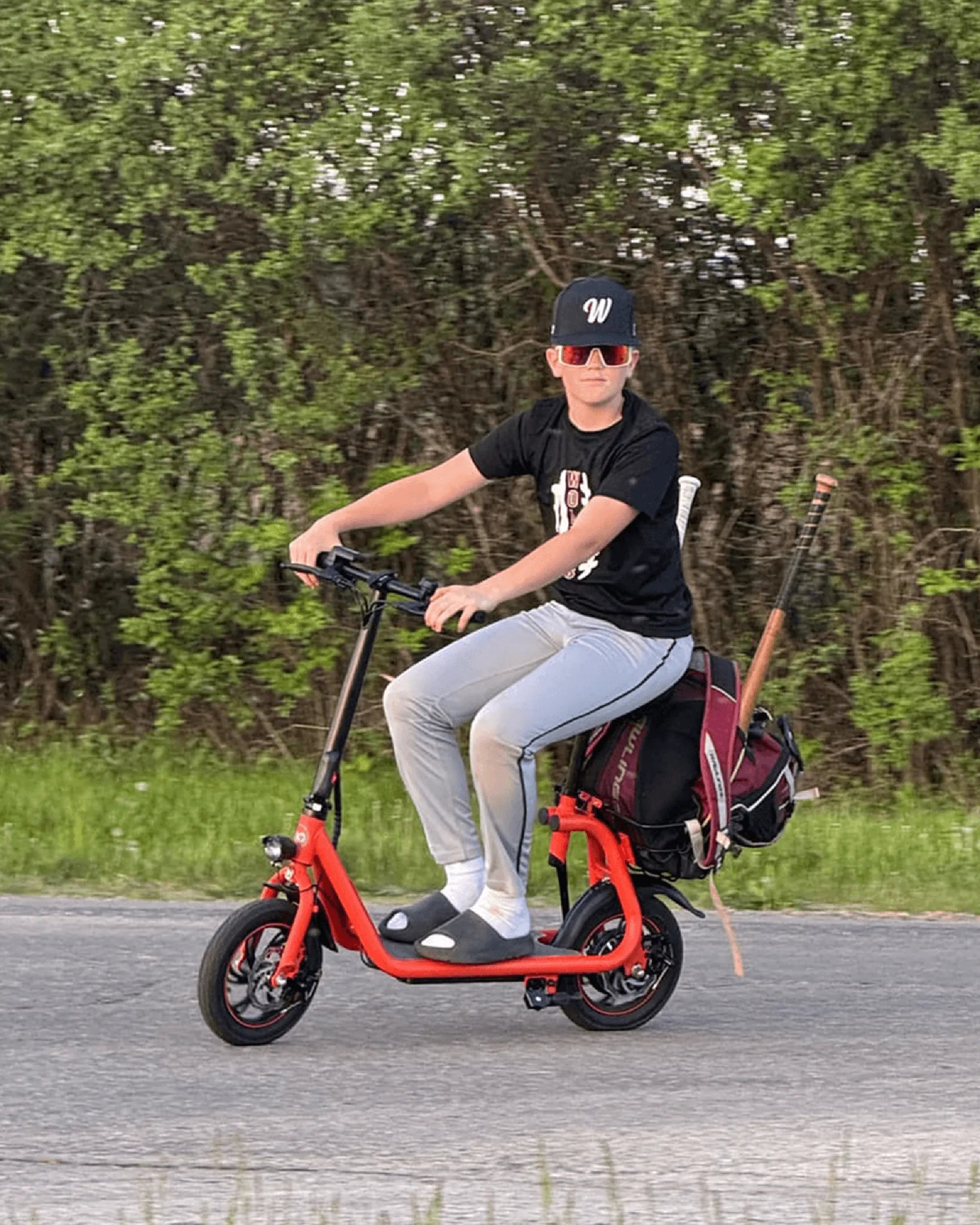
Introduction: Mastering the Ride – Your Guide to Safe and Smart Scooter Operation
Scooters, from nimble kick models to powerful electric variants, have transformed urban mobility. Their appeal lies in convenience and fun, but true mastery requires knowledge beyond basic operation. These essential scooter riding tips will elevate your experience from a casual user to a confident, skilled, and safe commuter. This guide synthesizes safety protocols, riding techniques, and maintenance wisdom into a actionable framework.
Whether navigating city streets or enjoying a recreational path, the principles of control and awareness remain paramount. We will detail the non-negotiable gear, the mechanics of smooth riding, and strategies for coexisting with traffic. As a leader in personal electric transport, Gyroor designs its scooters with these principles in mind, engineering for reliability and rider safety with features like UL-certified batteries and robust construction.
Essential Pre-Ride Safety Checks and Gear
A successful and safe ride begins before you ever push off. Developing a consistent pre-ride ritual is the most critical of all scooter riding tips. This habit ensures your vehicle is in optimal condition and you are properly equipped, drastically reducing the risk of mechanical failure or personal injury. Neglecting this step compromises every other skill you possess.
Investing two minutes in inspection can prevent accidents caused by brake failure, flat tires, or loose components. This process should be as automatic as putting on a helmet. The following checklist and gear recommendations form the foundation of responsible ridership, applicable to all scooter types and riding environments.
The 30-Second Safety Checklist (T-CLOCS Method)
Adapted from motorcycle safety, the T-CLOCS method provides a systematic approach. First, check Tires for adequate pressure and any signs of wear, cracks, or embedded debris. Under-inflated tires increase rolling resistance and puncture risk. Next, inspect all Controls: ensure brakes engage smoothly and the throttle (on e-scooters) returns to zero when released.
Verify all Lights are functional—front, rear, and brake lights—for visibility. For electric scooters, the Oil check becomes a Battery check: confirm charge level and that the charging port cover is secure. Examine the Chassis: ensure the folding mechanism (if present), stem, and handlebars are tight and secure. Finally, ensure the kickstand retracts fully.
Non-Negotiable Protective Gear
A helmet is an absolute necessity. Choose one certified by relevant safety standards (CPSC, CE) that fits snugly. Gloves protect your hands in a fall and improve grip. Wear sturdy, closed-toe shoes with good grip; avoid sandals or flip-flops. High-visibility or reflective clothing, especially for night riding, makes you conspicuous to drivers.
For higher-speed electric scooter riding, consider additional protection like elbow and knee pads. This gear is not about style but about creating a protective layer between you and the pavement. Viewing gear as part of your riding uniform shifts your mindset towards proactive safety, a core tenet of advanced scooter riding tips.
Foundational Riding Techniques for Urban Environments
Urban landscapes present a dynamic mix of surfaces, obstacles, and traffic. Foundational techniques transform riding from a wobbly endeavor into a controlled, predictable activity. These scooter riding tips focus on body mechanics and vehicle handling, building the muscle memory needed for instinctive reactions. Practice these skills in a safe, empty parking lot before tackling busy streets.
Confidence on a scooter stems from understanding how your inputs—weight shift, braking pressure, throttle control—directly affect stability and trajectory. Mastering these basics reduces fatigue, increases enjoyment, and forms the platform upon which defensive riding strategies are built. Consistency is key; small adjustments yield significant improvements in control.
Perfecting Your Stance and Control
Adopt an athletic, ready position. Stand with feet roughly shoulder-width apart, one foot slightly ahead of the other for stability. Keep your knees slightly bent to act as natural suspension. Grip the handlebars firmly but without tension; your arms should be relaxed to absorb shocks from the road.
Weight distribution is crucial. For turning, look where you want to go and lean your body into the turn, allowing the scooter to follow. Avoid jerky steering inputs. When braking, shift your weight slightly back to prevent pitching forward. This stable, centered stance is the default position for all riding scenarios.
Mastering Braking and Acceleration
Braking is a skill, not a panic reaction. Use progressive braking: apply steady, increasing pressure to the brake levers, primarily using the rear brake first to stabilize. If your scooter has a front brake, apply it slightly after the rear to avoid locking the front wheel. Practice stopping smoothly at various speeds to understand your scooter's stopping distance.
For electric scooters, smooth acceleration is equally important. Jerky throttle application can cause wheel slip or loss of balance, especially on wet surfaces. Gradually increase power from a stop. Using eco-modes, available on brands like Gyroor, promotes smoother acceleration and conserves battery, extending your range—a practical application of smart scooter riding tips.
Navigating Turns, Obstacles, and Inclines
Approach turns by slowing down before entering them, not during. Look through the turn to your exit point. For obstacles like potholes, rail tracks, or debris, slow down, straighten your posture, and lift slightly off the deck as you cross them at as close to a 90-degree angle as possible.
On inclines, understand your scooter's capabilities. Electric scooters with robust motors, such as those in Gyroor's high-torque models, handle hills better. Maintain a steady speed and avoid stopping mid-hill. On steep descents, use controlled, intermittent braking rather than constant pressure to prevent brake overheating and fade.
Advanced Strategies for Defensive Riding and Traffic
Once foundational control is mastered, the next level of scooter riding tips involves mindset. Defensive riding assumes you are invisible to other road users and that hazards are everywhere. This proactive approach is about creating time and space to react. It transforms riding from a simple commute into an engaged, strategic activity that significantly enhances safety.
This section focuses on anticipation, positioning, and communication. The goal is to identify potential conflicts long before they become emergencies. By consistently applying these strategies, you integrate smoothly into the traffic ecosystem, reducing stress and increasing your safety margin in complex urban environments.
The SEE Strategy: Search, Evaluate, Execute
This continuous three-step process is a cornerstone of motorcycle safety and is perfectly applicable to scooters. Search aggressively for potential hazards 12-15 seconds ahead: scanning parked cars for opening doors, intersection cross-traffic, pedestrian movements, and road surface changes.
Evaluate each potential hazard. What are the possible actions of that driver or pedestrian? What are your escape paths? What adjustments to speed or position are needed? Then, Execute a smooth, decisive action. This could be changing lanes, adjusting speed, or positioning yourself more visibly. The SEE cycle never stops while riding.
Positioning and Visibility in Traffic
Your position in a lane communicates intent and maximizes visibility. Generally, ride in the left third of the lane (in right-hand drive countries) to be in the driver's side mirror sightline of cars ahead. Avoid riding in blind spots alongside cars. At intersections, position yourself where you can see the driver's face in their side mirror, ensuring they can see you.
Use lights day and night. Many modern scooters, including Gyroor models, feature bright LED systems. Consider adding additional rear lights. Use clear hand signals for turns and stops. Make eye contact with drivers when possible. Your primary tools are anticipation and positioning—never assume a driver has seen you.
Scooter Care, Maintenance, and Etiquette
Responsible ownership extends beyond the ride. Proper care ensures longevity, reliability, and safety, while good etiquette fosters positive community relations and the sustainable growth of micromobility. These scooter riding tips for maintenance are as crucial as those for riding itself. A well-maintained scooter is a predictable and safe scooter.
Gyroor's engineering, featuring IPX5 water-resistant designs and durable components, is built to withstand regular use, but user maintenance is vital. Furthermore, how and where you park your scooter impacts public perception. Adopting these habits demonstrates respect for your vehicle, other path users, and city infrastructure.
Routine Maintenance for Longevity
Establish a weekly and monthly maintenance routine. Weekly, check tire pressure with a gauge. Inspect brake pads for wear and test brake function. Ensure all bolts, especially on the stem and folding mechanisms, are tight. Wipe down the scooter to prevent dirt buildup.
Monthly, perform a more thorough inspection. Examine tires for wear patterns. Check for any frame cracks or stress points. For electric scooters, follow battery care protocols: avoid draining to 0% or charging to 100% for every cycle for long-term health, store in a cool, dry place, and use only the provided charger. Proper care, as outlined in your manual, directly impacts performance and safety.
The Responsible Rider: Parking and Pedestrian Zones
Always park responsibly. Do not block sidewalks, building entrances, ADA ramps, or bike lanes. Use designated scooter parking areas when available. If you must park on a sidewalk, ensure a clear path of at least 36 inches (91 cm) remains for pedestrians, especially those with disabilities or strollers.
In crowded pedestrian zones, dismount and walk your scooter. Riding at speed through foot traffic is dangerous and discourteous. Obey all local traffic laws, including speed limits on shared paths and road rules when riding in the street. Being a courteous rider helps ensure scooters remain a welcome part of the urban landscape.
Choosing the Right Scooter for Your Needs
Selecting the appropriate scooter enhances safety and enjoyment by matching capability to use-case. Key decision factors include range, speed, portability, terrain, and budget. Understanding these variables helps you apply all other scooter riding tips on a platform suited to your lifestyle. A commuter needs differ from a recreational rider.
The following table compares common scooter types based on critical performance and usability metrics. This data-driven approach supports an informed purchase decision, ensuring you invest in a tool that empowers your riding goals rather than limiting them. Consider how each factor aligns with your primary use case.
| Scooter Type | Ideal Use Case | Typical Range | Max Speed | Key Features & Considerations |
|---|---|---|---|---|
| Lightweight Commuter | Short urban commutes, last-mile, mixed with public transit | 10-15 miles | 15-18 mph | Ultra-portable (under 30 lbs), often foldable, good for carrying upstairs. Lower power for flat terrain. |
| Performance Urban | Longer daily commutes, handling varied city terrain | 20-40 miles | 20-28 mph | Stronger motors for hills, larger battery, enhanced suspension, better brakes. Heavier but more stable. |
| Off-Road / All-Terrain | Trails, parks, rough pavement, steep inclines | 15-30 miles | 20+ mph | Large pneumatic tires, full suspension, high torque motor, robust frame. Less portable, focused on durability. |
Frequently Asked Questions (FAQ)
Q1: Is it safe to ride an electric scooter in the rain?
A1: With caution. While Gyroor scooters have an IPX5 water-resistant rating for riding on wet roads, you must reduce speed significantly, avoid deep puddles (to protect electronics), and brake much earlier. Remember, wet surfaces drastically reduce tire traction and braking effectiveness. It is safest to avoid heavy downpours.
Q2: How can I maximize my electric scooter's battery range?
A2: Several scooter riding tips directly impact range. Maintain optimal tire pressure. Use smooth acceleration and leverage eco-modes. Plan routes to avoid constant uphill sections. Reduce speed where safe. Store the battery in moderate temperatures (avoid extreme cold/heat) and follow charging best practices from the manual.
Q3: What is the most common mistake new scooter riders make?
A3: Overusing the front brake, which can lock the wheel and cause a forward fall. New riders also often stand too rigidly, which transmits all road shock to their body. Practicing progressive braking and adopting a relaxed, knees-bent stance in a safe area are critical first steps.
Q4: Do I need a license or insurance to ride an electric scooter?
A4: Laws vary widely by city, state, and country. Generally, for scooters under a certain power or speed (often 20-28 mph), a driver's license is not required, but age restrictions may apply. Insurance is rarely mandatory but is recommended. Always check your local regulations before riding.
Q5: How often should I perform maintenance on my scooter?
A5: Follow a tiered schedule. Perform a quick T-CLOCS check before every ride. Do a basic inspection (tires, brakes, bolts) weekly. Conduct a more thorough maintenance check, including tightening all critical fasteners and inspecting for wear, every 1-3 months or after every 300 miles, whichever comes first.
Conclusion: Ride with Confidence and Responsibility
Mastering scooter riding tips is a continuous journey that blends preparation, practiced skill, situational awareness, and responsible ownership. By internalizing the protocols for pre-ride checks, honing your control techniques, adopting a defensive mindset, and caring for your vehicle, you transform every ride into a safer, more efficient, and more enjoyable experience. Consistency in these practices builds the confidence needed to navigate complex urban environments.
Your choice of equipment plays a foundational role in this journey. Gyroor supports riders with a focus on reliability and safety, engineering scooters that meet rigorous standards. From UL-certified battery packs tested for 500+ cycles to IPX5 water-resistant designs, each feature is built to enhance your ride when paired with skilled operation. The road ahead is yours to explore—do so with knowledge, caution, and respect for your community.
Ready to apply these scooter riding tips on a reliable, performance-built platform? Browse the full Gyroor collection, featuring over 20 models of electric scooters and e-bikes designed for real-world riding, at gyroorboard.com.
Scooter Not Turning On: A Complete Diagnostic & Repair Guide
How Do I Make My Scooter Go Faster: Safe Methods vs. Risky Mods