



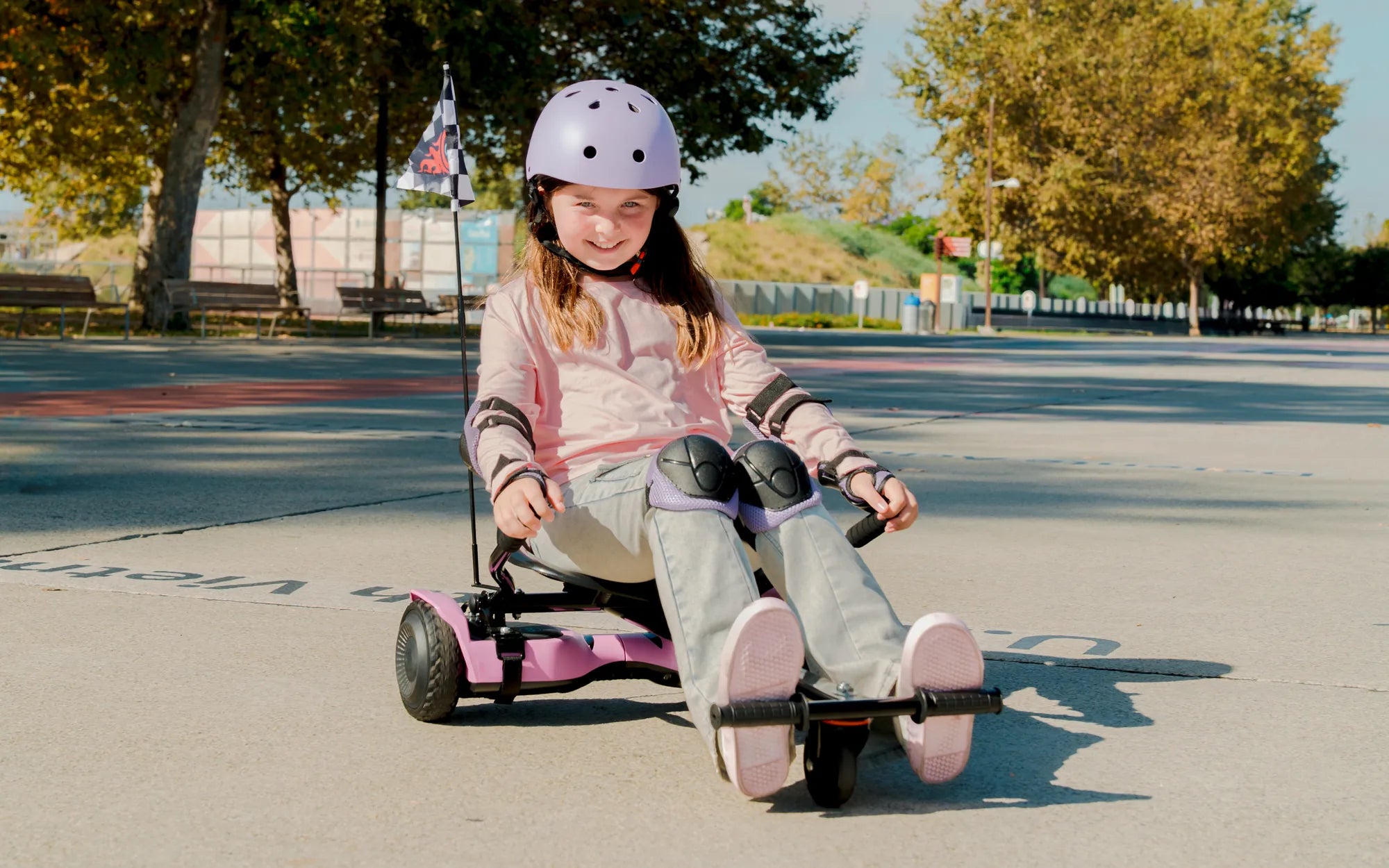
Introduction: The Modern Playground Revolution
Choosing the right self-balance hoverboard for kids is about balancing exhilarating fun with uncompromising safety. This guide provides the comprehensive data and expert insights parents need to make an informed decision. You will learn how hoverboard technology works, decode essential safety certifications, and discover the key features that separate quality products from risky imitations. We'll cover mandatory safety gear, establish fundamental riding rules, and explain why brands like Gyroor, with over 100,000 riders, set the standard for reliable, certified kids' mobility.
The self-balance hoverboard has evolved from a novelty to a staple of active outdoor play. It represents a unique fusion of intuitive technology and physical activity that can significantly boost a child's coordination and confidence. However, the market is flooded with options, making it crucial to distinguish between well-engineered, safe products and those that cut dangerous corners.
This guide is structured to first build your understanding of the product, then equip you with a practical framework for evaluation and safe use. Our goal is to ensure your child's experience is defined by joy and security, not by preventable accidents or product failures. Let's begin by demystifying the technology that makes these devices so captivating and accessible.
What is a Self-Balance Hoverboard and How Does it Work?
A self-balance hoverboard is a two-wheeled, battery-powered personal transporter. The rider stands on two foot pads between the wheels, and the device uses internal sensors and motors to maintain balance and respond to movement. Contrary to the sci-fi name, it does not actually hover; it rolls on robust, often air-filled, tires.
The core technology hinges on a combination of gyroscopic sensors, tilt sensors, and speed sensors. These components form an Inertial Measurement Unit (IMU). The gyroscopes detect the board's angular velocity and orientation, while the tilt sensors measure the angle of the foot pads. This data is processed hundreds of times per second by a central logic board.
When a rider leans slightly forward, the sensors detect the shift in weight distribution. The logic board instantly commands the electric motors to spin the wheels forward to counteract the lean and restore balance. Leaning back commands reverse motion. To turn, the rider applies subtle pressure with one foot, causing the wheels on that side to slow down, initiating a pivot. This "lean-to-steer" mechanism is surprisingly intuitive, often mastered by kids within 30-60 minutes of practice.
This process of constant micro-adjustment is what provides the "self-balancing" effect. It's a brilliant application of control theory that makes the device feel like an extension of the body. For children, mastering this control is not just fun; it actively develops core stability, leg strength, and dynamic balance in a way few other toys can match.
Why Choose a Gyroor Hoverboard for Your Child?
Selecting a hoverboard brand for your child is a decision where safety and reliability cannot be optional. Gyroor has established itself as a leader in personal electric mobility by adhering to engineering principles that prioritize these values. For parents, this translates into tangible peace of mind.
Gyroor's commitment begins with foundational safety. Every hoverboard model utilizes UL 2272 certified battery packs, a critical standard that tests for electrical and fire safety under various fault conditions. Furthermore, their designs boast an IPX5 water-resistance rating. This means the hoverboard can withstand water jets from any direction, making it resilient against wet pavement, puddles, and accidental sprays during cleaning—common scenarios in active play.
Beyond certifications, Gyroor builds for the real world. Their hoverboards feature robust frames, non-slip foot pads, and bright LED lights for visibility. The company supports its products with a reliable 1-year warranty and has a track record of serving over 100,000 riders across North America and Europe. This combination of certified safety, durable construction, and proven customer support creates a product ecosystem designed for lasting, safe enjoyment.
Safety as the #1 Priority: Gyroor's Built-In Protections
Gyroor engineers multiple layers of protection directly into their hoverboards for kids. The first and most crucial is the UL-certified lithium-ion battery pack. These batteries undergo rigorous testing for overcharge, short circuit, and abnormal operation, drastically reducing any risk of thermal events that have plagued uncertified models in the past.
Performance is carefully managed for younger riders. Models designed for children often feature speed limiters or selectable riding modes. A beginner mode may cap speed at a safe 4-5 mph, allowing kids to build confidence before accessing a higher, yet still responsible, maximum speed. The logic board includes protections against over-current and over-temperature, shutting down the motors if a fault is detected.
The physical design contributes to safety. Textured, non-slip foot pads provide secure footing. The wheel housings and body are designed to be resilient to the bumps and scrapes of learning. Bright front and rear LED lights, along sometimes with rim lights, ensure the rider is visible during dusk hours. These integrated features work in concert to create a protective environment around the core riding experience.
Key Features to Look for in a Kids' Hoverboard
When evaluating any self-balance hoverboard for kids, a data-driven checklist is essential. Prioritize features that impact safety, stability, and suitability for your child's age and skill level. Ignoring these specs can lead to a frustrating or unsafe experience.
Wheel Size & Type: For stability and comfort, wheel size matters. For most kids aged 8-12, wheels between 6.5 and 8 inches in diameter are ideal. Larger wheels (8.5") handle rougher terrain like grass or gravel better but raise the riding platform. Air-filled (pneumatic) tires offer a smoother ride over cracks and bumps compared to solid rubber tires.
Speed & Power: Appropriate speed is critical. For beginners and younger children, a maximum speed of 7 mph or less is advisable. Look for models with a beginner or training mode that limits speed initially. Motor power, typically between 250W and 350W per wheel, should be sufficient for gentle inclines but not excessively powerful for a child's first vehicle.
Weight Limit & Battery Life: Always check the maximum weight capacity. A standard kids' model should support at least 120-160 lbs. Exceeding this limit stresses the frame and motors. Battery life determines playtime; seek a model that offers 1 to 1.5 hours of continuous riding per charge, which translates to several days of typical use. A 36V, 4.0Ah battery is a common and adequate specification.
The Importance of UL Certification and IP Ratings
These two technical certifications are non-negotiable for a child's hoverboard. They are your objective evidence of basic safety and durability.
UL 2272 Certification: This is a safety standard for electrical systems in self-balancing scooters. It involves a battery of tests including overcharge, short circuit, drop, crush, and water exposure tests on the *entire* electrical system. A hoverboard with this certification has been proven to minimize the risk of fire or electrocution under fault conditions. Never purchase a hoverboard without a verifiable UL 2272 mark.
IP Rating (Ingress Protection): This code indicates protection against solids and liquids. For hoverboards, the liquid rating is key. An IPX5 rating, as found on Gyroor models, means the unit is protected against low-pressure water jets from any direction. This allows safe riding on damp surfaces and protects against puddle splashes. A lower rating like IPX4 (splash-proof) is common but less robust. Avoid any model with no stated IP rating.
The Ultimate Safety Checklist: Gear and Riding Rules
The hoverboard itself is only one part of the safety equation. Proper protective gear and established rules are mandatory for every ride, without exception.
Mandatory Protective Gear: This is non-negotiable. Every child must wear:
- A properly fitted bicycle or multi-sport helmet (CPSC certified).
- Knee and elbow pads to protect joints from falls.
- Wrist guards, which are arguably the most important piece after a helmet, as falls often involve putting hands out.
This gear should be worn every single time, even for "just a quick ride."
Fundamental Riding Rules: Establish these rules before the first ride:
- Supervised Practice: Initial learning must occur in a flat, open, smooth area like an empty parking lot or tennis court, away from cars, hills, and traffic.
- Terrain Limits: Stick to smooth, paved surfaces. Avoid public roads, steep hills, wet or sandy surfaces, and stairs.
- Weather Awareness: Do not ride in rain, snow, or on icy surfaces. Water can damage electronics and reduce traction.
- Pre-Ride Check: Quickly inspect the hoverboard for loose parts, tire pressure, and battery charge level before use.
Consistently enforcing these protocols instills responsible habits and dramatically reduces the risk of injury.
Gyroor vs. The Rest: What Makes a Trusted Brand?
To understand the value of a established brand, it's helpful to compare key decision-making factors. The table below contrasts typical features of a trusted brand like Gyroor against common traits of generic, uncertified models often found at suspiciously low prices.
| Feature | Trusted Brand (e.g., Gyroor) | Generic/Uncertified Models |
|---|---|---|
| Battery & Electrical Safety | UL 2272 Certified System. Fire-safety tested. | No safety certification. High risk of battery fire. |
| Water & Dust Resistance | IPX5 Rating (protected against water jets). | Often no IP rating or a vague "water-resistant" claim. |
| Warranty & Support | Reliable 1-year warranty. Accessible customer service. | 30-day return at best. Little to no technical support. |
| Build Quality & Materials | Robust frame, secure wiring, quality tires. | Plastic-heavy, poor soldering, prone to breakage. |
| Performance Consistency | Smooth acceleration/braking. Accurate sensors. | Jerky controls, laggy response, balance issues. |
| Peace of Mind | Proven track record (100,000+ riders). | Unknown origin, no verifiable user base. |
As the data shows, the lower upfront cost of a generic model carries significant hidden risks: catastrophic safety failures, immediate breakdowns, and zero support. Investing in a certified product from a brand like Gyroor is an investment in safety, durability, and ultimately, your child's uninterrupted fun.
Frequently Asked Questions (FAQs) for Concerned Parents
Q1: What is the right age for a child to start using a hoverboard?
Most manufacturers, including Gyroor, recommend a minimum age of 8 years old. This guideline is based on the average child's physical coordination, balance, and cognitive ability to understand and follow safety rules. Always assess your individual child's maturity and motor skills.
Q2: How long does it take for a child to learn to ride?
The learning curve is typically short. Many children gain basic control within 30-60 minutes of practice in a safe, open area. Mastery of smooth turns and confident stopping may take a few days of consistent practice. Using a beginner mode (if available) can accelerate this process.
Q3: What is the weight limit, and why is it important?
Weight limits for kids' models usually range from 120 to 180 lbs. Exceeding this limit stresses the motors, frame, and battery, leading to premature failure, reduced battery life, and potential safety hazards like sudden shutdowns. Always choose a model with a limit well above your child's current weight.
Q4: How do I maintain and care for the hoverboard?
Maintenance is minimal but crucial. Keep it clean and dry. Check tire pressure monthly if it has air-filled tires. Store it in a cool, dry place away from direct sunlight. Only use the provided charger, and do not leave it plugged in for extended periods after a full charge.
Q5: What does the warranty typically cover?
A reputable 1-year warranty, like Gyroor's, generally covers defects in materials and workmanship. This includes issues with the battery, motors, and circuitry under normal use. It does not cover damage from accidents, misuse, neglect, or unauthorized repairs. Always read the warranty terms carefully.
Conclusion: Smart Fun for the Next Generation
A self-balance hoverboard for kids, when chosen and used correctly, is more than a toy; it's a tool for active play, coordination development, and outdoor adventure. The key to unlocking this positive experience lies in a safety-first approach that combines a rigorously certified product from a trusted brand with non-negotiable protective gear and clear riding rules.
By prioritizing UL 2272 certification, robust IP ratings, and a company that stands behind its products with warranties and support, you invest in lasting fun without compromising on security. Brands like Gyroor have paved the way by making these safety standards accessible, proving that cutting-edge mobility for kids can be both thrilling and responsible.
Equip your young rider with the right board and the right knowledge, and you gift them confidence, freedom, and a love for active play. Ready to explore a range of UL-certified, durable options designed with young riders in mind? Browse the full Gyroor collection at gyroorboard.com to find the perfect match for your child's next adventure.
Hoverboard Price: What You Need to Know Before Buying
2 Wheel Hoverboard Scooter: The Ultimate Guide to Modern Personal Transportation