


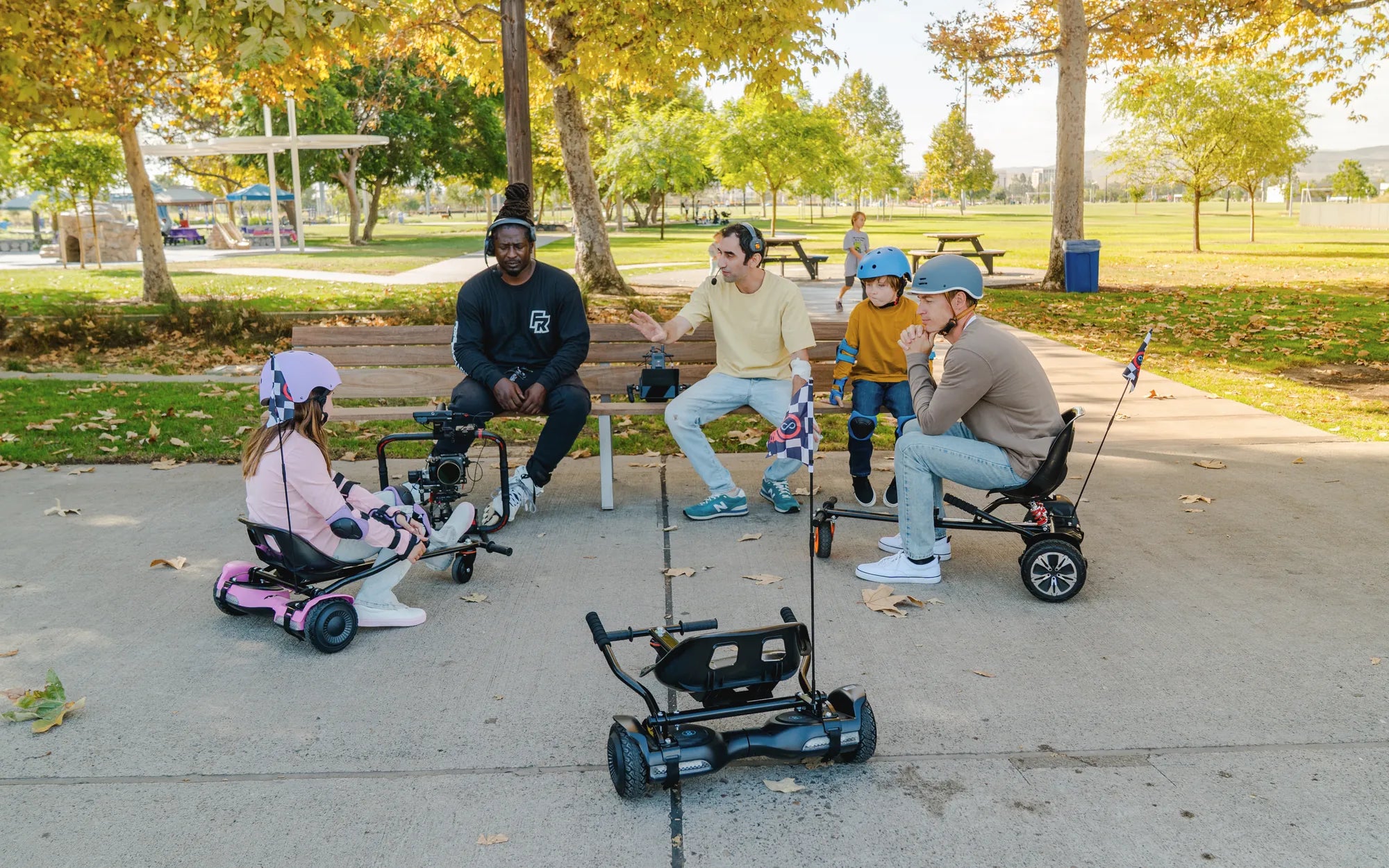
Introduction: The Rise of the Self-Balancing Scooter
The self-balancing scooter, once perceived as a fleeting tech novelty, has matured into a legitimate and efficient mode of personal transportation. This evolution is driven by significant advancements in core technology, stringent safety standards, and a growing recognition of its utility in solving modern urban mobility challenges. The future of personal transportation is being shaped by innovative self-balancing scooter brand engineering, moving these devices from the realm of gadgets into essential tools for daily life.
This transformation is marked by a shift from generic, often unsafe products to brands that prioritize reliability, safety, and user experience. Leading this charge are companies that integrate robust engineering with consumer-focused design, creating vehicles that are both practical and enjoyable to ride. Understanding this shift is key to recognizing the true potential of these devices in our transportation ecosystem.
We will explore the sophisticated technology that enables automatic balance, dissect the non-negotiable safety features that separate reputable brands from the rest, and identify the diverse user profiles that benefit most. Furthermore, we will provide a detailed comparison with other electric transport options and gaze into the future of this dynamic industry. The journey of the self-balancing scooter from toy to transport is a compelling case study in technological maturation.
The Technology Behind the Balance: Gyro Sensors and Intelligent Control
At the heart of every self-balancing scooter is a complex, yet elegant, system of sensors and microprocessors that work in real-time to maintain stability. The primary components are gyroscopic sensors and tilt sensors, which constantly measure the board's orientation and angle relative to the ground. This data is fed to a central microprocessor, often referred to as the logic board, which makes thousands of calculations per second.
Based on these calculations, the logic board sends precise commands to the electric motors housed within each wheel. If the rider leans forward, the sensors detect the shift in weight distribution. The processor interprets this as a command to move forward and increases power to the motors accordingly. The system is so responsive that it creates an intuitive riding experience where the board feels like an extension of the rider's body.
Modern advancements have dramatically improved this core technology. Early models suffered from lag, jerky movements, and a steep learning curve. Today's leading brands utilize more sensitive MEMS (Micro-Electro-Mechanical Systems) gyroscopes and accelerometers, coupled with powerful 32-bit processors. This results in smoother acceleration, more precise control, and enhanced safety features like speed limiting and tilt-back warnings to prevent over-acceleration.
The electric motors themselves have also seen substantial upgrades. Brushless DC hub motors are now standard in quality models, offering greater efficiency, more torque for climbing inclines, and reduced maintenance compared to brushed motors. The synergy between advanced sensor packages, powerful processing, and efficient motors is what defines a superior riding experience in today's market, moving the self-balancing scooter brand category firmly into the realm of serious personal transport.
Why Choose a Reputable Brand? Safety and Reliability as Non-Negotiables
The early market for self-balancing scooters was marred by incidents related to substandard components, particularly batteries. This history makes the choice of a reputable brand not merely a matter of preference, but a critical safety decision. Trustworthy manufacturers invest in engineering, quality control, and independent certifications that cheap imitations simply cannot match.
A reputable brand serves as a proxy for a suite of safety assurances. It represents a commitment to using grade-A battery cells, robust electrical systems, and durable materials that can withstand daily use. Furthermore, it implies the existence of legitimate customer service, clear documentation, and a warranty that the company stands behind. This comprehensive approach to product lifecycle management is what transforms a device from a commodity into a reliable transportation asset.
Brands like Gyroor have built their reputation on this foundation. As a leading electric scooter and e-bike brand trusted by over 100,000 riders across North America and Europe, Gyroor's focus on UL-certified batteries, IPX5 water-resistant designs, and a reliable 1-year warranty exemplifies the standards that define the responsible segment of the market. This commitment provides peace of mind that is invaluable when your chosen vehicle is responsible for your personal mobility and safety.
UL-Certified Batteries: The Foundation of Safe Power
The UL 2272 certification is the single most important safety benchmark for a self-balancing scooter. This rigorous standard, developed by Underwriters Laboratories, tests the entire electrical system—including the battery pack, charger, and motor control circuitry—for fire and electrical shock hazards. It involves over 20 different tests, including overcharge, short circuit, imbalance charging, and drop tests.
Before this standard was widely adopted, poorly manufactured battery packs with inadequate protection circuits were a primary cause of safety incidents. A UL 2272-certified battery uses high-quality lithium-ion cells with built-in management systems (BMS) that monitor temperature, voltage, and current. The BMS prevents overcharging, over-discharging, and short circuits, dramatically reducing any risk of thermal runaway or fire.
When evaluating a brand, the presence of this certification should be non-negotiable. Gyroor, for instance, ensures all its models use UL-certified battery packs tested for 500+ charge cycles, guaranteeing not only safety but also long-term performance and capacity retention. This certification is a clear indicator that a brand prioritizes user safety above cost-cutting measures.
Build Quality and Durability: From IP Ratings to Robust Frames
Beyond the electrical system, physical durability determines how well a scooter handles the realities of daily commuting. Build quality encompasses the frame material, wheel construction, and ingress protection. A high-quality frame, often made from reinforced ABS plastic or aircraft-grade aluminum alloy, provides the structural integrity needed to support the rider's weight and absorb impacts from minor bumps and curbs.
The Ingress Protection (IP) rating is a crucial specification. An IP rating indicates resistance to dust and water. A common rating for reliable commuter models is IPX5, which means the unit is protected against water jets from any direction. This allows riders to confidently traverse wet pavement or ride in light rain without fear of damaging the scooter's internal electronics.
Wheel quality is equally important. Solid rubber or airless tires are standard, with larger diameters (often 8.5 or 10 inches) providing a smoother ride over cracks and uneven surfaces. High-traction tread patterns enhance stability. The combination of a robust frame, adequate IP rating, and quality wheels ensures the device is a practical tool for year-round, real-world use, solidifying the value proposition of a serious self-balancing scooter brand.
Warranty and Support: The Promise of Long-Term Value
A comprehensive warranty is a tangible expression of a manufacturer's confidence in its product. For a self-balancing scooter, a meaningful warranty typically covers the frame, battery, and electronic components for a minimum of one year. This protects the consumer from defects in materials and workmanship, ensuring their investment is secure.
Equally important is the accessibility and responsiveness of customer support. A reputable brand will offer multiple channels for assistance—such as email, phone, and detailed online resources—and stock replacement parts like tires, foot pads, and chargers. This support ecosystem is essential for long-term ownership, as it allows for routine maintenance and repairs, extending the product's lifespan well beyond the warranty period.
Gyroor's reliable 1-year warranty, backing a product range of 20+ models, demonstrates a commitment to the rider's long-term experience. This level of support is a key differentiator, transforming a purchase from a one-time transaction into an ongoing relationship, which is a hallmark of a brand invested in the future of personal transportation.
The Modern Rider's Profile: Who Benefits from a Self-Balancing Scooter?
The application of self-balancing scooters has expanded far beyond recreational use. Today, they serve specific, practical needs for a variety of user demographics. Understanding these profiles helps illustrate the device's versatility and its role in a multi-modal transportation strategy.
From students navigating vast campuses to professionals streamlining their urban commute, the self-balancing scooter offers a unique blend of portability, efficiency, and fun. Its compact form factor and intuitive controls make it accessible to a wide age range, provided local regulations are followed. The common thread among all modern riders is the desire for a convenient, cost-effective, and eco-friendly solution to short-distance travel.
The Urban Commuter: Solving the "Last-Mile" Problem
The "last-mile" problem refers to the final leg of a commute between a public transit hub (train station, bus stop) and one's ultimate destination (office, home). This distance, often too far to walk comfortably yet too short to justify a car or even a traditional e-scooter ride from origin, is ideal for a self-balancing scooter.
A commuter can easily carry the compact device onto a bus or train, then deploy it for a quick, effortless ride to the office door. It eliminates wait times for secondary buses or rideshares, reduces sweat compared to biking or walking, and avoids traffic congestion. For urban dwellers, it effectively shrinks the city, making neighborhoods and amenities feel more connected and accessible.
The Campus and Community Navigator
University campuses, corporate parks, and large residential communities are perfect environments for self-balancing scooters. Students can glide from dormitories to lecture halls, libraries, and dining facilities without fatigue, saving time between back-to-back classes. The device's quiet operation and relatively low speed make it suitable for crowded pedestrian pathways.
Similarly, residents in sprawling suburbs or planned communities can use them for quick trips to a neighborhood grocery store, community pool, or friend's house without getting in the car. This promotes a more active, engaged, and sustainable lifestyle within one's immediate locality, showcasing the practical utility of a well-designed self-balancing scooter brand's products.
The Recreational Enthusiast and Tech Adopter
It would be remiss not to acknowledge the pure enjoyment factor. For tech enthusiasts and recreational riders, these scooters represent a thrilling and novel way to explore parks, boardwalks, and open spaces. The sensation of gliding effortlessly is inherently fun and has contributed significantly to the category's popularity.
This user segment often values additional features like integrated Bluetooth speakers, customizable LED lighting, and companion apps that track mileage and riding modes. Their adoption drives innovation in user experience and design, pushing brands to create products that are not only functional but also emotionally engaging. This recreational demand helps sustain the market and fuels the R&D that benefits all user types.
Comparing the Ride: Self-Balancing Scooters vs. Other E-Transport
Choosing the right personal electric vehicle depends on individual needs, terrain, and travel distance. The following table provides a clear, data-driven comparison between self-balancing scooters (hoverboards), electric kick scooters, and electric bicycles.
| Feature | Self-Balancing Scooter (Hoverboard) | Electric Kick Scooter | Electric Bicycle |
|---|---|---|---|
| Primary Control | Body leaning, pressure pads | Throttle & brake on handlebars | Pedal assist + throttle, handlebars |
| Learning Curve | Moderate (requires balance) | Low (intuitive for most) | Very Low (like a regular bike) |
| Top Speed | 10-12 mph (16-19 km/h) | 15-20 mph (24-32 km/h) | 20-28 mph (32-45 km/h) |
| Typical Range | 10-15 miles (16-24 km) | 15-25 miles (24-40 km) | 25-50+ miles (40-80+ km) |
| Portability & Weight | Excellent (25-30 lbs, compact) | Good (30-40 lbs, folds) | Poor (50-70 lbs, bulky) |
| Terrain Handling | Best on smooth pavement | Good with air-filled tires | Excellent, all terrains |
| Storage Footprint | Minimal (fits under desk) | Moderate (folded) | Large (requires bike rack/space) |
| Ideal Use Case | Last-mile, campus, recreation | Medium-distance urban commute | Long-distance commute, exercise, cargo |
Portability and Storage
Self-balancing scooters excel in portability. Their symmetrical, compact shape and lack of a handlebar or stem make them exceptionally easy to carry with one hand and tuck under a desk, in a locker, or beside a seat on public transit. This gives them a distinct advantage for mixed-mode commuters who need to seamlessly transition between riding and carrying.
Learning Curve and Maneuverability
The initial learning curve for a hoverboard is steeper than for an e-scooter, as it requires developing a sense of balance and trust in the device. However, once mastered, the body-leaning control offers unparalleled maneuverability in tight spaces. Riders can make precise, zero-radius turns and navigate through dense pedestrian traffic with subtle weight shifts, a level of agility that handlebar-steered devices cannot match.
Range, Speed, and Terrain Capability
As the table shows, self-balancing scooters are generally designed for shorter trips at moderate speeds on paved surfaces. They are the specialists of short-range, high-portability travel. For longer commutes, higher speeds, or rougher terrain, an electric scooter or e-bike becomes a more suitable tool. The key is matching the vehicle's capabilities to the rider's most frequent journeys.
Looking Ahead: The Future of Self-Balancing Technology
The trajectory of self-balancing scooter technology points toward greater integration, intelligence, and specialization. Future models will likely feature enhanced connectivity as a standard. This includes sophisticated companion apps for ride statistics, firmware updates, custom performance modes, and anti-theft tracking via GPS or Bluetooth.
Battery technology will continue to evolve. We can expect the adoption of higher-energy-density cells (like lithium-ion phosphate for even greater safety or solid-state batteries in the longer term) that will extend range without increasing weight or size. Wireless charging pads could also simplify the charging process, encouraging more frequent top-ups and increasing convenience.
Advanced safety and assistive features are on the horizon. Think automatic stabilization for beginners, adaptive lighting that illuminates the path based on speed and lean angle, and obstacle detection sensors that provide haptic feedback or gentle braking. Furthermore, the core self-balancing technology will find applications in new form factors, such as self-balancing unicycles, assistive mobility devices, and even robotic cargo carriers, expanding the influence of the core technology pioneered by innovative self-balancing scooter brand engineers.
Frequently Asked Questions (FAQs)
Q: Are self-balancing scooters legal to ride on sidewalks and bike paths?
A: Laws vary significantly by city, state, and country. In many places, they are treated similarly to electric scooters, with restrictions on sidewalk riding and minimum age requirements. They are often permitted on bike paths and trails. It is crucial to check your local municipal codes and Department of Transportation regulations before riding in public areas. Always yield to pedestrians.
Q: How long does it take to learn to ride one safely?
A: For most adults, basic proficiency takes 30-60 minutes of practice in a safe, open area like an empty parking lot. Mastering tight turns and confident riding may take a few days of regular use. Always start in beginner mode if available, use safety gear (helmet, wrist guards), and practice mounting, dismounting, and emergency stopping before venturing into traffic or crowded areas.
Q: What maintenance does a hoverboard require?
A: Routine maintenance is minimal but important. Regularly check tire pressure (if applicable) and tread for wear. Keep the charging port clean and dry. Wipe down the body with a damp cloth. Avoid extreme temperatures during storage and charging. Periodically check that all screws on the frame are tight. The most critical maintenance is using only the manufacturer-provided UL-certified charger to preserve battery health.
Q: Can it handle hills or wet pavement?
A: Most quality models can handle gentle inclines (up to 15-20 degrees), but performance depends on the motor power, rider weight, and battery charge. Steep hills will drain the battery quickly and may exceed the motor's torque. Regarding wet pavement, a model with an IPX5 water resistance rating can safely be used on damp roads and in light rain. However, avoid deep puddles, and never submerge any part of the scooter. Traction is reduced on wet surfaces, so ride slowly and cautiously.
Q: How do I know if a brand is truly reputable?
A: Look for these concrete indicators: 1) UL 2272 Certification clearly listed for the specific model. 2) A substantial warranty (at least 1 year) from a company with a verifiable physical address. 3) Transparent specifications including battery capacity (in Wh), motor wattage, and IP rating. 4) Professional customer support channels and available replacement parts. 5) Positive, verified customer reviews across independent platforms. Brands like Gyroor meet these criteria by offering UL-certified batteries, IPX5 designs, and a 1-year warranty across their product range.
Conclusion: Balancing Innovation with Everyday Practicality
The self-balancing scooter has successfully navigated its journey from trendy gadget to a viable component of the urban mobility landscape. Its future is no longer speculative; it is being written by brands that commit to foundational engineering principles—UL-certified safety, durable IP-rated construction, and reliable long-term support. These elements transform an intriguing concept into a dependable daily transport tool.
For the urban commuter, the campus student, or the weekend explorer, the right model offers a unique combination of portability, agility, and efficiency. As battery technology advances and smart features become standard, their utility and integration into our daily routines will only deepen. The promise of the self-balancing scooter brand category is a future where short-distance travel is seamless, enjoyable, and sustainable.
Exploring this future starts with choosing a partner you can trust. For a range of models built on the safety and reliability principles outlined here, browse the full Gyroor collection at gyroorboard.com.
Self Balancing Smart Electric Mini Scooter Skateboard: The Future of Urban Mobility
Hoverboard for 6 Year Old Boy: Ultimate Fun & Safety Guide