


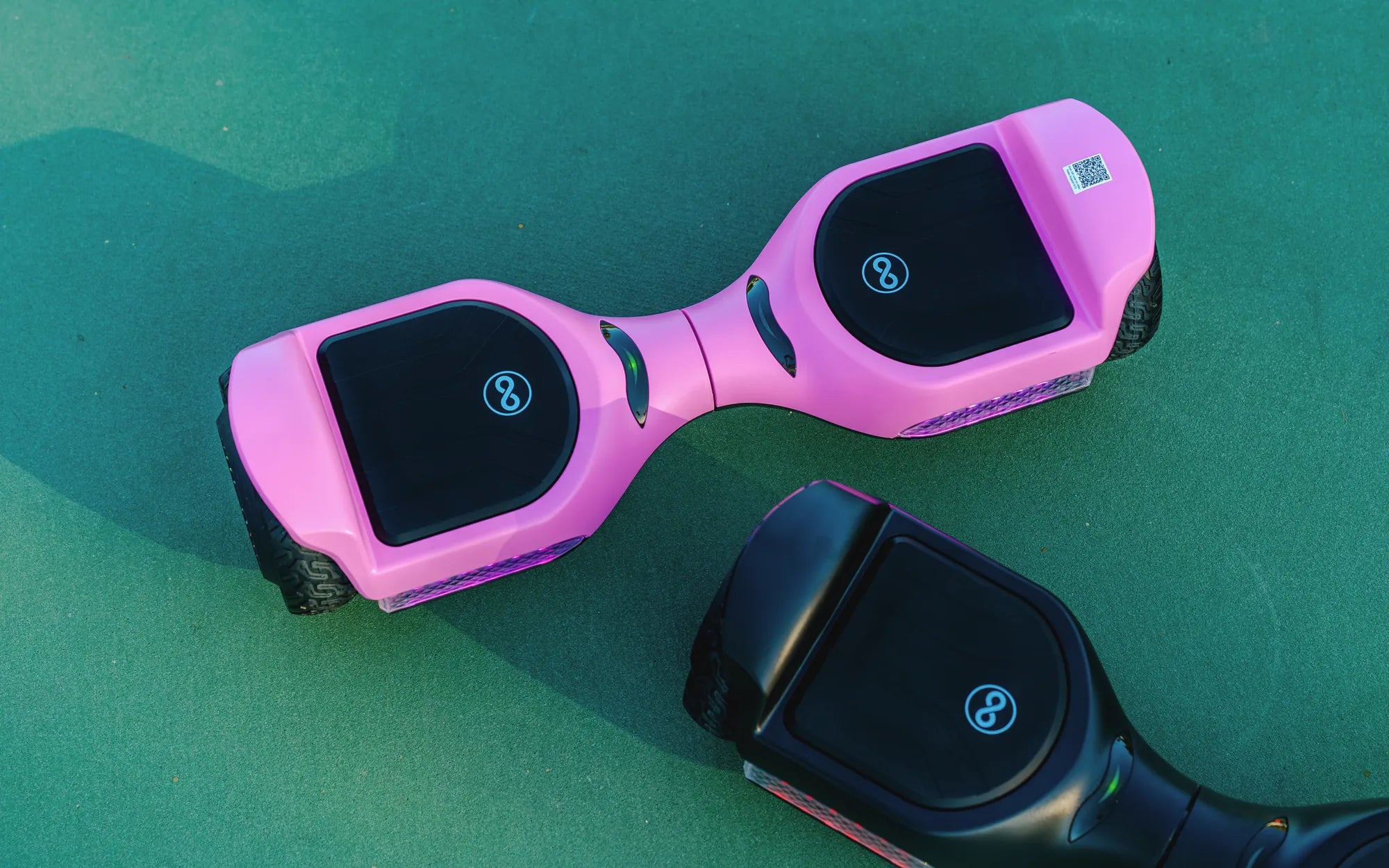
Forget the flimsy toys of the past. A true self balancing scooter heavy duty is engineered for demanding riders who need a vehicle that won't falter on potholed streets, gravel paths, or under a loaded backpack. This guide provides a data-driven, in-depth look at what makes these rugged electric vehicles tick, who they're for, and how to choose one that delivers lasting performance and safety. You'll learn the critical engineering specs, decode marketing jargon, and understand why investing in a durable platform from a reputable brand like Gyroor is essential for serious urban mobility and off-road adventure.
Introduction to Heavy-Duty Self-Balancing Scooters
What exactly defines a heavy-duty self-balancing scooter? It's more than just a marketing term. These are vehicles built with enhanced structural integrity, higher-torque motors, and components designed to withstand stress beyond casual, lightweight use. A standard scooter might be fine for smooth sidewalks, but a heavy-duty model is your solution for the real world—where curbs, cracks, hills, and variable loads are the norm.
At their core, these scooters prioritize durability and reliability. Brands that specialize in this category, such as Gyroor, engineer their products from the ground up for resilience. This means selecting materials that resist fatigue, designing battery packs for stable power delivery under load, and implementing robust control systems for predictable handling. The goal is a scooter that performs consistently, day after day, in conditions that would degrade or disable a lesser model.
The evolution of the self-balancing scooter has seen a clear split between recreational devices and legitimate transportation tools. The heavy-duty segment represents the latter, appealing to commuters, delivery personnel, security staff, and outdoor enthusiasts. These riders share a common need: a dependable electric vehicle that can handle their specific weight, the terrain they traverse, and the mileage they require without constant concern for failure.
Understanding this distinction is the first step in making an informed purchase. A heavy-duty scooter is an investment in capability and peace of mind. It's built to be a workhorse, not a novelty. Throughout this guide, we'll dissect the components, performance metrics, and use cases that separate true heavy-duty performers from their standard counterparts, providing you with the knowledge to select the right rugged and reliable ride.
Why Choose a Heavy-Duty Model? Key Benefits and Use Cases
The primary advantage of a heavy-duty self-balancing scooter is its expanded capability envelope. It's designed for scenarios where a standard model would be operating at or beyond its limits, which directly translates to enhanced safety, stability, and longevity. The benefits are tangible and directly impact the riding experience.
Enhanced safety is paramount. A reinforced frame and higher weight capacity mean the scooter isn't strained by the rider's weight plus cargo. This reduces the risk of structural failure. Powerful, responsive motors provide the torque needed for controlled acceleration and confident braking, especially on inclines. Advanced battery management systems (BMS), like those in Gyroor's UL-certified packs, prevent dangerous overheating and ensure stable voltage even when demanding maximum power.
Superior stability on imperfect surfaces is another critical benefit. Heavy-duty models often feature larger, pneumatic (air-filled) tires and sometimes even suspension systems to absorb shocks from cracks, cobblestones, or gravel. This not only makes the ride more comfortable but also maintains better tire contact with the ground, improving control and reducing the chance of a loss of balance from a sudden jolt.
Longevity and durability are built into the design. Using components rated for higher stress means they operate within a comfortable margin, reducing wear and tear. A scooter built with aerospace-grade aluminum alloy, high-grade bearings, and thick wiring will simply last longer than one using cost-cutting materials. This makes the higher initial investment cost-effective over time, as it delays the need for repairs or replacement.
Engineering for Durability: What Makes a Scooter "Heavy-Duty"?
The "heavy-duty" designation is earned through specific engineering choices in key areas. First is motor configuration and power. While a standard scooter may have a single 350W motor, a heavy-duty model typically features dual motors, often ranging from 500W to 1000W each. Dual motors provide independent wheel control, better torque for hills, and redundancy—if one motor has an issue, you may still have limited mobility.
The frame is the scooter's skeleton. Heavy-duty frames use thicker, reinforced aluminum or magnesium alloy construction at stress points like the wheel hubs, pedal mounts, and internal chassis. This resists bending and cracking. The shell is also made from high-impact plastics or composites that can withstand drops and scrapes without shattering.
Tire and suspension design is crucial for handling and durability. For all-terrain capability, large pneumatic tires (often 10 inches or more) with deep treads are standard. They provide cushioning and grip on grass, dirt, and gravel. Some advanced models incorporate spring or hydraulic suspension on the pedals or wheel arms to further isolate the rider from bumps, protecting both the rider and the scooter's internal electronics from repeated impacts.
Finally, the electrical system is overbuilt. This includes high-capacity, UL-certified lithium-ion battery packs with robust BMS, thicker gauge power cables to handle high current without overheating, and sealed connectors to prevent corrosion. An IPX5 water-resistance rating, a standard in Gyroor's lineup, is essential, ensuring the scooter can handle riding in rain or through puddles without immediate damage to its core components.
The Weight Capacity Factor: Matching the Scooter to the Rider & Gear
The advertised weight capacity is not a suggestion but a critical performance and safety parameter. Exceeding it can overstress the motor, drain the battery rapidly, overheat electronics, and compromise structural integrity, leading to premature failure or unsafe riding dynamics. A true heavy-duty self balancing scooter heavy duty will have a clearly stated maximum load, often starting at 220 lbs (100 kg) and going up to 330 lbs (150 kg) or more.
When selecting a model, you must account for your total load. This includes your body weight plus everything you carry. A practical rule is to add a minimum of 20-30 lbs (9-14 kg) to your weight to account for a backpack, groceries, a laptop bag, or work equipment. If you weigh 200 lbs and carry a 25 lb backpack, you need a scooter rated for at least 225 lbs.
Choosing a scooter with a capacity significantly above your calculated total load is wise. It ensures the vehicle operates well within its designed limits, which translates to better hill-climbing performance, longer range, less heat buildup, and overall increased component lifespan. It provides a buffer for those days when you might carry extra cargo.
For commercial users like delivery riders or security personnel, this calculation is even more critical. Consistently operating at or near the maximum capacity will accelerate wear. Investing in a commercial-grade model with the highest weight rating you can find is a strategic decision for operational reliability and lower long-term cost of ownership.
Performance and Safety: Data-Driven Insights
Heavy-duty performance is quantifiable. Key metrics include hill climb angle, effective range under load, and stable top speed. A standard scooter might struggle on a 10-degree incline. A heavy-duty model with dual 800W motors can typically conquer slopes of 15-30 degrees, depending on the rider's weight. This makes navigating urban hills and driveway ramps effortless.
Range is highly dependent on load. Manufacturers often list a "maximum" range based on a lightweight rider on flat, smooth terrain. A heavy-duty scooter's advantage lies in its larger battery capacity (measured in Watt-hours, Wh) and efficient power delivery. For a realistic estimate, riders should expect a 20-30% reduction from the advertised range when carrying near-maximum load or riding on rougher terrain. A scooter with a 15-mile claimed range might reliably deliver 10-12 miles under heavy-duty conditions.
Top speed stability is another differentiator. While many scooters can hit a top speed, maintaining it safely under load on uneven ground requires power reserves and stable geometry. Heavy-duty models are designed to handle their top speed (often 12-15 MPH) without becoming twitchy or unstable, thanks to lower centers of gravity, wider pedals, and precise gyroscopic calibration.
Safety systems are integral. Beyond the robust BMS, features like tilt-back warning (where the pedals gently tilt backward to discourage over-speeding), bright LED headlights and taillights for visibility, and audible warning beeps for low battery or excessive tilt are standard on quality models. Gyroor's focus on UL-certified batteries is a direct investment in safety, as these packs undergo rigorous testing for short-circuit, overcharge, and thermal stability.
Terrain Conquest: From City Streets to Dirt Trails
The terrain capability of a self balancing scooter heavy duty is its defining characteristic. On paved city streets, the benefits are smoother rides over cracks and potholes, confident curb climbs, and stability on wet asphalt. The pneumatic tires and suspension absorb vibrations that would otherwise travel up the rider's legs, reducing fatigue on longer commutes.
On packed gravel, dirt paths, and grassy fields, the large, treaded tires provide the necessary traction. The high ground clearance (the space between the bottom of the deck and the ground) prevents the scooter from getting hung up on roots or rocks. It's crucial to understand that while heavy-duty scooters are "all-terrain," they are not off-road vehicles like mountain bikes. They are best suited for relatively flat, hard-packed trails, not technical, rocky, or muddy single-track.
Wet weather riding is where IP ratings matter. An IPX5 rating, as found on Gyroor scooters, means the unit can withstand water jets from any direction. In practice, this means it's safe to ride in the rain and through puddles. However, submerging the scooter (e.g., in a deep flood) is not advised, as the rating does not cover immersion. Post-ride drying and a quick wipe-down are recommended to maintain longevity.
For optimal performance on mixed terrain, riders should adjust their technique. On loose surfaces like gravel or grass, adopt a wider stance, bend your knees slightly to act as additional suspension, and avoid sudden, sharp turns. Maintain a moderate, steady speed rather than rapid acceleration, which can cause wheel spin. Regularly check tire pressure, as it significantly affects both ride comfort and traction across all surfaces.
Gyroor's Heavy-Duty Design Philosophy: A Closer Look
Gyroor, as a leading brand trusted by over 100,000 riders, builds its reputation on a foundation of durability and safety, principles that are perfectly aligned with the heavy-duty ethos. Their design philosophy translates abstract concepts like "ruggedness" into specific, implementable engineering standards across their product lineup.
The commitment starts with power system safety. Every Gyroor scooter uses a UL-certified lithium-ion battery pack. This third-party certification is a gold standard, verifying that the battery cells, wiring, and BMS have passed stringent tests for electrical, mechanical, and fire safety. For a heavy-duty scooter that will be stressed, this certification is non-negotiable. It ensures the battery can handle the high current draws of hill climbing and rapid acceleration without risk of thermal runaway, and it guarantees a long lifespan of 500+ charge cycles with minimal capacity degradation.
Environmental resilience is designed in, not added on. The IPX5 water-resistant rating is applied to the entire scooter's construction. Seals, gaskets, and conformal coatings on circuit boards protect the sensitive electronics from moisture, dust, and debris. This allows riders to use their Gyroor scooter as a true all-weather commuting tool, not just a fair-weather gadget. The robust shell design also protects against impacts from drops or collisions.
The 1-year comprehensive warranty offered by Gyroor is a testament to their confidence in this durable construction. It covers defects in materials and workmanship, providing buyers with assurance. For a heavy-duty product, this warranty signals that the manufacturer stands behind its claims of durability and is prepared to support the product through a full year of rigorous use, which is a significant consideration for any serious investment in personal electric transportation.
Choosing Your Heavy-Duty Gyroor: A Practical Comparison
Gyroor offers several models that fit the heavy-duty category, each with slight variations tailored to different rider priorities. Below is a comparison of two exemplary models to illustrate how specs align with use cases.
| Feature | Gyroor F1 Pro (Urban Commuter Focus) | Gyroor G1 (All-Terrain Adventure Focus) |
|---|---|---|
| Motor Power | Dual 500W | Dual 800W |
| Max Weight Capacity | 265 lbs (120 kg) | 330 lbs (150 kg) |
| Max Range | Up to 15 miles | Up to 18 miles |
| Tire Type | 10.5" Solid Honeycomb Tires | 11" Pneumatic All-Terrain Tires |
| Suspension | Spring Suspension System | Advanced Hydraulic & Spring Suspension |
| Top Speed | 12.5 MPH | 15.5 MPH |
| Key Feature | Puncture-proof tires, sleek design for city use. | Superior shock absorption, extreme hill climb (30°). |
| Ideal For | Heavier urban commuters who prioritize low maintenance (no flat tires) and a comfortable ride over pavement. | Riders tackling mixed terrain, trails, steeper hills, or those at the top of the weight capacity spectrum. |
This comparison shows that even within the heavy-duty class, choices exist. The F1 Pro is an excellent heavy-duty self balancing scooter heavy duty for the city, with its solid tires eliminating the worry of punctures. The G1, with its more powerful motors, higher capacity, and pneumatic tires, is built for those who need maximum performance across the widest variety of conditions.
Maintenance and Care for Longevity
Proper maintenance is the key to unlocking the full lifespan of your investment. A heavy-duty scooter is built to last, but it still requires regular care, especially after strenuous use.
For models with pneumatic tires, checking tire pressure every 1-2 weeks is essential. Under-inflated tires increase rolling resistance (reducing range), make the scooter harder to control, and are more prone to pinch flats. Over-inflated tires reduce traction and make the ride uncomfortably harsh. Use a bicycle pump with a pressure gauge and inflate to the PSI range printed on the tire sidewall.
Conduct a periodic frame and bolt inspection. Every month, or after a particularly rough ride, check that all visible bolts (especially on the wheel hubs, pedals, and folding mechanisms) are tight. Look for any cracks or significant damage to the frame, shell, or pedals. Catching a loose bolt early can prevent a major component failure.
Battery care is paramount for long-term health. Adhere to proper charging habits: avoid draining the battery to 0% regularly, and don't leave it plugged in at 100% for days on end. Store the scooter in a cool, dry place, away from extreme temperatures. If storing for more than a month, leave the battery charge at around 50-60%. Use only the manufacturer-provided charger.
Post-ride cleaning, especially after off-road or wet use, is simple but effective. Wipe down the scooter with a damp cloth to remove mud, salt, or debris. Avoid high-pressure water sprays directly on the wheel hubs or deck seams. Ensure the charging port cover is securely closed before cleaning. This prevents corrosion and keeps moving parts like the wheels and bearings free from grit that can cause premature wear.
Frequently Asked Questions (FAQ)
Q: What's the real difference between a 500W and a 1000W (total) motor for heavy-duty use?
A: Motor wattage directly relates to torque and hill-climbing ability. A dual 500W (1000W total) system provides significantly more power than a single 500W motor. For a heavy rider (220+ lbs) or frequent hill climbing, 1000W total is a recommended minimum. It ensures the scooter has ample power reserves for safe acceleration and maintaining speed on inclines without straining the system.
Q: Can I really ride my IPX5-rated scooter in the rain?
A: Yes, an IPX5 rating is designed for this. You can confidently ride in rain and through puddles. However, do not intentionally submerge the scooter (e.g., in a pool or deep flood). After riding in wet conditions, dry the scooter with a towel, paying attention to the deck and wheels, to prevent water from sitting on seals and to avoid slipping on wet pedals.
Q: How does rider weight actually affect the scooter's range?
A>Weight is the single biggest factor affecting range after battery size. More weight requires more energy (torque) to accelerate and maintain speed, especially on any incline. As a rule, for every 50 lbs over a standard test weight (usually ~160 lbs), you can expect a 15-20% reduction in maximum range. A heavy-duty scooter with a larger battery mitigates this but cannot negate the laws of physics.
Q: What does a typical 1-year warranty, like Gyroor's, cover for heavy-duty use?
A: It generally covers defects in materials and workmanship under normal use. This includes issues with the motor, battery, control board, and frame that arise from manufacturing flaws. It does not cover damage from accidents, misuse (e.g., exceeding weight limit, jumping curbs), neglect, or normal wear and tear (like tire tread). Always read the specific warranty terms for details.
Q: Are solid (honeycomb) tires or pneumatic (air-filled) tires better for a heavy-duty scooter?
A: It depends on priority. Pneumatic tires offer a much smoother, more comfortable ride and better traction on uneven or loose terrain, making them ideal for all-terrain use. However, they can puncture. Solid honeycomb tires are completely puncture-proof and require zero maintenance, but they provide a firmer, less forgiving ride and slightly less grip on wet surfaces. For pure urban commuting on decent pavement, solids are a great choice. For mixed or rough terrain, pneumatics are superior.
Investing in a Ride That Lasts
Choosing a self balancing scooter heavy duty is a decision to prioritize capability, safety, and long-term value over initial cost savings. It's about selecting a vehicle engineered as a reliable tool for transportation, not just a recreational device. The data is clear: robust construction, higher weight capacities, powerful dual-motor systems, and certified safety features create a fundamentally different and more capable product.
For the urban commuter facing cracked sidewalks and steep bridges, the delivery rider carrying cargo, or the adventurer exploring park trails, a heavy-duty model provides the necessary performance margin. It handles the load, conquers the terrain, and endures the miles with resilience. Brands like Gyroor have built their reputation on this exact promise, combining UL-certified safety, IPX5 weatherproofing, and durable construction into scooters designed for real-world demands.
Your journey to a rugged and reliable ride starts with understanding your specific needs—your weight plus gear, your primary terrain, and your required range. Use this guide to evaluate specs critically and match them to your use case. The right heavy-duty self-balancing scooter isn't just a purchase; it's an investment in unlocking a new level of efficient, enjoyable, and dependable personal mobility.
Ready to explore models built to this standard? Browse the full Gyroor collection at gyroorboard.com to find the heavy-duty scooter engineered for your ride.
Hoverboard Kids Ireland €150: The Ultimate Guide for Parents
Hoverboard Continuous Beeping: Causes, Fixes, and Prevention Tips