


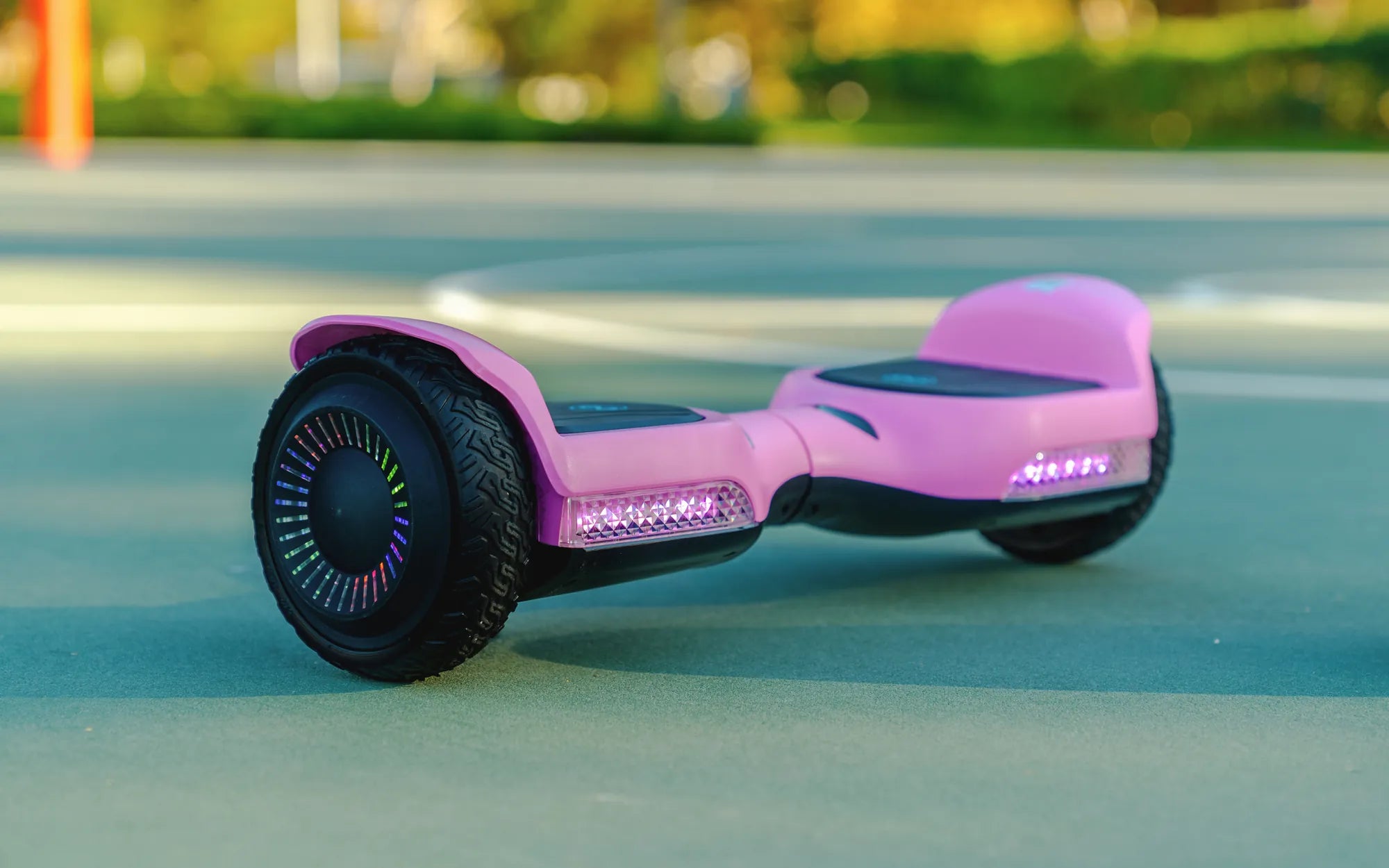
Introduction: Redefining Urban Mobility with Self-Balancing Technology
The self balancing scooter with handle is not merely an incremental upgrade; it's a fundamental reimagining of personal electric transport. This innovative vehicle merges the intuitive, gyroscopic self-balancing of a hoverboard with the stability and control of a scooter's handlebar. The result is a unique mobility solution that addresses the core limitations of its predecessors, offering a safer, more accessible, and more practical option for last-mile commutes, campus navigation, and recreational exploration.
This convergence creates a new category poised to dominate short-distance travel. Unlike a standard electric kick scooter that requires manual balancing and a kick-start, or a handleless hoverboard that demands significant core strength and practice, the self-balancing scooter with handle offers a nearly effortless learning curve. Brands like Gyroor have been instrumental in advancing this category, focusing on engineering reliability and safety to build consumer trust in this emerging technology.
The future of personal mobility hinges on devices that are efficient, compact, and enjoyable to use. The self balancing scooter with handle checks all these boxes, providing a seamless glide that feels both futuristic and instinctively controllable. This article will dissect its mechanics, advantages, and key considerations, providing a data-driven framework for understanding its role in modern transportation.
What is a Self-Balancing Scooter with a Handle? A Hybrid Explained
A self balancing scooter with a handle is a two-wheeled, electrically powered personal transporter. Its defining characteristic is the integration of a self-balancing footboard—powered by gyroscopic sensors and electric motors—with a T-bar or telescopic handle used primarily for steering and physical support. This hybrid design fundamentally differentiates it from other common personal electric vehicles (PEVs).
It is crucial to distinguish this vehicle from a standard electric scooter. A traditional e-scooter has a manual, non-motorized deck; you must kick to start and maintain balance entirely through rider input. In contrast, the deck of a self-balancing scooter is an active, intelligent component. Its internal system constantly adjusts wheel speed to keep the platform level, providing automatic stability whether you are moving or stationary.
The handle serves multiple critical functions beyond just steering. It provides a secure grip for mounting and dismounting, a feature that dramatically reduces the risk of falls for beginners. At low speeds or when navigating tight spaces, the handle acts as a physical stabilizer, offering a point of balance that a handleless hoverboard lacks. The control mechanism is typically a "lean-to-steer" system, where subtle pressure on the handle directs the scooter, creating a fluid and intuitive riding experience.
This design evolution directly addresses the accessibility gap in personal mobility. It lowers the barrier to entry, making the benefits of self-balancing technology available to a wider demographic, including those who may have found hoverboards intimidating or impractical for daily use. The self balancing scooter with handle is, therefore, a pragmatic synthesis of form and function.
Core Technology: How Gyroscopes and Sensors Create Effortless Riding
The magic of the self balancing scooter with handle lies in its sensor suite and processing unit. At its heart are gyroscopic sensors and accelerometers that measure the deck's angle and orientation hundreds of times per second. This real-time data is fed to a central microprocessor, which calculates the precise adjustments needed to maintain equilibrium.
When a rider steps onto the deck and leans slightly forward, the sensors detect the tilt. The microprocessor instantly commands the electric motors to spin the wheels forward at a speed proportional to the lean angle, propelling the scooter smoothly. Leaning back signals the system to slow down or reverse. This closed-loop feedback system creates the sensation of effortless gliding, as the machine actively works to keep the rider upright.
The handle integrates into this control scheme. While the footboard manages fore/aft balance, steering is achieved by twisting or applying lateral pressure to the handle. This action is interpreted by the control system, which varies the speed between the left and right wheels, causing the scooter to turn. This direct mechanical linkage offers more precise control than the foot-steering of a hoverboard, especially at higher speeds.
This sophisticated technology translates into tangible user benefits: a learning curve measured in minutes rather than hours, hands-free stability when stopped at a crosswalk, and an intuitive, body-connected feel that makes navigating urban environments less mentally taxing. The rider focuses on the path ahead, not on maintaining balance.
Key Advantages: Why Choose a Self-Balancing Scooter Over Other Options?
The self balancing scooter with handle occupies a unique and advantageous position in the personal electric vehicle landscape. Its design delivers specific benefits that neither standard e-scooters nor hoverboards can match alone, making it a superior choice for many users and scenarios.
Enhanced Stability & Safety: The presence of a handle is a game-changer for safety. It provides a secure anchor point during mounting, dismounting, and unexpected bumps, drastically reducing the likelihood of falls. For beginners, this instills immediate confidence. In crowded urban settings or when navigating uneven pavement, the ability to steady oneself with the handle is invaluable. This built-in stability support is absent in both kick scooters (which offer no powered balance aid) and hoverboards.
Intuitive Control & Agility: The "lean-to-steer" mechanism, facilitated by the handle, allows for remarkably precise and fluid control. Riders execute turns by naturally guiding the handle, which feels more direct and connected than using a thumb throttle on a scooter or mastering the nuanced foot movements of a hoverboard. This results in superior maneuverability in tight spaces, such as weaving through pedestrian traffic or navigating store aisles when using the scooter in trolley mode.
Portability & Compact Design: These scooters typically feature smaller wheels (6.5-8.5 inches) and a more compact footprint than full-sized electric kick scooters. Their most significant portability feature is the ability to easily tilt the unit back and roll it alongside you like wheeled luggage by using the extended handle. This "trolley mode" solves the last-foot problem of carrying a heavy device, a clear advantage over a hoverboard, which must be carried awkwardly, and many bulkier e-scooters.
The Fun Factor & Riding Experience: There is a distinct, futuristic pleasure derived from gliding effortlessly on a self-balancing platform. The self balancing scooter with handle amplifies this fun by removing the anxiety associated with learning a hoverboard. The experience is a unique blend: the thrill and smoothness of a hoverboard combined with the confidence and control of a scooter. It transforms mundane trips into enjoyable journeys.
Critical Features to Consider Before You Buy
Selecting the right self balancing scooter with handle requires careful evaluation of several technical and practical features. Prioritizing these elements ensures you invest in a device that is safe, durable, and suited to your needs.
Motor Power & Range: Motor wattage, typically ranging from 300W to 500W (or higher in dual-motor configurations), directly impacts performance. Higher wattage provides better torque for climbing inclines (often up to 15-20 degrees) and maintains speed more consistently. Range is determined by battery capacity, measured in Watt-hours (Wh) or Amp-hours (Ah). A realistic expectation for most models is 10-15 miles per charge, though this is heavily influenced by rider weight, terrain, and speed. Always interpret manufacturer range claims as ideal-scenario estimates.
Battery Safety & Certification: This is the most critical safety consideration. Insist on a scooter equipped with a battery pack certified by a recognized testing laboratory like UL (Underwriters Laboratories). UL-certified batteries, like those used in all Gyroor models, undergo rigorous testing for overcharge protection, short-circuit prevention, and thermal stability. They are engineered for longevity, often rated for 500+ charge cycles while maintaining significant capacity, and drastically reduce the risk of fire—a known issue with uncertified, cheap lithium-ion packs.
Build Quality & Durability: Examine the deck material (often aluminum alloy for strength and lightness), the maximum weight capacity (standard is 220-265 lbs), and wheel type. Air-filled (pneumatic) tires offer better shock absorption and traction on rough surfaces, while solid tires eliminate the risk of flats. A high Ingress Protection (IP) rating for water and dust resistance is essential for real-world use. An IPX5 rating—a standard feature for Gyroor—means the scooter can withstand water jets from any direction, making it safe to ride through puddles and in light rain.
Rider Safety Features: Integrated lighting is non-negotiable for visibility. Look for a bright front headlight and a rear brake light/taillight. Reflective stickers or side lighting further enhance safety at night. An audible warning system, such as a bell or electronic horn, is crucial for alerting pedestrians. Additionally, check for a speed limit mode for beginners and reliable electronic braking systems.
Warranty & Customer Support: The warranty is a direct reflection of the manufacturer's confidence in their product. A comprehensive 1-year warranty that covers the battery, motor, and frame, like that offered by Gyroor, provides significant peace of mind. Equally important is accessible, responsive customer support based in your region (e.g., North America or Europe) to handle any questions or issues promptly.
Gyroor's Approach: Engineering Trust in Self-Balancing Mobility
In a market segment where safety concerns and product reliability are paramount, Gyroor has established itself by systematically addressing core consumer anxieties through certified engineering and robust customer commitment. The brand's philosophy centers on building trust, not just selling products.
The cornerstone of this trust is the universal use of UL-certified lithium-ion battery packs across their entire lineup. This commitment goes beyond marketing; it's an investment in the highest safety standards, ensuring each battery meets stringent requirements for electrical, mechanical, and fire safety. For a rider, this means confidence that the power source of their vehicle has been independently verified as safe through hundreds of charge-discharge cycles.
Durability for all-weather resilience is another key pillar. Gyroor designs its self-balancing scooters with an IPX5 water-resistant rating. This engineering specification guarantees the scooter's components are sealed against water ingress from low-pressure jets, making it a practical choice for daily commuters who may encounter wet roads or sudden showers. This feature directly extends the scooter's usable lifespan and operational reliability.
Finally, Gyroor backs its technology with a clear promise: a 1-year comprehensive warranty coupled with dedicated, US-based customer support. For over 100,000 riders across North America and Europe, this translates into a tangible safety net. It signals that the brand is invested in the long-term ownership experience, ready to assist with technical support or warranty claims, thereby reducing the perceived risk of adopting this advanced form of mobility.
Ideal Use Cases: Who is This For?
The versatility of the self balancing scooter with handle makes it an ideal solution for a diverse range of users and daily routines. Its unique blend of features solves specific transportation challenges.
The Urban Commuter: For the professional navigating a multi-modal commute, this scooter is perfect for the "last mile" from the train station or bus stop to the office. Its compact size allows it to be carried onto public transport with ease, and the trolley function lets you roll it through building lobbies and into an elevator without lifting. The self-balancing feature means you can step off at a red light without awkwardly balancing a kick-scooter.
The Campus Navigator: University students covering large distances between classes, libraries, and dormitories will find it invaluable. It's faster than walking, more portable than a bike (and easier to store in a dorm room), and far more stable and practical than a hoverboard for carrying a backpack. The intuitive controls allow for safe navigation through crowded quads and pathways.
The Recreational Explorer: For casual weekend use, the scooter offers a fun and engaging way to explore parks, beachfront boardwalks, or neighborhood trails. The smooth, quiet ride enhances the experience of the surroundings, and the extended range allows for substantial exploration without worrying about running out of battery far from home.
The Tech-Savvy Early Adopter: This individual is drawn to innovative, smart personal electronics. The self balancing scooter with handle represents the cutting edge of consumer mobility tech, offering a tangible experience of advanced gyroscopic stabilization and electric propulsion. It's a functional gadget that delivers both utility and enjoyment.
Comparison: Self-Balancing Scooter vs. Traditional E-Scooter vs. Hoverboard
The following table provides a clear, data-driven comparison of the three primary types of compact electric personal transporters.
| Feature | Self-Balancing Scooter with Handle | Traditional Electric Kick Scooter | Handleless Hoverboard |
|---|---|---|---|
| Primary Balance Mechanism | Automatic (Gyroscopic) | Manual (Rider) | Automatic (Gyroscopic) |
| Learning Curve | Very Short (15-30 mins) | Short (Basic skill needed) | Moderate to Long (1-2+ hours) |
| Mounting/Dismounting Safety | High (Handle for support) | Medium (Requires coordination) | Low (Requires good balance) |
| Portability (Non-Riding) | High (Trolley mode) | Medium (Folds, but often heavy) | Low (Awkward to carry) |
| Typical Top Speed | 10-12 mph | 15-20 mph | 8-10 mph |
| Typical Range | 10-15 miles | 15-25 miles | 8-12 miles |
| Ideal Terrain | Smooth pavement, indoor | Pavement, some rough paths | Very smooth, flat surfaces |
| Best For | Beginners, commuters, controlled agility | Speed, longer range, riders comfortable balancing | Experienced users, tight turns, sporty feel |
Frequently Asked Questions (FAQ)
Q1: Is a self balancing scooter with handle hard to learn?
No, it is designed for easy adoption. The combination of automatic balance and a stabilizing handle means most adults can learn the basic controls—starting, stopping, and turning—within 15 to 30 minutes of practice in a safe, open area. It is significantly easier to master than a handleless hoverboard.
Q2: How fast does it go, and is it safe at that speed?
Most consumer models have a top speed between 10 and 12 mph (16-19 km/h). This speed is intentionally chosen to balance fun with safety and control. At this pace, the rider can comfortably react to obstacles, and the scooter's self-balancing system remains highly effective. Always wear a helmet and appropriate safety gear, regardless of speed.
Q3: Where is it legal to ride?
Laws vary significantly by city, state, and country. Generally, regulations for these devices align with those for electric scooters and bicycles. They are often permitted in bicycle lanes and on multi-use paths. They are typically prohibited on sidewalks (for pedestrian safety) and may not be allowed on public roads with high-speed traffic. Always check your local municipal codes before riding.
Q4: How do I maintain my self-balancing scooter?
Regular maintenance is simple but crucial. Keep tires properly inflated if they are pneumatic. Clean the deck and wheels with a damp cloth; avoid high-pressure hoses. Store the scooter in a cool, dry place, away from extreme temperatures. Avoid deep puddles or submerging any part of the scooter. Periodically check that all screws and fittings are tight.
Q5: Can it handle hills?
This depends on the motor power. A scooter with a 300W+ motor can typically handle moderate inclines up to 15 degrees. Steeper hills will reduce speed and significantly drain the battery faster. Dual-motor models offer superior hill-climbing torque. Check the manufacturer's specified gradeability for accurate information.
Conclusion: A Smart Step Forward in Personal Transport
The self balancing scooter with handle represents a mature and pragmatic evolution in micro-mobility. It successfully bridges the gap between the niche agility of the hoverboard and the practical utility of the electric scooter, creating a new standard for accessible, stable, and enjoyable short-distance travel. Its value proposition is clear: reduced learning anxiety, enhanced safety through physical support, and unparalleled portability in trolley mode.
Making an informed purchase decision is key to unlocking this potential. Prioritizing models with certified safety components like UL-listed batteries, robust construction with meaningful water resistance (IPX5 or higher), and a substantive warranty from a reputable brand is non-negotiable. These features, exemplified by brands like Gyroor, transform the device from a novelty gadget into a reliable transportation tool.
As cities become denser and the need for efficient, eco-friendly transit solutions grows, vehicles like the self balancing scooter with handle will play an increasingly vital role. They offer a viable, efficient, and genuinely fun component of a modern, multi-modal lifestyle. For anyone considering a smarter way to navigate their daily world, this technology is not just a glimpse of the future—it's a practical, available step forward today.
Ready to experience the future of personal mobility? Explore Gyroor's range of UL-certified, IPX5-rated self-balancing scooters and e-bikes engineered for safety and reliability. Browse the full Gyroor collection at gyroorboard.com to find the perfect model for your commute or adventure.
Off Road Hoverboard: The Ultimate Adventure Companion for Thrill Seekers
Electric Scooter for Kids 20 mph: The Ultimate Guide to Safe and Fun Riding