


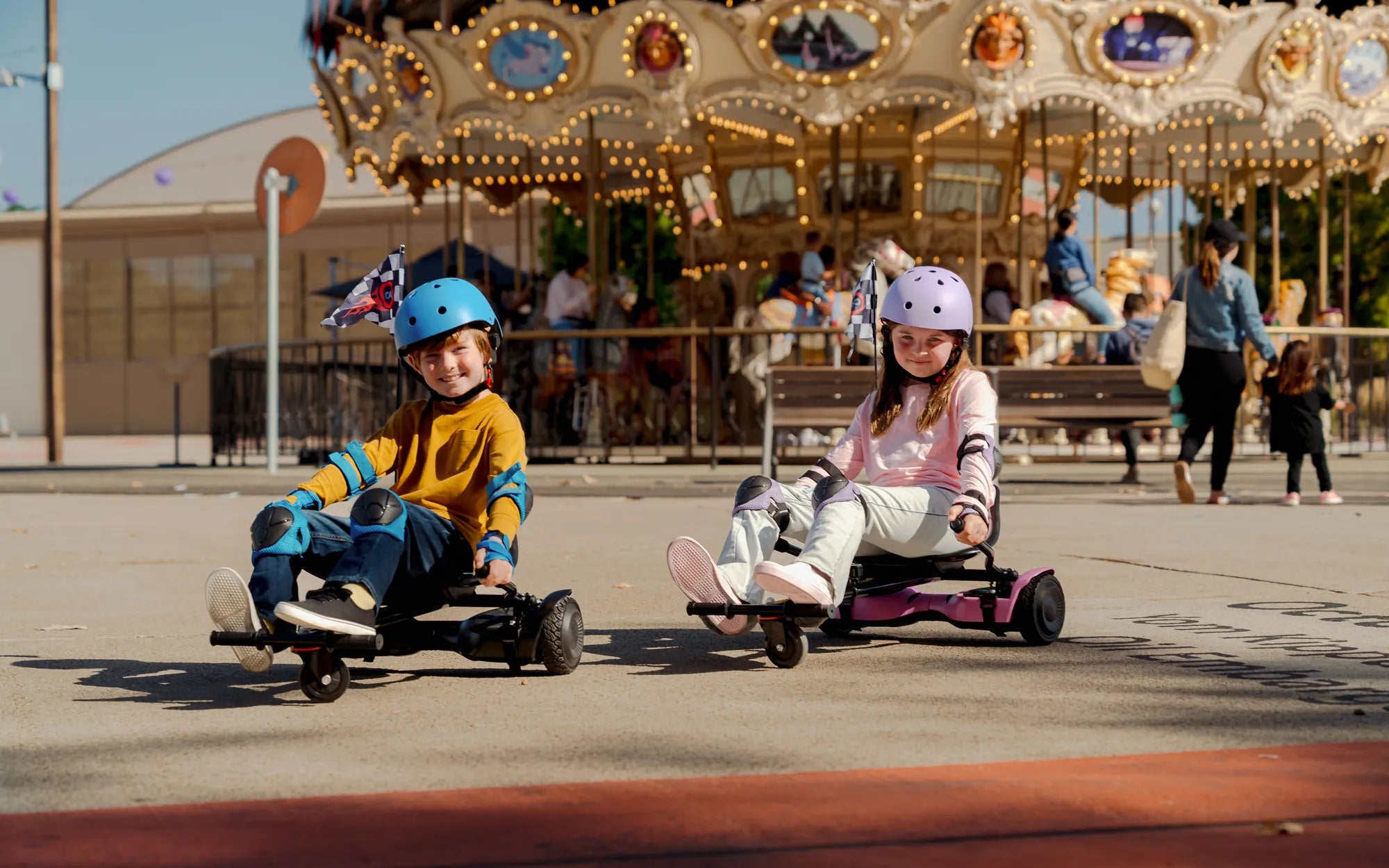
Introduction: Beyond Standing – The Rise of the Sit-Down Hoverboard
The personal electric vehicle landscape is evolving beyond the standing scooter. The sit-down hoverboard represents a significant leap forward, merging the fun, gyroscopic self-balancing technology of its predecessor with the practical comfort of a seated ride. This innovation isn't just a minor tweak; it's a redefinition of who can ride and for how long.
This article will provide a comprehensive analysis of the sit-down hoverboard. You will learn about its core advantages, how it compares to other transport options, and what specifications matter most when choosing a model. We'll also cover essential safety protocols and maintenance tips to ensure your riding experience is both enjoyable and secure.
The appeal is clear: it retains the intuitive, hands-free control that makes hoverboards fun while eliminating the leg fatigue and balance challenges associated with standing models. This opens up personal mobility to a wider demographic, including commuters, seniors, and those seeking a more relaxed recreational experience. The sit-down hoverboard is poised to become a staple for last-mile travel and neighborhood exploration.
Why Choose a Sit-Down Hoverboard? Key Benefits for Modern Riders
The primary advantage of a sit-down hoverboard is enhanced comfort and reduced physical strain. Long rides on a standing model can lead to fatigue in the legs, feet, and back. A seated position distributes weight evenly, allowing for extended journeys without discomfort. This makes it ideal for commuting to work or school, running errands, or leisurely park tours.
Stability and confidence are dramatically improved. The lower center of gravity provided by the seated position makes the device inherently more stable, especially at lower speeds and during starts and stops. This significantly shortens the learning curve, making it accessible for beginners, younger teens under supervision, and older adults who may find balancing on a standing device challenging.
For practical use, the improved weight distribution allows for higher payload capacities. Many sit-down models can comfortably support riders up to 220-265 pounds, and some can even accommodate a passenger or additional cargo. The ergonomic design also promotes better posture, as riders are not hunched over handlebars or constantly adjusting their stance for balance.
Finally, the experience is simply more versatile and enjoyable. The seated position feels more like driving a futuristic vehicle than balancing on a plank. It encourages longer, more exploratory rides and can be used in a wider variety of settings, from smooth bike paths to gentle, packed-dirt trails, depending on the model's tire design.
Gyroor's Approach: Engineering Comfort and Confidence
As a leading brand in personal electric mobility, trusted by over 100,000 riders, Gyroor applies its core engineering principles directly to the sit-down hoverboard category. The focus is on building devices that prioritize rider safety, durability, and long-term satisfaction, transforming a novel concept into a reliable daily tool.
Safety is foundational. Every Gyroor model uses UL-certified battery packs, rigorously tested for over 500 charge cycles. This certification is a critical safeguard against thermal runaway and fire risks, providing peace of mind that is non-negotiable for a device you ride. This commitment extends to robust battery management systems that prevent overcharging and deep discharge.
Durability for real-world conditions is another key pillar. Gyroor designs feature IPX5 water-resistant ratings. This means the electronics are protected against low-pressure water jets from any direction, allowing you to confidently ride on damp pavement, through puddles, or in light rain without worrying about immediate damage to the core components.
This engineering excellence is backed by a reliable 1-year warranty and accessible customer support. For a rider investing in a sit-down hoverboard, this support network ensures that any issues can be resolved promptly, protecting your investment and ensuring many miles of dependable service.
Sit-Down Hoverboard vs. Other Personal Transport: A Practical Comparison
Choosing the right electric personal transporter depends on your specific needs. The sit-down hoverboard occupies a unique niche, blending characteristics of several devices. The following table provides a clear, data-informed comparison across key metrics.
| Vehicle Type | Learning Curve | Portability (Weight) | Typical Range | Comfort (Long Rides) | Ideal Use Case |
|---|---|---|---|---|---|
| Sit-Down Hoverboard | Low-Medium (easier than standing) | Medium (35-55 lbs) | 10-20 miles | High (seated) | Recreation, casual commuting, accessible mobility |
| Standing Hoverboard | Medium-High (requires balance) | High (20-30 lbs) | 8-12 miles | Low (standing) | Short fun rides, indoor use, tricks |
| Electric Kick Scooter | Very Low | Varies (20-40 lbs) | 15-40 miles | Medium (standing) | Last-mile commute, urban errands |
| Electric Bike (E-Bike) | Very Low | Low (50-70 lbs) | 20-60+ miles | High (bicycle seat) | Long commutes, fitness, cargo hauling |
As the table illustrates, the sit-down hoverboard excels in comfort and accessibility while maintaining a relatively compact form. It is more portable than an e-bike and more comfortable for extended periods than a standing hoverboard or scooter. Its self-balancing technology offers a unique, intuitive riding experience distinct from the handlebar-controlled alternatives.
For users whose priority is a fun, stable, and fatigue-free ride for distances under 20 miles, the sit-down model is often the superior choice. It lacks the outright speed and range of a high-end e-scooter or e-bike but makes up for it in sheer enjoyment and ease of use.
Choosing Your Perfect Ride: A Buyer's Guide to Sit-Down Hoverboards
Selecting the right model requires careful consideration of specifications that align with your intended use. Motor power, typically ranging from 300W to 800W (or dual motors), determines hill-climbing ability and acceleration. For moderate inclines, a minimum of 500W total is recommended.
Battery capacity, measured in Watt-hours (Wh) or Amp-hours (Ah), is the primary determinant of range. A 36V, 7.8Ah battery may provide 10-15 miles, while a larger 10Ah+ battery can extend that to 18-22 miles under ideal conditions. Always factor in real-world variables like rider weight, terrain, and temperature, which can reduce advertised range by 20-30%.
Check the maximum weight capacity to ensure it accommodates you and any potential cargo. Tire type is crucial: standard 8-10 inch air-filled or solid rubber tires are fine for pavement, while models with 10-inch all-terrain, knobby tires (often offered by brands like Gyroor) provide better traction on grass, dirt paths, and gravel.
Beyond core specs, prioritize safety certifications. Ensure the device is UL 2272 certified (fire safety for the entire system), not just the battery. Additional features like bright LED headlights/taillights, a digital display for speed and battery level, Bluetooth speakers, and companion app connectivity for ride tracking and firmware updates can enhance the experience.
Mastering Your Sit-Down Hoverboard: Safety and Riding Tips
While a sit-down hoverboard is stable, safe operation is paramount. Always perform pre-ride checks: inspect tire pressure (for air-filled tires) for wear, ensure the battery is adequately charged, and verify that all lights are functional. Never ride with a critically low battery, as this can lead to sudden power loss.
The learning process should begin in a safe, open, and flat area like an empty parking lot or smooth driveway. Practice mounting and dismounting until it becomes second nature. Learn to control your speed using gentle forward and backward leans, and practice turning by applying slight pressure with one foot. The seated position makes this intuitive, but initial caution is key.
Adhere to safe riding practices. Obey local traffic laws, which often classify these as pedestrian devices. Avoid public roads with cars. Do not exceed the device's speed limit, and reduce speed on wet or uneven surfaces. Be hyper-aware of your surroundings, including pedestrians, cyclists, and obstacles.
Protective gear is non-negotiable. A properly fitted bicycle or multi-impact helmet is essential. Knee and elbow pads are highly recommended, especially during the learning phase. Wrist guards are also a wise addition. Remember, seated doesn't mean invincible; proper gear mitigates injury risk from falls or collisions.
Frequently Asked Questions (FAQs) About Sit-Down Hoverboards
Are sit-down hoverboards safe for beginners?
Yes, they are among the safest self-balancing devices for beginners. The lower center of gravity and seated position provide inherent stability that significantly reduces the risk of falls during the learning phase compared to standing models. However, beginners must still start in a safe environment and wear full protective gear.
What is the typical range and speed of a sit-down hoverboard?
Most consumer-grade sit-down hoverboards offer a real-world range of 10 to 20 miles on a single charge, with top speeds typically between 10 and 15 miles per hour. Performance varies based on battery capacity (measured in Ah), rider weight, terrain, and riding style. Heavier riders or hilly routes will see reduced range.
Can sit-down hoverboards be used off-road?
Models equipped with larger, all-terrain knobby tires (often 10 inches in diameter) can handle mild off-road conditions like packed dirt paths, grass fields, gravel, and dry sand. They are not designed for rugged mountain biking trails, deep mud, or rock climbing. Always check the manufacturer's specifications for terrain ratings.
How does the warranty and support work for these devices?
Reputable brands like Gyroor offer a comprehensive 1-year warranty covering defects in materials and workmanship for the main unit, battery, and charger. It's crucial to purchase from a company with clear warranty terms and accessible customer service. This protects your investment against premature component failures.
What maintenance does a sit-down hoverboard require?
Regular maintenance is minimal but important. Keep the device clean and dry. Check and maintain proper tire pressure for air-filled tires. Avoid exposing it to extreme temperatures for prolonged periods. Store it with a 50-80% battery charge if not used for extended times. Periodically check for loose screws or bolts and tighten as needed.
Conclusion: Redefining Personal Mobility with Comfort and Style
The sit-down hoverboard has successfully transitioned from a novelty to a legitimate category in personal electric transport. By solving the core issues of fatigue and instability associated with standing models, it has democratized fun, intuitive mobility. It serves as a practical tool for short commutes, a gateway to exploration for those less confident on two feet, and a pure source of recreational joy.
Its value is maximized when built on a foundation of safety and reliability. Prioritizing UL-certified batteries, water-resistant construction, and strong warranty support—hallmarks of brands like Gyroor—ensures that your investment delivers lasting performance. This device is more than a toy; it's a testament to how smart design can make technology accessible and enjoyable for a broader audience.
<Ready to experience the future of relaxed, personal mobility? Explore a range of engineered, reliable options designed for real-world riding. Browse the full Gyroor collection at gyroorboard.com to find the perfect sit-down hoverboard for your next adventure.
Cool Christmas Gift Ideas for Kids That Will Light Up Their Holiday
Christmas Gift Ideas for Boys 10-12: Fun and Engaging Presents They’ll Love