

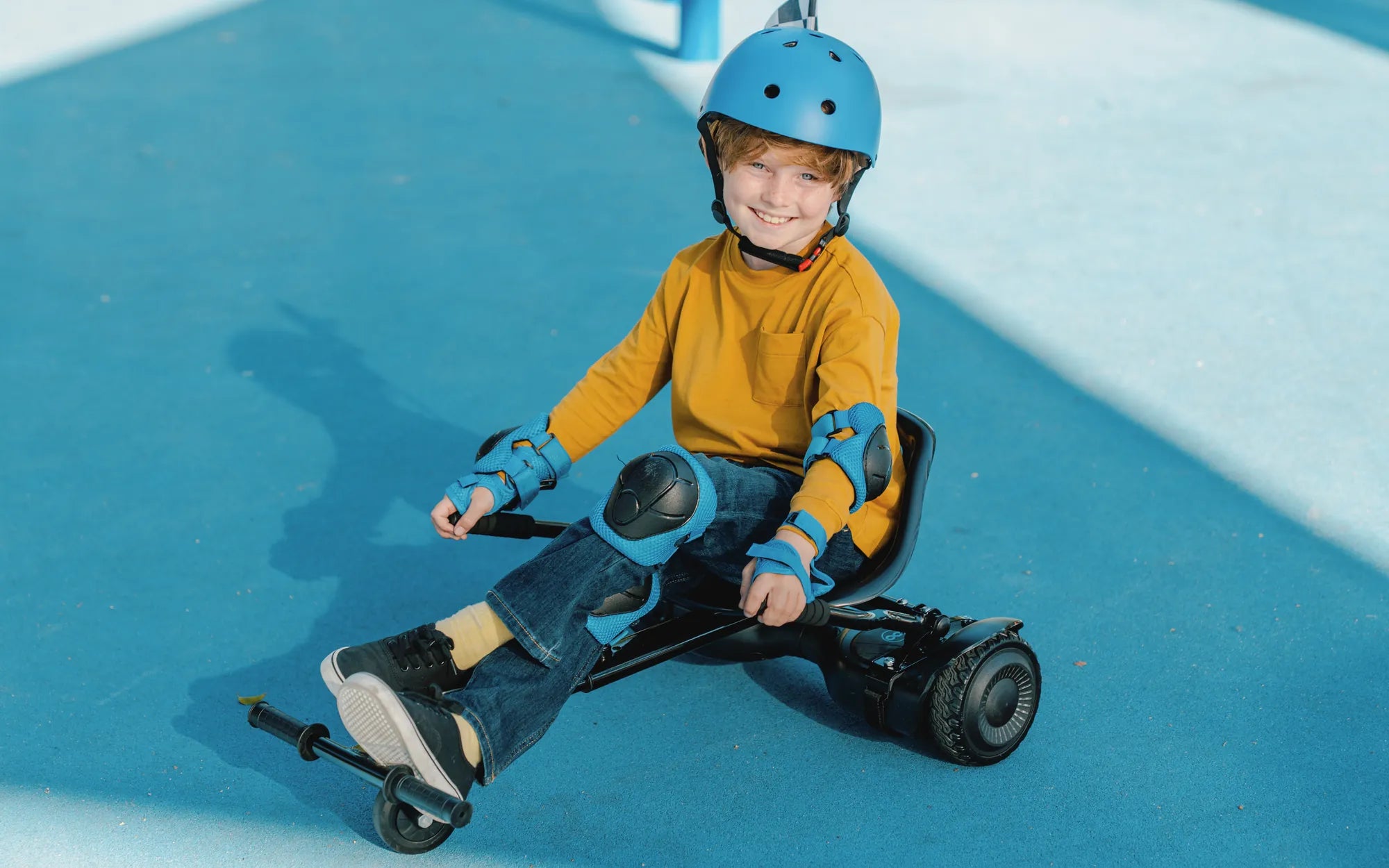
Introduction to Kids' Sitting Hoverboards
You're looking for a gift that combines cutting-edge fun with genuine safety for your child. A sitting hoverboard for kids, often called a self-balancing scooter with a seat, represents the evolution of personal electric mobility for young riders. This guide will teach you how to select the right model, implement crucial safety practices, and ensure your child gets the most enjoyment from their new ride. We'll cover key specifications, industry safety standards, and practical tips that transform a novel toy into a source of confident, active play.
Unlike traditional standing hoverboards, these models feature an integrated, padded seat that provides a lower center of gravity and enhanced stability. This design has surged in popularity because it addresses common parental concerns about balance and control. For children aged eight and up, a sitting hoverboard for kids can be the perfect introduction to electric personal transport, offering a fun way to explore the neighborhood, visit friends, or simply enjoy the backyard.
As a leading brand in personal electric mobility, Gyroor engineers its products with this balance of excitement and security in mind. Trusted by over 100,000 riders, the brand's philosophy centers on creating reliable, well-built vehicles that meet rigorous safety benchmarks. Choosing a reputable manufacturer is the first and most critical step in ensuring a positive experience with a sitting hoverboard for kids.
Key Benefits of a Sitting Hoverboard for Children
The seated design offers distinct advantages that make it particularly suitable for younger or novice riders. The primary benefit is significantly improved stability. By lowering the rider's center of gravity, the seated position makes balancing intuitively easier. This reduces the initial learning curve dramatically, allowing children to build confidence quickly without the frequent falls associated with learning on a standing model.
Another major advantage is reduced physical fatigue. A sitting hoverboard for kids enables longer play sessions. Children can cruise around the park or navigate driveway obstacle courses without tiring their legs, which encourages extended outdoor activity. This ergonomic benefit also makes the scooter accessible to a wider range of children, including those who might find balancing on a standing model challenging over time.
The design inherently promotes a safer riding posture. With a secure seat, riders are less likely to make sudden, unstable weight shifts. Their feet are firmly planted on footpads, and they can use the handlebars (on some models) or their core for steering, which encourages a more controlled and deliberate riding style. This controlled posture is a fundamental aspect of safe operation.
Finally, the novelty and fun factor cannot be overstated. A sitting hoverboard for kids feels more like driving a mini-vehicle, which captures the imagination and encourages creative, active play. It's a tool for social interaction and outdoor exploration, helping to offset sedentary screen time with wholesome, exhilarating movement.
Essential Safety Features to Look For
When evaluating any sitting hoverboard for kids, safety certifications are non-negotiable. The absolute minimum standard is UL 2272 certification. This rigorous test, developed by Underwriters Laboratories, certifies the electrical system and battery pack for fire and electrical safety. Never purchase a model lacking this certification. All Gyroor models utilize UL-certified battery packs tested for over 500 charge cycles, providing a foundational layer of protection.
The construction quality of the seat and frame is paramount. Look for a seat with a non-slip, waterproof cover and robust padding, securely bolted to a sturdy frame. The frame itself should be made of reinforced, impact-resistant materials like aircraft-grade aluminum. A wide wheelbase contributes to lateral stability, preventing easy tip-overs during turns. These physical attributes define a durable sitting hoverboard for kids.
Electronic safety controls are equally critical. A quality model must have a speed limiter or beginner mode, capping the maximum speed (often between 5-7 mph for beginners). It should feature a tilt-back or audible warning system that activates when exceeding safe speeds or when the battery is low. Bright LED headlights and taillights, along with optional wheel lights, are essential for visibility during dusk or in shaded areas.
Environmental protection is another key feature. An IPX5 water-resistance rating, a standard in Gyroor's design, means the scooter can withstand water jets from any direction. This protects the internal electronics from puddle splashes, light rain, or wet grass, preventing short circuits. However, it does not mean the scooter is submersible or suitable for heavy rain.
Choosing the Right Model: Age, Weight, and Terrain
Selecting the correct sitting hoverboard for kids requires matching the scooter's specifications to your child's size and intended riding environment. Manufacturers provide clear age and weight recommendations that must be followed for safe operation. Generally, these scooters are suitable for children aged 8 and up, with maximum weight limits typically ranging from 120 to 220 pounds.
Motor power and battery capacity should align with your child's weight and desired ride time. A child at the lower end of the weight range will get longer range and better performance from a standard motor. A heavier rider or one tackling mild slopes will benefit from a dual-motor system with more torque. Battery capacity, measured in Watt-hours (Wh), directly impacts range. A larger battery provides longer adventures between charges.
The terrain dictates the required wheel system. For smooth pavements, driveways, and indoor surfaces, standard solid rubber or airless honeycomb tires (6.5-8.5 inches) offer a smooth, low-maintenance ride. For tackling grass, gravel paths, or slightly uneven ground, an all-terrain sitting hoverboard for kids with larger, knobby tires (8.5-10 inches) provides necessary traction and shock absorption.
| Rider Profile | Recommended Motor | Wheel Type | Key Features |
|---|---|---|---|
| Ages 8-10, Lightweight (Under 120 lbs) | Single 250W-350W | 6.5" Solid Rubber | Speed Limiter (≤7 mph), Beginner Mode, Handlebar Assist |
| Ages 10+, Average Weight (120-180 lbs) | Dual 350W Motors | 8.5" All-Terrain | IPX5 Rating, LED Lights, Enhanced Battery for Longer Range |
| Older Kids/Teens, Heavier Riders (180+ lbs) | Dual 400W+ Motors | 10" Knobby Tires | High Torque for Slopes, Robust Frame, Advanced Suspension |
Consider additional features that enhance the experience. Some models come with Bluetooth speakers or companion apps for speed tracking. However, prioritize core safety and performance specs first. A model from a trusted brand like Gyroor will clearly list these specifications, allowing you to make an informed, safe choice for your child's specific needs.
Top Safety Tips and Riding Best Practices
Protective gear is mandatory, not optional. Every ride must begin with a properly fitted helmet, along with knee pads, elbow pads, and wrist guards. This gear is the most effective way to prevent serious injury from falls, which can happen even on a stable sitting hoverboard for kids. Make wearing this gear an unbreakable rule before the power switch is ever flipped.
Mastery begins in a controlled environment. The first 5-10 hours of use should be dedicated to practice in a flat, open, and obstacle-free area like an empty parking lot or a smooth driveway. Supervise your child as they learn to mount, dismount, start, stop, and turn gently. Emphasize smooth, gradual movements rather than jerky motions. This foundational practice builds muscle memory and confidence.
Establish clear environmental rules. Sitting hoverboards for kids are not designed for public roads, steep hills, wet surfaces, or stairs. Riding on wet pavement or grass significantly increases the risk of slipping and losing control. Always be aware of surroundings, watching for pedestrians, cyclists, cars, and obstacles like curbs or potholes. Riding at dusk or dawn requires active lights and reflective clothing.
Battery care is a cornerstone of long-term safety. Always use the manufacturer-provided charger. Do not leave the scooter charging unattended for extended periods or overnight. Store and charge the scooter in a dry, temperate area away from flammable materials. Teach your child to stop riding immediately if they hear an alarm or feel the board losing power, and to never attempt to modify or tamper with the battery or electronics.
Maintenance and Care for Longevity
Regular maintenance ensures your sitting hoverboard for kids remains safe and functional for years. Perform a simple pre-ride check: inspect the tires for wear or damage, ensure all screws and bolts on the frame and seat are tight, test the lights, and check that the footpads and seat respond correctly to pressure. A quick two-minute inspection can identify potential issues before they become hazards.
Battery management is the most important aspect of care. Avoid completely draining the battery. Try to recharge when it reaches 20-30% capacity. If storing the scooter for more than a month, charge the battery to about 50-60% and store it in a cool, dry place. Performing a full charge cycle (drain to near-empty, then charge to full) once every month or two can help calibrate the battery management system.
Keep the scooter clean. Use a damp cloth to wipe down the seat, footpads, and frame. For the wheels, use a soft brush to remove dirt, pebbles, and grass that can affect balance and motor performance. Avoid using a high-pressure hose, as forced water can breach seals despite an IPX5 rating. Ensure the charging port is clean and dry before plugging in the charger.
Be aware of the warranty and support. Reputable brands like Gyroor offer a comprehensive 1-year warranty covering manufacturing defects in the frame, motor, and battery. Familiarize yourself with the warranty terms and keep your proof of purchase. This warranty is your assurance of quality and the manufacturer's commitment to standing behind their product's safety and durability.
Frequently Asked Questions (FAQs)
What is the appropriate age for a sitting hoverboard?
Most manufacturers, including Gyroor, recommend sitting hoverboards for children aged 8 years and older. This recommendation considers the average child's motor skills, coordination, and ability to understand and follow safety rules. Crucially, it also depends on the individual child's maturity and responsibility level, and riding should always begin under direct adult supervision.
How long does the battery last on a single charge?
Range varies by model, rider weight, terrain, and speed. On average, a quality sitting hoverboard for kids offers a range of 7 to 12 miles per charge. A lighter child riding on smooth, flat pavement at moderate speeds will achieve the higher end of this range. The battery typically requires 3 to 5 hours to recharge from empty.
Is a sitting hoverboard waterproof?
It is vital to understand the distinction. Many quality models, including those from Gyroor, have an IPX5 water-resistance rating. This means they are protected against water jets from any direction, making them safe for riding through puddles, on damp grass, or in light rain. They are NOT waterproof or submersible and should never be ridden through deep water, floods, or during heavy downpours.
What is the maximum speed, and can it be limited?
Maximum speeds for kids' models typically range from 7 to 10 mph. A key safety feature for beginners is a speed limiter or a dedicated beginner mode, which can cap the speed to around 5-7 mph. This allows a child to master control in a safer environment. The mode can often be changed via a button or app once the rider has gained sufficient skill and confidence.
What does the warranty cover?
A standard comprehensive warranty, like Gyroor's 1-year warranty, covers defects in materials and workmanship for the frame, motor, battery, and electronic controller. It does not cover damage from accidents, misuse, neglect, or unauthorized modifications. Always register your product and keep your receipt to validate the warranty period.
Conclusion: Investing in Fun and Peace of Mind
A sitting hoverboard for kids, when chosen wisely and used responsibly, represents an outstanding investment in active, outdoor fun. The joy and confidence it can foster in a child are immense. The decision ultimately hinges on selecting a model built to rigorous safety standards from a reputable brand and pairing it with consistent, non-negotiable safety practices. This combination is what transforms a thrilling gadget into a reliable source of childhood adventure.
By prioritizing UL 2272 certification, robust construction, appropriate speed controls, and clear parental supervision, you mitigate the risks and maximize the rewards. The goal is to provide a tool for exploration and enjoyment that also teaches responsibility and awareness. The memories created cruising around the neighborhood or park are priceless.
For parents seeking this balance, exploring options from established brands that transparently list their safety certifications and specifications is the recommended path. Discover models engineered for durability and safety that don't compromise on excitement. Browse the full Gyroor collection at gyroorboard.com to find the perfect sitting hoverboard that matches your child's spirit and your standards for safety.
Hoverboard Ride on Attachment: The Ultimate Guide to Fun and Convenience
First Self Balancing Scooter: The Revolutionary Invention That Changed Urban Mobility