


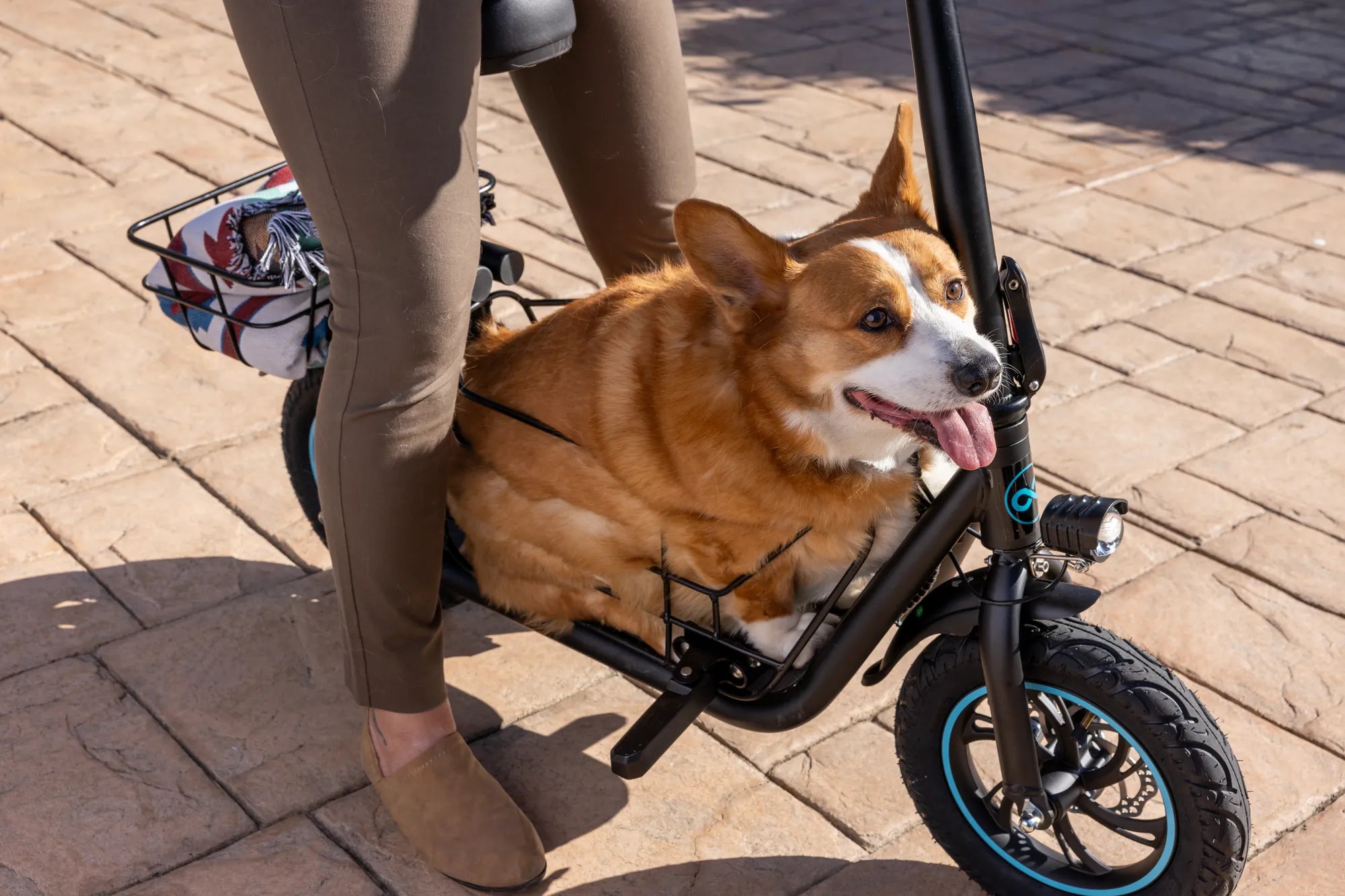
Introduction: The Rise of the Small Folding E Bike
The small folding e bike represents a fundamental shift in how we navigate congested urban environments. It directly solves the last-mile problem, seamlessly bridging the gap between public transit hubs and final destinations. This category merges the freedom and health benefits of cycling with electric assistance and unprecedented logistical convenience.
For over 100,000 riders across North America and Europe, brands like Gyroor have demonstrated that these are not mere toys but serious transportation tools. The core appeal lies in a powerful trifecta: eliminating parking fees, reducing carbon footprints, and offering a door-to-door travel solution that fits under a desk or in a closet. This guide provides the data-driven analysis you need to navigate this innovative market.
What Defines a Small Folding E Bike? Key Features and Benefits
A small folding e bike is characterized by three non-negotiable elements: a compact folded footprint, an integrated electric drive system, and a frame engineered for repeated folding without compromising structural integrity. Typical folded dimensions range from 30" x 18" x 20", allowing them to be stored vertically. The electric system usually consists of a hub motor (250W to 750W) and a removable lithium-ion battery pack.
The primary benefit is multimodal portability. You can ride to a train station, fold the bike in seconds, carry it aboard, and unfold it to complete your journey. This eliminates the security concerns and space limitations of traditional bike parking. The electric assist also democratizes cycling, making hills and longer distances manageable for riders of varying fitness levels.
Portability and Convenience for the Urban Commuter
Folding mechanisms vary from single-step designs, where the frame collapses around a central hinge, to multi-step processes involving handlepost and pedal folds. The best systems use robust locking latches and require no tools. Weight is a critical factor, with most quality models weighing between 35 and 55 pounds.
This weight range is a careful balance between durable construction and carry-ability. A 40-pound small folding e bike can be comfortably carried up a flight of stairs or through a subway turnstile. The folded package should have integrated carry handles or a design that balances easily. This transforms the bike from a vehicle into a piece of luggage, granting access to areas where standard bikes are prohibited.
Power and Performance: Not Just a Mini Bike
Performance is where the small folding e bike shatters expectations. A 350W motor provides ample power for flat urban terrain and moderate inclines, while 500W+ motors offer confident hill-climbing. Torque, measured in Newton-meters (Nm), is crucial for acceleration from a stop; look for motors with at least 40Nm of torque.
Most models offer multiple assist levels (e.g., Eco, Normal, Sport) and a throttle-only mode for effortless starts. The throttle allows the bike to function like a compact electric moped for short bursts. Top assisted speeds are typically 20 mph (Class 2) in the U.S., aligning with local regulations for bicycle path use. This combination ensures the bike is both a practical commuter and a responsive, enjoyable ride.
Critical Factors to Consider Before You Buy
Selecting the right model requires evaluating your specific needs against technical specifications. Key decision points include your daily commute distance, the presence of hills, storage space, and local regulations. Prioritizing factors like battery safety and water resistance will ensure long-term satisfaction and reliability.
A data-driven approach prevents overpaying for unneeded features or underestimating required performance. The following sections break down the most critical specifications, providing a framework for comparison. This analysis helps you invest in a tool, not just a gadget.
Battery and Range: Planning Your Commute
Battery capacity, measured in Watt-hours (Wh), is the fuel tank of your small folding e bike. A 375Wh battery is common for entry-level models, while 500Wh+ units support longer ranges. Manufacturers often claim ranges of 20-40 miles, but real-world results depend heavily on rider weight, terrain, wind, and assist level.
A practical rule is to derate the claimed range by 30-40% for planning. If your round-trip commute is 15 miles, seek a bike with a 25+ mile claimed range. Most importantly, insist on a UL-certified battery pack. As used by Gyroor, these batteries undergo rigorous testing for overcharge, short circuit, and thermal stability, significantly reducing fire risk over hundreds of charge cycles.
Build Quality, Weight Limit, and Durability
The frame is the foundation. Aerospace-grade aluminum alloy is the standard for its optimal strength-to-weight ratio. Critically examine the folding hinge and latch mechanism—it should feel solid, with minimal play when locked. The maximum load capacity typically ranges from 220 to 300 pounds, encompassing most riders and cargo.
Durability extends to environmental protection. An IPX5 water resistance rating, a benchmark in brands like Gyroor, means the bike can withstand water jets from any direction. This protects electrical components from rain and road spray, ensuring all-weather reliability. Avoid models with no stated IP rating, as moisture ingress is a leading cause of e-bike failure.
Ride Comfort and Safety Features
Wheel size dramatically affects ride quality. Smaller wheels (8"-14") enhance compactness but are more sensitive to bumps. Larger wheels (16"-20") provide better stability and roll over obstacles more easily. Pneumatic (air-filled) tires offer superior comfort and traction compared to solid rubber tires.
Safety is paramount. A dual braking system—such as front and rear disc brakes—provides consistent stopping power in all conditions. Integrated LED headlights and taillights, along with reflectors, are essential for visibility. A suspension fork or seat post suspension can greatly improve comfort on rough city streets, reducing fatigue on longer rides.
Small Folding E Bike vs. Other Micro-Mobility Options
Understanding the competitive landscape clarifies the unique value proposition of a small folding e bike. It sits between a full-size electric bicycle and a stand-up electric scooter, offering a distinct blend of features. The choice ultimately depends on your priority: portability, riding posture, range, or storage.
The following comparison highlights key trade-offs. A small folding e bike generally requires more storage space than a scooter when folded but offers a more natural, bicycle-style riding position. It typically has a longer range and better hill-climbing ability than most compact electric scooters due to larger batteries and more efficient drivetrains.
| Feature | Small Folding E Bike | Standard E-Bike | Electric Scooter |
|---|---|---|---|
| Folded Size | Very Compact (e.g., 30"x18"x20") | Not Foldable or Bulky Fold | Most Compact |
| Riding Posture | Seated, Bicycle-Style | Seated, Bicycle-Style | Standing |
| Typical Range | 20-40 Miles | 30-60 Miles | 15-25 Miles |
| Hill Climbing | Good (with mid-drive or >500W hub) | Excellent | Fair to Poor |
| Multi-Modal Ease | Excellent (fits on trains/buses) | Poor | Excellent |
| Storage at Home/Office | Fits in closet, under desk | Needs garage/bike rack | Fits under desk |
Maximizing Your Investment: Use Cases and Lifestyle Fit
The versatility of a small folding e bike extends far beyond a simple commute. It acts as a force multiplier for urban living, enabling efficient errand-running, expanding recreational horizons, and simplifying complex travel logistics. Its value is realized when it replaces multiple car trips or frustrating waits for delayed transit.
By integrating the bike into your daily routine, the initial investment pays dividends in saved time, money, and stress. The following scenarios illustrate how this single device can solve multiple transportation challenges, proving it's more than a novelty—it's a practical lifestyle upgrade.
The Perfect Commuter Companion
The classic use case is the hybrid commute. Ride 2-3 miles to the train or bus stop, fold and carry your bike aboard, then ride the final mile to your office. This door-to-door solution often beats driving in time and certainty during rush hour. Data from the U.S. Census Bureau shows the average one-way commute is 27.6 minutes; a small folding e bike can optimize a significant portion of that journey.
It also eliminates parking costs, which can exceed $300 per month in dense urban centers. For the "car-free" or "one-car" household, it provides reliable, independent mobility without the overhead of a second vehicle. The electric assist ensures you arrive at work sweat-free, even in business attire.
Beyond Commuting: Errands, Travel, and Recreational Riding
For local errands, a small folding e bike with a rear rack or basket can carry a surprising load of groceries. It navigates traffic and parking lots far more efficiently than a car. On weekends, its portability shines: fold it into the trunk of a car for a trip to a scenic trailhead or beach town, instantly giving you electric exploration capabilities.
For travelers, it can serve as a compact tourer in a new city, though airline policies on lithium batteries must be checked. Recreational riders enjoy the flexibility to extend their range without excessive physical strain, making longer, more scenic routes accessible. This multi-role functionality ensures the bike is used frequently, maximizing your return on investment.
FAQs About Small Folding E Bikes
1. How heavy are they, and are they easy to carry?
Most quality small folding e bikes weigh between 35 and 55 pounds. Models around 40 lbs are designed to be manageable for most adults to carry short distances, like up stairs or through a station. Look for integrated carry handles and a balanced folded shape.
2. How far can I realistically travel on a single charge?
Take the manufacturer's maximum range estimate and reduce it by 30-40% for real-world planning. Factors like hills, headwinds, higher assist levels, and rider weight reduce range. A bike with a 40-mile claim will typically achieve 25-30 miles under moderate assist on mixed terrain.
3. Do I need a license or insurance to ride one?
In most U.S. states, a small folding e bike classified as a Class 1 (pedal-assist only, up to 20 mph) or Class 2 (throttle-assisted, up to 20 mph) is treated as a bicycle. No driver's license, vehicle registration, or insurance is required. Always verify local regulations, as laws can vary by municipality.
4. Are they safe to ride in the rain?
Safety in rain depends on the bike's construction. A model with an IPX5 water-resistant rating is engineered to handle rain and wet roads. Combine this with appropriate tires (good tread) and cautious riding—avoiding painted lines and metal surfaces when wet—and wet-weather riding is viable. Never submerge the bike or charge it when wet.
5. What kind of warranty and support should I expect?
A comprehensive warranty is a sign of manufacturer confidence. Look for at least a 1-year warranty on the frame, motor, battery, and electronic components. Gyroor, for example, offers a 1-year comprehensive warranty with accessible, U.S.-based customer support. This is crucial for resolving any technical issues promptly.
Conclusion: Is a Small Folding E Bike Right for You?
The decision hinges on a clear assessment of your mobility pain points. If you face a frustrating last-mile gap, expensive or scarce parking, a desire to reduce car dependency, or simply need a flexible way to navigate a dense urban area, a small folding e bike is a compelling solution. It demands a balance of priorities: accepting a slightly larger folded package than a scooter for a more comfortable ride and greater range.
Prioritize models from established brands that invest in critical safety features like UL-certified batteries and IPX5-rated construction. This ensures your investment is protected and reliable for years. The right small folding e bike doesn't just change how you get from A to B; it reclaims time, reduces stress, and adds a layer of freedom to daily life. Explore engineering-focused brands that build for durability and safety.
Ready to transform your commute and explore the city on your terms? Browse the full Gyroor collection at gyroorboard.com to see models that combine portability, UL-certified safety, and robust performance trusted by a global community of riders.
Dirt Bike Tire Care: The Complete Guide to Safety, Performance, and Longevity
E Dirt Bike Helmet: The Essential Guide to Off-Road Electric Safety