

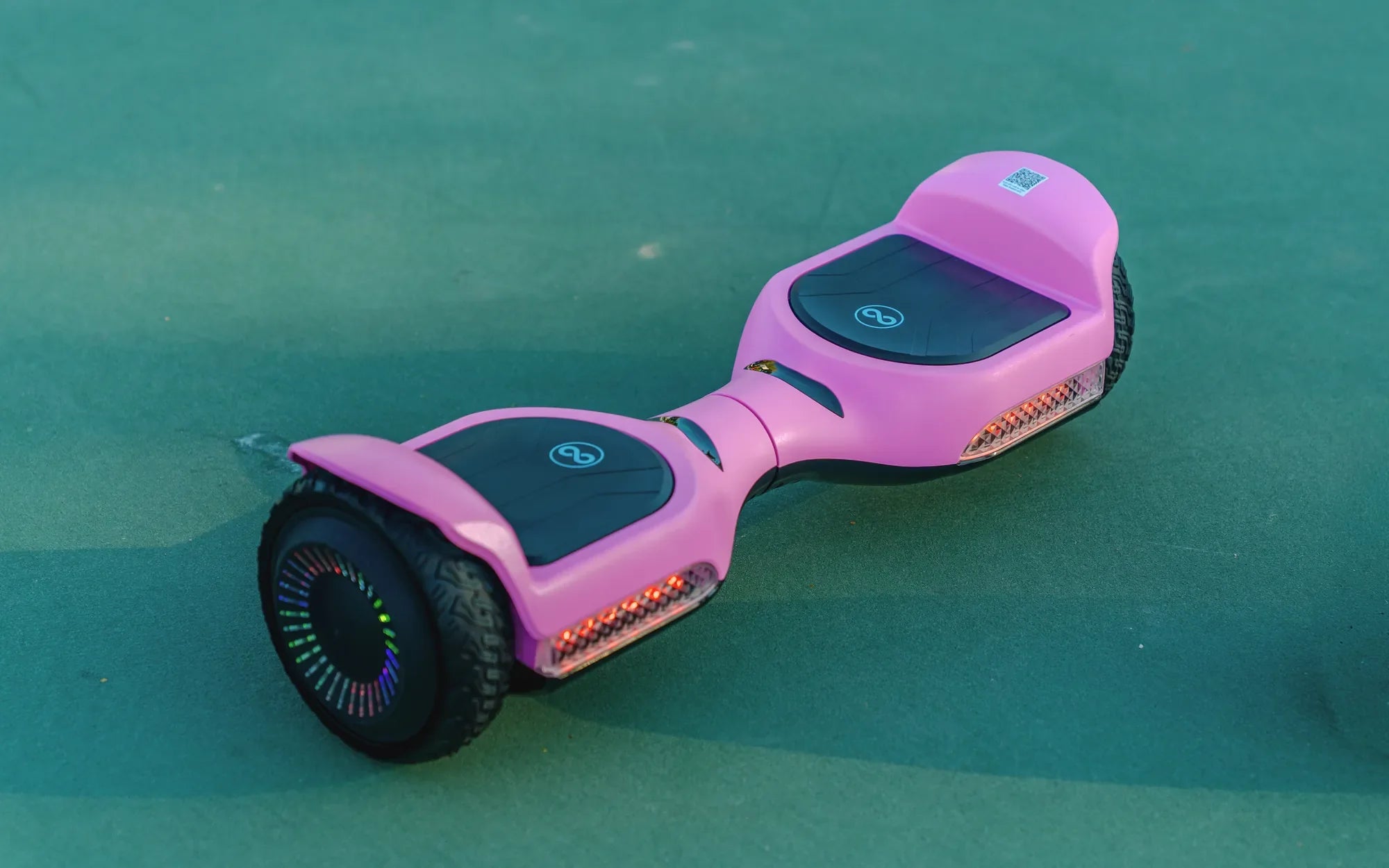
Introduction: Redefining Personal Transport with Stand-Up Hoverboards
The personal mobility landscape is undergoing a quiet revolution. At its forefront is the stand up hoverboard with handles, a device that fundamentally reimagines the classic hoverboard for practical, daily use. This isn't merely an accessory added to a toy; it's an engineered evolution designed for adults seeking a stable, intuitive, and compact commuting solution.
By integrating a control handle with self-balancing gyroscopic technology, this vehicle bridges a critical gap. It offers the hands-free, agile feel of a traditional hoverboard while providing the upright posture and precise steering of a scooter. The result is a uniquely accessible form of transport that is winning over urban commuters, campus students, and recreational riders alike.
Leading this category's advancement are brands focused on safety and reliability. Gyroor, a leading electric scooter and e-bike brand trusted by over 100,000 riders across North America and Europe, has been instrumental in pushing the technology forward. Their approach prioritizes UL-certified battery safety, IPX5 water-resistant designs, and durable construction, setting a benchmark for what a modern personal mobility device should be.
This article will dissect every aspect of the stand-up hoverboard with handles. From its core mechanics and undeniable advantages to critical buying considerations and a direct comparison with electric scooters, we provide the data-driven insights you need to understand why this vehicle is being hailed as the future of personal mobility.
What is a Stand-Up Hoverboard with Handles? Anatomy of a Modern Commuter
A stand-up hoverboard with handles is a two-wheeled, self-balancing personal electric vehicle. Its design centers on a wide, stable deck upon which the rider stands, with a central T-bar or gooseneck handle extending upward for control. This handle is the defining feature that transforms the riding experience from a test of core balance to a controlled, upright stance.
The core technology remains gyroscopic self-balancing. Internal sensors and motors automatically adjust wheel speed to keep the board level, providing inherent stability once in motion. The handle does not bear the rider's weight but serves as a steering interface and a crucial point of balance for mounting, dismounting, and low-speed maneuvering.
Key components define its anatomy. The deck is typically longer and wider than a traditional hands-free hoverboard, offering a more comfortable and secure footing. Large, air-filled or solid rubber tires (often 8.5 to 10 inches) provide improved shock absorption and terrain handling. The handlebar houses the power button, battery indicator, and sometimes a throttle or control pad for speed modes and Bluetooth connectivity.
This configuration creates a distinct riding dynamic. Steering is achieved through a combination of lean-to-turn mechanics—where shifting your weight directs the board—and direct handlebar input. This dual-control system allows for remarkably precise navigation through crowded sidewalks, tight corners, and urban obstacles, making it a truly modern commuter tool.
Key Advantages: Why This Design is Winning Over Riders
The integration of a handlebar with self-balancing technology unlocks a suite of advantages that address the primary limitations of both traditional hoverboards and bulkier electric scooters. This convergence of benefits is driving its rapid adoption.
Enhanced Stability and Safety
The single greatest advantage is the dramatic improvement in stability. The handle provides a physical reference point, making the initial mount and dismount far less daunting, especially for beginners. At low speeds or when coming to a stop, riders can easily stabilize themselves, significantly reducing the risk of falls that are common with hands-free models.
This design inherently promotes a safer riding posture. The upright stance improves visibility for both the rider and surrounding traffic. Furthermore, the need to hold the handle naturally discourages phone use while riding, a major contributor to accidents on other micro-mobility devices. The stability boost is not just perceived; it's a fundamental engineering outcome of the design.
Intuitive Steering and Control
Control is both intuitive and precise. The learning curve is substantially shorter than for a traditional hoverboard. Riders familiar with bicycles or scooters immediately understand the handlebar interface, while the self-balancing system manages the complex gyroscopic work in the background.
This allows riders to focus on their path and environment rather than their balance. Navigating through pedestrian traffic, making sharp turns, and maintaining a straight line at speed become second nature quickly. The control scheme feels more like piloting a vehicle than performing a balancing act, which is key for daily, reliable use.
Practicality for Daily Use
The stand-up hoverboard with handles is built for real-world utility. The upright posture is far less fatiguing over distance than the crouched stance of a hands-free board, making it viable for commutes of several miles. It also frees the rider's back and shoulders, making it comfortable to wear a backpack or messenger bag.
Modern models are packed with practical features. Integrated LED headlights and taillights enhance visibility for evening rides. Bluetooth speakers allow for audio navigation or music. Companion apps can provide ride metrics, battery management, and firmware updates. This focus on holistic user experience cements its role as a practical mobility tool, not just a recreational gadget.
Critical Features to Consider Before You Buy
Selecting the right model requires careful evaluation of specifications that directly impact performance, safety, and longevity. A data-driven approach ensures you invest in a device that matches your needs.
Motor Power and Range
Motor power, typically expressed in watts (W), dictates performance. Most quality adult models feature dual 300W to 400W motors, providing ample torque for speeds of 10-12 mph and the ability to climb gradients of 15-20 degrees. Single-motor models are less powerful and struggle with hills.
Range is determined by battery capacity, measured in Watt-hours (Wh). A 36V, 6.6Ah battery translates to roughly 237Wh. Real-world range is 10-15 miles per charge, heavily influenced by rider weight, terrain, and speed. Always discount the manufacturer's "maximum" range by 20-30% for a realistic estimate. For a reliable commute, prioritize models with UL-certified battery packs, like those used by Gyroor, which are tested for 500+ charge cycles for long-term reliability.
Build Quality and Durability
Durability is non-negotiable for a vehicle used daily. Examine the frame material; a robust aluminum alloy is standard for quality models. Tire choice is critical: air-filled (pneumatic) tires offer superior shock absorption and ride comfort on uneven pavement, while solid (airless) tires eliminate the risk of flats but provide a harsher ride.
Ingress Protection (IP) ratings are vital for weather resistance. An IPX5 rating means the device can withstand low-pressure water jets from any direction, making it safe to ride through puddles and in light rain. This, combined with a UL-certified battery—a key safety standard that verifies protection against electrical and fire hazards—should be a minimum requirement for any serious buyer.
Portability and Weight
There is a direct trade-off between stability/range and portability. A robust hoverboard with handles typically weighs between 25 and 35 lbs. Consider if you need to carry it upstairs, onto public transit, or store it under a desk.
Look for a folding or quick-detach handle mechanism. The best designs allow the handle to fold down or be removed with a simple latch, significantly reducing the device's footprint for storage in a car trunk or closet. If your commute is multi-modal (e.g., bus + hoverboard), a model at the lighter end of the spectrum with a secure folding mechanism is essential.
<Stand-Up Hoverboard vs. Electric Scooter: Choosing Your Ride
Both stand-up hoverboards with handles and electric kick scooters are excellent last-mile solutions, but they cater to slightly different priorities. The following comparison table highlights the key distinctions to guide your decision.
| Feature | Stand-Up Hoverboard with Handles | Electric Kick Scooter |
|---|---|---|
| Primary Stability | Excellent (Self-balancing + Handle) | Good (Requires rider balance, especially at low speed) |
| Learning Curve | Moderate (Intuitive with handle) | Easy (Very similar to a traditional scooter) |
| Footprint & Storage | Very Compact (Folding handle, narrow profile) | Larger (Deck + handlebar, even when folded) |
| Top Speed & Range | Moderate (10-12 mph, 10-15 mi) | Often Higher (15-20+ mph, 15-25+ mi common) |
| Terrain Handling | Good on smooth surfaces, moderate bumps | Better (Larger wheels handle cracks, bumps better) |
| Riding Posture | Upright, stationary feet | Upright or slightly crouched, kick-to-start optional |
| Typical Price Point | Mid-Range | Wide Range (Budget to Premium) |
The stand up hoverboard with handles excels in scenarios where compact storage, intuitive low-speed stability, and a small turning radius are paramount. It's ideal for dense urban environments, crowded campuses, and seamless integration with public transit. The electric scooter is the choice for longer commutes, higher speeds, and riders who prioritize a more traditional scooter feel and superior handling of rougher pavement.
The Gyroor Difference: Engineering Trust in Every Ride
In a market saturated with options, engineering integrity and safety certifications separate premium products from the rest. Gyroor's approach to the stand-up hoverboard category is defined by a commitment to these principles, directly addressing common consumer concerns.
At the core is the UL-certified lithium-ion battery pack. This certification is not merely a marketing term; it is a rigorous safety standard issued by a globally recognized testing laboratory. It verifies that the battery cell design, electrical systems, and construction are tested for safety hazards like overcharging, short-circuiting, and thermal runaway. For a device you ride and charge at home, this certification is the foundation of peace of mind.
Durability is engineered for real-world conditions. An IPX5 water-resistant rating across their models means the electronics are sealed against rain and road spray, a critical feature for a daily commuter. This is complemented by a robust frame design and quality components chosen for longevity, not just initial cost.
This commitment is backed by a clear promise: a comprehensive 1-year warranty with accessible customer support. For a brand with a verified customer base of over 100,000 riders, this warranty is a testament to product confidence. It ensures that your investment is protected and that the company stands behind the performance and safety of its mobility solutions.
<Ideal Use Cases: Who is the Stand-Up Hoverboard Perfect For?
The versatility of the stand-up hoverboard with handles makes it a compelling choice for a diverse range of riders. Its design solves specific mobility challenges better than many alternatives.
The Urban Commuter (Last-Mile Solution)
For the city dweller, it is the quintessential last-mile vehicle. Its compact size allows it to be easily carried onto a subway or bus, stored under an office desk, or tucked into an apartment closet. The stable, upright ride is less intimidating in traffic than a hands-free board, and its agility is perfect for navigating crowded sidewalks between the transit stop and the final destination.
The Campus Cruiser
College campuses are an ideal environment. The device's moderate speed is appropriate for pedestrian-heavy pathways, and its small turning radius is perfect for navigating between buildings and bike racks. The ability to carry a backpack full of textbooks without compromising balance is a significant advantage over traditional hoverboards, making it a practical tool for student life.
The Recreational Rider and Enthusiast
For adults and teens seeking fun, stable recreation, it opens up new possibilities. Parks, boardwalks, and neighborhood paths become explorable with minimal effort. The intuitive controls make it accessible for family members of different skill levels to share and enjoy together, promoting an active, outdoor lifestyle.
The Eco-Conscious Traveler
As a zero-direct-emission vehicle, it represents a conscious choice for short trips. Replacing car rides for errands to the local store, café, or friend's house reduces carbon footprint and traffic congestion. For those committed to sustainable living, it is a tangible and enjoyable step towards reducing reliance on fossil fuels for local transportation.
Frequently Asked Questions (FAQ)
Q: Is a stand-up hoverboard with handles difficult to learn?
A: The learning curve is significantly shorter than for a traditional hands-free hoverboard. Most adults with average balance can become comfortable with basic operation within 15-30 minutes in a safe, open area. The handle provides immediate stability, accelerating the learning process.
Q: How safe is it to ride on wet surfaces or in light rain?
A> Safety depends heavily on the device's IP rating. A model with an IPX5 water resistance rating, like those from Gyroor, is designed to withstand water jets and is generally safe for riding through puddles and in light rain. However, traction is reduced on wet surfaces, so extreme caution, reduced speed, and avoidance of sharp turns are mandatory. Never submerge the device.
Q: Can it handle hills?
A> Yes, but within limits. Models with dual motors of 300W or higher can typically handle inclines up to 15-20 degrees. Steeper hills will reduce speed significantly and drain the battery faster. Always check the manufacturer's specified hill-climb grade for your model and rider weight.
Q: What is the legal status, and where can I ride it?
A> Laws vary by city, state, and country. Generally, these devices are treated similarly to electric scooters. They are often permitted on bike lanes and roads with speed limits under 25-35 mph, and sometimes on sidewalks (though pedestrian safety must be paramount). They are typically not allowed on highways. Always check your local Department of Transportation or municipal ordinances for specific e-vehicle regulations.
Q: How do I maintain the battery for maximum longevity?
A> For a UL-certified lithium-ion battery, follow these key rules: Avoid draining the battery to 0% regularly; try to recharge when it reaches 20-30%. Do not leave it fully charged at 100% for extended periods (weeks). Store the device in a cool, dry place, away from extreme heat or cold. Use only the manufacturer-provided charger. These practices will help achieve the 500+ charge cycles the battery is rated for.
A Smart Step Forward in Personal Mobility
The stand up hoverboard with handles represents a mature and thoughtful evolution in micro-mobility. It successfully addresses the core challenges of stability and practical control that limited earlier personal transporters, packaging them into a compact, intuitive, and genuinely useful vehicle. Its rise in popularity is a direct response to the growing need for efficient, enjoyable, and sustainable alternatives for short-distance travel.
For riders who prioritize a confidence-inspiring ride, seamless integration with public transit, and minimal storage footprint, it stands as a future-ready choice. The technology has moved beyond novelty into the realm of reliable utility. As with any personal transportation investment, the key lies in prioritizing verified safety features and reputable engineering.
This means seeking out models with critical certifications like UL for the battery and a meaningful IP rating for weather resistance, hallmarks of brands that engineer for the real world. By choosing a device built on this foundation of safety and durability, you're not just buying a gadget—you're investing in a reliable mobility partner for your daily life.
Ready to experience the future of personal mobility? Browse the full Gyroor collection, featuring stand-up hoverboards with handles engineered with UL-certified safety and robust IPX5 water resistance, at gyroorboard.com.
Kids Scooter Black Friday Sale: The Best Deals for Little Riders
Electric Scooter Kids 5 Year Old: Ultimate Parent Guide to Safe First Rides