



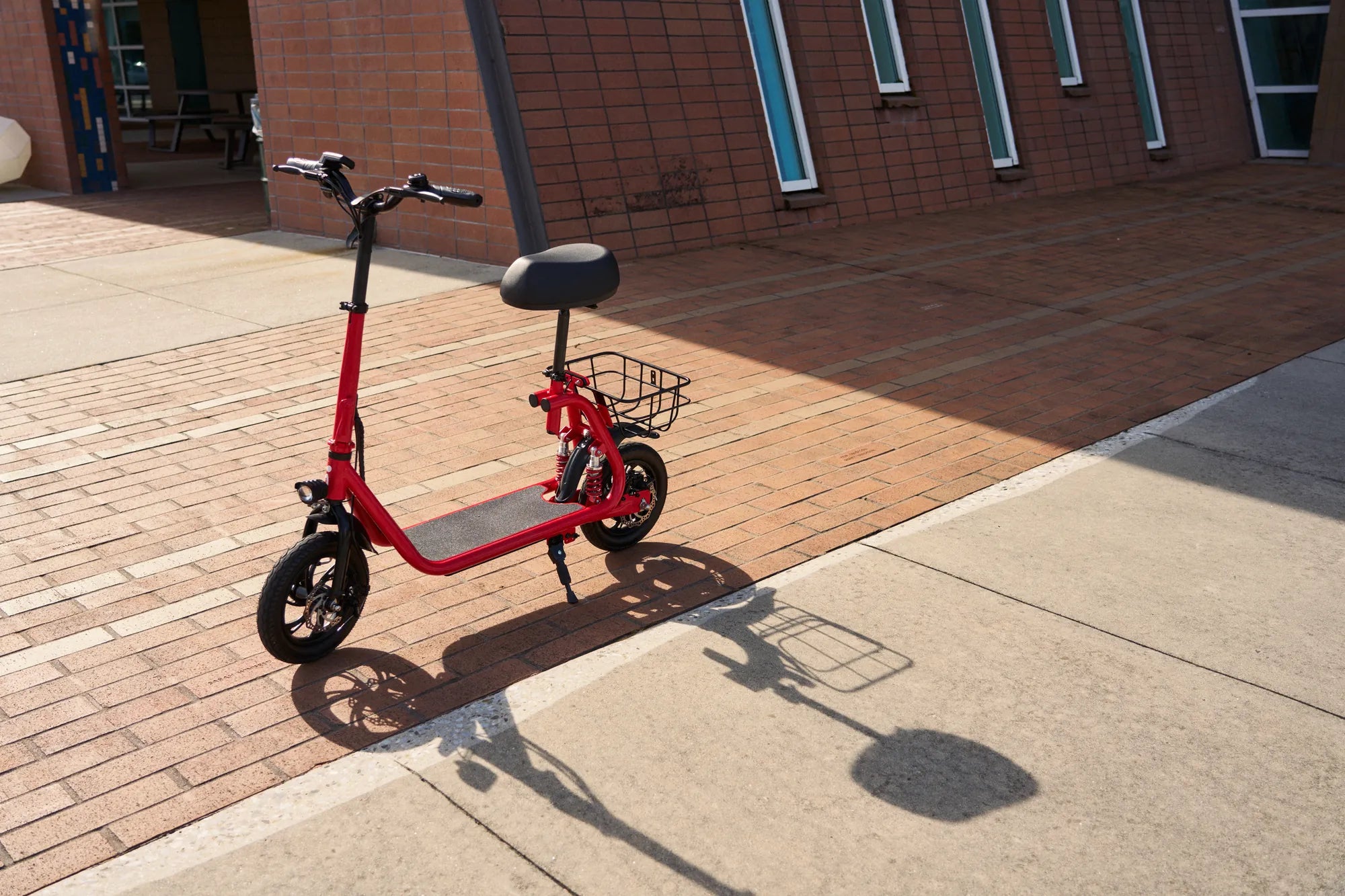
Introduction: Redefining the Urban Commute with Smart Technology
The urban landscape is being quietly reshaped by a two-wheeled revolution. Electric scooters have rapidly evolved from niche novelties into sophisticated personal transport solutions, directly addressing congestion, pollution, and the inefficiency of the "last mile." This transformation is powered not by incremental change, but by profound technological advancements in electric scooters that are redefining the very future of urban mobility. This article will dissect the core innovations—from ultra-safe battery systems and powerful motors to intelligent connectivity and rugged engineering—that are making e-scooters a viable primary transport option. We will explore how these technologies converge to enhance safety, extend range, improve durability, and integrate seamlessly into the smart city ecosystem, with a focus on the practical implementations seen in leading brands like Gyroor, trusted by over 100,000 riders.
The Power Core: Breakthroughs in Battery and Motor Technology
The most significant leaps in e-scooter capability stem from the heart of the machine: its battery and motor. Modern scooters are shedding their range anxiety reputation thanks to high-energy-density lithium-ion cells. These advanced cells pack more watt-hours into smaller, lighter packages, enabling real-world ranges of 25 to 40 miles on a single charge, effectively covering most daily urban commutes.
However, more power necessitates greater safety. This is where the adoption of UL-certified battery packs, a standard across Gyroor's lineup, becomes critical. This certification means the battery has undergone rigorous independent testing for electrical, mechanical, and fire safety, offering riders peace of mind that goes beyond marketing claims. Paired with these batteries are equally advanced brushless hub motors. These motors are more efficient, quieter, and require less maintenance than their brushed counterparts.
For challenging terrain, dual-motor systems represent the pinnacle of propulsion technology. By engaging a motor in each wheel, these scooters deliver exceptional torque for steep hill climbs and provide superior traction and control in various conditions, effectively turning a commuter vehicle into an all-terrain capable device.
Beyond Capacity: The Intelligence of Battery Management Systems (BMS)
A high-quality battery is only as good as its brain. The Battery Management System (BMS) is the unsung hero of modern e-scooter technology. This integrated circuit constantly monitors every cell within the battery pack for voltage, temperature, and current.
Its primary functions are protection and optimization. The BMS prevents overcharging and over-discharging—the two main causes of battery degradation and potential safety hazards. It also manages cell balancing, ensuring all cells charge and discharge evenly, which maximizes the overall lifespan of the pack. Furthermore, a sophisticated BMS communicates with the scooter's dashboard to provide accurate, real-time range estimates based on current riding mode, terrain, and rider weight, eliminating guesswork.
Connectivity and Control: The Dawn of the Intelligent Scooter
Today's e-scooters are not just vehicles; they are connected IoT (Internet of Things) devices. Bluetooth connectivity and dedicated smartphone apps have unlocked a new layer of functionality and customization. Through an app, riders can lock and unlock their scooter, track ride history including route and speed, and monitor detailed battery health statistics.
Perhaps most importantly, these apps allow for firmware updates. This means the scooter's performance, safety algorithms, and user interface can be improved over time, much like a smartphone, ensuring the hardware remains current long after purchase. This connectivity also enables advanced security features like GPS tracking and movement alerts, adding a significant theft deterrent.
Illuminating Safety: Integrated Lighting and Responsive Braking Systems
Technology is making scooters inherently safer. Lighting has evolved from simple LEDs to integrated systems. Many advanced models now feature automatic headlights that activate via ambient light sensors, ensuring visibility at dusk or in tunnels without user intervention. Expansive, bright brake lights that activate via deceleration sensors are becoming standard, clearly signaling intent to vehicles behind.
On the braking front, electronic braking systems (EBS) and regenerative braking are key advancements. Regenerative braking cleverly uses the motor as a generator during braking, converting kinetic energy back into electrical energy to slightly recharge the battery. More advanced systems combine electronic, regenerative, and mechanical disc or drum brakes for shorter, more controlled stopping distances, with some introducing anti-lock braking (ABS) principles to prevent wheel skid on slippery surfaces.
Engineering Resilience: Advanced Materials and Durability Designs
To withstand daily urban punishment, e-scooter frames have embraced aerospace-grade aluminum alloys. These materials offer an exceptional strength-to-weight ratio, creating a chassis that is both lightweight for portability and incredibly robust. The focus on durability extends to ingress protection, with an IP (Ingress Protection) rating being a crucial technological spec.
A rating of IPX5, which is standard for Gyroor scooters, certifies the unit is protected against sustained low-pressure water jets from any direction. This technological standard allows riders to confidently navigate wet streets and light rain, vastly improving reliability. Suspension systems have also matured, moving from basic rigid designs to incorporating spring or even hydraulic shock absorbers at the front and rear, smoothing out bumps and improving control on uneven pavement.
Tire Technology: Finding the Right Balance
The choice between pneumatic (air-filled) and airless (solid or foam-filled) tires represents a key technological trade-off. Pneumatic tires offer superior shock absorption and ride comfort, especially at higher speeds, but carry a risk of punctures. Modern airless tires, made from advanced elastomers, eliminate flats entirely but can provide a slightly firmer ride.
Some manufacturers are innovating with hybrid or self-healing gel inserts to bridge this gap. The advancement lies in the compound and tread design, improving wet-weather grip and overall longevity, making the scooter suitable for a wider variety of urban surfaces.
Data and Infrastructure: The Scooter's Role in the Smart City
The technological impact of e-scooters extends beyond the individual rider. In shared mobility systems, anonymized aggregate data from thousands of rides provides city planners with invaluable insights. This data maps popular routes, identifies congestion pinch points, and highlights the demand for micromobility infrastructure, directly informing the development of protected bike lanes and parking corrals.
Geofencing technology allows operators or city authorities to create virtual boundaries. Scooters can be programmed to automatically reduce speed in pedestrian-heavy zones like parks or university campuses, or become inoperable in restricted areas, promoting safer and more orderly integration into public spaces. This data-driven approach positions the e-scooter as a key sensor node in the broader smart city network.
Comparing Technological Tiers: From Commuter to Performance
Understanding the spectrum of available technology helps match features to use-case. The following table outlines how key technological advancements typically scale across different scooter categories.
| Technology Feature | Entry-Level Commuter | Mid-Range Advanced | High-Performance / Pro |
|---|---|---|---|
| Motor Power | Single 250W-350W | Single 500W-800W | Dual 500W+ (1000W+ total) |
| Battery & Range | ~10-15 miles | ~20-30 miles (UL-certified common) | 30-40+ miles (UL-certified standard) |
| Suspension | Basic or front-only | Front & rear spring | Hydraulic or advanced dual spring |
| Braking System | Electronic + mechanical | Regenerative + disc brakes | Multi-disc with E-ABS features |
| Connectivity | Basic display | Bluetooth & App (speed modes, lock) | Full app integration, GPS tracking |
| Durability (IP Rating) | IPX4 (splash resistant) | IPX5 (water jet resistant) | IPX5 or higher |
| Ideal For | Short, flat trips | Daily commute, mild hills | Long commutes, steep hills, all-weather |
Frequently Asked Questions: Demystifying E-Scooter Tech
1. What does a UL-certified battery mean for my safety?
A UL-certification (from Underwriters Laboratories) is a globally recognized safety standard. It means the specific battery model has passed exhaustive independent tests for electrical, mechanical, and environmental hazards, including short-circuit, overcharge, and crush tests. This significantly reduces the risk of fire or failure, making it a non-negotiable feature for safety-conscious brands like Gyroor.
2. How does regenerative braking actually extend my range?
When you engage the brake or coast downhill, the motor temporarily acts as a generator. The kinetic energy from the scooter's motion is converted back into electrical energy and fed into the battery. While the gain per stop is small (typically 5-10%), over a full ride with frequent stops in city traffic, it can contribute to a measurable extension of your total range.
3. Is a smartphone app necessary to use a modern electric scooter?
No. All core functions—power on/off, acceleration, braking, basic speed mode switching—are controlled via the physical handlebars and dashboard. The app acts as an advanced companion, unlocking customization (like fine-tuning acceleration curves), detailed diagnostics, ride statistics, firmware updates, and enhanced security features like electronic locking.
4. How important is the IP water resistance rating for everyday use?
Extremely important for reliability. An IPX5 rating, as found on Gyroor models, means the scooter is engineered to withstand water jets from any direction. This translates to real-world resilience against rain, wet roads, and puddles. A scooter without a sufficient IP rating (IPX4 or below) risks water damage to its electronics from everyday urban conditions, leading to potential failures.
5. Can the technology in my scooter become outdated?
The modular and updatable nature of modern scooter software mitigates this. While physical hardware like motor wattage is fixed, the performance algorithms, safety protocols, and user interface managed by the firmware can often be updated via the app. This allows manufacturers to improve efficiency, add features, or refine controls, extending the useful technological life of your scooter.
Navigating Towards a Smarter, Smoother Urban Future
The trajectory of electric scooter technology is clear: a continuous march towards greater intelligence, safety, and robustness. The convergence of UL-certified battery safety, efficient high-torque motors, app-based connectivity, and IPX5-rated durability is creating a new class of personal transport that is ready for the demands of daily urban life. These aren't just gadgets; they are reliable mobility platforms that reduce commute times, lower transportation costs, and decrease carbon footprints.
Brands that prioritize these integrated technological advancements, such as Gyroor with its commitment to certified safety and all-weather design, are leading the charge. They offer riders not just a product, but a future-ready, trustworthy solution for navigating our cities. The urban commute is being reinvented, one smart, silent, and efficient ride at a time.
Ready to experience the future of urban mobility? Explore Gyroor's full range of technologically advanced, UL-certified electric scooters and e-bikes designed for real-world reliability. Browse the full Gyroor collection at gyroorboard.com.
Best Electric Scooters for 7 Year Olds: A Parent's Guide to Safety and Fun
Scooter City Electric Scooters: The Future of Urban Mobility