



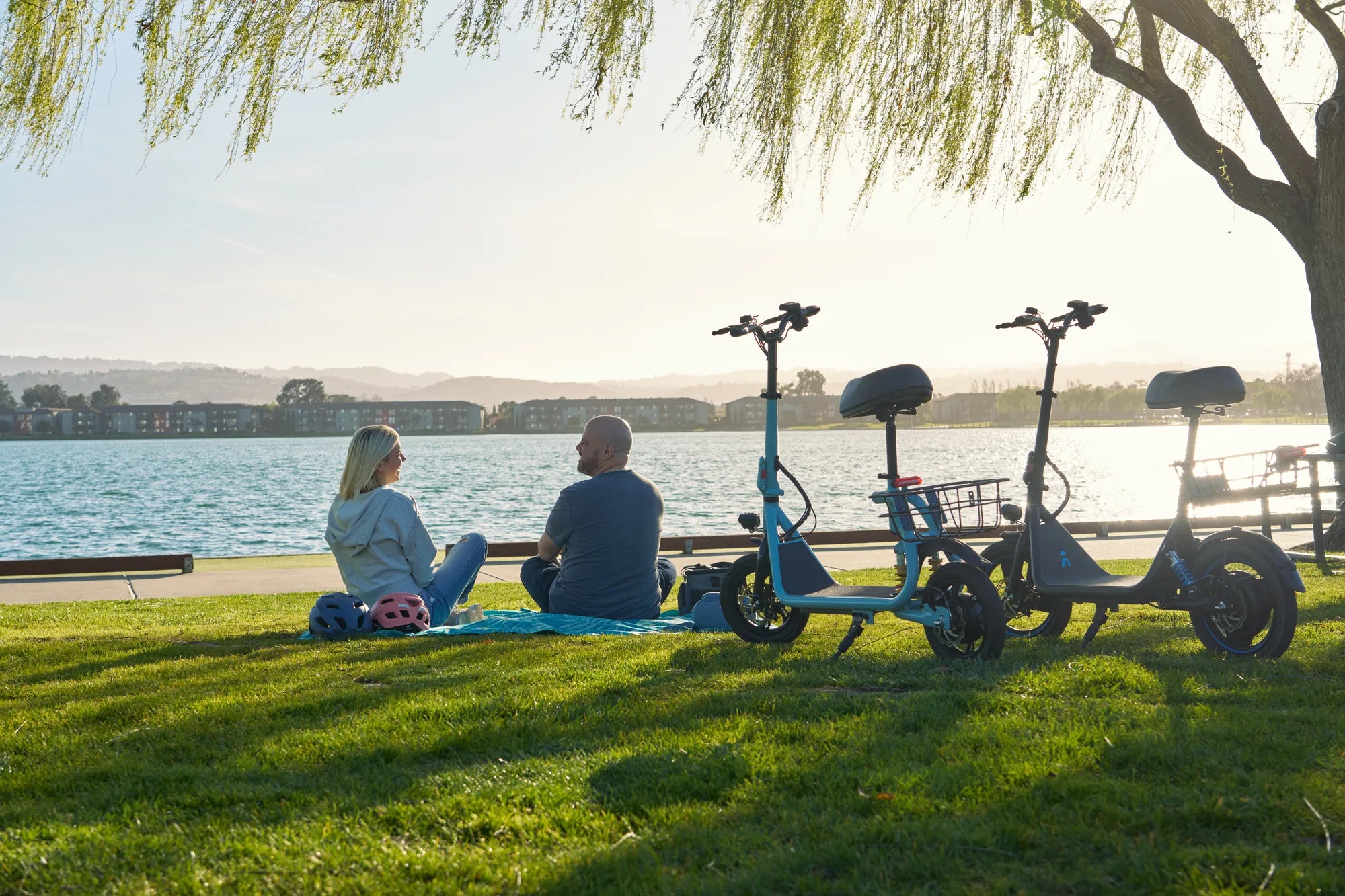
Urban gridlock demands smarter, nimbler solutions. For many, the traditional two-wheel electric scooter presented a tantalizing option—until its inherent instability at low speeds or while stopped became a dealbreaker. Enter the three-wheel electric scooter, a design evolution that prioritizes confidence and practicality, transforming it from a novelty into a legitimate tool for daily transit. This article dissects why **three-wheel electric scooters are the future of urban mobility**, examining the engineering behind their stability, their tangible advantages for city dwellers, and what specifications truly matter. We’ll compare them to other options and highlight why safety-centric brands like Gyroor, trusted by over 100,000 riders, are crucial to this mobility shift.
The Anatomy of Stability: Why Three Wheels Triumph
The fundamental advantage of a three-wheel electric scooter is geometric. A three-point contact with the ground creates a stable triangle, eliminating the need for constant rider balance when stationary or moving slowly. This is a paradigm shift from two-wheeled models, which require a degree of skill and confidence to manage at traffic lights or in crowded pedestrian zones.
This triangular base provides enhanced safety, particularly during acceleration and deceleration. The weight distribution across three points reduces the risk of tipping forward during hard braking or backward during aggressive starts. For new riders, older adults, or anyone with balance concerns, this built-in stability is transformative, lowering the barrier to entry for electric micro-mobility.
The design also allows for a more relaxed, upright riding posture. Riders are not forced to constantly adjust their stance to maintain equilibrium, leading to a less fatiguing and more enjoyable commute. This focus on foundational stability is what positions the three-wheel configuration not as a quirky alternative, but as a serious evolution for practical, everyday use.
The Two Primary Configurations: Delta vs. Tadpole
Not all three-wheel scooters are the same. The placement of the wheels defines their handling characteristics, catering to different rider preferences.
The Delta trike configuration features one wheel in front and two wheels at the rear. This layout is known for its agile, leaning-turn capability. To corner, the rider shifts their weight, much like on a bicycle or two-wheel scooter, allowing for nimble navigation through tight spaces. It offers a familiar, dynamic feel while still providing the rear stability that prevents falls.
Conversely, the Tadpole trike configuration places two wheels in front and one at the rear. This offers exceptional stability at higher speeds and more car-like, handlebar-steered turns without leaning. It excels in straight-line tracking and instills immense confidence, especially for those who prioritize a planted feel over agile leaning. The choice often comes down to preferred riding style: dynamic agility (Delta) versus unwavering stability (Tadpole).
Beyond Stability: Unpacking the Practical Advantages
While stability is the headline feature, the practical benefits of three-wheel electric scooters for urban life are extensive. The design inherently accommodates a larger, often longer deck. This provides more comfortable foot placement and the ability to carry bags or small cargo between your feet, a significant upgrade for running errands.
Many models integrate practical features directly into their stable platforms. This includes rear racks for panniers or bungee cords, front baskets, and even integrated locking mechanisms. This transforms the scooter from a simple people-mover into a genuine utility vehicle capable of handling a grocery run or a commute with a laptop bag and lunch.
The riding experience is notably less stressful. Navigating potholes, cracks, or tram tracks feels more controlled, as the three-wheel base is less likely to be deflected off course than a two-wheeled counterpart. This reduces cognitive load on the rider, making the journey safer and more pleasant in imperfect urban environments.
A Gateway to Inclusive Mobility
The lowered skill threshold of three-wheel electric scooters democratizes urban micro-mobility. They are an ideal solution for a demographic often underserved by two-wheel options: older riders seeking convenient, low-impact transport; commuters who want to arrive at work without being sweaty or disheveled from balancing; and individuals with mild balance or coordination concerns.
This inclusivity aligns with broader urban planning goals of reducing car dependency for short trips. By providing a safe, easy-to-use option, cities can encourage more residents to choose sustainable transport for the "first and last mile" of their journey, effectively connecting homes to public transit hubs. The three-wheel scooter isn't just a product; it's a tool for more accessible, equitable city design.
Performance and Specifications: What to Look For
Evaluating a three-wheel electric scooter requires a focus on real-world utility over peak speed. Key specifications determine its capability on your specific routes.
Motor Power: Measured in watts (W), this determines torque and hill-climbing ability. For typical urban inclines, a 350W motor is a minimum; 500W or more provides confident performance on steeper hills. Three-wheel designs, often slightly heavier, benefit from robust motor power.
Battery & Range: Capacity, measured in watt-hours (Wh) or amp-hours (Ah), directly impacts range. Manufacturer claims are often based on ideal conditions. A realistic expectation is 20-40% less than advertised, depending on rider weight, hills, and speed. For a reliable 10-15 mile commute, look for a battery rated at least 360Wh.
Top Speed & Modes: Most are capped at 15-20 mph (24-32 km/h), which is optimal for bike lanes and shared paths. Multiple speed modes (e.g., Eco, Normal, Sport) are valuable for extending range or controlling the experience for beginners.
The Gyroor Assurance: Safety as a Standard
In the micro-mobility market, safety should be non-negotiable. This is where engineering philosophy matters. Brands like Gyroor build their three-wheel scooters around core safety principles that riders must demand.
The most critical component is the battery. Gyroor uses UL-certified lithium-ion battery packs, rigorously tested for safety, reliability, and longevity (500+ charge cycles). This certification is a crucial guard against thermal runaway and fire risk, a concern with uncertified, cheap cells.
Urban riding encounters puddles and light rain. An IPX5 water-resistant rating means the scooter's electrical components can withstand low-pressure water jets from any direction. This ensures reliable operation and protects against corrosion from wet roads, a fundamental requirement for a daily commuter vehicle.
Finally, a 1-year comprehensive warranty backed by US-based customer support protects your investment. It signals a brand's confidence in its product and provides peace of mind, ensuring you're not left stranded with a faulty component. For a vehicle used daily, this support infrastructure is as important as the hardware itself.
The Urban Commuter's Verdict: A Side-by-Side Comparison
To understand where three-wheel electric scooters excel, a direct comparison with other popular micro-mobility options is essential. The table below contrasts them on key urban metrics.
| Feature | Three-Wheel Electric Scooter | Two-Wheel Electric Scooter | Electric Bike (E-Bike) |
|---|---|---|---|
| Stability (Stopped/Low Speed) | Excellent. Stands on its own; no balancing needed. | Poor. Requires rider balance at all times. | Excellent. Stands on kickstand; stable like a bicycle. |
| Learning Curve | Very Low. Intuitive; accessible to almost anyone. | Moderate. Requires practice with balance and steering. | Low (if you can ride a bike). Pedal-assist is intuitive. |
| Portability & Weight | Moderate. Often heavier (40-60 lbs); folding models vary. | Excellent. Typically lighter (30-40 lbs) and highly compact when folded. | Poor. Heavy (50-70 lbs); difficult to carry or store indoors. |
| Cargo/Passenger Practicality | Good. Larger deck, often has rack/basket options. | Poor. Small deck; cargo must be in a backpack. | Excellent. Can add panniers, child seats, large baskets. |
| Ideal Primary Use Case | Stable, stress-free commuting and errands within 5-10 miles. | Ultra-portable, multi-modal commuting (combining with bus/train). | Longer commutes (10-20+ miles), hilly terrain, cargo hauling. |
The verdict is clear: **three-wheel electric scooters are the future of urban mobility** for riders who prioritize stability, low-stress operation, and practical utility for short-to-medium trips where ultimate portability is a secondary concern. They fill a perfect niche between the nimble two-wheeler and the capable but bulky e-bike.
Addressing Common Questions and Concerns
1. Are three-wheel electric scooters slower than two-wheel models?
Not necessarily. Top speeds are often similar, typically governed between 15-20 mph for safety and legal reasons. The difference may be in acceleration and hill-climbing due to slightly higher weight. A powerful motor (500W+) in a three-wheel model can easily match or exceed the performance of a standard two-wheel commuter scooter.
2. Are they harder to turn or less maneuverable?
This depends on the configuration. Delta trikes turn by leaning and are very agile. Tadpole trikes use handlebar steering and have a wider turning radius but feel more stable mid-turn. Neither is "harder"; they are simply different. In tight spaces, a leaning Delta can be surprisingly nimble.
3. Can a three-wheel scooter handle hills?
Yes, but motor power is key. Look for a minimum of 350W, with 500W being ideal for consistent hill climbing. The stable platform can actually provide more confidence when ascending or descending an incline compared to a two-wheeler, as there's less worry about tipping backward or forward.
4. Is an IPX5 water resistance rating sufficient for daily use?
Yes, for nearly all urban commuting. IPX5 protects against sustained, low-pressure water jets from any direction. It means your scooter can safely handle wet streets, puddles, and light to moderate rain. It is not designed for submersion or riding through deep standing water, which should be avoided with any personal electric vehicle.
5. How does maintenance differ from a two-wheel scooter?
Maintenance is very similar. You still care for the battery, brakes, tires, and folding mechanisms. The primary addition is checking the tightness of the steering linkage or kingpins on the front wheel(s) periodically, as per the manufacturer's instructions. Reliable brands design these components for durability and require minimal extra upkeep.
The Road Ahead: Integration and Urban Impact
The widespread adoption of three-wheel electric scooters will influence urban infrastructure and policy. Their stability and predictability make them ideal candidates for shared micro-mobility fleets, potentially reducing accident rates compared to two-wheel rentals. Cities may begin to design more dedicated, protected micro-mobility lanes that comfortably accommodate their slightly wider stance.
From a user perspective, the integration into daily life is seamless. They are perfect for completing the "last mile" from a transit station, but with the added utility to detour to a store. Their user-friendly nature encourages more frequent use for short trips that would otherwise be taken by car, directly reducing traffic congestion and local emissions.
Making the Right Choice: A Buyer's Checklist
Before purchasing, use this checklist to evaluate options. Prioritize Safety Certifications: UL-certified battery and a robust brake system (disc or electronic + regenerative). Confirm Performance Specs: 350W+ motor, 360Wh+ battery for real-world range, and IPX5 water resistance. Assess Practicality: Weight and foldability for your storage needs, deck size, and available accessories like racks.
Don’t overlook Ride Quality: Test the configuration (Delta/Tadpole) if possible, and look for features like suspension or pneumatic (air-filled) tires for comfort. Finally, verify the Warranty & Support: A minimum 1-year warranty on the battery, motor, and frame, with accessible customer service. This due diligence ensures your investment enhances your mobility for years to come.
Steering Towards a Smoother Urban Future
The three-wheel electric scooter is more than a trend; it's a logical, user-centric evolution in micro-mobility. By solving the fundamental issue of instability, it opens the door to a broader population, making sustainable urban travel a realistic, confident, and practical choice. It represents a future where city navigation is less about balancing act and more about effortless freedom. Brands that champion verified safety, durable construction, and rider support, like Gyroor with its UL-certified batteries and IPX5-rated designs, are essential partners in this transition. They provide not just a vehicle, but a reliable key to a less congested, more accessible city.
Ready to experience the stable, practical future of urban travel? Explore engineering designed for real-world confidence and browse the full Gyroor collection at gyroorboard.com.
Compare Electric Scooters: A Comprehensive Guide to Finding the Best Ride
Electric Scooters for Adults Under $300: Affordable and Efficient Commuting Solutions