



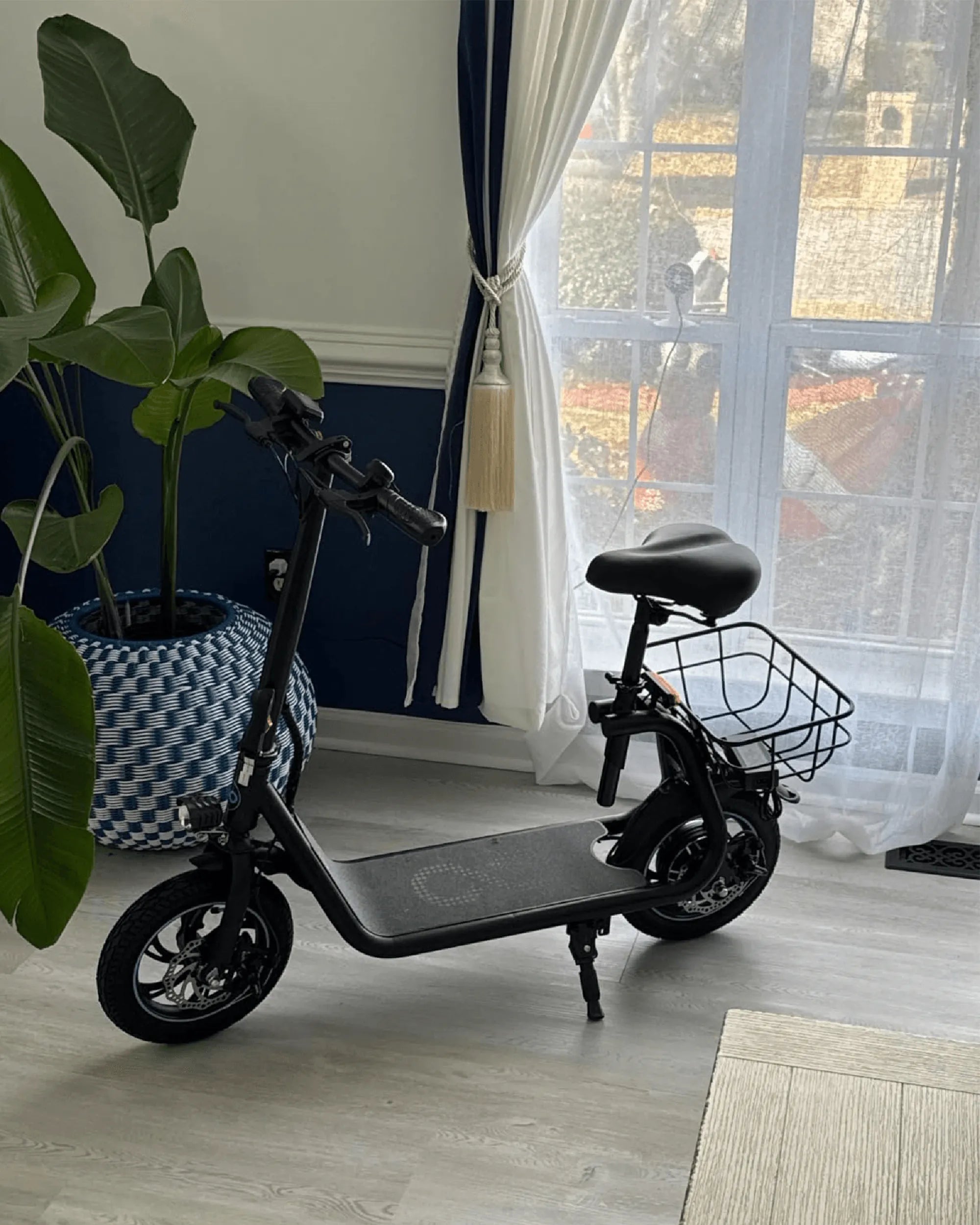
The Rise of Electric Scooters in India's Urban Landscape
India's city streets are undergoing a silent revolution. The familiar roar of petrol engines is increasingly being replaced by the quiet hum of electric motors. This shift towards electric mobility is accelerating, driven by a powerful combination of government policy, economic pragmatism, and environmental consciousness. The FAME II subsidy scheme, rising fuel costs, and crippling urban congestion have created the perfect storm for electric two-wheelers to claim their place as the future of urban commuting.
By 2025, this transition is expected to reach a critical mass. Advanced battery technology, a maturing charging infrastructure, and intense competition among manufacturers will deliver products that are more capable, reliable, and accessible than ever before. This guide is designed to cut through the noise and highlight the models leading this charge. We will delve into the Top 5 Electric Scooters in India 2025: The Future of Urban Commuting, providing a data-driven analysis to help you choose your ideal partner for the electric future.
Key Factors to Consider Before Buying an E-Scooter in 2025
Choosing an electric scooter in 2025 requires looking beyond just the sticker price. The market will be filled with options, making it crucial to understand the metrics that define real-world usability, safety, and long-term value. A smart purchase decision hinges on evaluating performance under Indian conditions, battery longevity, and the strength of after-sales support.
Performance is not just about top speed. It's about how the scooter handles a steep incline with two riders, accelerates from a standstill in busy traffic, and maintains stability on uneven roads. Similarly, range claims are often optimistic; the real-world figure is what matters for your daily commute. Finally, a scooter is a long-term investment. The warranty terms, service network density, and availability of spare parts are critical for peace of mind over years of ownership.
Beyond the Price Tag: Performance & Practicality Metrics
For 2025, your minimum benchmarks should be clear. A real-world range of 70-100 kilometers on a single charge is essential for eliminating daily range anxiety for most urban dwellers. Charging time is equally important; look for models supporting fast charging that can replenish 50-80% of the battery in 2-4 hours.
Motor power, measured in watts or kilowatts, tells only part of the story. Pay closer attention to torque, which determines pulling power and acceleration. A motor with high torque (e.g., 90-100 Nm) is vital for handling flyovers, bridges, and the stop-start nature of city traffic. Build quality should withstand daily use, with a focus on robust chassis construction and corrosion-resistant materials suited to India's diverse climate.
Safety and Reliability: Non-Negotiables for Indian Roads
Indian road conditions demand uncompromising safety features. A combination of front disc and rear drum brakes (or dual discs) provides reliable stopping power. Advanced features like Combined Braking System (CBS) or Anti-lock Braking System (ABS) offer superior control during emergency braking. Suspension must be capable of absorbing shocks from potholes and speed breakers without compromising handling.
Bright LED lighting for the headlamp, tail lamp, and indicators is non-negotiable for visibility. Given India's monsoon season, a high water-resistance rating is critical. An IPX5 rating or higher ensures protection against water jets from any direction, making the scooter safe to ride in heavy rain. Most importantly, insist on a scooter with a certified, high-quality battery pack. Brands like Gyroor, trusted by over 100,000 riders globally, use UL-certified batteries tested for 500+ charge cycles, ensuring safety and longevity.
The Top 5 Electric Scooters in India for 2025
This curated list projects the leading contenders for 2025, based on current market trends, technological roadmaps, and anticipated advancements. The selection balances performance, value, innovation, and range to cater to different rider profiles. Each model represents a distinct approach to solving the urban mobility puzzle, from high-performance commuting to tech-integrated city travel.
Our analysis focuses on the projected specifications and features that will define the best-in-class experience. We've evaluated these scooters on the key factors outlined earlier, ensuring each entry offers a compelling reason for consideration. The goal is to provide a clear picture of what you can expect from the forefront of electric two-wheeler technology in the coming year.
1. Gyroor C1X Pro (The Performance Commuter)
The Gyroor C1X Pro is positioned as a top-tier performance commuter for the rider who refuses to compromise. It is engineered for the demanding urban environment, combining robust power with practical range. Projected specifications for a 2025 iteration include a high-torque hub motor delivering swift acceleration from 0-40 km/h, making it ideal for navigating dense traffic and overtaking confidently.
Its long-range lithium-ion battery pack is designed for extended commutes, with an estimated real-world range of 85-100 km. Support for fast charging means a quick top-up during a work break is feasible. The scooter features a premium hydraulic suspension system for a plush ride over rough patches and comes with an IPX5 water-resistant rating as standard, a testament to Gyroor's commitment to all-weather reliability built for conditions worldwide.
The Gyroor C1X Pro’s key USPs are its foundation in proven safety standards. It utilizes UL-certified battery technology, ensuring thermal stability and durability over hundreds of charge cycles. Backing this is a comprehensive 1-year warranty on the vehicle and battery, supported by a growing service network. For the rider seeking a powerful, safe, and dependable machine with international quality benchmarks, the C1X Pro stands out.
2. Model B (The High-Value Family Workhorse)
This model from a leading Indian OEM is expected to be the high-value family workhorse of 2025. It focuses on delivering a balanced package of sufficient range, superior comfort for two, and unmatched after-sales accessibility. Its design prioritizes practicality, with a long, flat seat and generous under-seat storage capable of holding two helmets, addressing a common pain point for Indian families.
Anticipated specs include a mid-powered motor tuned for efficiency rather than outright sportiness, delivering a real-world range of 90-110 km. Its biggest strength lies in the manufacturer's vast existing service network, ensuring peace of mind across tier 1, 2, and 3 cities. Smart features like Bluetooth connectivity, geo-fencing, and ride statistics through a companion app add a layer of modern convenience.
This scooter is for the buyer who prioritizes trusted brand value, low cost of ownership, and everyday practicality over cutting-edge performance. It represents a safe, sensible, and highly practical entry into electric mobility, leveraging traditional automotive strengths in the new EV domain.
3. Model C (The Agile City Specialist)
Model C is the quintessential agile city specialist. Lightweight, nimble, and designed for hyper-urban environments, it excels in weaving through gridlocked traffic and fitting into tight parking spaces. Its compact frame and low kerb weight make it exceptionally easy to handle, especially for newer or younger riders.
It is projected to feature a peppy motor that offers brisk 0-40 km/h acceleration, perfect for short trips and errands. A key differentiator could be the option for a swappable battery system, either proprietary or through a growing battery-as-a-service network, effectively eliminating charging downtime for some users. The real-world range is likely optimized for city use, around 60-75 km, which is ample for daily urban chores.
This scooter makes its case through affordability and sheer usability in the most congested parts of the city. It’s the ideal second vehicle for a household or the primary vehicle for students and delivery executives who value maneuverability and low running costs above all else.
4. Model D (The Tech-Forward Innovator)
Emerging from a tech-centric brand, Model D is the tech-forward innovator of the list. It reimagines the scooter as a connected device on wheels. The centerpiece is a minimalist, vibrant digital dashboard that integrates fully with a sophisticated smartphone app, offering navigation, vehicle diagnostics, and customizable ride modes.
Expected technological highlights include over-the-air (OTA) software updates that can unlock new features or improve performance remotely, a key trend for 2025. It may also introduce innovative safety aids like electronic stability control or a reverse assist mode for easy parking. The design is sleek and futuristic, appealing to early adopters who view their vehicle as an extension of their digital lifestyle.
While its range and motor specs will be competitive, its primary appeal is the seamless integration of software and hardware. This model is for the rider who prizes cutting-edge technology, connectivity, and a unique design language, viewing their commute as an interactive experience.
5. Model E (The Premium Long-Range Tourer)
Model E is built for those with longer commutes or the desire for occasional inter-city travel. As the premium long-range tourer, it places a premium on distance, comfort, and premium build quality. It is expected to house the largest battery pack in its class, targeting a real-world range of 120-150 km, effectively reducing charging frequency to once every few days for most users.
The motor will be powerful, enabling a higher top speed (where legally permissible) and relaxed cruising. Comfort is paramount, with a wide, well-cushioned seat and a sophisticated suspension setup—likely a combination of telescopic forks and twin shock absorbers—to handle longer stints in the saddle. Fit and finish will rival premium petrol scooters, using high-quality materials and offering features like keyless start.
This scooter commands a premium price but justifies it for the rider who needs to cover significant distances daily or simply desires the most capable, comfortable, and well-appointed electric two-wheeler available. It represents the apex of current electric scooter technology focused on endurance and refinement.
Head-to-Head Comparison: Specs at a Glance
This table provides a clear, at-a-glance comparison of the projected key specifications for the Top 5 Electric Scooters in India 2025. Use it to quickly contrast their core attributes and identify which models align with your priority features.
| Model | Positioning | Est. Price (Ex-Showroom) | Motor Power | Claimed Range | Real-World Range Est. | Key Features |
|---|---|---|---|---|---|---|
| Gyroor C1X Pro | Performance Commuter | ₹1.25 - 1.45 Lakhs | 2000W (High Torque) | 110 km | 85-100 km | UL-Certified Battery, IPX5, Fast Charge, 1-Yr Warranty |
| Model B | Family Workhorse | ₹1.10 - 1.30 Lakhs | 1500W | 120 km | 90-110 km | Large Boot, App Connect, Extensive Service Network |
| Model C | Agile City Specialist | ₹85,000 - ₹1.05 Lakhs | 1200W | 80 km | 60-75 km | Lightweight, Swappable Battery Option, Compact |
| Model D | Tech-Forward Innovator | ₹1.35 - 1.55 Lakhs | 1800W | 105 km | 80-95 km | OTA Updates, Full Connectivity, Advanced Dashboard |
| Model E | Premium Long-Range Tourer | ₹1.50 - 1.75 Lakhs | 2200W | 160 km | 120-150 km | Largest Battery, Premium Suspension, Keyless Start |
The 2025 Ecosystem: Charging, Subsidies, and Total Cost of Ownership
The electric scooter experience in 2025 will be shaped by factors beyond the vehicle itself. The charging ecosystem is rapidly evolving. Expect a significant expansion of public charging stations in city centers, malls, and office parks. More impactful could be the growth of battery swapping networks for specific brands or consortiums, offering a "2-minute recharge" model ideal for commercial users and those without home charging.
Government subsidies under schemes like FAME II have been a major catalyst. By 2025, the subsidy structure may evolve or phase out as the industry matures. It is crucial to check the latest Central and State government notifications at the time of purchase, as incentives can substantially lower the upfront cost. Some states offer additional road tax and registration fee waivers.
The Total Cost of Ownership (TCO) remains the most compelling argument for electric. A simple 5-year comparison is revealing. A petrol scooter costing ₹1 lakh will incur approximately ₹1.5-2 lakhs in fuel costs alone, plus frequent oil changes, filter replacements, and engine maintenance. An electric scooter's "fuel" cost is about 1/5th for the same distance, and maintenance is largely limited to brake pads, tires, and occasional coolant top-ups. The major cost is battery replacement after 4-6 years, but this is increasingly offset by falling battery prices and longer warranty periods.
Frequently Asked Questions (FAQs)
Making a significant purchase like an electric scooter naturally brings questions. Here are detailed answers to some of the most common and practical queries for a 2025 buyer in the Indian context.
What is a realistic daily range I should look for?
Aim for a scooter with a real-world range of 70-100 kilometers. This comfortably covers the average urban round-trip commute with a safety buffer for detours, traffic delays, and the natural battery degradation that occurs over time and with varying loads. Always discount the manufacturer's "ideal condition" claimed range by 15-25% to arrive at a practical estimate.
Are electric scooters suitable for monsoon conditions?
Yes, but only if they are properly designed for it. Look for a high Ingress Protection (IP) rating. An IPX5 rating, like that on Gyroor scooters, means the scooter is protected against water jets from any direction, making it perfectly safe for riding in heavy rain and through wet roads. However, avoid submerging any part of the scooter, especially the battery compartment, in flooded streets.
How does the maintenance cost compare to petrol scooters?
Electric scooter maintenance costs are significantly lower. There is no engine oil, air filter, spark plug, or clutch to replace. Routine checks involve brakes, tires, suspension, and the electrical system. The most substantial future cost is battery replacement, typically after 4-6 years or 500-800 full charge cycles. Brands offering long battery warranties provide greater long-term cost predictability.
Is the existing FAME II subsidy likely to continue in 2025?
The future of FAME II subsidies is uncertain as the scheme has a defined timeline. The government may introduce a successor scheme (e.g., FAME III) with potentially altered focus or eligibility criteria, or subsidies may begin to phase out as the industry scales. Prospective buyers should monitor official announcements from the Ministry of Heavy Industries and their respective State Transport departments for the most current incentive structure.
Can I charge my e-scooter at home with a regular plug?
Most electric scooters in India come with a standard portable charger designed for a regular 5A/15A household socket. A full charge from empty typically takes 4-8 hours, making overnight charging perfectly convenient. For faster home charging, some models offer optional higher-amperage home chargers that require a dedicated electrical line, similar to an AC unit.
Choosing Your Partner for India's Electric Future
The journey to selecting the right electric scooter is a personal one, defined by your daily needs, commute distance, and performance expectations. The "best" scooter from our list of the Top 5 Electric Scooters in India 2025 is the one that aligns perfectly with your lifestyle—be it the performance-oriented Gyroor C1X Pro, the family-friendly Model B, or the tech-savvy Model D.
This analysis underscores that 2025 is not a year of compromise. The products available will offer mature technology, credible range, and robust safety features. Your final steps should always include taking a test ride to assess comfort and handling, and verifying the service network strength in your area. Investing in a reliable brand with proven safety standards, like those employing UL-certified batteries, is an investment in long-term peace of mind.
The electric revolution on two wheels is here, and it is practical, economical, and exciting. By making an informed choice, you are not just buying a vehicle; you are adopting a cleaner, smarter, and more sustainable mode of urban transportation. The future of commuting is electric, and it arrives in 2025.
Ready to explore a range of electric scooters built to global safety and performance standards? Discover engineering focused on reliability and rider trust. Browse the full Gyroor collection at gyroorboard.com to learn more about their UL-certified, IPX5 water-resistant electric scooters and e-bikes.
Best Electric Scooters in the World: Top Picks for Speed, Range, and Comfort
Cheap Electric Scooters Under $100: A Realistic Guide to Budget Mobility