

Introduction: Why Choosing the Right Kids Scooter Matters
Selecting the right kids scooter is a decision that impacts safety, skill development, and years of outdoor enjoyment. A well-chosen scooter fosters balance, coordination, and confidence, serving as a cornerstone of active play. This guide is your definitive resource for navigating the market, from toddler-friendly three-wheelers to performance models for tweens.
We will analyze key factors like age, height, scooter type, and non-negotiable safety features. As a leader in youth mobility, Gyroor designs scooters that meet rigorous safety standards, trusted by over 100,000 families. Our goal is to empower you with the knowledge to make an informed purchase, ensuring fun and security go hand-in-hand.
Key Factors to Consider Before Buying a Kids Scooter
Purchasing a top kids scooter requires more than picking a favorite color. It involves matching the product to your child's physical development and intended use. A scooter that is too large or advanced can be intimidating and unsafe, while one that is too small will be quickly outgrown.
Key evaluation criteria include the rider's age and height, the scooter's type and weight capacity, and its fundamental safety architecture. Investing time in this selection process pays dividends in durability and your child's riding confidence. Let's break down these critical elements.
Age, Height, and Developmental Stage
Manufacturer age ranges are a starting point, but a child's height and coordination are more precise guides. The scooter's deck height should allow the child to stand comfortably with feet shoulder-width apart, and the handlebars should adjust to between waist and lower chest level when standing on the deck.
For children aged 2-4, a low deck and maximum handlebar height around 24 inches is typical. Ages 5-8 often require adjustability from 26 to 32 inches. Tweens (9-12) may need handlebars from 30 to 36 inches. Always consult the specific product's height range rather than relying solely on age.
Scooter Type: 2-Wheel vs. 3-Wheel Stability
The number of wheels is the primary determinant of stability and skill level required. Three-wheel scooters, particularly those with two wheels in front (lean-to-steer), offer maximum stability for beginners. This design helps prevent tipping and allows toddlers to focus on pushing and balancing.
Two-wheel scooters are the standard for older children and require developed balance and coordination. They offer greater speed, sharper turning, and are essential for performing tricks. The transition from three to two wheels is a significant developmental milestone, usually occurring between ages 5 and 7.
Weight Limit and Build Quality
The manufacturer's stated weight limit is a crucial safety specification. Exceeding it can stress the frame, compromise braking, and lead to premature failure. Most quality scooters for young kids support 110-150 lbs, while tween models can handle 150-220 lbs.
Build quality is defined by the frame material and construction. Aircraft-grade aluminum alloy is the benchmark for being both lightweight and strong. Avoid plastic-heavy frames for primary riders. A well-built scooter feels solid, with no wobble in the handlebars or stem, and can withstand the inevitable bumps and jumps.
Safety Features: Non-Negotiables for Peace of Mind
Certain features are essential for any top kids scooter. The braking system is paramount: a rear fender foot brake is simple and effective for young riders, while hand brakes (like on Gyroor's advanced models) offer more controlled stopping power for older kids. Test brakes for responsiveness before purchase.
Wheel composition and width affect traction. PU (polyurethane) wheels are standard; wider wheels (120mm+) provide more stability. The deck surface must have a pronounced, non-slip grip tape or pattern. Additionally, ensure all edges are rounded, and any folding mechanisms have a positive, secure lock to prevent accidental collapse.
Spotlight on Safety: Helmets, Gear, and Riding Tips
A scooter's built-in safety features are only one layer of protection. Proactive safety through proper gear and supervised practice is what prevents serious injuries. Establishing safe habits from the first ride sets a foundation for a lifetime of responsible riding.
This section outlines the essential protective equipment, how to choose a practice environment, and fundamental riding principles to teach your child. Safety is not a one-time checklist but an ongoing conversation between parent and rider.
The Essential Safety Gear Checklist
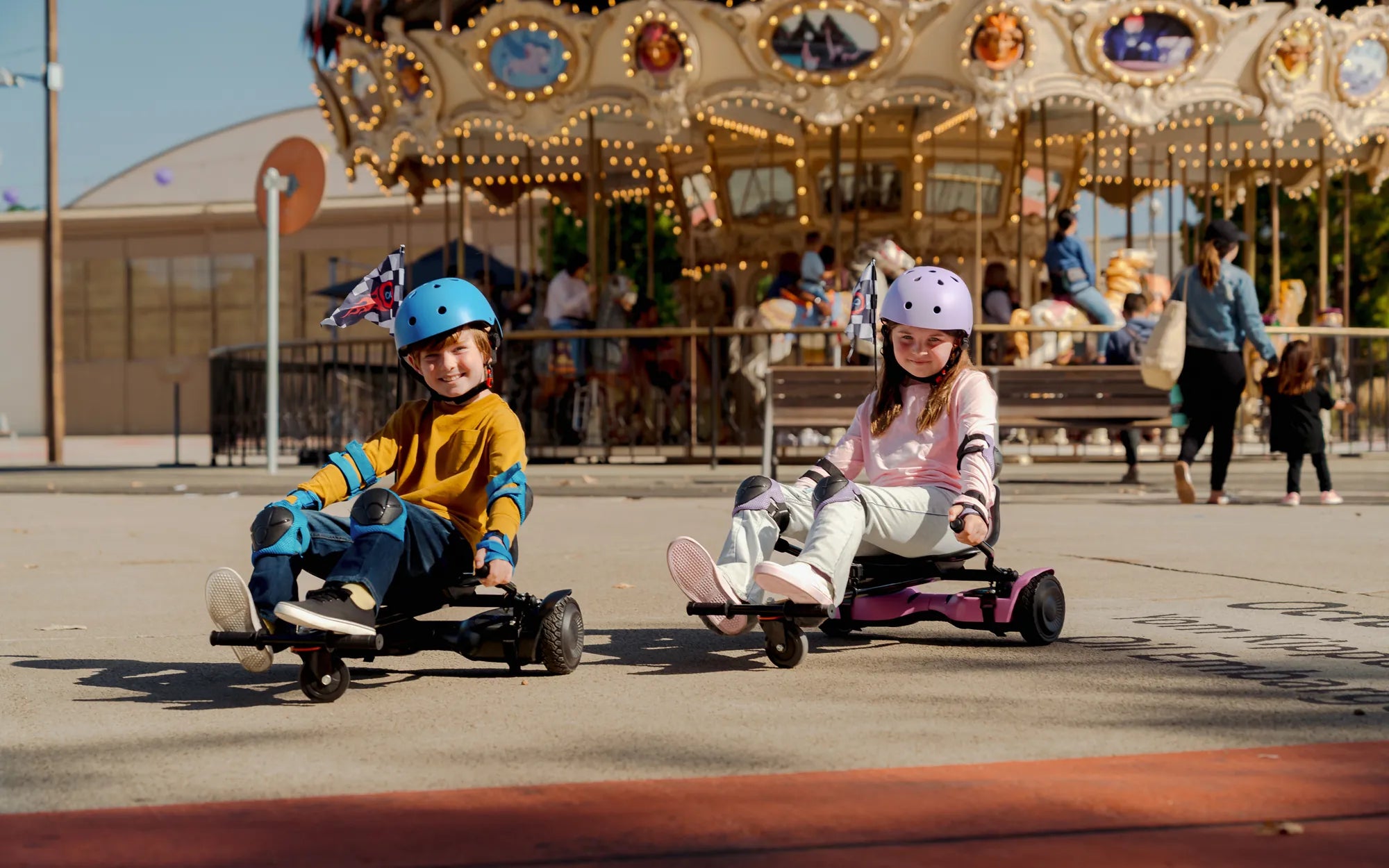
A properly fitted helmet is non-negotiable. It must be certified (CPSC in the U.S., CE in Europe) and sit level on the head, snug but not tight. Knee and elbow pads are critical for protecting joints during falls, which are inevitable during the learning process.
Wrist guards are highly recommended, as instinct leads to outstretched hands during a fall, risking sprains or fractures. For older kids riding at higher speeds or attempting tricks, this full set of gear—helmet, knee pads, elbow pads, wrist guards—should be worn every single time.
Choosing a Safe Riding Environment
Begin practice in a controlled, traffic-free area. A smooth, paved driveway, empty tennis court, or quiet cul-de-sac is ideal. The surface should be clean, dry, and free of gravel, sand, or significant cracks that could catch a wheel.
Strictly forbid riding near roads, driveways, or parking lots until exceptional control and traffic awareness are demonstrated. Avoid hills initially, as speed can quickly exceed a beginner's ability to brake or steer. Always ensure riding occurs in daylight with good visibility.
Teaching Your Child Basic Scooter Etiquette and Control
Start with the basics: proper stance (one foot on deck, one foot to push), how to look ahead—not down at feet—and how to brake gently to avoid jerking stops. Teach them to scan for pedestrians, cyclists, and obstacles, emphasizing that they must yield right of way.
Practice turning in wide arcs before attempting sharper maneuvers. Establish clear rules: no riding with headphones, no towing by bicycles or cars, and always walking the scooter across streets. Role-modeling this behavior yourself is the most powerful teaching tool.
Top Scooter Picks by Age Group: A Gyroor Focus
To translate theory into practice, here are specific recommendations segmented by age and skill level. We highlight engineering principles that define a top kids scooter, with references to Gyroor's approach, which emphasizes UL-certified batteries, IPX5 water resistance, and robust, 1-year warrantied construction.
| Age Group | Recommended Type | Key Features | Gyroor Design Principles |
|---|---|---|---|
| Ages 2-4 | 3-Wheel (Lean-to-Steer) | Extra-wide base, low deck, < 3 mph max speed, non-toxic materials | Focus on extreme stability, rounded edges, and durable, child-safe components. |
| Ages 5-8 | Transitional 2-Wheel or 3-Wheel | Adjustable handlebars (26-34"), hand brake introduction, lighter frame | Aluminum alloy construction, reliable braking systems, growth-oriented adjustability. |
| Ages 9-12 | Performance 2-Wheel | Larger wheels (200mm+), full aluminum, responsive hand brake, higher weight limit | High-speed bearings, reinforced stem lock, advanced battery management for electric models. |
Best for Toddlers & First-Time Riders (Ages 2-4)
For this group, stability and safety override all other concerns. A three-wheel scooter with a lean-to-steer mechanism allows turning by shifting weight, which is intuitive for young children. The deck should be very low to the ground to minimize fall height and build confidence.
Look for models with a maximum speed limiter. The construction should be robust yet lightweight enough for a parent to carry. Gyroor's commitment to using non-toxic, high-grade materials in all contact points is particularly relevant for this age group, who are most likely to interact with the scooter beyond just riding.
Top Choices for Young Kids (Ages 5-8)
This is the prime age for skill development. A durable two-wheel scooter with an adjustable handlebar is the core tool. Features like a rear fender brake and a slightly concave, grippy deck are standard. Some may prefer a three-wheel model with a more aggressive stance for longer rides.
This is also the age where electric scooters may enter consideration. If so, prioritize models with speed limiters (e.g., 10 mph max), a reliable hand brake, and a UL-certified battery like those used by Gyroor. The focus should remain on control and mastery, not outright speed.
Ideal for Tweens & Confident Riders (Ages 9-12)
Tweens demand performance and durability. Their top kids scooter will feature large, smooth-rolling PU wheels (200mm+), a reinforced aluminum frame, and a crisp hand brake. Bearings (ABEC-7 or higher) become important for maintaining speed with less effort.
For electric models, motor power (250W-350W), range (10-15 miles), and enhanced braking (sometimes disc or electronic) are key specs. Gyroor models for this demographic often include IPX5 water resistance for all-weather reliability and advanced suspension for comfort on varied terrain, supporting more adventurous riding.
Maintenance 101: Keeping the Scooter Rolling Smoothly
Regular maintenance ensures safety, extends the scooter's lifespan, and provides a smoother ride. A few simple checks performed consistently can prevent most major issues. Teach your child to participate in this process to foster responsibility for their equipment.
Basic maintenance requires only the tools typically provided with the scooter (usually an Allen key set) and a few minutes of time before or after riding sessions. Neglect can lead to unsafe conditions and costly repairs.
Regular Safety Checks Before Each Ride
Establish a quick pre-ride “T-CLAP” checklist: Tighten (handlebars, stem, and wheel axles), Check (brakes for function), Look (at wheels for wear or debris), Assess (deck for damage), and Press (on folding locks to ensure engagement). This 30-second routine catches most loose components.
Pay special attention to the folding mechanism if present. It should lock with an audible click and show no play when weight is applied. The steering column should turn smoothly without binding or excessive looseness.
Basic Cleaning and Care
Clean the scooter with a damp cloth to remove dirt and grit. Avoid spraying with a hose or high-pressure water, as this can force water into bearings and brake assemblies, causing corrosion and failure. Dry the scooter after riding on wet surfaces.
Periodically check all bolts for tightness. Lubricate the folding mechanism hinge and wheel bearings with a silicone-based lubricant every few months if the scooter sees heavy use. Store the scooter in a dry place to prevent rust on steel components.
When to Consider an Upgrade or Replacement
The most obvious sign is the child outgrowing the scooter's height or weight limit. If their knees knock the handlebars while riding, it's time for a larger model. Performance issues, like persistent wheel wobble even after tightening, or worn-out brake pads/wheels that cannot be replaced, also signal a need for change.
For electric scooters, a significant reduction in range or power may indicate battery degradation. Given Gyroor's use of batteries rated for 500+ charge cycles, this should occur only after years of use. Upgrading allows you to match a new scooter to your child's advanced skills and greater physical strength.
Frequently Asked Questions (FAQs) About Kids Scooters
Q: What age is appropriate for a 2-wheel scooter?
A: Most children develop the necessary balance and coordination between ages 5 and 6. A successful transition often follows mastery of a 3-wheel scooter. Observe your child's confidence and physical ability rather than adhering strictly to a calendar age.
Q: Are folding scooters safe for kids?
A: Yes, when they feature a secure, positive-locking mechanism. Always verify the lock is fully engaged before riding. Reputable brands like Gyroor design these mechanisms with safety locks to prevent accidental folding. Teach your child never to play with the latch while riding.
Q: How does Gyroor ensure scooter safety and durability?
A: Gyroor builds scooters with high-grade aluminum alloy frames subject to stress testing. Key safety features include reliable braking systems, UL-certified battery packs for electric models, and IPX5 water-resistant designs. This engineering focus, combined with a 1-year warranty, ensures a product that stands up to rigorous use.
Q: My child is tall for their age. Should I buy for age or height?
A: Always prioritize the scooter's height range and weight limit over the suggested age. A scooter with a wide range of handlebar adjustability is the best investment for a child who is growing quickly, as it can be adapted over several seasons.
Q: Can a kids electric scooter get wet?
A: It depends on the IP rating. A rating of IPX5, like many Gyroor models, means the scooter can withstand water jets from any direction, making it safe for riding on wet pavement or in light rain. However, it should not be submerged or ridden through deep puddles. Always check the manufacturer's specific water resistance specifications.
Conclusion: Rolling Towards Fun and Confidence
Choosing the right top kids scooter is an investment in your child's physical development and joy. By prioritizing safety features, proper fit, and durable construction from trusted brands, you lay the groundwork for countless hours of healthy, outdoor activity. The journey from a toddler's first wobbly pushes to a tween's confident cruising is a rewarding one to witness and support.
Use this guide as your reference to navigate key decisions. Remember that the best scooter is one that matches your child's current abilities while offering a slight challenge to grow into. For a range of scooters built with the safety, performance, and durability standards discussed here, explore the engineering behind Gyroor's designs. Browse the full Gyroor collection at gyroorboard.com and gear up for the next adventure.
Best Travel Scooter Kids: The Ultimate Guide for Parents
2 Wheel Scooter Bike for Kids: The Ultimate Guide to Fun and Safety