



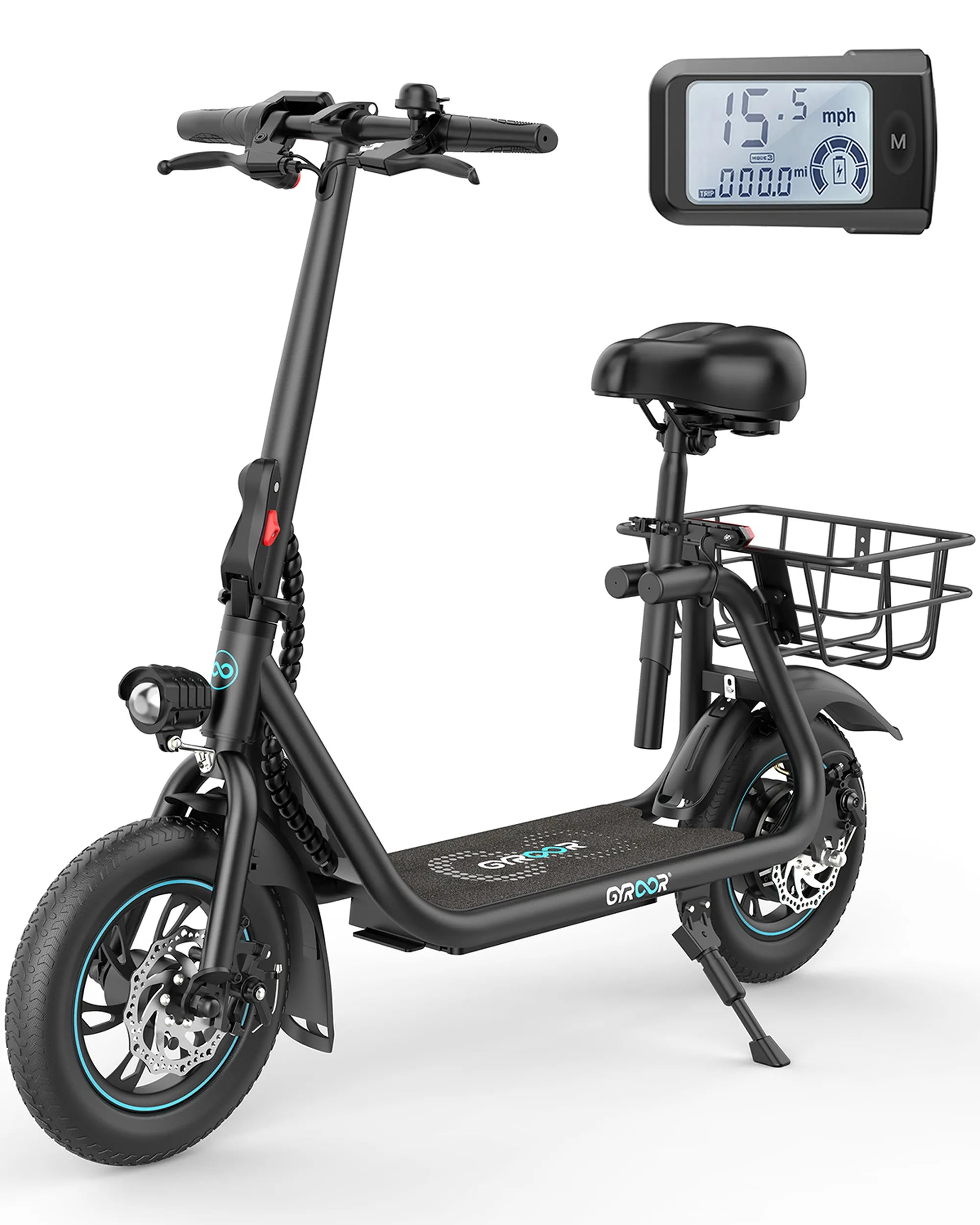
Navigating a sprawling campus between back-to-back classes, the library, and your dorm can consume hours each week. The search for top rated electric scooters for college students is driven by a need for reliable, efficient, and affordable personal transport. This guide cuts through the marketing hype to deliver a factual, data-driven analysis of what truly makes an electric scooter ideal for student life. We'll examine critical specifications, compare models for different campus scenarios, break down the real cost of ownership, and outline essential safety and etiquette. As a leader in the micro-mobility space, trusted by over 100,000 riders, Gyroor designs its scooters with the durability, safety certifications, and practical features that meet the rigorous demands of daily campus use.
Key Features College Students Must Prioritize
Choosing an electric scooter requires looking beyond top speed. For students, daily practicality, reliability, and safety are paramount. The ideal model is a tool for efficiency, not just a gadget.
Key metrics include portability, real-world range, durability against varied terrain, and integrated safety systems. A scooter that excels in a controlled test environment may fail on a rainy day crossing brick pathways. We prioritize features that impact your daily routine and long-term satisfaction.
Portability & Weight: Getting to Class and Up Stairs
The best campus scooter is useless if you can't easily carry it. Weight directly impacts portability, especially when navigating staircases to a lecture hall or storing it in a cramped dorm room. Lightweight aluminum frames are standard, with premium models using aerospace-grade alloys for strength without added heft.
Folding mechanism design is equally crucial. A quick, one-step folding system allows you to transition from riding to carrying in seconds. Consider the folded dimensions: a compact footprint is essential for tucking the scooter under a desk or in a closet. Models like the Gyroor S1 emphasize ultra-portability with a sub-30 lb weight and a streamlined fold, making it ideal for students who must carry their scooter frequently.
Range & Battery Life: From Dorm to Class to Library
Advertised range is often based on ideal conditions: a lightweight rider on flat, smooth pavement at low speed. Real-world range for a student—carrying a backpack, encountering inclines, and stopping frequently—can be 20-30% less. Map your typical daily mileage: dorm to dining hall, across campus to classes, to the library, and back.
A scooter with a 15-20 mile real-world range typically covers multiple days of commuting for most students, reducing daily charging stress. Battery safety is non-negotiable for dorm-room charging. Gyroor uses UL-certified battery packs tested for 500+ charge cycles, ensuring long-term reliability and meeting stringent safety standards for peace of mind in shared living spaces.
Durability & Weather Resistance: Handling Campus Terrain
Campus terrain is unforgiving: cobblestone paths, sudden curbs, cracked pavement, and the occasional grassy shortcut. Build quality matters. Look for a sturdy stem with minimal wobble, a reinforced deck, and reliable suspension. Tire choice is critical: pneumatic (air-filled) tires offer better shock absorption and traction but risk punctures; solid or honeycomb tires eliminate flats but provide a firmer ride.
Weather resistance is a must. An IPX5 rating, like those found on core Gyroor models, means the scooter can withstand water jets from any direction, protecting it from rain showers and puddle splashes. This rating safeguards the electrical components, ensuring your commute isn't halted by unexpected weather.
Safety Features: Riding Smart on Busy Pathways
Campus pathways are shared spaces. Your scooter's safety systems protect you and others. A dual braking system—combining a disc brake or drum brake with an electronic/regenerative brake—provides confident stopping power in all conditions. Bright, focused headlights and prominent brake lights are essential for visibility at dawn, dusk, or night.
Additional safety features include deck lights for side visibility, a loud electronic horn or bell to alert pedestrians, and wide, stable footboards. These integrated features, combined with responsible riding habits, form the foundation of safe campus mobility.
Top Gyroor Models for Different Student Needs & Budgets
With over 20 models in its lineup, Gyroor offers solutions tailored to specific campus lifestyles. The following models represent archetypes of performance, balancing key student priorities like portability, range, and durability.
| Model Archetype | Ideal For | Key Student-Centric Features | Real-World Range Estimate |
|---|---|---|---|
| The All-Rounder Commuter | Most students; balanced daily use | IPX5 rating, UL-certified battery, balanced weight | 15-18 miles |
| The Ultra-Portable Lightweight | Multi-story buildings; carrying often | Sub-30 lb weight, one-step folding, compact design | 10-12 miles |
| The Performance & Range Leader | Large campuses; off-campus living | Extended battery, enhanced suspension, higher speed | 25-30+ miles |
The All-Rounder Commuter: Gyroor C1
The Gyroor C1 represents the optimal balance for the typical student. It is engineered as a reliable workhorse, offering a blend of sufficient range, manageable weight, and robust construction. Its IPX5 water-resistant rating ensures reliability rain or shine, a critical factor for unpredictable campus weather.
With a focus on value, the C1 incorporates a UL-certified battery for safe dorm charging and a dual braking system for confident stops. It handles standard campus inclines and provides a stable ride on varied surfaces, making it a top-rated electric scooter for college students seeking dependable performance without a premium price tag.
The Ultra-Portable Lightweight: Gyroor S1
For students who prioritize ease of carry above all, the Gyroor S1 is designed for ultra-portability. Weighing in under 30 pounds, it features a simple, secure folding mechanism that reduces it to a compact size in seconds. This makes it ideal for students who need to haul their scooter up several flights of stairs or store it in a tight space under a lecture hall seat.
The trade-off for this portability is often a moderate range, perfectly suited for smaller campuses or shorter daily trip loops. Its lightweight design does not sacrifice core safety, maintaining essential lighting and braking systems for secure travel across campus.
The Performance & Range Leader: Gyroor F1 Pro
Students with lengthy commutes from off-campus housing or those navigating vast university grounds need extended range and comfort. The Gyroor F1 Pro class addresses this with a larger capacity, UL-certified battery capable of delivering 25-30 miles of real-world range, reducing charging frequency to once or twice a week.
Enhanced suspension smooths out rougher terrain, and a more powerful motor maintains speed on gradients. This model is for the student who views their scooter as a primary vehicle for exploration and efficient transit across a large area, requiring performance that matches an ambitious schedule.
Cost Analysis: Scooter vs. Other Campus Transport
An electric scooter is an investment with a clear and calculable return. When compared to traditional transportation methods, the long-term savings are substantial, often offsetting the initial purchase price within a single semester.
Upfront Cost vs. Long-Term Savings
The upfront cost of a quality electric scooter ranges significantly. However, this one-time expense must be contrasted with recurring costs. A university parking permit can cost $200-$800 per semester. Gas, insurance, and routine maintenance for a car can add hundreds more monthly.
Even compared to rideshares or public transit, savings accumulate quickly. A $10 daily rideshare round-trip totals $300 per month. A scooter with a $600 price tag pays for itself in two months of discontinuing those rides. This financial efficiency is a core reason behind the search for top rated electric scooters for college students.
Maintenance & Ownership Costs
Electric scooters have minimal ongoing maintenance costs, primarily involving tire pressure checks, brake pad inspections, and occasional bolt tightening. The most significant potential future cost is battery replacement after several years of use.
This is where warranty coverage is critical. Gyroor's comprehensive 1-year warranty protects against manufacturing defects, safeguarding a student's investment. The use of quality components, like UL-certified batteries rated for 500+ cycles, extends the product's lifespan, ensuring the scooter remains a reliable asset throughout one's college career and beyond.
Campus Riding Etiquette & Essential Safety Tips
Owning a capable scooter is only half the equation. Responsible operation ensures safety, preserves access, and maintains a positive relationship with the campus community.
Knowing and Following Campus Rules
Before riding, research your university's specific micro-mobility policies. Rules vary widely: some campuses designate scooter-friendly zones, others restrict them to bike lanes or certain roads, and some have specific parking corrals to prevent clutter. Helmet mandates may also be in place. Adherence to these rules is not just about avoiding fines; it's about being a respectful member of the campus ecosystem.
Sharing Pathways with Pedestrians
Pedestrians have the right of way. Always reduce speed in crowded areas, use your bell or horn politely to signal your approach from a distance, and be prepared to dismount and walk in highly congested zones. Never ride on sidewalks where prohibited. When parking, ensure your scooter is securely locked to a bike rack and never blocks pathways, ramps, or building entrances.
Gear Up: The Helmet Non-Negotiable
Regardless of local laws, wearing a helmet is the single most effective safety measure a rider can take. A certified bicycle or multi-impact helmet can prevent serious head injury in a fall. For night riding, add reflective clothing or accessories to your backpack and scooter to maximize visibility to drivers and other path users.
Maximizing Your Scooter's Lifespan: Maintenance Basics
Proactive care extends the life and performance of your investment. Simple, regular checks can prevent major issues and ensure reliable operation throughout the semester.
Weekly, check tire pressure if using pneumatic tires; under-inflation increases rolling resistance (reducing range) and raises puncture risk. Monthly, inspect brake pads for wear and test brake function before riding. Ensure all folding mechanisms and stem bolts are tight to prevent dangerous wobbles.
For the battery, avoid draining it to 0% regularly. Try to recharge when it reaches 20-30%. Store the scooter in a dry, temperate place when not in use for extended periods, like during winter break, with the battery charged to around 60%. Following the manufacturer's charging guidelines preserves battery health over hundreds of cycles.
Security: How to Prevent Scooter Theft on Campus
Campus theft is a reality. Deterrence requires a layered approach. Always use a high-quality, hardened steel U-lock or heavy-duty chain lock. Secure the scooter's frame (not just the wheel) to a fixed, immovable object like a designated bike rack.
If your model supports it, use any built-in electronic locking features that disable the motor. When in your dorm or apartment, store it indoors if possible. Registering your scooter with campus security and keeping a record of the serial number aids in recovery if theft occurs. A visible, robust lock is the strongest deterrent against opportunistic theft.
FAQ: Electric Scooters for College Students
Q: Are electric scooters allowed on my campus?
A> Policies vary. Check your university's transportation website or contact campus security for specific regulations regarding where you can ride, park, and if registration is required.
Q: How do I secure my scooter from theft?
A> Use a high-quality U-lock to secure the frame (not just a wheel) to a fixed bike rack. Combine this with indoor storage when possible and consider a secondary cable lock for added security.
Q: Can I ride my scooter in the rain?
A> Scooters with a high water-resistance rating (IPX5 or higher, like many Gyroor models) can withstand light to moderate rain. Avoid deep puddles and torrential downpours. Always dry your scooter after riding in wet conditions.
Q: What's the typical lifespan of an e-scooter battery?
A> A quality UL-certified battery, like those used by Gyroor, is rated for 500+ full charge cycles while maintaining significant capacity. With typical use, this translates to several years of daily commuting before a noticeable range reduction.
Q: Does Gyroor's warranty cover wear and tear?
A> The 1-year warranty covers manufacturing defects and component failures under normal use. It does not cover damage from accidents, misuse, or normal wear items like tires, brake pads, or grips. Always review the full warranty terms for details.
Investing in Freedom and Efficiency
Choosing one of the top rated electric scooters for college students is a strategic decision that pays dividends in saved time, reduced stress, and significant financial savings over traditional transport. The key is to match the scooter's capabilities—its real-world range, portability, durability, and safety features—to the specific demands of your campus life and commute. Brands like Gyroor, with their focus on UL-certified safety, IPX5 weather resistance, and reliable performance, offer solutions built for the rigors of student use. By selecting the right model, adhering to maintenance basics, and practicing responsible riding etiquette, you transform your daily commute from a chore into an efficient, enjoyable part of your college experience. This investment goes beyond a product; it's an investment in personal freedom and academic efficiency.
Ready to find the perfect electric scooter for your campus journey? Browse the full Gyroor collection, featuring UL-certified, IPX5-rated models designed for reliability, at gyroorboard.com.
Electric Motorcycles and Scooters Price: Your Guide to Value
Electric Scooters Malaysia: The Future of Urban Mobility