



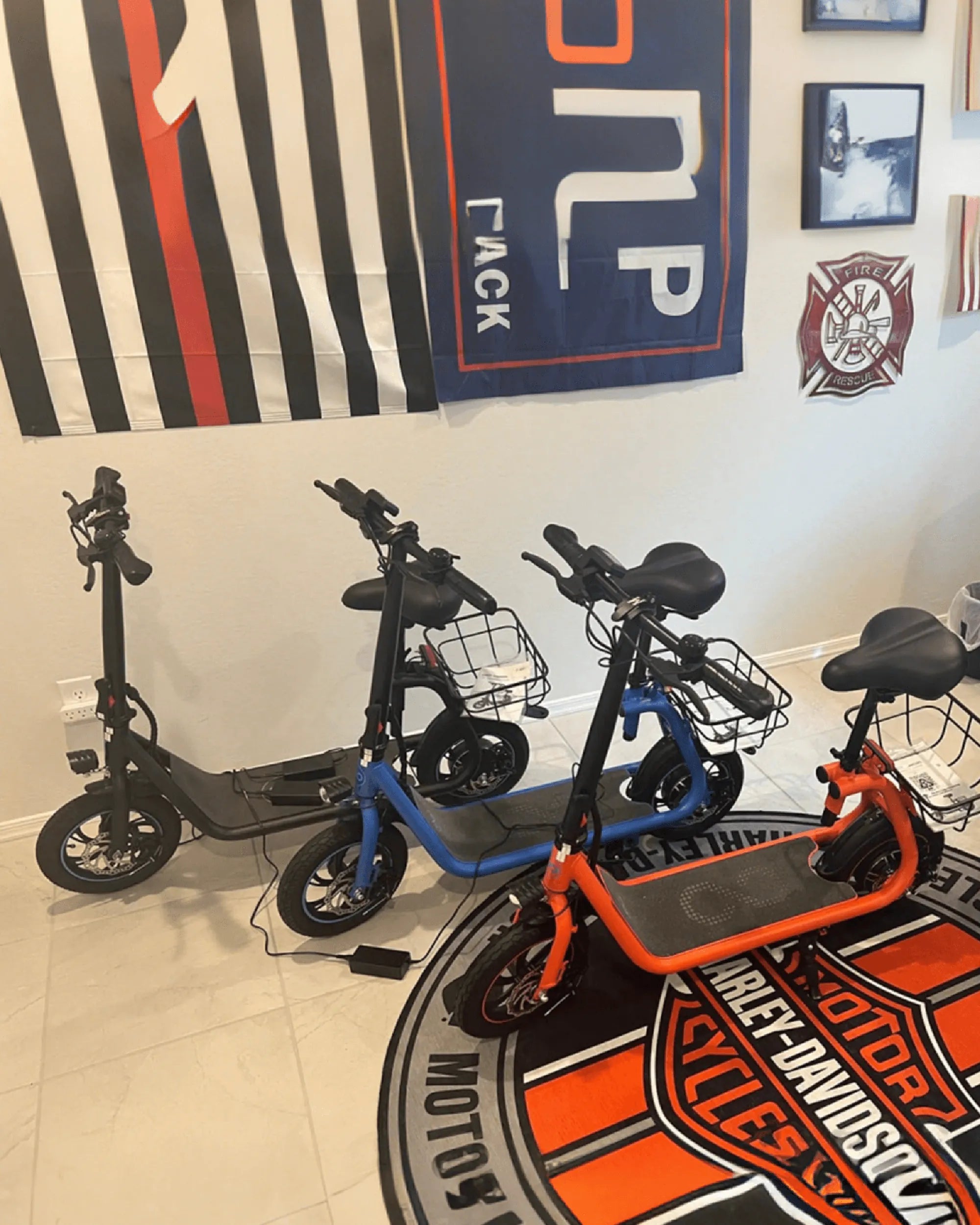
Introduction to Teen Trikes: More Than Just a Big Kid's Toy
A trike for teens represents a significant evolution in personal mobility for young adults aged 13 to 18. Unlike traditional bicycles or unstable two-wheeled scooters, these are three-wheeled electric vehicles engineered for stability, safety, and practical transportation. The growing popularity of a trike for teens stems from its unique position as a bridge between childhood toys and adult vehicles, offering a taste of independence without the associated risks of cars or motorcycles.
This category addresses a clear need: providing older kids with a reliable, eco-friendly way to travel short to medium distances. Whether it's commuting to a part-time job, visiting friends across town, or simply enjoying the outdoors, a trike for teens delivers a solution. It combines the fun of riding with the serious benefits of a stable platform, making it an appealing choice for both teens seeking freedom and parents prioritizing safety.
The market for these vehicles has expanded rapidly, moving beyond basic designs to include sophisticated features like powerful motors, long-range batteries, and advanced safety systems. This guide will delve into why a trike for teens is a smart investment, what features to look for, and how to ensure years of reliable, enjoyable use. Choosing the right trike for teens can unlock new levels of responsibility and outdoor activity for your teenager.
Why a Trike is the Perfect Ride for Teenagers
The primary advantage of a trike for teens is its inherent stability. The three-point contact with the ground eliminates the balancing act required for two-wheelers, drastically reducing the risk of falls, especially during low-speed maneuvers, sudden stops, or on uneven surfaces. This built-in confidence booster is invaluable for new riders or those who may not be comfortable on a bicycle, allowing them to focus on the road and traffic rules rather than just staying upright.
Beyond safety, a trike for teens promotes healthy, outdoor activity in an age dominated by screens. It provides a compelling reason to leave the house, encouraging exploration of neighborhoods, parks, and bike trails. This form of active transport builds physical fitness and fosters a connection with the local community. Furthermore, it serves as a practical car-alternative for countless short trips, reducing family reliance on carpooling for every errand.
From a developmental perspective, operating a trike for teens teaches responsibility. Teens learn to care for a vehicle—charging the battery, checking tire pressure, and performing basic maintenance. It also requires understanding and adhering to local traffic laws, planning routes, and managing travel time. This hands-on experience with personal mobility is a foundational step toward greater independence and practical life skills.
Socially, a trike for teens can be a hub for group activities. Riding with friends becomes an accessible and fun group outing. The cargo capacity often found on these trikes—via rear racks or baskets—also adds utility, allowing teens to carry school supplies, sports gear, or groceries, transforming the vehicle from a mere toy into a genuine tool for daily life.
Key Features to Look for in a Quality Teen Trike
Not all trikes are created equal. Selecting a quality trike for teens requires careful evaluation of several critical components that directly impact safety, durability, and performance. Prioritizing these features ensures you invest in a vehicle that will last and protect its rider.
Safety First: Non-Negotiable Features
Safety is paramount. The battery is the heart of any electric vehicle, and for a trike for teens, it must be UL-certified. This certification means the battery pack has undergone rigorous independent testing for overcharge protection, short-circuit prevention, and thermal stability, significantly reducing fire risk. Never compromise on this.
Effective braking is equally critical. Look for a combination of mechanical disc brakes and electronic braking (E-ABS). Disc brakes offer strong, consistent stopping power in all weather conditions, a must for a vehicle that may be used daily. A bright LED headlight, taillight, and brake light are essential for visibility during dawn, dusk, or night rides. Finally, speed limiters or parental control modes that allow you to cap the maximum speed are invaluable for peace of mind.
Built to Last: Durability and Performance
The frame should be constructed from high-strength aluminum or steel to withstand the rigors of teen use. Check the weight capacity; a robust trike for teens should support at least 220 pounds. Motor power, typically between 350W and 500W, determines hill-climbing ability and acceleration. For most suburban areas with moderate inclines, a 350W motor is sufficient, while 500W offers extra power for hilly terrain.
Weather resistance is a key durability factor. An IPX5 water-resistant rating, a standard in Gyroor's design philosophy, means the trike can withstand water jets from any direction. This protects the electrical components from rain, puddles, and wet roads, ensuring reliability and longevity.
Comfort and Control for Growing Riders
Comfort encourages regular use. Adjustable handlebars and a seat post allow the trike to grow with your teen, ensuring a proper, ergonomic riding posture for years. Wide, pneumatic (air-filled) tires provide a smooth ride by absorbing bumps and vibrations from cracked pavement or gravel paths, unlike solid tires which transmit every shock.
Intuitive controls are also important. A clear digital display showing speed, battery level, and riding mode helps the rider make informed decisions. The throttle and brake levers should be easy to reach and operate without straining the hands, contributing to overall control and safety.
Gyroor Teen Trike: Engineered for Confidence and Freedom
When evaluating options for a trike for teens, the Gyroor approach stands out by integrating all the critical features into a cohesive, reliable package. As a brand trusted by over 100,000 riders, Gyroor's design philosophy centers on safety, durability, and user-centric engineering, making their models a benchmark in the category.
Every Gyroor trike for teens is built around a UL-certified battery system, tested for over 500 charge cycles. This commitment to battery safety is non-negotiable and provides foundational peace of mind. The frames are engineered for high weight capacity and daily use, while the IPX5 water-resistant construction means a sudden rain shower won't end the ride or damage the vehicle.
Performance features like responsive disc braking systems, bright LED lighting arrays, and smooth motor output are standard. Perhaps just as valuable is the comprehensive 1-year warranty and accessible U.S.-based customer support. This support network transforms the trike from a disposable gadget into a supported vehicle, ensuring any issues are resolved promptly—a stark contrast to generic brands with unclear origins and no after-sales service.
The value proposition is clear: while the initial investment in a Gyroor trike for teens might be higher than an unknown brand, the long-term cost of ownership is lower. You pay for proven safety, enduring quality, and reliable support, which prevents the frustration and danger of a malfunctioning vehicle. For parents, this translates to confidence; for teens, it means uninterrupted freedom and fun.
Comparison: Teen Trike vs. Electric Scooter vs. Bicycle
Choosing the right vehicle involves understanding the trade-offs. The table below compares a trike for teens with two other popular options: a standard two-wheeled electric scooter and a traditional bicycle.
| Feature | Trike for Teens | Electric Scooter (2-Wheel) | Traditional Bicycle |
|---|---|---|---|
| Primary Stability | Excellent (3 wheels) | Fair to Good (requires balance) | Good (requires balance) |
| Ease of Learning | Very Easy | Moderate | Moderate to Hard (if new) |
| Carrying Capacity | High (often has rack/basket) | Low (rider must carry backpack) | Moderate (with add-ons) |
| Physical Effort | Low (motor-assisted) | Low (motor-assisted) | High (human-powered) |
| Safety in Traffic | Higher (stable platform) | Lower (small wheels, less stable) | Variable (depends on rider skill) |
| Typical Range | 15-25 miles | 10-20 miles | Unlimited (human-dependent) |
| Best For | New riders, cargo, stability-focused users | Agile, experienced riders, ultra-portability | Fitness, unlimited range, simplicity |
As shown, a trike for teens excels in stability, ease of use, and utility. It is the superior choice for teens who value practicality, may need to carry items, or prefer a confident, upright riding position without the learning curve of balancing. While an electric scooter is more portable and a bicycle offers exercise, the trike for teens provides a unique, balanced blend of safety-assisted mobility and everyday usefulness.
Making the Right Choice: A Parent-Teen Buying Guide
Purchasing a trike for teens should be a collaborative decision. Start by researching local regulations. Laws governing electric vehicles vary by city and state, covering where they can be ridden (bike lanes vs. sidewalks), speed limits, age requirements, and helmet laws. Ensuring legal compliance is the first step to safe operation.
Next, match the trike's specifications to your teen's needs. Consider their size and weight relative to the trike's capacity, the typical terrain (flat streets or steep hills), and the average distance of planned trips to ensure the battery range is adequate. A trike for teens used for a 5-mile round trip to school needs different specs than one for weekend trail adventures.
Establish clear ground rules before the first ride. These should include always wearing a helmet, obeying all traffic signals, avoiding headphones, using lights at dusk/night, and defining approved riding zones. Setting expectations for responsibility—like charging the battery after use and performing weekly tire pressure checks—fosters ownership.
Proper maintenance is crucial for safety and longevity. Teach your teen to keep the battery charged between 20% and 80% for optimal lifespan, avoid leaving it in extreme heat or cold, and to regularly inspect tires, brakes, and lights. A well-maintained trike for teens is a safe and reliable trike for teens.
Frequently Asked Questions About Trikes for Teens
Q1: What age and weight is a trike for teens designed for?
A trike for teens is typically designed for riders aged 13 and older. Weight capacities are robust, usually ranging from 220 to 265 pounds, accommodating virtually all teens and even many adults.
Q2: How fast do they go, and can you limit the speed?
Most quality models have a top speed of 15-20 mph. Many, including Gyroor trikes, feature multiple speed modes (e.g., Eco, Normal, Sport). Parents can set the trike to a lower speed mode (e.g., 10 mph) for beginners, effectively acting as a parental control.
Q3: Where is it legal and safe to ride a trike for teens?
They are generally legal on bike lanes, multi-use paths, and residential streets. They should not be ridden on highways or major arterial roads. Always check local ordinances. For safety, stick to paved surfaces and avoid wet leaves or deep gravel.
Q4: What's the real-world range on a single charge?
Advertised range is 15-25 miles, but real-world results depend on rider weight, terrain, wind, and speed mode. Using a lower speed mode on flat ground maximizes range, while frequent hill climbing at top speed will reduce it.
Q5: Why is a UL-certified battery so important for a trike for teens?
A UL-certified battery has passed stringent safety tests for electrical, mechanical, and environmental hazards. It dramatically reduces the risk of overheating, fire, or explosion—non-negotiable risks when the user is your teenager. It is the single most important safety feature.
Q6: Can it be used in the rain?
Models with an IPX5 water resistance rating, like those from Gyroor, are protected against water spray from any direction and can safely be used in light rain and through puddles. However, they should not be submerged or used in heavy downpours.
Conclusion: Unlocking Independence the Safe, Smart Way
A trike for teens is more than a vehicle; it's a tool for developing responsibility, encouraging outdoor activity, and providing practical, eco-friendly transportation. The stability and safety it offers make it a uniquely suitable option for young adults stepping into greater independence. By choosing a model with non-negotiable safety features like UL-certified batteries, robust brakes, and durable construction, you invest in years of reliable enjoyment and peace of mind.
The journey toward choosing the right trike for teens involves careful consideration of specs, local laws, and household rules. Prioritizing quality from a reputable brand with strong customer support, like Gyroor, ensures that your investment is protected and your teen's experience is positive. It’s a choice that supports their growth, freedom, and safety all at once.
Ready to explore a trike for teens that combines leading safety standards with reliable performance? Browse the full Gyroor collection, featuring UL-certified batteries, IPX5 water-resistant designs, and a comprehensive 1-year warranty, at gyroorboard.com. Empower your teen's next adventure with confidence.
Can I Ride a Scooter on the Highway? Legality, Safety & Real-World Facts
Black and Gold Scooter: The Ultimate Guide to Luxury E-Scooters