

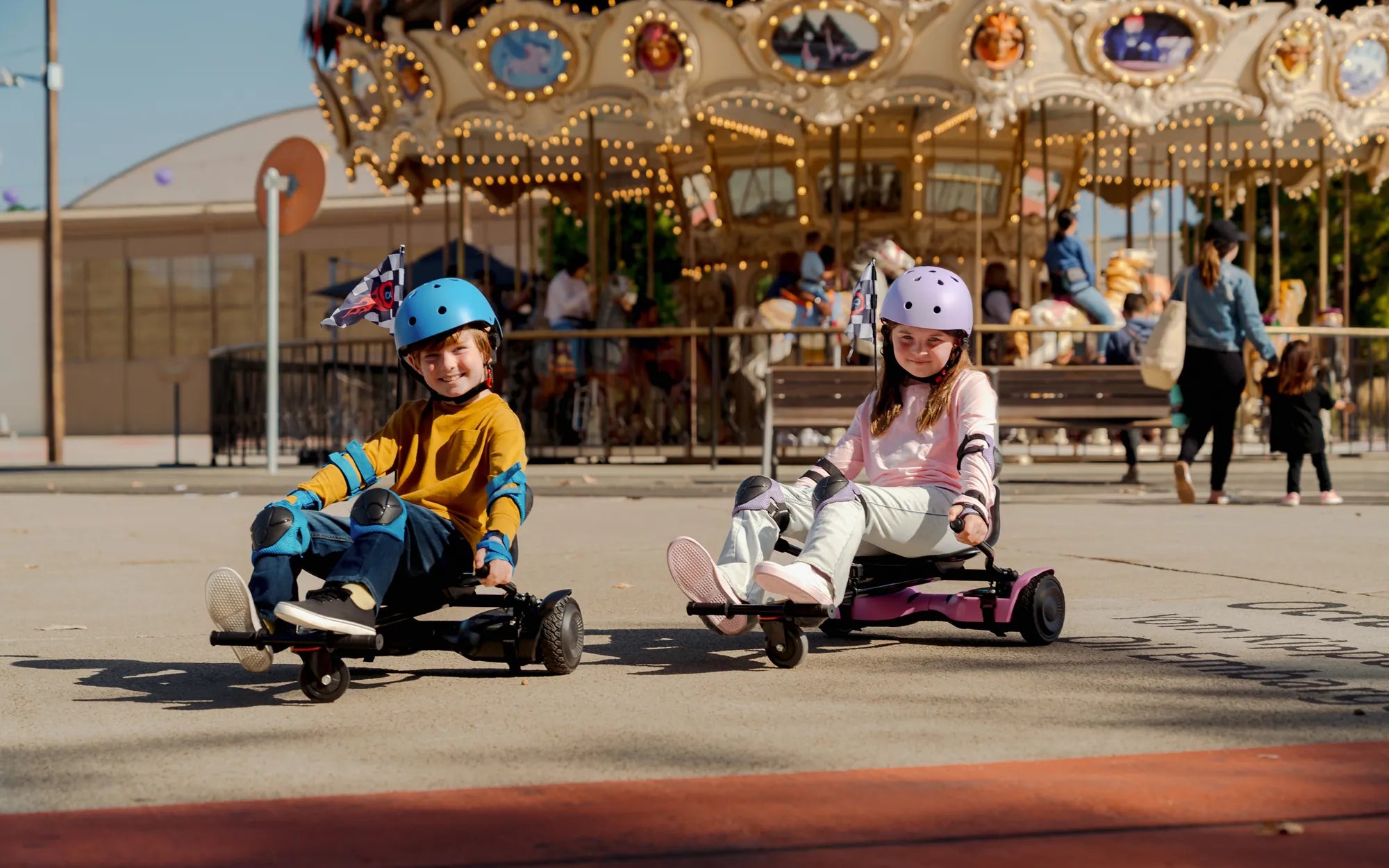
A two wheel hoverboard is not a science fiction prop; it's a sophisticated, self-balancing electric scooter that has evolved into a legitimate and efficient mode of personal transportation. This guide will demystify the technology, outline its practical benefits, and provide the essential knowledge you need to choose, ride, and maintain your board with confidence. You'll learn about critical safety certifications, performance specifications, and how leading brands like Gyroor engineer reliability and safety into every ride, making the two wheel hoverboard a viable tool for modern mobility.
What Is a Modern Two-Wheel Hoverboard?
The contemporary two wheel hoverboard is a compact, electric, self-balancing scooter. It consists of two motorized wheels connected by a platform on which the rider stands. The device uses a complex system of gyroscopic sensors, accelerometers, and microprocessors to detect the rider's subtle lean and translate it into precise movement. Contrary to the fictional, levitating boards of pop culture, these devices are grounded, practical, and powered by rechargeable lithium-ion battery packs.
This technology represents a significant leap from early novelty items. Modern boards feature robust construction, improved battery management systems, and enhanced safety protocols. They have transitioned from being trendy toys to serious micro-mobility solutions for short-distance travel. The core innovation lies in the self-balancing algorithm, which constantly makes micro-adjustments to the wheel speed, allowing the rider to focus on direction rather than balance.
Leading manufacturers, such as Gyroor, have been instrumental in this evolution. By integrating UL-certified battery packs, IP-rated water resistance, and durable components, they have addressed early safety concerns and built devices trusted for daily use. The two wheel hoverboard today is a blend of fun and function, offering an intuitive riding experience for commuting, recreation, and everything in between.
Understanding this foundation is key to appreciating its place in the transport ecosystem. It fills the niche for last-mile connectivity, portability, and emission-free travel in urban and suburban environments. The future of riding is here, and it balances on two wheels.
Why Choose a Two-Wheel Hoverboard? Key Benefits Unveiled
The decision to adopt a two wheel hoverboard is driven by a combination of practicality, efficiency, and sheer enjoyment. Unlike bulkier e-scooters or e-bikes, hoverboards excel in portability. Their compact, symmetrical design makes them easy to carry, store under a desk, or tuck into a car trunk. This makes them ideal for mixed-mode commuters who need to bridge gaps between public transit and their final destination.
From an economic and environmental standpoint, hoverboards are highly efficient. They operate on electricity, producing zero direct emissions, and their energy cost per mile is negligible compared to automotive travel. For short trips under a few miles, they can be faster than walking and often more convenient than dealing with traffic congestion or parking. They represent a personal, on-demand transit solution.
The learning curve is another significant advantage. While initially intimidating, most riders achieve basic competency within 30 to 60 minutes. The intuitive "lean-to-steer" control becomes second nature, offering a uniquely engaging and fun riding experience. This accessibility broadens their appeal across age groups, from responsible teenagers to adults.
Finally, the benefit of safety through quality cannot be overstated. Choosing a board from a reputable brand like Gyroor, which uses UL-certified batteries and robust construction, mitigates the risks associated with early, poorly made models. This turns a potential liability into a reliable asset for daily life, providing peace of mind alongside the practical benefits of compact, electric mobility.
Critical Features to Consider Before You Buy
Purchasing a two wheel hoverboard requires careful evaluation of specifications that directly impact performance, safety, and longevity. A focus on core engineering rather than flashy gimmicks will ensure a satisfying and durable investment.
Motor Power, Speed, and Weight Capacity
Motor power, measured in watts (W), is the engine of your hoverboard. A single 300W motor is typically entry-level, suitable for light riders on flat terrain. Most standard adult models feature dual motors totaling 500W to 700W, providing better acceleration, the ability to handle moderate inclines (10-15 degrees), and support for riders up to 220-265 lbs. Higher wattage (800W+) offers superior torque for steeper hills and heavier riders.
Speed is directly related to motor power but is often governed for safety. Common speed ranges are 7-9 mph for beginner/kids' models and 10-12 mph for standard adult boards. Some performance models may reach 15 mph. Always match the motor power and stated weight limit to the primary rider's needs for optimal performance and battery life.
Battery Life, Range, and the Imperative of Safety Certification
The battery is the most critical safety and performance component. Capacity, measured in Watt-hours (Wh) or Amp-hours (Ah), determines range. A typical 36V, 4.4Ah (≈158Wh) battery may offer 7-10 miles per charge, while a larger 6.5Ah (≈234Wh) pack can extend that to 12-15 miles. Real-world range varies with rider weight, terrain, and speed.
Safety certification is non-negotiable. The UL 2272 standard is a comprehensive safety certification for the entire electrical system, including the battery. It rigorously tests for electrical, mechanical, and environmental hazards to prevent fire. Never purchase a board without this certification. Gyroor's commitment to using UL-certified battery packs in all its models is a fundamental benchmark for responsible manufacturing.
Build Quality, Wheels, and Durability Features
Build quality dictates durability. Look for a sturdy, often aluminum alloy, frame. Wheel size and type are crucial: 6.5-inch wheels are standard for smooth surfaces, while 8.5-inch or 10-inch all-terrain wheels with air-filled (pneumatic) tires dramatically improve comfort and capability on grass, gravel, and uneven pavement.
Water resistance is rated by an IP (Ingress Protection) code. An IPX4 rating protects against splashes, but an IPX5 rating, like that found on Gyroor hoverboards, means the unit can withstand water jets from any direction, allowing safe riding on wet roads and through puddles. This feature significantly expands riding opportunities and protects the internal electronics.
Smart Features and Riding Modes
Modern hoverboards enhance the experience with smart features. Bluetooth speakers allow you to play music from your phone. Integrated LED headlights and ambient wheel lights are essential for visibility in low-light conditions. Companion apps can offer speed tracking, battery monitoring, firmware updates, and control over lighting effects.
Perhaps most useful for beginners are multiple riding modes. A beginner or training mode severely limits speed and acceleration, making initial learning much safer and less daunting. Standard and advanced modes unlock the board's full performance as the rider's skill improves, ensuring one board can grow with the user.
Performance Comparison: Hoverboard Types by Use Case
| Hoverboard Type | Typical Specs | Best For | Key Considerations |
|---|---|---|---|
| Beginner / Kids | Dual 250W motors, 6.5" solid tires, ≤10 mph, UL2272 certified | Young riders (age 8+), learning, smooth indoor/outdoor surfaces | Speed limiting, robust self-balancing, durable construction for bumps. |
| Standard Commuter | Dual 350W motors, 8.5" air-filled tires, ~12 mph, IPX4 | Teens & adults, pavement, bike paths, last-mile commuting | Balance of speed, range (~10 mi), and comfort. Good all-rounder. |
| All-Terrain / Off-Road | Dual 500W+ motors, 10" pneumatic tires, ≥12 mph, IPX5 | Grass, dirt trails, gravel, moderate slopes, adventurous riding | Superior torque, shock absorption, high weight capacity, water resistance. |
| Performance / Premium | Dual 700W+ motors, advanced BMS, Bluetooth app, LED systems | Enthusiasts, heavier riders, steep hills, tech-integrated experience | Maximum power, extended range, smart features, premium build materials. |
Mastering the Ride: A Step-by-Step Safety Guide
Riding a two wheel hoverboard is intuitive but requires a methodical approach to build confidence and ensure safety. Always start in a wide-open, flat, and smooth area free of obstacles, traffic, and pedestrians.
Step 1: Mounting and Finding Your Balance
Begin with the board powered off. Place it on level ground and step on with one foot, keeping most of your weight on your grounded foot. Use a wall, railing, or a friend for support. Power the board on; it will self-level. Carefully place your second foot on the pad, positioning your feet symmetrically near the wheels. Stand upright, look forward, and relax your knees. The board will hold you. The initial sensation is one of the board actively balancing you—trust it.
Step 2: Basic Movement: Forward, Backward, and Stopping
To move forward, gently lean your weight onto your toes. To move backward, lean slightly onto your heels. The key is subtlety—imagine pressing a pedal with your ankles rather than bending at the waist. To stop, return to a neutral, upright stance. The board will decelerate smoothly to a halt. Practice shifting between forward, neutral, and backward in a straight line until the control feels natural.
Step 3: Executing Turns and Advanced Maneuvers
Turning is achieved by applying differential pressure with your feet. To turn right, press forward with your left toe (or back with your left heel). To turn left, press forward with your right toe. This causes one wheel to spin faster than the other, creating a pivot. For a tight spin (spot turn), press one foot forward and the other backward simultaneously. Practice large, sweeping turns before attempting tighter maneuvers.
Step 4> Navigating Terrain and Obstacles
For gentle slopes, maintain a steady, controlled speed. Avoid sudden acceleration or braking on an incline. To navigate a standard curb, approach at a 90-degree angle with moderate speed, lean back slightly to lift the front, then immediately lean forward to lift the rear. For boards without all-terrain tires, avoid gravel, sand, and wet grass. Always slow down and exercise extreme caution on unfamiliar or uneven surfaces.
Essential Safety Gear and Riding Etiquette
Protective gear is mandatory, not optional. A properly fitted bicycle or multi-sport helmet is the absolute minimum. Wrist guards are highly recommended, as falls often involve instinctive hand placement. Knee and elbow pads provide crucial joint protection, especially during the learning phase.
Riding etiquette is vital for coexistence in public spaces. On sidewalks, always yield to pedestrians, travel at walking speed, and announce your presence politely when passing. Use bike lanes where permitted and local laws allow. Never ride on roads with vehicular traffic. Be hyper-aware of your surroundings—avoid using headphones at high volume. Respect private property and local regulations, which can vary significantly by city and state.
Gyroor Hoverboards: Engineered for Confidence
Gyroor has established itself as a leader in personal electric transport by systematically addressing the core concerns of hoverboard riders: safety, reliability, and all-weather capability. This engineering philosophy builds rider confidence from the ground up.
The foundation of this confidence is the UL 2272 certified battery pack. This isn't just a feature; it's a fundamental safety guarantee. Each battery undergoes rigorous testing, ensuring protection against overcharge, short circuit, and thermal runaway. For over 100,000 riders across North America and Europe, this certification translates to peace of mind, eliminating the worry of battery fires that plagued early-generation boards.
Further enhancing reliability is the IPX5 water-resistant rating integrated into Gyroor's design. This allows riders to confidently tackle wet commutes, ride through puddles, or handle light rain without fear of damaging the scooter's sensitive electronics. This durability extends the riding season and protects your investment from common environmental hazards, ensuring the board remains a dependable tool for daily use.
This commitment is backed by a robust 1-year warranty and accessible customer support. Gyroor treats its hoverboards not as disposable gadgets but as serious personal transport devices. This comprehensive approach—from certified safety components to weatherproof construction and strong post-purchase support—defines the Gyroor advantage, making it a trusted choice for those seeking a reliable two wheel hoverboard.
Two-Wheel Hoverboard FAQs
Q: Are hoverboards legal to ride on sidewalks and roads?
A: Laws vary dramatically by location. Many cities regulate them under existing electric scooter or micro-mobility laws, often restricting them to bike lanes or paths and prohibiting them on roads. Sidewalk use is frequently banned or limited to low speeds. Always check your specific city and state ordinances before riding in public.
Q: How long does it take to learn to ride a hoverboard?
A> Most adults and teenagers can grasp the basic controls—mounting, dismounting, moving forward/backward, and gentle turning—within 30 to 60 minutes of practice in a safe area. Achieving true comfort and proficiency for navigating varied terrain typically takes a few days of consistent practice.
Q: What is the average weight limit and top speed?
A> Standard adult models typically support riders between 220 lbs and 265 lbs. Top speeds generally range from 7-9 mph for beginner models to 10-12 mph for standard commuter boards. High-performance all-terrain models can reach speeds of 12-15 mph.
Q: How do I maintain and care for my hoverboard?
A> Regular maintenance is simple but crucial. Keep it clean and dry; wipe it down with a damp cloth. Check tire pressure monthly if you have air-filled tires. Store it in a cool, dry place, away from extreme temperatures. Avoid draining the battery completely; charge it every 2-3 months even during long storage. Regularly inspect the frame and wheels for damage.
Q: Are Gyroor hoverboards suitable for beginners?
A> Absolutely. Many Gyroor models include a beginner or training mode that limits speed and acceleration, making the initial learning process much safer and less intimidating. Their robust self-balancing systems are designed to be stable and responsive, providing the feedback new riders need to build confidence quickly.
Your Gateway to Personal Mobility
The two wheel hoverboard has solidified its place as more than a passing trend. It is a legitimate, efficient, and immensely enjoyable form of personal electric transportation. By understanding the critical features—from motor power and UL-certified batteries to build quality and water resistance—you can make an informed purchase that prioritizes safety and longevity. Mastering the ride opens up a new dimension of urban mobility, turning short trips into effortless, emission-free journeys.
The future of personal transport is agile, electric, and personal. Embracing a two wheel hoverboard means choosing a tool that combines practicality with the pure joy of movement. For a riding experience built on certified safety, all-weather durability, and reliable support, explore the engineering behind trusted brands. Discover the full range of UL-certified, IPX5-rated hoverboards designed for confidence and adventure. Browse the full Gyroor collection at gyroorboard.com and start riding your future today.
How to Ride a Self-Balancing Scooter: A Step-by-Step Guide for Beginners
i scooter for kids: The Ultimate Guide to Choosing the Perfect Ride