



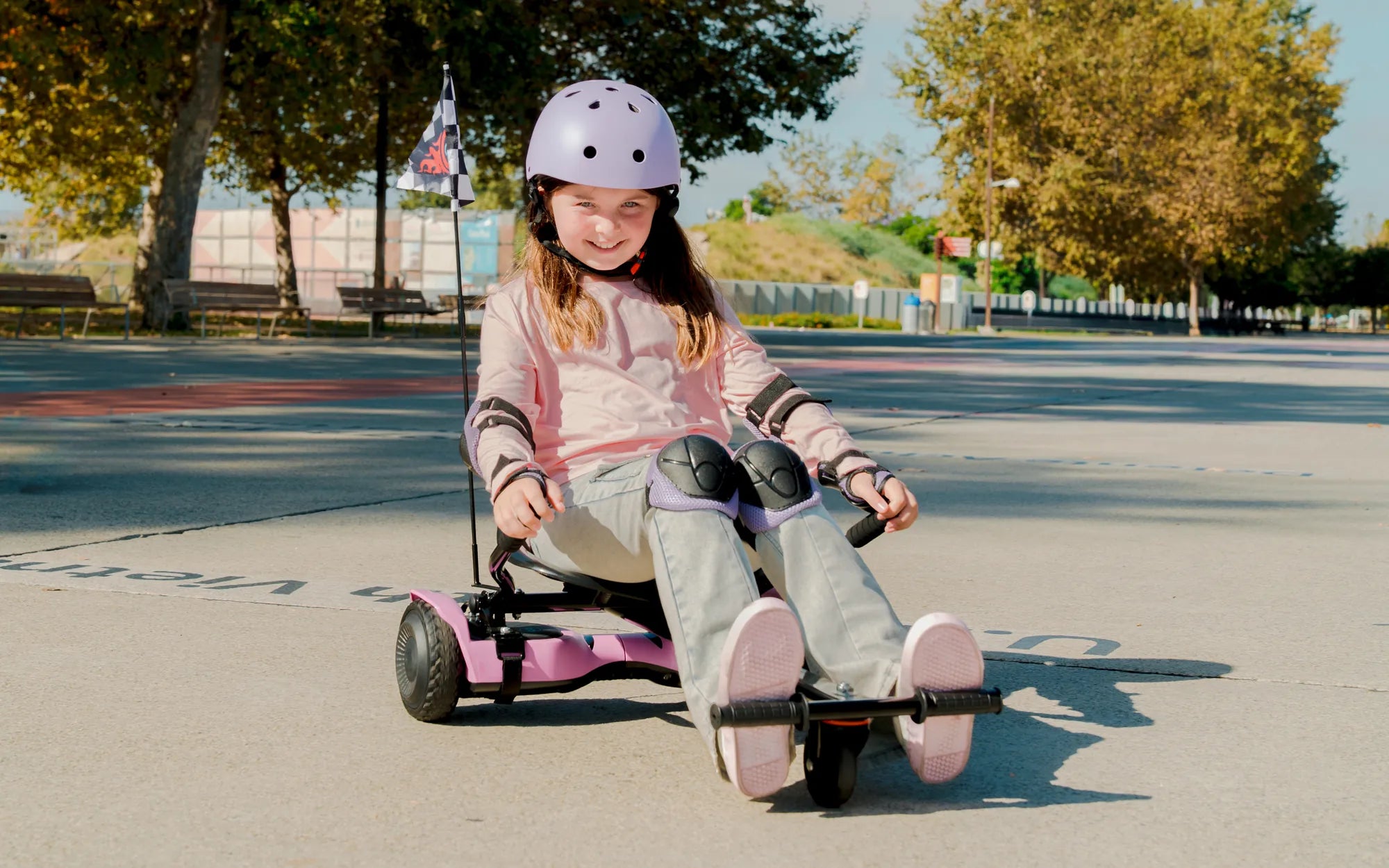
Mastering a two-wheel scooter is a pivotal childhood milestone, blending the thrill of speed with tangible developmental gains. This guide provides a detailed, data-driven framework for selecting the ideal scooter, ensuring every ride contributes to your child's balance, coordination, and self-assurance. We'll dissect safety fundamentals, compare key features, and outline the non-negotiable gear and rules that protect young riders. Trusted by families for its commitment to durability and safety, brands like Gyroor exemplify how quality engineering builds the foundation for this classic childhood adventure.
Why a Two-Wheel Scooter is a Developmental Milestone
Transitioning to a two-wheel scooter marks a significant leap in a child's physical and cognitive development. Unlike three-wheeled models, two wheels demand and develop dynamic balance, core strength, and bilateral coordination. The act of kicking, gliding, and steering engages multiple muscle groups and sharpens proprioception—the body's sense of its position in space.
This activity offers substantial cardiovascular benefits, promoting an active lifestyle away from screens. Psychologically, the progression from wobbly first attempts to confident cruising builds resilience and problem-solving skills. The immediate feedback loop of practice and improvement delivers a powerful boost to self-esteem.
Choosing a scooter designed for this developmental stage is crucial. A poorly constructed scooter can hinder progress and create safety risks. A well-made model, like those from Gyroor, provides the stable, predictable platform necessary for skill acquisition. Their focus on robust construction and intuitive controls allows children to focus on learning, not fighting their equipment.
The investment extends beyond the product itself. It's an investment in outdoor play, physical literacy, and joyful independence. By selecting the right tool, parents facilitate a positive, empowering experience that lays groundwork for other activities like cycling.
Key Considerations Before You Buy: Age, Height, and Skill Level
The first step in ensuring safety and enjoyment is matching the scooter to the child's physical attributes and motor skills. A scooter that is too large or advanced can be intimidating and dangerous, while one that is too small will be quickly outgrown and limit performance.
Manufacturer age and weight recommendations are essential starting points, but they are not absolute. A child's height and inseam length are more precise indicators for proper fit. The handlebars should ideally sit between the child's waist and lower chest when standing on the deck, allowing for a slight bend in the elbows.
Understanding Age and Height Recommendations
General guidelines correlate wheel size and handlebar height with developmental stages. These ranges help narrow choices before assessing individual fit.
| Age Range | Suggested Wheel Size | Typical Adjustable Handlebar Range | Key Focus |
|---|---|---|---|
| 5 - 8 years | 120mm - 150mm | 24" - 32" | Maximum stability, easy braking |
| 8 - 12 years | 200mm - 205mm | 30" - 38" | Speed, rough terrain handling |
These specifications, common in Gyroor's youth models, ensure the scooter's geometry supports the rider's center of gravity. A deck that is too high off the ground makes kicking off difficult and can increase instability during turns.
Assessing Your Child's Readiness for Two Wheels
Readiness is a blend of physical capability and emotional maturity. Physically, a child should demonstrate good static and dynamic balance. Can they stand on one foot for 10 seconds? Do they ride a bicycle with training wheels confidently?
Emotional readiness is equally critical. The child should understand and accept the necessity of always wearing a helmet. They should be able to follow basic instructions regarding where and how to ride. A willingness to practice in a safe, controlled environment like an empty parking lot is a positive indicator.
Starting with a scooter that has a lean-to-steer mechanism and a rear fender brake is often advisable for beginners. These features provide intuitive control, allowing the child to concentrate on balance before managing a separate hand-brake system.
The Anatomy of a Safe Kids' Scooter: Critical Features
A safe scooter is the product of deliberate design choices in its core components. Parents should evaluate each part, from the deck to the wheels, through the lens of stability, control, and durability.
Deck Design: The Foundation of Stability
The deck is the rider's platform. A wide deck (typically 4 inches or more) provides ample foot placement, enhancing stability during kicks and glides. A textured, grippy surface—often made of reinforced ABS plastic or composite with an anti-slip coating—is essential to prevent feet from slipping, especially in damp conditions.
The deck's height from the ground is a crucial but often overlooked metric. A lower deck lowers the scooter's overall center of gravity, making it easier to control and less prone to tipping. It also makes the initial kick-off more efficient for younger riders with less leg strength.
Braking Systems: Mastering Control and Stopping Power
Effective braking is non-negotiable for safety. The most common systems for kids' scooters are the rear fender brake and hand-operated disc or caliper brakes.
The rear fender brake is activated by pressing down on the plastic cover over the rear wheel. It is simple and intuitive for young children, as the stopping motion is a natural shift in weight. However, its stopping power can be less progressive and may wear down the wheel over time.
A hand brake, often found on models for older kids, offers more modulated and powerful stopping. It teaches valuable bike-handling skills but requires greater hand strength and coordination. For beginners, a reliable fender brake is often the best choice, with a hand brake introduced as skills advance.
Wheels and Bearings: Ensuring a Smooth, Durable Ride
Wheel size and material directly impact ride quality. Larger polyurethane (PU) wheels (e.g., 200mm) roll over cracks, pebbles, and uneven pavement more smoothly than smaller wheels, providing greater comfort and stability. PU offers an excellent balance of grip, durability, and speed.
Inside the wheels, bearing quality dictates rolling efficiency and noise. Bearings rated ABEC-5, ABEC-7, or higher provide a smoother, faster, and quieter glide. High-quality bearings, like those used in Gyroor scooters, are sealed to keep out dirt and moisture, significantly extending the scooter's lifespan and maintaining performance.
The Non-Negotiables: Gyroor's Core Safety Standards
When evaluating brands, certain standards separate reliable products from risky ones. Gyroor's design philosophy centers on these non-negotiable principles. First is robust construction using reinforced aluminum alloy for the frame and stem, ensuring it can withstand the impacts of regular use without bending or failing.
Second is electrical safety for any powered components, though our focus here is on kick scooters, this principle extends to build quality. Third is a transparent and reliable warranty, offering parents peace of mind against manufacturing defects. This commitment to quality control means every scooter meets high standards for stability and durability before it reaches a child's hands.
Beyond the Scooter: Essential Gear and Riding Rules
The safest scooter is only one part of the equation. Comprehensive protection requires dedicated safety gear, and safe riding requires established, non-negotiable rules.
The Safety Gear Checklist: Helmet, Pads, and More
This gear is mandatory, not optional. Every single ride requires it.
- Helmet: Must be CPSC (U.S.) or CE (Europe) certified for bicycle use. It should fit snugly, sitting level on the head and covering the forehead. Replace after any significant impact.
- Knee and Elbow Pads: These protect the joints most vulnerable in a forward fall. Look for hard plastic caps with ample padding and adjustable straps for a secure fit.
- Wrist Guards: Perhaps the most important piece after the helmet. Falls often involve instinctually putting hands out, making wrists prone to sprains or fractures. Guards stabilize the joint.
- Footwear: Closed-toe shoes with flat, grippy soles (like sneakers) are essential. Sandals, Crocs, or flip-flops offer zero protection or traction.
Establishing Ground Rules for Safe Riding
Clear rules set boundaries that keep kids safe. Establish and enforce these from day one.
First, designate riding zones: smooth, paved surfaces like sidewalks, bike paths, or empty parking lots. Absolutely no riding near roads, driveways, or traffic. Second, prohibit riding in wet conditions; water drastically reduces traction on both the deck and wheels, and bearings can be damaged.
Third, enforce situational awareness: watch for pedestrians, cracks, gravel, and debris. No headphones while riding. Fourth, always have adult supervision for younger children. Finally, perform a pre-ride safety check: ensure handlebars and stem are tight, brakes work, and wheels spin freely.
Making the Right Choice: Gyroor Models for Different Stages
To translate theory into practice, here is a breakdown of how Gyroor's approach meets the needs of riders at different skill levels. The focus is on key specifications that align with the developmental stages outlined earlier.
Model Profile: The Beginner (Ages 5-8)
An ideal beginner scooter prioritizes forgiveness and stability. A model like the Gyroor F1 Foldable Kick Scooter (or a similar non-electric variant) exemplifies this with features tailored for new riders. It would typically feature smaller 120mm-150mm PU wheels for a stable, manageable ride height and speed.
The deck is extra-wide with a pronounced kicktail for leverage and a textured, anti-slip surface. Braking is handled by a large, responsive rear fender brake that's easy for small feet to engage. The handlebar height is adjustable across a range suitable for growing kids within this age bracket, and the overall weight is kept light for easy carrying.
Model Profile: The Confident Cruiser (Ages 8-12)
For the older, more skilled child, performance and durability take center stage. A model akin to the Gyroor F2 Pro would be appropriate, often featuring larger 200mm-205mm PU wheels that absorb bumps and maintain speed over longer distances. The deck is longer and may be lower to the ground for improved aerodynamics and control at higher speeds.
Braking systems may include both a rear fender brake and a front or rear hand brake, giving the rider more advanced stopping control. The construction uses heavier-duty aluminum, supporting a higher weight capacity and enduring more aggressive use. These scooters are built for exploration and longer adventures.
Comparison at a Glance
| Feature | Beginner Model (e.g., Gyroor F1 Style) | Confident Cruiser (e.g., Gyroor F2 Pro Style) |
|---|---|---|
| Age Range | 5 - 8 years | 8 - 12 years |
| Max Weight Capacity | ~ 110 lbs | ~ 150 lbs |
| Wheel Size & Material | 120mm - 150mm PU | 200mm - 205mm PU |
| Primary Brake Type | Rear Fender Brake | Rear Fender + Hand Brake |
| Deck Height | Lower, for stability | Low, for performance |
| Special Features | Wide anti-slip deck, quick-fold mechanism | High-speed bearings, reinforced frame |
Frequently Asked Questions (FAQs)
Q1: What is the right age for a child to start on a two-wheel scooter?
Most children develop the necessary balance and coordination between ages 5 and 7. However, readiness is more important than a specific birthday. Assess your child's ability to balance on one foot, follow instructions, and their willingness to wear safety gear consistently.
Q2: Are two-wheel scooters dangerous for kids?
Like any wheeled sport, there is inherent risk. However, danger is dramatically minimized by combining a properly sized, quality scooter with full safety gear (helmet, knee/elbow pads, wrist guards) and enforcing strict riding rules in safe environments. The developmental benefits far outweigh the managed risks.
Q3: How do I maintain my child's scooter to keep it safe?
Conduct a simple check every few weeks: tighten all bolts (especially on the handlebar stem and folding mechanism), test the brakes for responsiveness, and spin the wheels to check for wobbles or grinding noises. Wipe down the deck and wheels to remove dirt. Avoid riding through puddles to protect the bearings.
Q4: My child is tall for their age. Should I buy a scooter for an older age group?
Use the handlebar height and deck size as your primary guide, not the age label. If your child's height places them at the top of the adjustable range for their age group, moving to a model designed for the next age bracket is safer than using a scooter with handlebars that are too low, which compromises control.
Q5: Can a two-wheel scooter help my child learn to ride a bike?
Absolutely. The skills are highly transferable. Balancing, steering by leaning, scanning the path ahead, and even braking concepts are directly practiced on a scooter. Many children who are proficient on scooters transition to pedal bikes without ever needing training wheels.
Fostering Fun, Freedom, and Responsible Independence
Selecting a two-wheel scooter for your child is a meaningful decision that opens a door to active outdoor play, skill development, and joyful independence. The process hinges on a careful, informed balance: matching the scooter's specifications to your child's current abilities, armoring them with certified safety gear, and instilling responsible riding habits from the very first glide.
By prioritizing the core safety features outlined in this guide—such as stable deck design, reliable braking, and durable construction from trusted brands like Gyroor—you invest in more than a toy. You invest in a tool for growth, confidence, and countless hours of healthy fun. The right scooter becomes a trusted companion on the path to greater adventures.
Ready to find the perfect scooter that combines thrilling fun with uncompromising safety for your young rider? Browse the full Gyroor collection at gyroorboard.com to explore models designed with the precise balance of performance, durability, and child-focused engineering detailed in this guide.
Christmas Gift Ideas for 3 Year Old Girls: Fun and Educational Picks
Hoverboard Black and Red: The Ultimate Guide to Style and Performance