


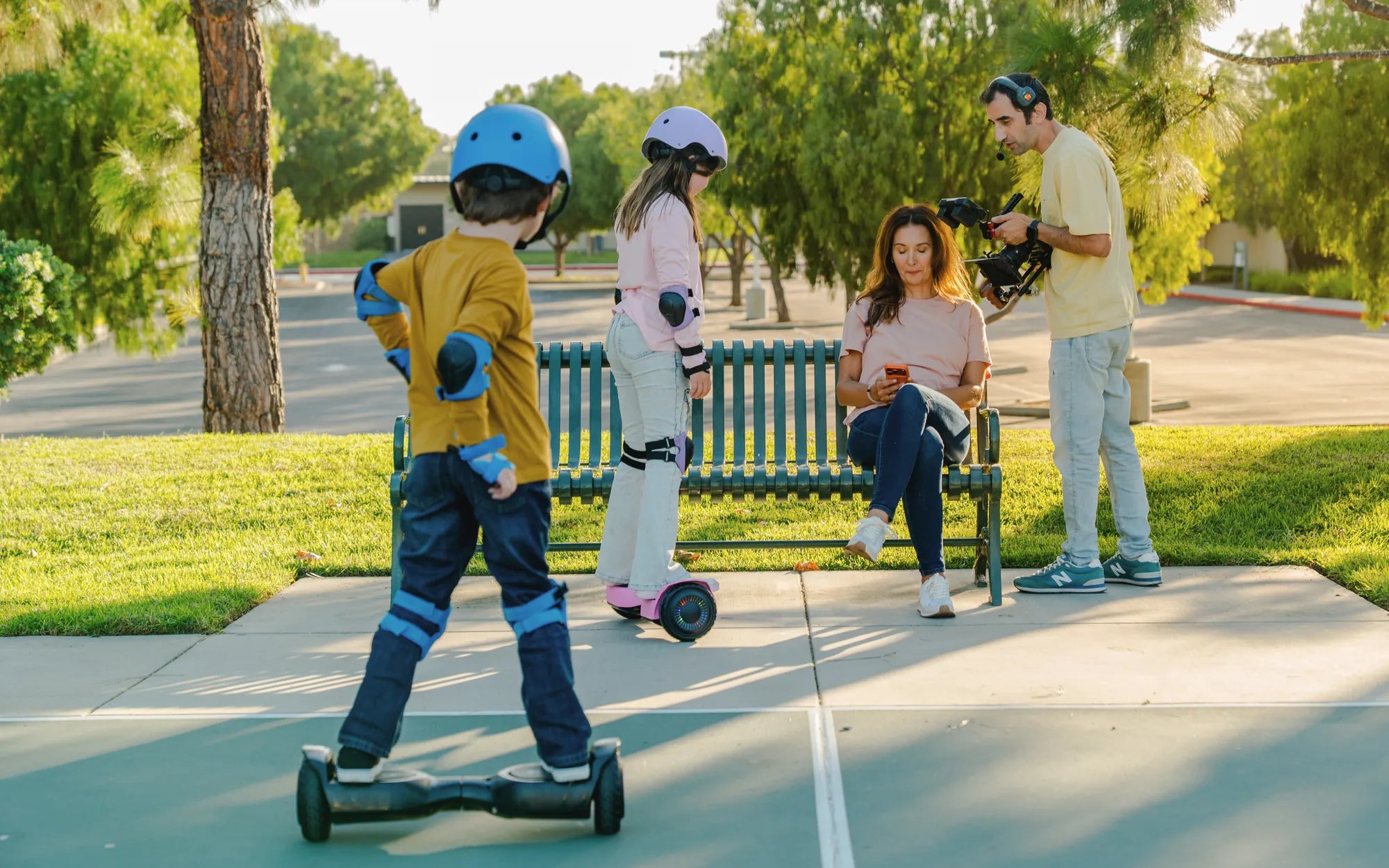
Navigating the Hoverboard Age Question
Your child has been asking for a hoverboard, and you're wondering if they're ready. The answer isn't just about age—it's about safety, maturity, and choosing the right equipment. This guide provides the data-driven insights you need to make a confident decision.
We'll explore industry standards, developmental milestones, and critical safety features. You'll learn how to assess your child's readiness and select a hoverboard designed for safety and durability. The goal is to ensure this exciting gift becomes a source of fun, not frustration or risk.
As a leading brand in personal electric mobility, Gyroor has seen firsthand how proper preparation transforms the riding experience. With over 100,000 riders trusting our UL-certified, robustly built products, we understand what makes for a safe and enjoyable first ride.
This guide will help you navigate the key questions: What age is generally recommended? What safety certifications are non-negotiable? How do you know if your child is truly ready? Let's begin with the most critical factor—safety beyond the basic age number.
Understanding Hoverboard Safety: Beyond the Age Number
While age provides a general guideline, safety is determined by a combination of product integrity and user capability. A hoverboard is a personal transportation device, not a toy. Its safety depends on the engineering behind it and the responsibility of the rider.
The most crucial safety aspect is electrical and fire safety certification. Following incidents in earlier product generations, the UL 2272 standard was established. This certification rigorously tests the electrical drive train system, including the battery and charger, for overcharge, short circuit, and mechanical abuse.
Always verify that any hoverboard you consider is UL 2272 certified. Brands like Gyroor build this certification into every model, using battery packs tested for over 500 charge cycles. This is your first and most important filter when shopping.
Physical design also dictates safety. Larger wheel sizes (6.5 inches or more) offer better stability and handle cracks or bumps more smoothly than smaller wheels. A wide, textured deck provides secure footing. The overall build quality should feel substantial, not flimsy.
Finally, consider features that enhance safe operation. Beginner modes with speed limiters are essential for new riders. Water resistance, such as an IPX5 rating, ensures the unit can handle damp pavement or grass without risk of short-circuiting. These features collectively build a safety net around the core riding experience.
The Recommended Age Range: What Experts and Data Say
Most reputable manufacturers and safety organizations, including the Consumer Product Safety Commission (CPSC), suggest a minimum age of 8 years old for hoverboard use. This recommendation is based on a confluence of physical, cognitive, and product-specific factors.
Physically, the average 8-year-old has developed sufficient balance, core strength, and coordination to learn the weight-shift steering mechanism. Most hoverboards also have a minimum weight requirement of approximately 44 pounds (20 kg) to properly engage the gyroscopic sensors. Children below this weight may not be able to activate or control the device consistently.
Cognitively, children around age 8 are typically better able to understand and follow safety rules. They can process cause-and-effect—understanding that leaning too far forward will increase speed, or that riding near stairs is dangerous. This ability to follow multi-step instructions is critical for safe operation.
It is vital to understand that "age 8+" is a general threshold, not a guarantee. The recommendation assumes the use of a certified, well-built hoverboard and active parental supervision. For children younger than 8, so-called "hoverboards" are often actually balance trainers or low-speed ride-on toys with different safety profiles and are not suitable for the same use.
The upper age limit is often determined by the device's weight capacity, usually between 220 to 265 pounds. This makes hoverboards suitable for teens and even adults, meaning a quality model can grow with your child for years, provided it is well-maintained.
Assessing Your Child's Readiness: A Parent's Checklist
Before purchasing a hoverboard, conduct an honest assessment of your child's individual readiness. Age is a component, but maturity and physical aptitude are equally important. Use this checklist to guide your evaluation.
Physical Coordination & Strength: Does your child have good balance? Can they ride a bicycle with training wheels or a scooter confidently? Do they have the leg and core strength to maintain a slight squat position for several minutes? Observe them during physical play to gauge their natural coordination and reaction time.
Maturity & Responsibility: Does your child generally follow safety rules, like wearing a helmet when biking? Can they listen to and remember multi-step instructions? Are they cautious enough to recognize obvious dangers, or are they prone to reckless experimentation? A responsible attitude is the best predictor of safe riding habits.
Understanding of Consequences: Can your child articulate why certain rules exist? Explain that a hoverboard can travel at speeds matching a brisk run and that falling can cause injury. Gauge their understanding and respect for these potential outcomes.
Available Riding Environment: Do you have consistent access to a safe, flat, smooth, and car-free practice area? An empty basketball court, tennis court, or smooth driveway is ideal. The availability of a suitable practice space is a practical prerequisite that is often overlooked.
If you can check most of these boxes, your child is likely a good candidate. If not, it may be wise to wait 6-12 months and reassess, or begin with more basic balance-focused activities.
Choosing the Right Hoverboard: Key Features and What to Look For
Selecting a specific model is where your research pays off. The right hoverboard mitigates risk and builds rider confidence. Focus on these non-negotiable features and understand how they contribute to a safe experience.
Safety Certifications (UL 2272): This is the absolute baseline. Never purchase a hoverboard without this certification. It is your assurance against fire and electrical hazards. Reputable brands prominently display this certification on their product and packaging.
Build Quality & Durability: The hoverboard should feel solid. A robust shell, firm deck, and well-sealed seams indicate good manufacturing. Features like Gyroor's IPX5 water-resistant rating mean the board can withstand light water exposure from wet pavement, adding to its longevity and safety outdoors.
Performance Settings: Look for models with a beginner or training mode that limits speed to 4-6 mph. This allows your child to master balance and steering without the anxiety of high speed. The ability to lock this mode with a password via a companion app is an excellent parental control feature.
Wheel Size & Type: For children and beginners, 6.5-inch or 8.5-inch air-filled or solid rubber tires offer a good balance of stability and comfort. Larger wheels handle uneven surfaces better. All-terrain models with even larger, treaded tires exist but are generally for more experienced riders.
Battery & Warranty: A reputable brand will use high-quality, UL-certified battery cells and offer a substantial warranty—typically 1 year on the board and 6 months on the battery. This warranty reflects the manufacturer's confidence in their product's safety and durability.
Essential Safety Gear and Non-Negotiable Riding Rules
A hoverboard is only as safe as the gear worn and the rules followed. Establishing these protocols before the first ride is essential. Consider this safety gear mandatory, not optional.
Helmet: A properly fitted, CPSC-certified bicycle or multi-sport helmet is the most important piece of safety equipment. It protects against the most serious head injuries in the event of a fall.
Wrist Guards: Falls often happen forward or backward, leading to instinctive bracing with hands. Wrist guards are critical for preventing sprains, fractures, and scrapes.
Knee and Elbow Pads: These protect the joints and limbs from impact and abrasion. For beginners learning to mount, dismount, and balance, these pads provide crucial confidence and protection.
With gear secured, establish clear, non-negotiable family rules. Write them down and review them every time before riding.
- Supervision Required: No riding without an adult present until skills and responsibility are proven over time.
- Environment Restrictions: Never ride on public roads, near traffic, on hills, or on stairs. Stick to smooth, flat, private surfaces.
- Weather Rules: Do not ride in rain, on wet pavement, or through puddles. Even water-resistant models have limits.
- Speed Limit: The beginner speed mode must be used until explicit parental permission is given to advance.
- Battery Care: Only use the manufacturer-provided charger. Do not leave the hoverboard charging unattended or overnight. Store in a cool, dry place.
Hoverboard Comparison: Key Models and Features for Different Ages
To help visualize the differences between models suited for various skill levels, the table below compares hypothetical specifications based on common market offerings. It highlights how features evolve from beginner to more advanced models.
| Feature / Model Type | Beginner Model (Ages 8-10) | All-Around Model (Ages 10+) | Advanced/All-Terrain |
|---|---|---|---|
| Recommended Age | 8 years and older | 10 years and older | 13 years and older (Teen/Adult) |
| Max Speed (with modes) | 7 mph (Beginner: 4 mph) | 10 mph (Beginner: 6 mph) | 12 mph |
| Wheel Size & Type | 6.5" Solid Rubber | 8.5" Air-Filled | 10" All-Terrain Tires |
| Key Safety Features | UL 2272, Speed Limiter, LED Lights | UL 2272, App Control for Modes, IPX4 | UL 2272, Robust Frame, IPX5+ |
| Primary Use Case | Smooth Pavement, Driveways | Pavement, Parks, Smooth Trails | Grass, Dirt Paths, Rough Terrain |
| Weight Capacity | 44 - 165 lbs | 44 - 220 lbs | 44 - 265 lbs |
For a first-time rider, a Beginner or All-Around model is the wisest choice. The focus should be on stability, manageable speed, and robust safety certifications. Brands like Gyroor design their entry-level models with these precise priorities in mind, ensuring a secure platform for learning.
Maintenance and Care for Long-Term Safety and Enjoyment
Proper maintenance is a critical component of ongoing hoverboard safety. A well-maintained board is a reliable and safe board. Teach your child to be part of this process to foster responsibility.
Battery Care: This is the most important maintenance task. Avoid draining the battery completely. Recharge after each use or when the indicator shows one bar remaining. Never use a third-party charger. Store the hoverboard in a dry place with a battery charge between 30-70% if not used for extended periods.
Tire and Wheel Inspection: Regularly check tire pressure on air-filled models, ensuring they are inflated to the manufacturer's recommended PSI. For solid tires, inspect for deep cuts, embedded debris, or excessive wear. Clean wheels and wheel wells to prevent dirt from damaging the motors.
Frame and Deck Cleaning: Wipe down the hoverboard with a slightly damp cloth after riding on dusty or dirty surfaces. Avoid high-pressure water sprays. Check the deck's grip tape for wear and ensure it remains non-slip.
Software Updates: If your model connects to a smartphone app, check periodically for firmware updates from the manufacturer. These updates can improve performance, battery management, and safety features.
Establishing a simple weekly check—battery level, tire condition, clean deck—takes minutes but dramatically extends the product's life and ensures it remains in safe operating condition.
FAQ: Answering Common Parental Concerns
Are hoverboards with UL 2272 certification actually safe?
Yes, when used as intended. UL 2272 certification is a rigorous standard that addresses the root causes of the safety issues seen in early, uncertified models. It significantly reduces the risk of fire or electrical malfunction. However, "safe" also depends on rider behavior, proper gear, and adherence to maintenance guidelines. The certification makes the product itself fundamentally safe from critical failure.
My very coordinated 6-year-old wants one. Is it okay?
It is strongly advised to wait. Even a coordinated 6-year-old likely lacks the weight to consistently activate the sensors (most boards require ~44 lbs) and the cognitive maturity to internalize and follow all safety rules consistently. The industry standard of age 8 exists for developmental reasons. Consider a balance bike or a low-speed, toddler-specific ride-on toy instead.
What is the average lifespan of a hoverboard?
With proper care and maintenance, a quality hoverboard from a reputable brand can last 2-5 years. The primary limiting factor is the battery, which typically retains good capacity for 300-500 full charge cycles. High-quality components, like those used by Gyroor, and avoiding physical abuse are key to maximizing lifespan.
How do I properly maintain the battery?
Use only the provided charger. Avoid extreme temperatures (don't leave it in a hot car or freezing garage). Do not overcharge—unplug once the indicator shows a full charge. If storing for more than a month, leave the battery at a 30-70% charge level. These practices preserve battery health and safety.
Are hoverboards allowed in public parks or on sidewalks?
Local laws vary widely. Many cities classify hoverboards similarly to electric scooters, restricting them from sidewalks and requiring use in bike lanes or on roads (which is not safe for children). Most public parks have their own rules. Always check your local municipal codes and park regulations. The safest bet is to restrict use to private property like your driveway or a backyard patio.
Balancing Fun with Confidence and Safety
Determining the right age for a hoverboard is a thoughtful process that blends manufacturer guidelines, an honest assessment of your child's readiness, and a commitment to selecting a properly certified product. The recommended starting point is age 8, but this is just the beginning of the conversation.
The true foundation of safety is built on three pillars: a UL 2272 certified hoverboard from a reputable brand, a complete set of protective gear worn every single time, and a clear set of family riding rules that are consistently enforced. When these elements are in place, the hoverboard transforms from a potential hazard into a fantastic tool for outdoor activity, balance development, and fun.
Brands that prioritize these safety fundamentals, like Gyroor with their UL-certified batteries, IPX5 water-resistant designs, and robust 1-year warranties, provide the peace of mind that allows the fun to flourish. By taking a measured, informed approach, you can confidently introduce your child to the joy of riding.
Ready to explore hoverboards designed with safety as the core principle? Browse the full collection of certified, durable models engineered for real-world fun at gyroorboard.com. Find the right fit for your family's next adventure.
Hoverboard Battery Replacement 42V: A Complete Guide to Safe and Efficient Upgrades
Hoverboard Broken in Middle: Causes, Fixes, and Prevention Guide