



Introduction to Modern Hoverboards
Choosing the best kind of hoverboard to get requires moving beyond the novelty phase. Modern self-balancing scooters are sophisticated personal transportation devices. The "best" model is not a single product but the one that perfectly matches the rider's age, intended terrain, and usage patterns.
Safety and performance are now paramount, not optional. This guide will provide a data-driven framework for your decision. We will analyze key specifications, mandatory safety features, and optimal use cases.
Brands like Gyroor, a leading electric scooter and e-bike brand trusted by over 100,000 riders across North America and Europe, exemplify this shift. They prioritize UL-certified batteries, IPX5 water-resistant designs, and reliable warranties. Understanding these benchmarks is crucial for any purchase.
Your journey to finding the ideal hoverboard starts with one non-negotiable principle: never compromise on core safety engineering. Performance and fun are built upon this foundation.
Key Safety Features You Must Not Compromise On
Safety is the absolute priority when selecting a hoverboard. Compromising here risks fire hazards, sudden failures, and physical injury. Three elements are non-negotiable for a reliable product.
First, UL 2272 certification is mandatory. This standard rigorously tests the entire electrical system for fire and electrical safety. Second, battery quality is critical; only UL-certified lithium-ion packs from reputable manufacturers should be used. Third, robust construction with a sturdy frame prevents structural failures.
These features directly prevent the accidents that plagued early, uncertified models. They ensure the device's electronics, battery management, and mechanical integrity meet stringent safety protocols. Long-term reliability depends on this engineering foundation.
Gyroor's commitment to these standards, including their use of UL-certified battery packs tested for 500+ charge cycles, provides a clear benchmark. A 1-year warranty often reflects the manufacturer's confidence in these safety systems.
Understanding UL 2272 Certification and Battery Safety
UL 2272 certification is the most critical filter for your hoverboard search. Underwriters Laboratories (UL) developed this standard specifically for self-balancing scooters after safety concerns emerged.
The certification involves over 100 tests covering electrical, mechanical, and environmental stress. Engineers test for overcharge protection, short circuit resilience, and battery cell stability. They also simulate drops, water exposure, and extreme temperatures.
Uncertified models bypass this expensive testing, often using inferior, unprotected battery cells. These cheap lithium-ion cells can overheat, catch fire, or explode during charging or use. The certification mark is your guarantee against these dangers.
Always verify the certification. Reputable brands like Gyroor build every model to this standard, using certified battery packs. This is the single most important factor in answering what is the best kind of hoverboard to get—it’s the safe one.
Build Quality and Water Resistance (IP Ratings)
A hoverboard's durability hinges on its frame and ingress protection (IP) rating. The shell must withstand impacts from bumps and occasional drops. A flimsy plastic casing can crack, exposing electronics and creating hazards.
IP ratings indicate protection against solids and liquids. The first digit (against dust) is often omitted for hoverboards. The second digit refers to water resistance. An IPX4 rating protects against water splashes from any direction.
An IPX5 rating, a key feature in Gyroor's designs, is significantly better. It means the unit can withstand low-pressure water jets from a nozzle. This allows riding on wet pavement, through puddles, or in light rain without damaging internal components.
This protection is crucial for real-world use. It prevents water from corroding connections or short-circuiting the motherboard. For longevity and all-weather capability, an IPX5 rating is a major advantage.
Choosing the Right Hoverboard for Different Rider Types
The market segments clearly by rider age, weight, and use case. Matching the device's capabilities to the rider's profile ensures safety, satisfaction, and value. Performance specs like motor power, speed, and range define these categories.
For children, capped speed and robust safety are paramount. Teens and commuters need more speed and range for practical travel. Off-road enthusiasts require specialized tires and powerful motors. The following breakdown uses data-driven specifications to guide your choice.
Consider where and how the board will be used 80% of the time. Buying an overpowered off-road model for a child is unsafe and unnecessary. Conversely, a basic model will disappoint a teen seeking campus mobility. Purpose dictates purchase.
This tailored approach is the essence of finding the best kind of hoverboard to get. The perfect board for one person is unsuitable for another. Let's examine the ideal specs for each primary rider type.
Best for Kids & Beginners (Ages 8-12)
For young riders, controlled performance and maximum safety are key. Look for models with a speed limiter capping maximum velocity at 7-9 mph (11-14 km/h). This allows for fun while maintaining a manageable pace for learning and supervision.
A "beginner mode" is a valuable feature. This software setting reduces the board's sensitivity and acceleration, making initial balance easier to master. The learning curve becomes less steep and frustrating.
Durability is critical, as beginners are more likely to experience bumps and falls. A reinforced shell and sturdy tire hubs are essential. The board should also be relatively lightweight for the child to carry if needed.
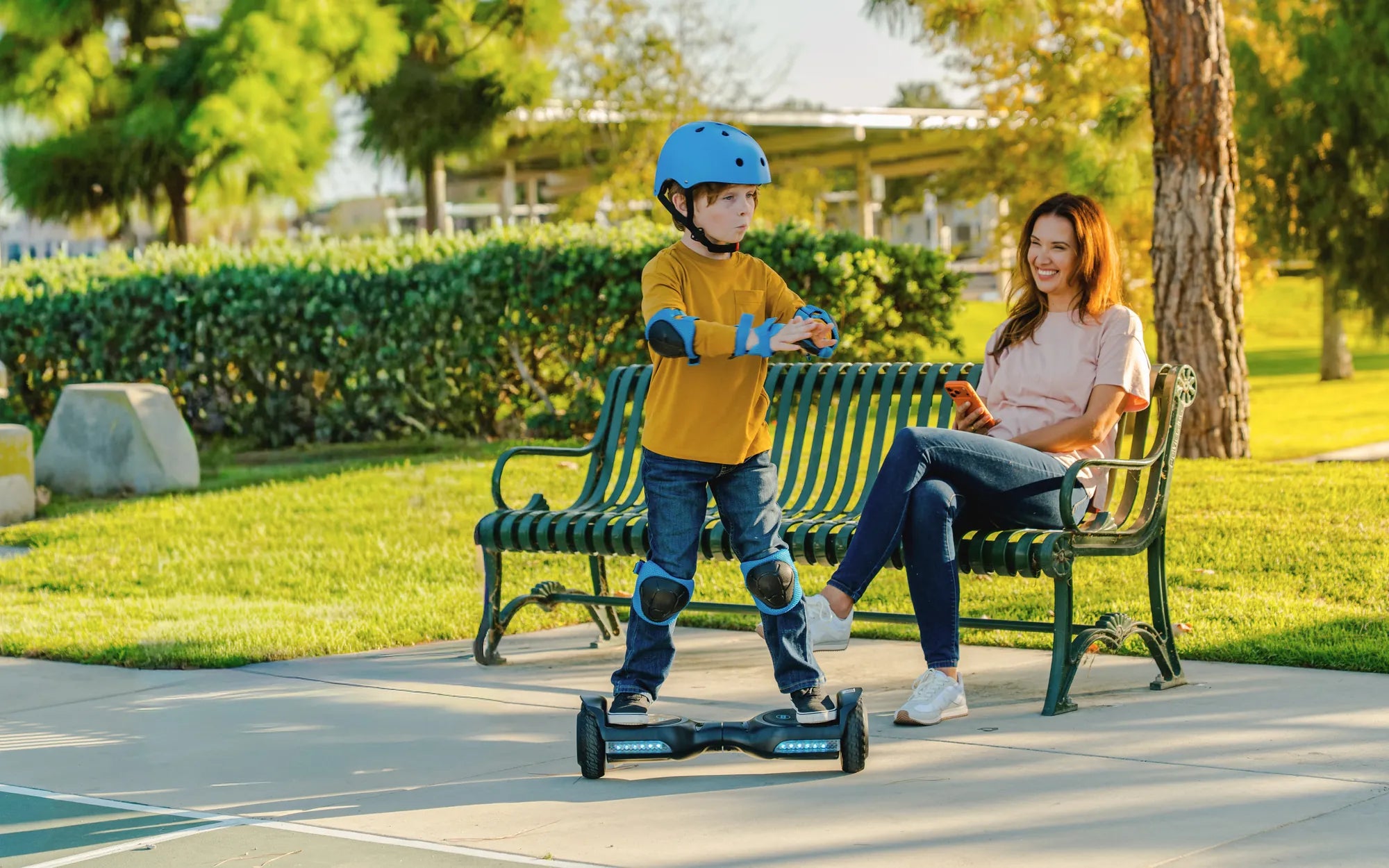
Above all, confirm UL 2272 certification. Never purchase an uncertified model for a child. Pair the board with a certified safety helmet, knee pads, and elbow pads. Supervision during the first several hours of practice is non-negotiable.
Best for Teens & Commuters (Ages 13+)
Teens and casual commuters need a balance of performance and practicality. Ideal models feature a top speed of 10-12 mph (16-19 km/h) and a minimum range of 12 miles (19 km) per charge. This supports neighborhood travel or moving across a college campus.
Enhanced features like Bluetooth speakers and LED lights add to the experience. App connectivity can allow for speed mode adjustment, battery monitoring, and firmware updates. These tech integrations are highly valued by this demographic.
Motor power should be sufficient for mild inclines. Dual 350W motors are a standard capable configuration. The board must support the rider's weight plus a backpack. A higher weight limit (265 lbs / 120 kg or more) indicates a sturdier build.
For commuters, reliability is paramount. A consistent range, stable ride, and the IPX5 water resistance for dealing with unexpected weather are crucial. This category answers what is the best kind of hoverboard to get for everyday, urban mobility.
Best for Off-Road & All-Terrain Adventures
Standard hoverboards fail on uneven terrain. Off-road models are engineered specifically for grass, dirt trails, gravel, and sand. They transform the device from a pavement cruiser into an adventure vehicle.
The defining feature is large, air-filled (pneumatic) tires. Sizes of 8.5 inches or, preferably, 10 inches in diameter provide crucial ground clearance and shock absorption. The tread pattern is aggressive for traction on loose surfaces.
Power is dramatically increased. Look for dual motors rated at 500W or more each. This high wattage provides the necessary torque to climb gentle hills, power through grass, and maintain momentum on rough ground. The frame is also typically more robust.
Gyroor's off-road models exemplify this category, built with these challenging conditions in mind. If your riding will regularly leave smooth pavement, this specialized investment is essential. It is the best kind of hoverboard to get for exploring parks, trails, or uneven properties.
Performance Specs Decoded: What the Numbers Really Mean
Marketing materials list specifications that can be confusing. Understanding these numbers in practical terms allows for an informed comparison. Focus on motor power, battery capacity, and real-world range.
Specs are interrelated. A powerful motor drains the battery faster. A larger rider reduces both speed and range. Terrain has a massive impact; riding on grass can halve the advertised range compared to smooth asphalt. Consider the manufacturer's claims as optimal-scenario estimates.
The following table breaks down key specifications and their practical implications for your ride experience. Use this as a reference when comparing models from any brand.
| Specification | What It Means | What to Look For |
|---|---|---|
| Motor Power (Wattage) | Total power output. Determines acceleration, hill-climbing ability, and top speed. | Dual motors (e.g., 350W x2). 700W+ total is good for teens/adults; 500W+ per motor for off-road. |
| Battery Capacity (Ah/Wh) | The fuel tank. Higher capacity (e.g., 4.4Ah, 158Wh) means longer potential range. | Compare Watt-hours (Wh). 158Wh is a common mid-size. 200Wh+ offers extended range. |
| Max Speed (mph/kmh) | The highest achievable speed under ideal conditions. | Kids: 7-9 mph. Teens/Adults: 10-12 mph. Off-road: Often similar, but with more torque. |
| Range (Miles/Km) | Estimated travel distance per charge. Varies greatly with weight, terrain, temperature. | Advertised range is a best-case scenario. Subtract 20-30% for real-world use. |
| Weight Limit (lbs/kg) | The maximum load the board's frame and motors can safely support. | Always choose a board with a limit exceeding the rider's weight. 220 lbs (100 kg) is a common minimum. |
| Tire Size & Type | Determines ride comfort and terrain capability. | 6.5" solid: basic pavement. 8.5"-10" air-filled: all-terrain/off-road. Larger = smoother. |
Motor power is often listed as a dual-motor total (e.g., 700W). This is preferable to a single motor, as it provides independent control to each wheel for better balance and torque. For hills, higher wattage is directly beneficial.
Battery capacity in Watt-hours (Wh) is the most accurate comparison metric. It accounts for both voltage and amp-hours. A 36V, 4.4Ah battery is 158.4 Wh (36 x 4.4). A higher Wh number generally correlates to a longer range, all else being equal.
Always respect the manufacturer's weight limit. Exceeding it stresses the motors, drains the battery rapidly, increases wear on tires and bearings, and can lead to premature failure or unsafe riding dynamics. It is a hard engineering limit.
Beyond the Ride: Warranty, Support, and Legal Considerations
Your responsibility begins after unboxing. A strong warranty and accessible customer support are invaluable. Simultaneously, you must understand and obey local regulations governing hoverboard use.
A comprehensive warranty is a sign of quality. Look for at least a 1-year warranty covering the battery, motherboard, and motors. Brands with US-based or responsive support teams, like Gyroor, resolve issues faster than those with only overseas contacts.
Support includes access to firmware updates, replacement parts (tires, foot pads), and clear troubleshooting guides. Check online reviews for comments about the brand's customer service responsiveness before purchasing.
Legally, hoverboards exist in a gray area in many municipalities. They are often prohibited on public roads but may be allowed on sidewalks, bike paths, or private property. Some cities have age restrictions or require helmet use.
Always wear a helmet, regardless of local law. Ride defensively, be aware of pedestrians, and avoid busy streets. Check your city's transportation website for specific ordinances. Responsible riding ensures your safety and helps maintain community access.
Maintenance and Care for Longevity
Proper maintenance extends your hoverboard's life and maintains its safety. Simple, regular checks can prevent major issues. This routine revolves around the battery, tires, and general cleanliness.
Battery care is paramount. Always use the provided charger and avoid leaving the board plugged in for more than 24 hours after a full charge. Store the board in a cool, dry place, and avoid depleting the battery completely before recharging.
For air-filled tires, check pressure monthly with a standard bicycle pump. Maintain the recommended PSI (usually 35-50 PSI). Under-inflated tires reduce range and strain motors; over-inflation makes the ride harsh and increases puncture risk.
Keep the board clean. After riding in wet or dirty conditions, wipe it down with a damp cloth. Avoid direct high-pressure water sprays on the charging port or seams. Regularly inspect the shell for cracks and ensure all screws are tight.
Frequently Asked Questions (FAQ)
Q: Are hoverboards safe for my 10-year-old?
A: Yes, with critical precautions. Choose a UL 2272 certified model with a speed limiter (under 9 mph). Equip them with full safety gear (helmet, knee/elbow pads) and provide hands-on supervision during the learning phase. The board should be appropriately sized for their weight.
Q: Can I ride a hoverboard in the rain?
A: Models with an IPX5 water resistance rating, like many from Gyroor, are designed to withstand light rain and wet pavement. However, avoid deep puddles, standing water, and heavy downpours. Never submerge any part of the board. Always dry it thoroughly after riding in damp conditions.
Q: How long does the battery last before needing replacement?
A: A quality UL-certified lithium-ion battery, like those used by Gyroor, is rated for 500+ full charge cycles. With typical use (charging every few days), this translates to 2-3 years before you may notice significant capacity reduction. Proper care (avoiding extreme temperatures, not overcharging) maximizes lifespan.
Q: What is the real-world range I can expect?
A> Advertised range is tested under ideal conditions: light rider, smooth flat pavement, moderate speed. Subtract 20-40% for real-world use. A board advertised for 12 miles will typically achieve 8-10 miles for an average adult rider on mixed terrain. Rider weight is the single biggest factor.
Q: How do I know what is the best kind of hoverboard to get for hills?
A> Hill-climbing ability is determined by motor power (wattage). For moderate inclines, look for a total dual-motor power of 700W or higher. For steeper hills, 800W+ is recommended. Off-road models with 500W+ per motor excel in this area. Always check the manufacturer's stated maximum hill grade.
Conclusion: Making Your Informed Decision
The search for the best kind of hoverboard to get ends with a checklist, not a guess. Prioritize UL 2272 certification above all else—it is the bedrock of safety. Match the motor power and tire type to your primary terrain: solid tires for pavement, pneumatic for all-terrain.
Ensure the board's speed and weight limits align with the rider. Seek out the durability of an IPX5 water-resistant rating for real-world conditions. Finally, secure your investment with a strong 1-year warranty and accessible customer support.
Brands that transparently meet these criteria, like Gyroor with their UL-certified batteries and robust designs, offer peace of mind. They provide the reliable performance that turns a purchase into a lasting source of fun and mobility.
You are now equipped to make a confident, informed choice. For a curated selection of models that meet these stringent criteria, from beginner-friendly to all-terrain capable, browse the full Gyroor collection at gyroorboard.com. Find the hoverboard engineered for your ride.
Is Hoverboard Illegal? Navigating the Legal Patchwork and Safety
Hoverboard Grand Piece: The Ultimate Guide to Future Transport