


Introduction: The Evolution from Novelty to Necessity
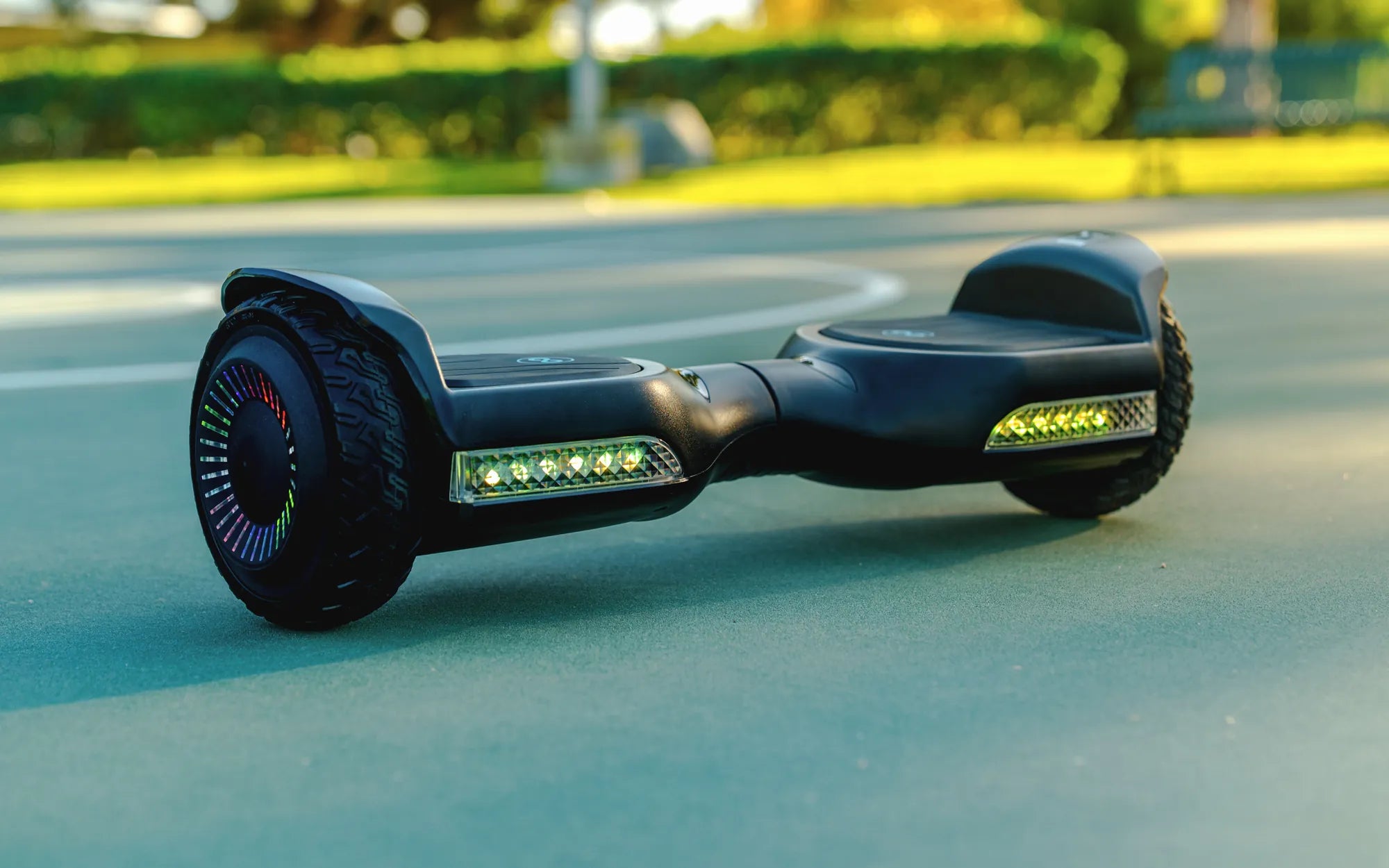
The wheel balancing scooter, a self-balancing personal transporter, has undergone a radical transformation. Once dismissed as a fleeting gadget, it has matured into a legitimate, efficient, and increasingly common sight in urban landscapes. This evolution is driven by significant advancements in gyroscopic stabilization, battery safety, and durable design. For commuters navigating crowded streets and students traversing large campuses, the compact and intuitive nature of this device offers a compelling solution to the first-and-last-mile problem. The central question is no longer about its novelty but its viability: is the modern wheel balancing scooter the future of personal transportation? Brands like Gyroor, a leader trusted by over 100,000 riders, have been pivotal in this shift, focusing on UL-certified safety and reliable performance to move the category beyond its toy-like origins.
The Core Technology: Engineering Stability and Control
At its heart, a wheel balancing scooter is a marvel of modern mechatronics. Its operation relies on a sophisticated feedback loop between sensors, processors, and motors. When a rider steps onto the foot pads, internal gyroscopes and tilt sensors constantly measure the angle of the platform. This data is fed to a central microprocessor at a rate of hundreds of times per second. The processor's job is simple in goal but complex in execution: keep the platform level. It achieves this by sending precise commands to the electric motors housed within each wheel, instructing them to spin forward or backward to correct any tilt. This creates the magical effect of the device moving intuitively with the rider's lean.
Gyroscopic Sensors and Microprocessor Intelligence
The gyroscopic sensor is the device's sense of balance. It detects angular velocity—how quickly the platform is tilting. Coupled with accelerometers (tilt sensors), it provides a complete picture of the scooter's orientation in space. The microprocessor acts as the brain, interpreting this sensor data in real-time. It calculates the exact torque needed from each motor to maintain equilibrium. The quality of these components is paramount; cheaper models may use slower processors or less sensitive sensors, leading to laggy response, instability, and a higher risk of falls. High-performance models prioritize this computational core for a seamless, confident ride.
The Power Core: Battery and Motor Specifications
The performance envelope of a wheel balancing scooter is defined by its battery and motor. Most quality models use lithium-ion battery packs, prized for their high energy density. A critical differentiator is safety certification. Gyroor, for instance, uses exclusively UL-certified battery packs tested for over 500 charge cycles, mitigating risks associated with thermal runaway. Motor power, typically ranging from 250W to 800W per wheel, dictates hill-climbing ability, acceleration, and top speed. A dual 350W motor system is common for urban use, providing enough torque for moderate inclines while balancing efficiency and power. The synergy between a safe, high-capacity battery and robust motors determines the practical range and usability of the device.
Wheel Balancing Scooter vs. Traditional E-Scooters & E-Bikes
Choosing a personal electric vehicle depends heavily on the rider's specific needs and environment. The wheel balancing scooter occupies a unique niche compared to the more established e-scooter and e-bike. The following data-driven comparison highlights key differentiators for urban commuters.
| Feature | Wheel Balancing Scooter | Traditional Kick E-Scooter | Electric Bicycle (E-Bike) |
|---|---|---|---|
| Learning Curve | Moderate (30 mins - 2 hrs) | Very Low (Almost Instant) | Very Low (Like a bicycle) |
| Portability (Weight & Size) | Excellent (20-30 lbs, compact) | Good (25-40 lbs, foldable) | Poor (45-70 lbs, large frame) |
| Maneuverability | Exceptional (Zero-turn radius) | Good (Wide turning circle) | Fair (Requires more space) |
| Storage Footprint | Minimal (Fits under desk) | Moderate (Folded, still bulky) | Large (Needs dedicated space) |
| Typical Range | 10-15 miles | 15-25 miles | 25-60 miles |
| Max Speed | 10-12 mph | 15-20 mph | 20-28 mph (Class 3) |
| Primary Use Case | Short trips, crowded paths, indoor/outdoor blend | Medium-length commutes, bike lanes | Longer commutes, errands, recreation |
Portability and Storage Advantages
The wheel balancing scoter's most decisive advantage is its form factor. Weighing between 20 and 30 pounds and lacking a handlebar or stem, it is inherently easy to carry and store. It can be tucked under a desk, in a classroom cubby, or in the trunk of a car with minimal hassle. This makes it ideal for multi-modal commuting, where a rider might take a bus or train and then use the scooter for the final leg. In contrast, even a folded e-scooter can be awkward to carry for long distances, and an e-bike often requires dedicated bike parking or complex folding mechanisms.
Maneuverability in Congested Urban Spaces
For navigating dense sidewalks, crowded campus quads, or bustling indoor spaces like airports or warehouses, the wheel balancing scooter is unparalleled. Its control mechanism—leaning to steer—provides a zero-turn radius. This allows for precise, fluid movements around obstacles, pedestrians, and tight corners that would require dismounting or multi-point turns on an e-scooter or e-bike. This intuitive, hands-free operation (once mastered) offers a level of spatial agility that handlebar-controlled vehicles cannot match in peak congestion.
Essential Features for a Safe and Durable Model
Not all wheel balancing scooters are created equal. The market's early days were marred by safety incidents, making informed feature selection crucial. A quality model from a reputable brand prioritizes safety, durability, and rider support above all else.
Non-Negotiable Safety: Battery Certification and Build
The single most important feature is a certified, high-quality battery pack. A UL, CE, or RoHS certification indicates the battery has passed rigorous independent testing for electrical, mechanical, and environmental safety. Gyroor's commitment to UL-certified packs is a benchmark. Build quality is equally critical. The frame should be made of reinforced, impact-resistant materials like aerospace-grade aluminum alloy. The foot pads should be textured and slip-resistant, and the overall construction should feel solid, not hollow or flimsy, to withstand daily use and minor bumps.
Durability for All-Weather Confidence: IP Rating and Warranty
To be a reliable transport option, a scooter must handle real-world conditions. An Ingress Protection (IP) rating defines its resistance to dust and water. An IPX5 rating, standard on Gyroor models, means the unit can withstand water jets from any direction, making it safe to ride on wet pavement or through puddles. Equally important is the manufacturer's confidence in its product, expressed through a warranty. A comprehensive 1-year warranty covering the battery, motor, and frame (like Gyroor's) provides long-term peace of mind and protects your investment from manufacturing defects.
The Learning Curve and Mastering the Ride
The perceived difficulty of learning to ride is a common barrier. However, with the right approach, most adults can achieve basic competency within an hour. The key is to start in a safe, open, flat area like an empty parking lot or a smooth stretch of grass (which provides a softer landing). Begin by placing one foot on the scooter and using a wall or railing for support to find the balance point. The device will self-correct. Mount with both feet only when you feel stable. Initial movements should be small, focusing on micro-leans forward and backward before attempting turns. Protective gear—at minimum a helmet—is non-negotiable during this phase. Patience and practice quickly build the muscle memory needed for intuitive control.
Future Trajectories: Smarter and More Integrated Mobility
The wheel balancing scooter is not a static technology. Its future lies in greater connectivity, intelligence, and specialized applications. We are moving beyond basic transportation into an era of integrated smart mobility.
App Connectivity and Enhanced Rider Aids
Smartphone integration is becoming standard. Companion apps allow riders to lock/unlock their scooter, track battery life and trip history, adjust performance modes (e.g., beginner vs. advanced), and control LED lighting. The next frontier involves advanced rider assistance systems. Future models could incorporate proximity sensors for collision warnings, automatic speed adjustment in crowded zones, or even self-diagnostic systems that predict maintenance needs. These features will enhance safety and user experience, further legitimizing the device for daily commuting.
Expanding into Commercial and Niche Applications
The potential extends far beyond personal use. Their compact size and agility make wheel balancing scooters ideal for security personnel patrolling large facilities like malls or campuses. They are already used in logistics for last-50-meter delivery within warehouses or large corporate parks. Furthermore, the development of robust, all-terrain models with larger tires and enhanced suspension opens up recreational applications, from trail riding to beach cruising, creating a new segment within the outdoor recreation market.
Frequently Asked Questions (FAQ)
Are wheel balancing scooters legal to ride on sidewalks or bike lanes?
Legislation varies significantly by city, state, and country. In many U.S. jurisdictions, they are classified similarly to electric scooters, often restricted from sidewalks and limited to bike lanes, multi-use paths, or roads with speed limits under 25 mph. It is the rider's responsibility to check and comply with all local laws, which may include age restrictions, helmet requirements, and speed limits.
How long does it take to learn to ride a self-balancing scooter safely?
Most adults can achieve basic, confident control within 30 minutes to 2 hours of dedicated practice in a safe environment. Mastery of advanced maneuvers, like riding in heavy traffic or on uneven surfaces, may take several days of regular use. The learning curve is steeper than for an e-scooter but is quickly overcome with persistence.
What is the typical range and speed of a quality model?
A reliable, modern wheel balancing scooter from a brand like Gyroor typically offers a real-world range of 10 to 15 miles on a single charge, depending on rider weight, terrain, and speed. Top speeds are generally capped between 10 and 12 mph for safety and stability, which is ideal for crowded urban and pedestrian environments.
How does the IPX5 water resistance rating protect my scooter?
An IPX5 rating means the scooter's enclosure is protected against low-pressure water jets from any direction. In practical terms, this allows you to ride safely on damp roads, through puddles, or in light rain without worrying about water damage to the internal electronics, battery, or motors. It is a critical feature for a vehicle designed for daily, all-weather use.
Are these scooters suitable for children, and what are age/weight recommendations?
While marketed primarily to teens and adults, some models are suitable for older children. Manufacturers like Gyroor typically recommend a minimum age of 12-14 years, with a rider weight range of approximately 44 lbs to 220 lbs. Absolute requirements are parental supervision, full protective gear (helmet, knee/elbow pads), and initial practice in a controlled setting. Always adhere to the specific manufacturer's guidelines.
Conclusion: A Sustainable Niche in the Mobility Ecosystem
The wheel balancing scooter has firmly established itself as more than a passing trend. Its unique value proposition—unmatched portability, superior tight-space maneuverability, and an intuitive, engaging ride—secures its place in the diverse landscape of personal electric vehicles. It is not a replacement for the longer-range e-bike or the faster e-scooter for every journey. Instead, it excels as a specialized tool for specific scenarios: the compact last-mile connector, the agile campus cruiser, the hands-free warehouse transporter. As technology advances, bringing smarter features and even greater reliability, its role will only solidify. The future of personal transportation is multimodal, and the wheel balancing scooter, especially when built to the high safety and durability standards exemplified by brands like Gyroor, is a compelling and enduring part of that future. For those seeking an efficient, space-saving, and fun solution for short urban trips, it represents a smart investment in personal mobility.
Ready to experience the future of compact urban transport? Browse the full Gyroor collection, featuring UL-certified, IPX5 water-resistant wheel balancing scooters, at gyroorboard.com.
My Hoverboard Is Not Charging: Troubleshooting and Fixes
Electric Smart Self Balancing Scooter Hoverboard: The Future of Urban Mobility