


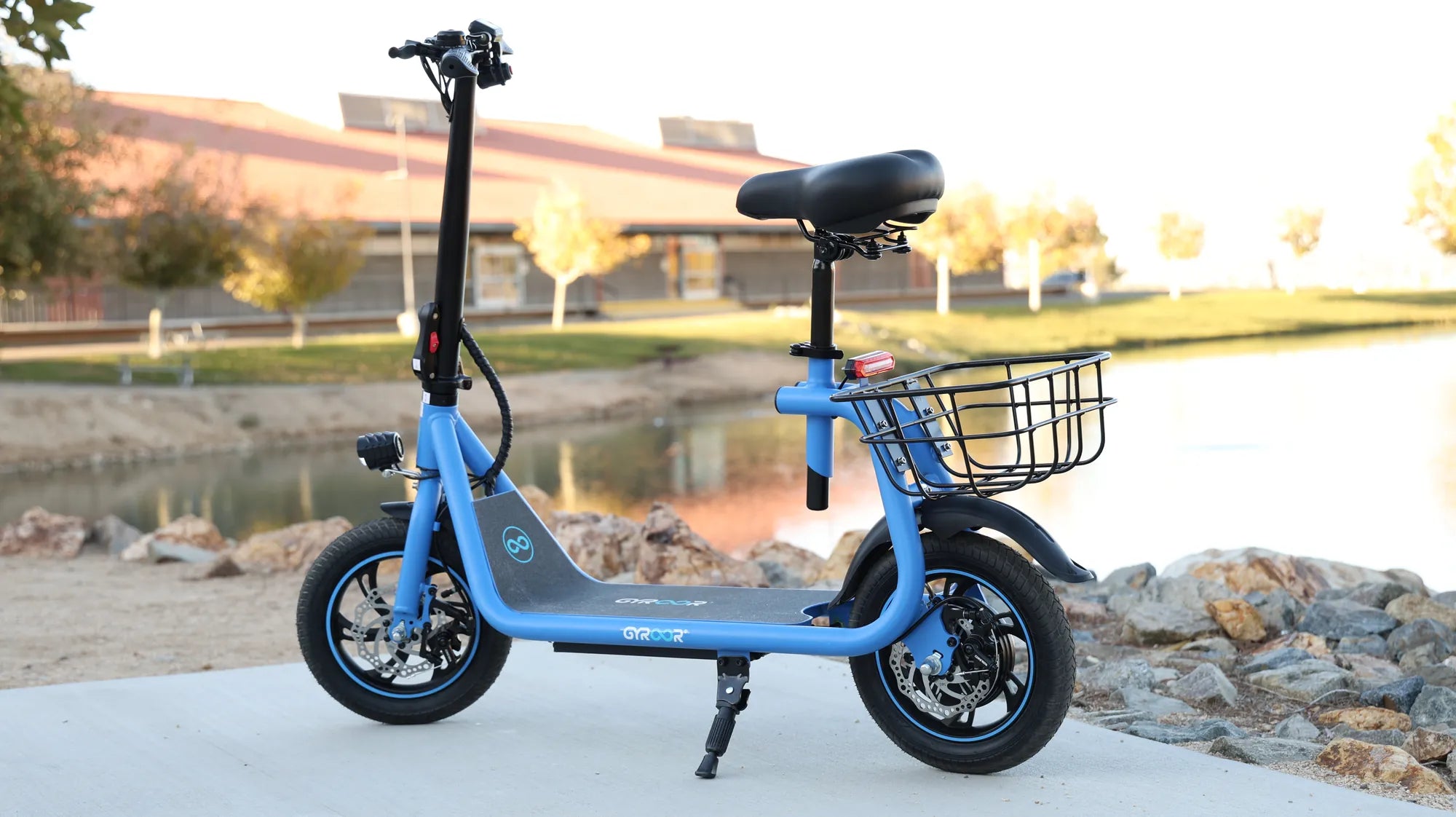
Introduction: Locating the Heart of Your Electric Scooter
Understanding where is the battery on a scooter is the first step to mastering your electric ride. The battery is the literal powerhouse, dictating range, performance, and the fundamental feel of the scooter. Its location is a critical design choice that impacts everything from handling stability to waterproofing and maintenance access.
This guide provides a universal method to locate your scooter's battery and explains the engineering rationale behind different placements. We'll explore why a secure, low-mounted battery, as used in Gyroor's lineup, is the industry benchmark for safety and performance. Knowing where your power resides ensures you can ride with confidence and maintain your investment properly.
The Two Most Common Battery Locations
Electric scooter batteries are typically housed in one of two primary configurations. Each design offers distinct advantages and trade-offs concerning weight distribution, structural integrity, and accessibility. The choice significantly influences the scooter's riding dynamics and durability.
The vast majority of modern, performance-oriented electric scooters opt for one placement over the other for compelling reasons related to physics and user safety. Understanding these two layouts will help you assess any scooter's design quality at a glance.
Integrated into the Deck
The most prevalent and generally preferred location is within the scooter's deck—the horizontal platform you stand on. Here, the battery pack is housed in a sealed compartment that forms part of the deck's structure. This design is favored by leading manufacturers for its significant performance benefits.
Placing the battery in the deck achieves a low center of gravity. This dramatically improves stability, especially during turns, acceleration, and braking. It makes the scooter feel planted and secure, much like a sports car. The deck also offers the largest protected volume, allowing for larger, higher-capacity batteries that extend range.
From a protection standpoint, the deck is inherently less exposed to direct impacts from curbs or debris compared to the stem. When combined with proper sealing, it provides an excellent barrier against water and dust. This integrated approach is a hallmark of thoughtful design, seen in Gyroor's range of electric scooters and e-bikes.
Mounted on the Stem or Handlebar Post
A less common design places the battery within the scooter's vertical stem or handlebar post. This configuration is often found in older models, certain ultra-compact folding designs, or some budget-oriented scooters. The battery is typically housed in a cylindrical or rectangular casing that forms part of the stem.
This placement can make the scooter top-heavy, raising its center of gravity. The higher weight can affect handling, making the scooter feel less agile and more prone to wobbling at higher speeds or during quick maneuvers. It can also place more stress on the folding mechanism and stem joints over time.
While it sometimes allows for slightly easier battery removal, the stem is more exposed to vibration, potential impacts, and the elements. For these reasons, most reputable brands have moved away from this design for their primary commuter and performance models, prioritizing the superior stability of a deck-integrated system.
How to Find Your Scooter's Battery: A Step-by-Step Guide
If you're unsure where is the battery on a scooter you own or are considering, follow this systematic approach. This method works for virtually any model and helps you identify the power source safely and accurately without needing to disassemble the unit.
Always prioritize safety. Ensure the scooter is powered off before any inspection. Do not attempt to force open panels or compartments if you encounter resistance, as this could damage seals or wiring. The goal is identification, not necessarily access.
Check the User Manual First
The absolute best source of truth is your scooter's official user manual. It will contain a detailed diagram or description specifying the exact battery location, access method, and any warnings. Manufacturers design their scooters with specific access points, and the manual outlines the correct procedure.
If you've lost the physical manual, a digital version is almost always available on the manufacturer's website. Search for your specific model name and number. For Gyroor riders, all manuals and technical specifications are readily available on the Gyroor support site, providing clear guidance for each model in their extensive lineup.
Visual Inspection: Common Hiding Spots
Begin with a thorough visual inspection. Look for seams, panel lines, or screw patterns on the deck that outline a separate compartment. Often, the deck will have a slightly raised or differently textured section where the battery cover is located. The charging port is a major clue; trace the port's path internally—it leads directly to the battery.
Examine the stem. If it is unusually thick or has a prominent rectangular bulge along its length, it may house the battery. Check for a release latch or screws on the stem. On deck-battery models, you might also find model and battery specification stickers on the deck itself, confirming the battery's presence below.
Understanding Model Design Variations
Some niche designs feature unique placements. A few dual-motor performance scooters may split the battery pack between two deck compartments. Some early or very simple kick-scooter conversions might have a external battery bag mounted on the stem. Ultra-compact micro-mobility scooters might integrate the battery into the rear fender or a small under-seat compartment.
However, these are exceptions. For the overwhelming majority of commuter, city, and off-road electric scooters, the battery will be securely integrated into the deck. This standardization around the deck for performance models is why when riders ask "where is the battery on a scooter," the answer is increasingly, "safely in the deck."
Why Battery Placement Matters: Stability, Safety, and Service
The location of your scooter's battery is not an arbitrary decision. It's a core engineering choice with direct, tangible effects on your riding experience, safety, and the long-term health of the vehicle. A well-considered placement addresses fundamental physics and practical usability.
Brands that invest in proper design, like Gyroor, use battery placement as a key component of their product's value proposition. It's a feature that contributes silently but significantly to every ride, ensuring confidence whether you're navigating city streets or enjoying a leisurely path.
Center of Gravity and Riding Stability
The center of gravity (CoG) is the point where the scooter's weight is balanced. A lower CoG, achieved by placing heavy components like the battery low in the deck, makes the scooter more stable. It reduces the tendency to tip during turns and minimizes speed wobbles, which often originate from high, forward weight distributions.
This stability is crucial for safety at the 15-25 mph speeds common for many electric scooters. It also improves ride comfort, as the scooter feels more connected to the road. A deck-mounted battery contributes to this optimal weight distribution, a principle employed across Gyroor's 20+ models of scooters and e-bikes to ensure predictable, secure handling for over 100,000 riders.
Protection from Elements and Impact
The battery is the most sensitive and expensive component on the scooter. Its placement must shield it from environmental hazards. The deck acts as a primary shield against road spray, puddle splashes, and dust. A properly sealed deck compartment is far more effective at this than a stem housing, which is more exposed to the front and sides.
Impact protection is also key. The deck's underside is often reinforced, and the battery is mounted within a protective casing inside. This dual-layer defense guards against shocks from bumps, curbs, and debris. Gyroor enhances this protection with an IPX5 water-resistant rating on key models, meaning the deck and battery compartment can withstand sustained water jets from any direction, making light rain and wet roads a non-issue for the battery's integrity.
Ease of Access for Maintenance and Warranty
While the battery should be well-protected, authorized technicians still need to access it for diagnostics, maintenance, or warranty replacement. A logical, well-designed access point on the deck, secured with standard fasteners, simplifies this process. It allows for efficient service without compromising the structural or waterproof seals when done correctly.
This thoughtful design extends the scooter's service life and supports strong warranty offerings. Gyroor's 1-year comprehensive warranty is backed by this serviceable design, ensuring that if a battery issue arises under warranty, it can be addressed promptly by their support network without requiring a complete frame replacement.
Gyroor's Design Philosophy: Secure, Safe, and Smart Placement
Gyroor's approach to electric scooter design exemplifies the industry's best practices, with battery placement being a cornerstone. Their philosophy prioritizes rider safety, product durability, and performance through intelligent engineering choices that begin with where the power is stored.
By consistently utilizing the deck-integrated battery location across their core models, Gyroor delivers a reliable and familiar riding experience. This consistency, coupled with high-quality components, is a key reason they have earned the trust of a large and growing customer base across North America and Europe.
UL-Certified Batteries in a Protected Environment
Gyroor doesn't just place the battery well; they start with a superior cell. All Gyroor models use UL-certified lithium-ion battery packs. This certification from Underwriters Laboratories is a rigorous safety standard, testing for electrical, mechanical, and environmental hazards to prevent overheating, short circuits, and fires.
Placing these certified batteries inside a robust, deck-based compartment creates a synergy of safety. The physical armor of the deck protects the battery from external trauma, while the UL-certified internals ensure safety from within. These batteries are tested for 500+ charge cycles, ensuring long-term capacity retention when housed in such a stable, temperature-moderated environment.
How Gyroor's IPX5 Rating Protects Your Investment
The IPX5 water-resistant rating is a quantifiable promise of durability. For the battery, this rating is meaningful specifically because of its placement. The rating applies to the entire scooter's build, ensuring that seals around the deck compartment, charging port, and controls can resist low-pressure water jets.
This means riding in damp conditions or through occasional puddles won't compromise the battery or electrical systems. It directly protects your investment from one of the most common real-world hazards, greatly enhancing the scooter's longevity and all-weather usability. This feature is a direct result of designing the battery compartment as an integral, sealed part of the frame.
Warranty and Support: Peace of Mind Built-In
The confidence from smart design and quality components allows Gyroor to back their products with a strong 1-year warranty. This warranty covers the battery, motor, and frame, providing comprehensive protection. The accessible, deck-mounted design of the battery facilitates efficient warranty service should it ever be needed.
With US-based support, Gyroor ensures that riders have a direct line for troubleshooting and service. This commitment to post-purchase support, built upon a foundation of reliable design, completes the picture. It transforms the question of "where is the battery on a scooter" from a mere curiosity into an understanding of a well-considered system designed for rider peace of mind.
Electric Scooter Battery Placement Comparison
The table below summarizes the key differences between the two main battery placement strategies, highlighting why the deck-integrated design has become the standard for quality scooters.
| Feature | Deck-Integrated Battery | Stem-Mounted Battery |
|---|---|---|
| Center of Gravity | Very Low (Excellent Stability) | High (Can Feel Top-Heavy) |
| Handling & Control | Predictable, Planted, Agile | Potentially Less Stable at Speed |
| Impact Protection | High (Shielded by Deck Structure) | Moderate (More Exposed) |
| Weather Resistance | Easier to Seal Effectively (e.g., IPX5) | More Challenging to Seal Fully |
| Battery Capacity Potential | High (Largest Available Space) | Limited by Stem Dimensions |
| Common in | Most Modern Commuter & Performance Scooters (e.g., Gyroor) | Older Models, Some Ultra-Compact Designs |
Frequently Asked Questions (FAQ)
Can I move or relocate my scooter's battery?
No, you should never attempt to relocate your scooter's battery. The battery placement is integral to the scooter's structural design, weight distribution, and safety systems. Wiring, battery management systems (BMS), and mounting points are specific to the original location. Moving it could create serious safety hazards, including fire risk from damaged wiring, severe instability from altered weight balance, and immediate voiding of any manufacturer warranty.
Is it safe to ride in the rain if the battery is in the deck?
It depends entirely on the scooter's official water resistance rating. Simply being in the deck is not enough; the compartment must be properly sealed. A scooter with a rating like IPX5 (like several Gyroor models) is designed to handle light rain and wet roads safely. However, scooters with no official IP rating or a low rating (e.g., IPX4) should be kept out of the rain, as water ingress can permanently damage the battery and electronics, leading to failure or safety issues.
How do I know if my battery compartment is properly sealed?
First, consult your user manual for the official IP rating. Visually, check that the compartment cover or panel sits flush with no gaps. The seal is often a rubber gasket. Ensure all screws securing the cover are present and tight (but do not over-tighten). After riding in damp conditions, if you see condensation inside any transparent covers or moisture near the charging port, the seal may be compromised. For peace of mind, brands like Gyroor design their compartments to meet specific IP standards, which are tested during manufacturing.
Does battery location affect the scooter's maximum range?
Indirectly, yes. The location itself doesn't change the battery's capacity, but it influences the design constraints. A deck-integrated battery has more physical space, allowing manufacturers to install a larger, higher-capacity battery pack, which directly increases range. A stem location limits the battery's size and shape, often capping potential capacity. Furthermore, a lower center of gravity from a deck battery can lead to more efficient riding with less corrective steering, potentially conserving a small amount of energy.
What should I do if I suspect water has entered the battery compartment?
Immediately stop using the scooter. Power it off completely. Do not attempt to charge it, as this is a major electrocution and fire risk. Place the scooter in a dry, well-ventilated area away from flammable materials. Contact the manufacturer's customer support or a qualified repair technician immediately. Do not open the compartment yourself if you are not trained, as lithium-ion batteries pose serious risks when handled improperly, especially if damaged by water.
Conclusion: Power with Purpose
Knowing where is the battery on a scooter unlocks a deeper understanding of your vehicle's design, safety, and capabilities. The trend towards secure, deck-integrated placement is a clear industry advancement, prioritizing rider stability and component protection. This design choice is not hidden but is a visible hallmark of a well-engineered scooter.
Brands like Gyroor exemplify this approach, combining optimal battery placement with UL-certified battery packs, IPX5 water resistance, and a robust warranty. This creates a cohesive system where the battery's location is the first layer of defense in a comprehensive safety and performance strategy. It's a philosophy that builds trust, one reliable ride at a time.
When choosing or maintaining an electric scooter, let the battery's location be a key indicator of quality. A low, integrated design speaks to a commitment to your safety and riding enjoyment. For those seeking this standard of thoughtful engineering, explore the models that put power in its proper place.
Ready for a stable, safe, and powerful ride? Browse the full Gyroor collection, featuring deck-integrated UL-certified batteries and IPX5 water-resistant designs, at gyroorboard.com.
Lowrider Scooter for Sale: The Ultimate Guide to Electric Style & Performance
Lowrider Scooter for Sale: The Ultimate Guide to Electric Style & Performance