

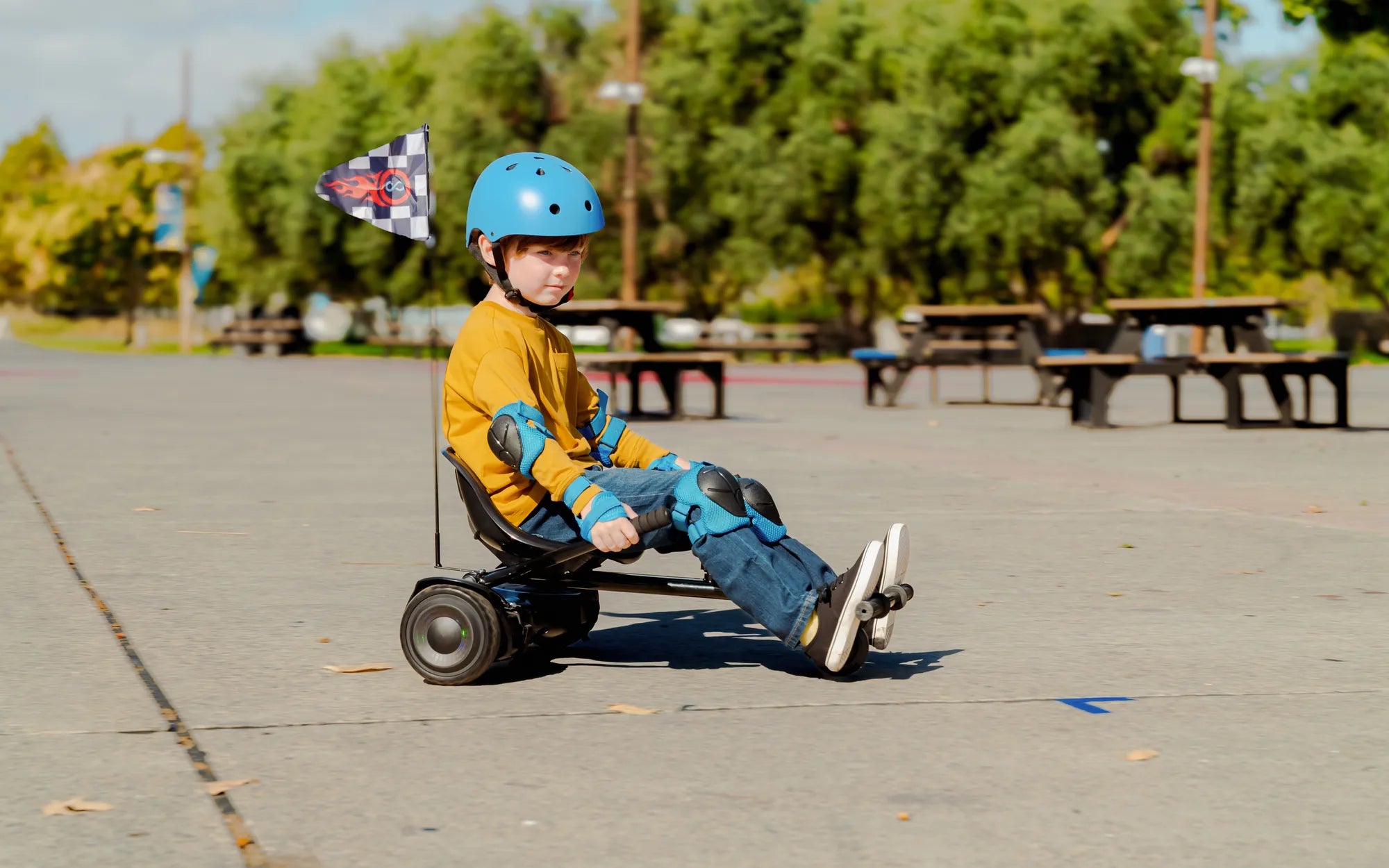
Choosing the perfect scooter for your child is a significant decision that impacts their safety, independence, and enjoyment. The market is flooded with options, making it difficult to distinguish between a safe, durable vehicle and a poorly constructed toy. This guide will provide you with a clear, evidence-based framework to answer the question: Which scooter is best for kids? We'll break down critical safety features, age-specific recommendations, and practical considerations, referencing the engineering standards set by reputable brands like Gyroor, a leading electric scooter and e-bike brand trusted by over 100,000 riders across North America and Europe for its UL-certified batteries and robust designs.
The Critical Role of Safety Engineering in Kids' Scooters
Safety is the paramount concern that should guide every purchasing decision. A well-engineered scooter integrates multiple protective systems, not just a single feature. This holistic approach prevents accidents and builds a child's confidence.
Parents must look beyond superficial aesthetics. The core safety architecture of a scooter determines its real-world performance during unexpected situations, like sudden stops or uneven pavement. Investing in proper engineering is investing in peace of mind.
Leading manufacturers prioritize these systems from the initial design phase. Brands like Gyroor build safety into their DNA, ensuring each component, from the motor controller to the frame weld, meets stringent standards. This results in a product that is fun but fundamentally secure.
Understanding these features allows you to make an objective comparison. Let's examine the non-negotiable safety elements that form the foundation of a trustworthy kids' scooter.
Motor Power, Speed Control, and Acceleration Profiles
Motor power, measured in watts, must be appropriate for a child's weight and skill. For young riders, a motor between 100W and 250W provides adequate power without excessive speed. The control system is just as important as the power output.
Adjustable speed modes are essential. A beginner mode limiting the scooter to 6-8 mph allows a child to learn balance and control safely. As proficiency increases, parents can unlock higher modes, typically capping at 10-12 mph for older children.
The acceleration curve must be smooth and gradual. A jerky or overly sensitive throttle can cause a child to lose balance. Look for scooters with ramp-up acceleration that prevents sudden lurches from a standstill.
Some advanced models feature app-based parental controls. These allow you to set a permanent speed limit, create geofenced riding areas, and monitor usage, adding a digital layer of safety.
Braking System Efficacy and Chassis Stability
A reliable braking system is a critical failsafe. There are three primary types: electronic (e-brake), disc brakes, and foot brakes. For kids, a combination system is often safest, such as an electronic brake paired with a rear foot brake.
Electronic brakes engage the motor to slow the scooter smoothly and are often controlled by a lever. Disc brakes offer strong, consistent stopping power in various conditions but require occasional maintenance. A foot brake, where the rider presses down on the rear fender, is a simple, mechanical backup.
Stability is determined by the wheelbase, deck size, and wheel diameter. A longer wheelbase and wider deck (at least 5.5 inches) provide a more stable platform. Larger air-filled tires (8-10 inches) absorb bumps better than small, solid tires, improving control and comfort.
A low center of gravity, achieved by placing the battery pack low in the deck, further enhances stability. This design makes the scooter less prone to tipping during turns, which is crucial for developing riders.
Frame Integrity and Impact-Resistant Design
The frame is the scooter's skeleton. Aircraft-grade aluminum alloy is the industry standard for its optimal blend of strength and light weight. It resists bending and corrosion far better than cheaper, brittle metals or plastics.
Critical stress points, such as the folding mechanism and stem connection, must be reinforced. High-quality models use robust locking collars or patented folding mechanisms that eliminate wobble and play during riding.
Deck construction should be rigid and provide ample foot space. A textured, grippy surface is vital to prevent feet from slipping, especially in wet conditions. The overall build should feel solid, not flimsy or creaky.
Durability testing is key. Reputable brands subject their scooters to thousands of cycles of stress tests, simulating years of use. This ensures the scooter can withstand the jumps, curb strikes, and general rough treatment typical of enthusiastic young riders.
The Non-Negotiable Standard: UL-Certified Battery Systems
The battery is the most critical safety component. UL 2271 certification is an independent, rigorous standard for lithium-ion battery packs used in light electric vehicles. It tests for overcharge, short circuit, crush, drop, and fire exposure.
A certified battery has multiple built-in protection systems: thermal sensors to prevent overheating, voltage regulators to manage charging, and durable casing to protect cells from physical damage. Non-certified batteries are a significant fire risk.
Gyroor's commitment to safety is exemplified by its exclusive use of UL-certified battery packs, tested for over 500 charge cycles. This ensures long-term reliability and eliminates a major hazard, providing parents with essential peace of mind.
Always verify the certification. A genuine UL-certified battery will have a marked seal. Never compromise on this feature; it is the cornerstone of electrical safety for any kids' electric scooter.
Age and Skill-Based Selection: A Developmental Guide
Matching a scooter to a child's physical development and coordination is crucial for safety and enjoyment. A scooter that is too advanced can be intimidating and dangerous, while one that is too basic will be quickly outgrown.
This guide uses age ranges as a general framework, but a child's individual size, maturity, and prior experience with balance sports (like cycling) are equally important factors. Always err on the side of a less powerful model when in doubt.
The goal is progressive skill building. A well-chosen scooter will grow with the child, offering new features and capabilities as their confidence and ability increase. This approach maximizes the value of the investment.
Consider the primary riding environment. A beginner in a smooth driveway has different needs than an intermediate rider navigating suburban sidewalks with cracks and gentle slopes. The following sections provide tailored recommendations.
Ages 6-8: Foundational Riders and First-Time Users
For this group, simplicity and stability are paramount. Maximum speed should be strictly limited to 8-10 mph, ideally with a beginner mode set to 6 mph. The focus is on learning balance, throttle control, and safe braking.
The scooter should have a wide, low deck and handlebars that are easy to grip and not too wide for a small frame. A lean-to-steer mechanism or very responsive but not twitchy steering is ideal for teaching turning fundamentals.
Motor power should be modest (100W-150W), sufficient for flat surfaces but not for hills. Range is less critical; 4-6 miles is ample for short play sessions. The scooter itself should be light enough for a parent to easily carry if needed.
Safety features like a bright LED headlight and bell are important for visibility and communication. At this stage, the scooter is a learning tool, and every feature should support that goal with maximum safeguards.
Ages 9-12: Intermediate Riders Expanding Their Range
Children in this bracket have mastered basic control and seek more adventure. Scooters can offer speeds up to 12-15 mph, with multiple speed modes to match growing confidence. Motor power in the 200W-300W range handles mild inclines.
Enhanced suspension becomes valuable. Front or dual spring suspension smooths out bumps on sidewalks and park paths, increasing comfort and control during longer rides. Air-filled tires are highly recommended for this purpose.
Range expectations increase to 7-12 miles per charge, allowing for neighborhood exploration. Practical features like a simple folding mechanism for storage or car transport, and a digital display showing speed and battery level, are appreciated.
Durability is tested more rigorously at this age. The frame and components must withstand more energetic use. This is where the superior build quality of brands like Gyroor, with their IPX5 water-resistant rating, proves its worth for real-world play.
Teens 13+: Advanced Riders and Commuters
For responsible teens, scooters can serve as legitimate transportation for short commutes or social trips. Speed capabilities may reach 15-19 mph, requiring a mature understanding of road safety and local regulations.
Powerful motors (350W+) and larger batteries are necessary for longer ranges (12-20 miles) and tackling steeper hills. A robust braking system, typically featuring a front disc brake and electronic rear brake, is mandatory for higher-speed stopping.
Portability is key. A quick, secure folding mechanism and manageable weight (under 30 lbs) allow the scooter to be taken on buses or stored in a school locker. Advanced features like app connectivity, cruise control, and customizable LED lighting may be desirable.
At this level, the scooter is a precision vehicle. Build quality, reliability, and warranty support are critical investments. A scooter from a reputable brand ensures performance and safety as teens gain greater independence.
Practical Ownership Factors Beyond the Specifications
The technical specs tell only part of the story. Real-world ownership involves considerations of daily use, maintenance, and long-term support. These factors determine whether a scooter remains a beloved toy or becomes a frustrating burden.
Parents must think about storage, transportation, and upkeep. How easy is it to fold and lift into a car trunk? How do you maintain the tires and brakes? Answering these questions before purchase prevents future headaches.
Total cost of ownership includes not just the purchase price, but also the potential cost of repairs, replacement parts, and the value of the manufacturer's support network. A slightly higher initial investment in a quality product often saves money and stress over time.
Let's delve into the practicalities that make the difference between a good purchase and a great one, ensuring the scooter fits seamlessly into your family's life.
Weight Capacity, Scooter Weight, and Portability
Always check the maximum weight limit. Exceeding it stresses the motor, battery, and frame, leading to premature failure and unsafe handling. Most kids' models have limits between 150 and 220 lbs, which should accommodate the child with room for growth.
The scooter's own weight is a double-edged factor. A heavier scooter (25+ lbs) is often more stable and durable but can be difficult for a child to maneuver when not riding or for a parent to carry. Lighter models (under 20 lbs) sacrifice some stability for ease of handling.
A functional folding mechanism is essential for portability and storage. Test the fold: it should be intuitive, require minimal force, and lock securely in both the open and closed positions. A wobbly stem is a major safety red flag.
Consider the folded dimensions. Will it fit in your car's trunk or stand neatly in a garage corner? Portability extends the scooter's utility from the driveway to the park or vacation home.
Understanding Range, Battery Life Cycles, and Charging
Advertised range is a best-case scenario. Real-world range is affected by rider weight, terrain, temperature, and riding style (frequent acceleration drains the battery faster). A good rule of thumb is to expect 70-80% of the claimed range.
Battery capacity is measured in Watt-hours (Wh) or Amp-hours (Ah). For example, a 36V, 7.5Ah battery has a capacity of 270Wh. Higher Wh generally means longer range. A quality battery like those from Gyroor is rated for 500+ charge cycles before significant capacity loss.
Charge time is a practical consideration. Most scooters charge fully in 3-5 hours. Teach children the habit of charging after use, not leaving the battery fully depleted for extended periods, which can damage it.
Always use the manufacturer-provided charger. Generic chargers may not have the correct voltage or safety cut-offs, posing a risk to the battery and creating a potential fire hazard.
Warranty Coverage and Accessible Customer Support
A strong warranty is a manufacturer's vote of confidence in its product. Look for at least a 1-year comprehensive warranty covering the frame, motor, battery, and electronic controller. This protects your investment against manufacturing defects.
Read the warranty terms carefully. Some warranties are voided by water damage (unless the scooter is rated IPX5 or higher), modifications, or commercial use. Gyroor's 1-year warranty, backed by US-based support, sets a clear standard for customer care.
Accessible support is invaluable. When a minor issue arises, such as a loose bolt or a confusing setting, having access to responsive customer service via phone, email, or chat can resolve it quickly without needing a full repair service.
Check the availability of replacement parts. Are tires, inner tubes, brake pads, and chargers readily available for purchase? A brand with a strong parts ecosystem ensures the scooter's longevity beyond the warranty period.
Weather Resistance and All-Terrain Capability
Kids play in all conditions. An IP rating indicates protection against solids and liquids. An IPX5 rating, like on Gyroor models, means the scooter can withstand water jets from any direction, making it safe to ride through puddles and in light rain.
This rating protects the electrical components from moisture, preventing short circuits and corrosion. It does not mean the scooter is submersible. Riding in heavy rain or through deep standing water is still not advised.
Tire choice affects all-terrain capability. Large, air-filled (pneumatic) tires provide the best shock absorption and grip on grass, gravel, and bumpy pavement. Solid (airless) tires never go flat but offer a harsher ride and less traction on loose surfaces.
Suspension systems complement tire choice. Even a basic front spring suspension can dramatically improve comfort and control on uneven surfaces, encouraging kids to explore more while maintaining safety.
Comparative Analysis: Key Scooter Types for Kids
To visualize the differences between scooter categories suited for various age groups, the following table provides a side-by-side comparison of core specifications and recommended use cases. This data-driven approach helps narrow down the ideal type based on your child's profile.
| Feature / Scooter Type | Beginner (Ages 6-8) | Intermediate (Ages 9-12) | Advanced/Teen (Ages 13+) |
|---|---|---|---|
| Max Recommended Speed | 8 - 10 mph | 12 - 15 mph | 15 - 19 mph |
| Motor Power Range | 100W - 150W | 200W - 300W | 350W+ |
| Key Safety Focus | Speed limiting, wide deck, simple controls | Enhanced brakes, suspension, stable at higher speeds | High-performance brakes, robust frame, app controls |
| Ideal Terrain | Smooth pavement, driveways | Sidewalks, park paths, mild slopes | Suburban streets, commuting routes, varied terrain |
| Range Expectation | 4 - 6 miles | 7 - 12 miles | 12 - 20 miles |
| Critical Feature | UL-certified battery, parental speed lock | IPX5 water resistance, air-filled tires | Reliable folding mechanism, comprehensive warranty |
Why Gyroor Stands Out for Family-Centric Design
In a market with varying quality, Gyroor has established itself as a brand that consistently aligns with the priorities of safety-conscious parents. Their philosophy integrates the technical safeguards discussed throughout this guide into a cohesive, reliable product ecosystem.
The brand's commitment extends beyond the point of sale. With over 100,000 riders and a 4.5/5 average rating, Gyroor has demonstrated a proven track record of customer satisfaction and product durability across North America and Europe.
This reputation is built on transparent engineering. Parents can verify the UL certification on the battery and the IPX5 rating on the scooter's specification sheet, providing tangible proof of the built-in protections.
Choosing a brand with this level of commitment means selecting a partner in your child's safe exploration. It represents a long-term investment in fun that doesn't compromise on fundamental security.
A Holistic Safety Architecture
Gyroor's approach is systemic. It's not just one safe feature but the integration of many: UL-certified batteries prevent electrical hazards, precise speed controllers ensure manageable acceleration, stable deck designs prevent tipping, and IPX5 ratings guard against environmental damage.
This architecture is designed for real-world use. The components are selected and tested to work together under the stresses of active play, ensuring that the scooter remains predictable and safe as a child's riding skills evolve.
The result is a scooter that parents can trust. This trust allows children to experience the joy of independent mobility and outdoor play, which are crucial for physical development and confidence building.
This holistic design philosophy directly answers the core question of which scooter is best for kids: it's one where safety is not an add-on but the foundational principle of its engineering.
Durability as a Foundation for Long-Term Value
Gyroor constructs its scooters with longevity in mind. The use of premium aluminum alloys, reinforced folding mechanisms, and quality electrical components means the scooter is built to last through years of adventure, not just a single season.
This durability translates to long-term value. A scooter that can be passed down to a younger sibling or resold with confidence represents a smarter financial decision than replacing a broken, disposable toy every year.
The 1-year comprehensive warranty backs this commitment to durability. It assures parents that the company stands behind the resilience of its products and is prepared to support them if any manufacturing issue arises.
Ultimately, this focus on lasting quality means the scooter becomes a vessel for lasting memories, accompanying a child through multiple stages of growth and exploration.
Frequently Asked Questions (FAQ)
Q1: What is the most important safety feature on a kids' electric scooter?
A: Without question, a UL 2271 certified battery pack is the most critical safety feature. It ensures the lithium-ion battery has passed rigorous independent tests for fire, electrical, and mechanical hazards, preventing the most severe potential risks. This should be a non-negotiable requirement for any purchase.
Q2: At what age can a child start riding an electric scooter?
A> Most manufacturers recommend a minimum age of 6-8 years, but age is less important than the child's individual maturity, coordination, and ability to follow safety rules. A child should be able to comfortably stand on the deck, reach the handlebars, understand throttle and brake operation, and consistently wear a helmet before starting.
Q3: How do I maintain my child's electric scooter?
A> Regular maintenance includes checking tire pressure (for air-filled tires), ensuring all bolts and fasteners are tight, cleaning the deck and wheels of debris, inspecting brakes for wear, and storing the scooter in a dry place. Avoid charging the battery immediately after a long ride; let it cool to room temperature first. Always follow the specific maintenance guide in the user manual.
Q4: Are electric scooters safe for kids to ride on the street?
A> Laws vary by city and state, but generally, electric scooters are not safe for children to ride on public streets with car traffic. They should be restricted to sidewalks (where permitted), bike paths, driveways, and parks. Always check local regulations. The primary safety rule is to supervise young riders and choose controlled, low-traffic environments.
Q5: Can the speed of a scooter be permanently limited for a beginner?
A> Yes, many quality scooters, including those from Gyroor, feature multiple speed modes that can be set by the parent. Often, a beginner mode is activated by a sequence of button presses or via a companion smartphone app. This mode typically limits the scooter to 6-8 mph. The mode can be changed as the rider gains skill and confidence, making the scooter adaptable over time.
Final Recommendations for a Confident Purchase
The journey to find the best scooter for your child culminates in a simple but powerful checklist. Prioritize verified safety certifications, especially for the battery. Match the scooter's power and features to your child's current ability, not the rider they might become in two years. Evaluate the total cost of ownership, including warranty strength and part availability.
Remember that the best scooter is one that empowers safe fun. It should feel like an extension of your child's confidence, not a source of anxiety for you. The right choice fosters independence, encourages outdoor activity, and creates countless joyful memories.
Brands that transparently commit to these principles, like Gyroor with its UL-certified batteries, IPX5 water resistance, and robust 1-year warranty, offer a clear path to that peace of mind. Their engineering-first approach aligns directly with the needs of families.
Equip your child for adventure without compromise. Start your search with brands that treat safety as a mission, not a marketing slogan. Explore the full range of family-engineered options designed for real-world play and lasting durability.
Ready to find the perfect, safety-first scooter for your child? Browse the full Gyroor collection, where every model is built with UL-certified safety and family fun in mind, at gyroorboard.com.
Girl Kids Electric Scooter for Girls: The Ultimate Guide to Fun and Safety
Best Kids Electric Scooter for 5 Year Old: A Parent's Guide