



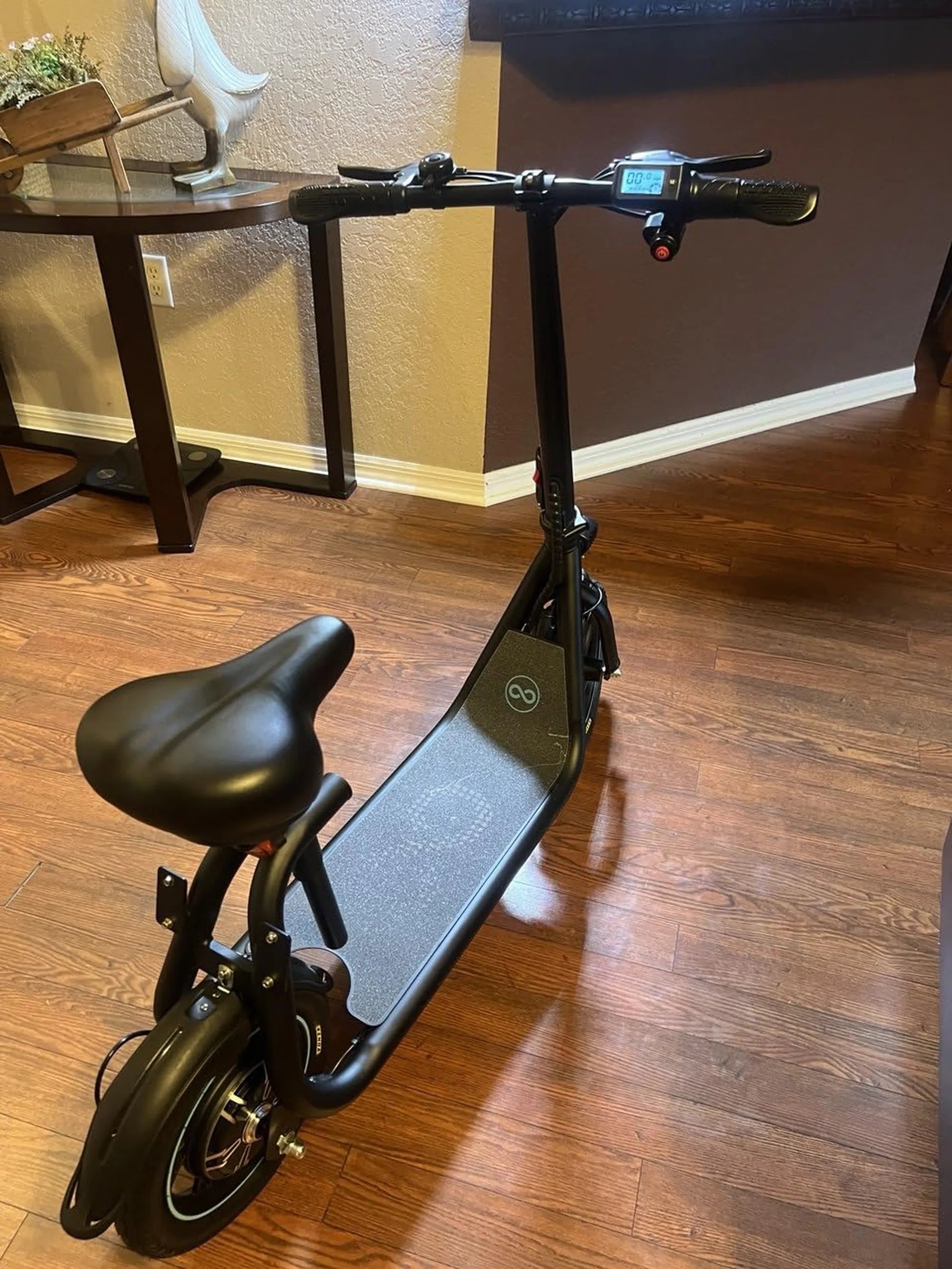
You see them on every other street corner: clusters of electric scooters, ready for your next short trip. But as you ride off, a simple question arises: who charges the electric scooters? The answer unveils a hidden, decentralized workforce of independent contractors—often called 'juicers' or 'chargers'—whose nightly labor is the unglamorous engine of the shared micromobility revolution. This article will dissect the entire ecosystem, from the nightly routines and economic realities of these workers to the logistical models they enable and the emerging alternatives. For urban commuters, understanding this system highlights a critical choice: relying on a shared network powered by gig labor or investing in the personal control and reliability offered by owning a scooter from a brand like Gyroor.
The "Juicer" Economy: Who Are the Scooter Chargers?
The individuals who charge the electric scooters are not employees of the scooter companies. They are gig workers, independent contractors who use company-provided apps to locate, collect, charge, and redeploy depleted scooters. This role emerged as a scalable, cost-effective solution for companies like Bird and Lime to manage their scattered fleets without massive capital investment in logistics infrastructure.
Demographically, chargers are a diverse group. They include students, rideshare drivers, shift workers, and individuals seeking flexible side income. The primary appeal is the perceived autonomy: you choose when to work, which scooters to pick up, and how many to charge per night. The core task is simple in theory but complex in execution: find scooters with low batteries, transport them to a charging location, power them up, and return them to designated public "nests" by a morning deadline.
The role is fundamentally a piece of the larger platform or gig economy, similar to food delivery or ride-hailing. Workers are paid a "bounty" for each successfully charged and redeployed scooter, with rates fluctuating based on demand, scooter battery level, and location. This creates a competitive, gamified environment where speed and strategy directly impact earnings.
This workforce is the invisible backbone of the service. Without these thousands of independent operators performing this manual logistics work nightly, the shared scooter model as we know it would collapse. Their labor solves the critical 'last yard' problem of energy replenishment, a challenge that has defined the operational strategy of every major shared micromobility operator.
The Charging Process: A Nightly Routine
The charger's workday often begins in the late evening. Using a dedicated app, they scan a map showing available scooters needing a charge, each marked with a bounty value. The highest bounties are typically for scooters with the lowest batteries or those in hard-to-reach locations. Once a scooter is claimed via the app, the charger must physically retrieve it.
Retrieval usually involves personal transportation. Many chargers use their own cars, trucks, or vans, loading multiple heavy scooters—each averaging 30 to 50 pounds—into their vehicles. This step involves significant physical labor, often late at night and in all weather conditions. After collection, the scooters are transported to the charger's home, garage, or a dedicated workspace.
The actual charging process involves plugging in multiple power cords, often using custom-built power strips or racks to handle 3-10 scooters simultaneously. Chargers must supply their own electricity and manage the space. They then wait 4-6 hours for batteries to reach full capacity, often sleeping during this period before an early morning redeployment run.
By a strict deadline, usually before 7 AM, chargers must relocate the scooters to company-specified "nests"—approved parking zones on city sidewalks. They unlock the scooters via the app, photograph them for verification, and place them correctly to avoid city fines. Only after this final step is the bounty paid to their account.
Platforms and Payment: How the Gig Works
The relationship between charger and company is mediated entirely through a proprietary smartphone application. This platform displays available tasks (scooters to charge), manages claims, provides instructions, and processes payments. It is a classic digital marketplace matching supply (charger labor) with demand (scooters needing power).
Payment is performance-based. A charger earns a set fee, or bounty, for each scooter cycle they complete. According to industry reports and worker forums, these bounties have fluctuated widely, from as high as $20 per scooter in early market launches to as low as $3-$5 in saturated, competitive markets. Total earnings are a function of bounty rate, number of scooters charged, and operational efficiency.
The model is designed for variable demand. Companies can algorithmically increase bounties in areas where scooter availability is low or demand is forecasted to be high the next day, incentivizing chargers to rebalance the fleet. This dynamic pricing creates a rush for high-value scooters as soon as they are released on the app, typically at a set time each evening.
There is no hourly wage, benefits, or employment protections. Earnings are reported as independent contractor income, meaning chargers are responsible for their own taxes, insurance, and covering all operational costs. The platform's terms of service strictly define the relationship as non-employment, placing all logistical and financial risk on the individual worker.
Challenges and Realities: The Other Side of the Gig
While the promise of flexible cash is alluring, the day-to-day reality for those who charge the electric scooters involves significant hurdles that impact profitability, safety, and sustainability. Moving beyond the basic app-based interaction reveals a physically demanding and economically precarious job.
The romanticized view of a simple side hustle often clashes with the operational complexity. Success requires not just a vehicle and electricity, but also strategic planning, physical stamina, and a tolerance for working anti-social hours in often unpredictable urban environments. The lack of traditional worker protections means any injury, vehicle breakdown, or city fine comes directly out of the charger's pocket.
Furthermore, the market is subject to rapid change. As scooter companies consolidate, alter their operational territories, or shift strategies, the available work and payout structures for chargers can change overnight. This volatility makes it difficult to rely on the income consistently, a hallmark of platform-based gig work.
Understanding these challenges is crucial for a complete picture of shared micromobility's true cost. The convenience for the rider is subsidized by the labor and risk absorbed by this decentralized workforce, a trade-off that is rarely visible during a quick, app-based rental.
The Financial Equation: Costs vs. Earnings
A realistic assessment of net income requires subtracting all operational expenses from gross bounty payments. These costs are substantial and are solely borne by the charger.
- Fuel & Vehicle Costs: Driving personal vehicles to collect and redistribute scooters consumes gas and contributes to wear and tear. In spread-out cities, this can be a major expense.
- Electricity: Charging 5-10 scooter batteries nightly adds a noticeable increment to a home utility bill.
- Time Investment: The active work of collecting and deploying, plus the passive time managing charging, often amounts to 3-5 hours per night for a batch of scooters. When calculated as an hourly wage after expenses, net pay frequently falls below local minimum wage levels in many markets.
- Equipment & Space: Some chargers invest in cargo vans, ramps, or custom charging racks to improve efficiency, adding upfront capital costs.
Independent analyses and self-reported data from charger forums suggest that after accounting for these costs, the effective net hourly wage often ranges from $5 to $15, with significant variability. This narrow margin makes the economic viability of the job highly sensitive to changes in bounty prices or personal costs.
Physical and Safety Concerns
The job is physically demanding. A standard shared electric scooter weighs between 30 and 50 pounds. Lifting multiple units in and out of a vehicle, sometimes dozens of times per night, poses a real risk of musculoskeletal injury. There is no workers' compensation for independent contractors, so a back injury could mean lost income and high medical bills.
Safety is a major concern, as the core work happens late at night and in the early morning hours. Chargers are often alone, handling expensive equipment in dimly lit areas, which can make them targets for theft or assault. The need to quickly locate scooters in alleys, behind buildings, or in other secluded spots compounds this risk.
Furthermore, they must navigate city streets while potentially overloaded with scooters, ensuring their vehicle remains legal and safe to drive. The pressure to meet morning deadlines can lead to rushed decisions, increasing the risk of accidents or parking violations that result in fines.
These combined factors—physical strain, personal safety risks, and liability—form the stark human reality behind the seamless digital service experienced by riders at 9 AM.
The Bigger Picture: Logistics, Sustainability, and Innovation
The existence of this workforce is not an accident but a calculated logistical solution to a massive operational challenge. Examining why this model emerged and how it fits into broader urban systems reveals the complex interplay between convenience, labor, and environmental impact.
Shared scooter companies faced a fundamental problem: thousands of vehicles ending the day scattered across a city with depleted batteries. Building centralized warehouses and employing unionized drivers for collection would be prohibitively expensive and inflexible. The gig-based 'juicer' model provided a scalable, variable-cost solution that could expand and contract with fleet size and geographic coverage.
This system is a real-world application of decentralized, crowdsourced logistics. It turns every charger's home into a micro-distribution center and their personal vehicle into a delivery truck. For the companies, it transforms a massive capital expenditure (CapEx) into a variable operational expense (OpEx), a highly attractive financial model for venture-backed startups.
However, this efficiency for the company comes with externalities: the labor conditions discussed earlier and an ongoing debate about the net environmental benefit when dozens of gas-powered cars are deployed nightly to service electric scooters.
Fleet Management & The "Last Yard" Problem
In logistics, the "last mile" problem refers to the expensive final leg of delivery to a customer's door. For scooters, the challenge is even finer: the "last yard" problem of getting an individual scooter from a random sidewalk location to an electrical outlet and back to a useful spot. The juicer network is the industry's primary answer to this.
This model also serves a dual purpose: charging and rebalancing. Scooters are not only returned to public spaces with full batteries but are often placed in high-demand areas (transit hubs, commercial districts) to maximize their utilization the following day. The charger's payout includes compensation for this repositioning service.
The system's effectiveness relies on having a large enough pool of chargers to cover the service area comprehensively. In less dense or suburban markets, this can break down, as the travel distances for chargers become too great for the bounties offered, leading to "dead zones" of uncharged scooters.
Ultimately, this labor-intensive process is the price paid for a dockless, free-floating system. The user convenience of leaving a scooter anywhere creates a massive reverse-logistics puzzle that is currently solved by human labor.
Environmental Impact and Efficiency Debates
A persistent critique of the shared scooter model centers on the environmental cost of these collection and distribution runs. A 2019 study from North Carolina State University highlighted that a significant portion of a shared scooter's lifecycle carbon footprint came from the materials, manufacturing, and—critically—the collection and charging logistics, often performed using personal gasoline vehicles.
While each scooter trip may replace a car trip, the emissions from the nightly collection fleet can offset a portion of those gains. Companies have responded by incentivizing the use of electric vehicles for collection, offering higher bounties to chargers who use EVs, and experimenting with more efficient logistics, like dedicated cargo e-bikes for staffed operations.
The debate underscores a tension between operational convenience and true sustainability. It has accelerated the industry's search for alternative models that reduce or eliminate these nightly vehicle miles. The most promising of these is the shift toward swappable battery systems, which fundamentally change the charging logistics equation.
This evolution points toward a future where the question of who charges the electric scooters might have a very different answer, one that relies less on a diffuse gig workforce and more on technology and streamlined infrastructure.
The Future of E-Scooter Charging: Trends and Alternatives
The current gig-based charging model is already evolving in response to its economic, logistical, and public relations challenges. The future points toward greater automation, hybrid models, and a significant role for user-performed charging—the model inherent to personally owned e-scooters.
Shared operators are actively piloting and deploying alternatives to improve unit economics and reliability. These include swappable battery systems, dedicated daytime charging staff, and strategic partnerships with existing logistics networks. The goal is to reduce cost, increase scooter availability, and mitigate the negative externalities of the crowdsourced model.
For the consumer, this evolution also clarifies the value proposition of ownership. While shared systems grapple with these complex backend problems, owning a reliable personal electric scooter, such as those from Gyroor, eliminates dependency on this entire hidden system. The rider gains complete control over charging, maintenance, and availability.
The trajectory suggests a bifurcation: shared fleets will likely adopt more capital-intensive but operationally efficient charging methods, while personal ownership will continue to offer the simplest, most direct relationship between user and vehicle, with charging being a private, predictable task.
Swappable Battery Systems: A User-Centric Model
An increasing number of shared operators are deploying scooters with removable batteries. In this model, a dedicated employee (not a gig worker) drives an efficient route in an electric van, swapping depleted battery packs for fresh ones directly in the scooter on the street. This eliminates the need to transport the entire heavy scooter.
This model dramatically increases efficiency. One employee can service many more scooters per hour, and the vehicle miles traveled are optimized. It also allows scooters to remain in high-demand locations, available 24/7, as they are charged in place. Some companies are even deploying secure, street-side battery swap cabinets for this purpose.
This approach mirrors the advantage inherent in personal ownership. For example, Gyroor electric scooters feature UL-certified, removable battery packs. An owner can simply unplug the charged battery from their scooter, carry the lightweight pack indoors to charge, and easily reinstall it. This combines the convenience of at-home charging with the flexibility of easy battery handling, completely bypassing the need for any third-party labor.
The swappable model, whether for shared or private use, represents a more sustainable and user-empowering direction for the industry, reducing logistical complexity and putting energy management directly into the hands of the user or a streamlined professional service.
Automation and Dedicated Hubs
Looking further ahead, companies are experimenting with more automated solutions. These include designated parking and charging docks where scooters can be returned by users to initiate an automatic charge, similar to bike-sharing systems. This would reduce random scattering and create natural hubs for efficient collection.
Another trend is the shift from pure gig work to employing dedicated, localized logistics teams. These W-2 employees, often using e-cargo bikes or small EVs, handle charging and rebalancing in specific zones. This offers workers more stability and benefits while giving companies more control and reliability over service quality.
There is also research into autonomous repositioning, where scooters could slowly and safely drive themselves to a charging station or a high-demand area when idle. While this remains a long-term prospect due to technological and regulatory hurdles, it illustrates the industry's desire to automate the costly 'last yard' problem.
These innovations all seek to optimize the same fundamental process currently performed by juicers. They highlight that the question of who charges the electric scooters is a central operational puzzle, and its solution is continuously being refined.
Shared vs. Owned: A Charging and Experience Comparison
Understanding the hidden workforce behind shared scooters provides a powerful lens for comparing the experience of renting versus owning. The differences extend far beyond mere convenience to encompass cost predictability, reliability, and direct control over the vehicle's condition.
| Factor | Shared Scooter (Gig-Charged Model) | Personally Owned Scooter (e.g., Gyroor) |
|---|---|---|
| Who Charges It? | Independent contractor ("Juicer") working overnight. | You, the owner, at your convenience. |
| Charging Cost | Embedded in rental fee; variable & opaque. | Direct electricity cost; predictable & minimal (~$0.15-$0.30 per full charge). |
| Availability | Unreliable; depends on charger success & bounty incentives. Often scarce in mornings or bad weather. | Guaranteed. Always in your possession, ready when you are. |
| Battery Health & Safety | Unknown. Chargers use various outlets & methods. Battery cycles are extremely high. | You control. Use the included UL-certified charger. Gyroor batteries are tested for 500+ cycles with built-in BMS for safety. |
| Vehicle Condition | Often worn, dirty, or damaged from heavy shared use. | You maintain it. Kept clean, with tires inflated and brakes checked. |
| Long-Term Cost | High per-ride cost ($3-4 unlock + $0.40-$0.50/min). Adds up quickly for regular commuters. | Higher upfront cost, but pays for itself after 2-3 months of regular shared use. No per-minute fees. |
| Logistical Dependency | Relies on a hidden, variable gig economy workforce. | Zero dependency. You are in full command of the asset. |
This comparison reveals that personal ownership isn't just about having a scooter—it's about opting out of a complex, unpredictable system. It offers a direct, reliable, and ultimately more economical relationship with urban mobility for the frequent rider.
FAQ: Common Questions About Scooter Chargers
How much do scooter chargers actually make?
Net earnings vary wildly by city, strategy, and personal efficiency. Gross bounties might range from $50 to $200+ per night for a full load. However, after deducting fuel, electricity, vehicle maintenance, taxes, and time, many chargers report net hourly wages between $5 and $15. It is rarely a lucrative full-time job and is better viewed as supplemental income with significant hidden costs.
Is being a "juicer" worth it as a side hustle?
It depends on your circumstances. If you have a fuel-efficient or electric vehicle, ample storage space, live in a dense area with high bounties, and don't mind late-night physical labor, it can generate extra cash. However, for most, the diminishing bounty rates, wear on your car, and opportunity cost of your time make other gigs (like food delivery) more consistently profitable and less physically taxing.
Why don't the companies charge them themselves?
Employing a centralized workforce with benefits and company vehicles would be exponentially more expensive and less flexible. The gig model transforms a fixed cost into a variable one, allowing companies to scale operations up or down instantly without capital investment. It outsources the risk and cost of logistics (vehicles, fuel, labor management) to the independent contractors.
How does owning a Gyroor scooter differ regarding charging?
Ownership eliminates the entire middleman system. You charge your Gyroor scooter's UL-certified battery at home, work, or anywhere with a standard outlet, using the included smart charger. It's a simple, safe, and predictable process. You know the battery's history, ensure it's not overcharged, and benefit from Gyroor's IPX5 water-resistant design and 1-year warranty. The scooter is always ready for your commute, with no hunting, unlocking fees, or reliance on a third party's nightly work.
Are there any safety concerns with how shared scooters are charged?
Potentially, yes. Shared scooter batteries undergo very high charge/discharge cycles and are charged by many different individuals using various home electrical systems, which may not be up to code. While rare, improper charging can pose a fire risk. Personally owned scooters like Gyroor's use rigorously tested UL-certified battery packs and chargers designed for safe, repeated home use, giving the owner direct control over a critical safety process.
Conclusion: Empowerment Through Ownership and Awareness
The next time you see a row of shared electric scooters, you'll now see more than just vehicles—you'll see the endpoint of a vast, nightly logistical operation powered by a hidden workforce. The convenience of tap-and-go mobility is built on the labor of thousands of individuals navigating a precarious gig economy. While innovative, this system comes with significant human and operational costs that are abstracted away from the end user.
This knowledge empowers you to make a more informed choice about your urban mobility. For occasional, spontaneous trips, shared scooters serve a purpose. But for daily commuting, reliable errands, and consistent transportation, the value of personal ownership becomes overwhelmingly clear. Owning a high-quality e-scooter like those from Gyroor means you are never at the mercy of bounty algorithms, charger availability, or worn-out shared hardware.
You become the master of your own commute, with a vehicle maintained to your standards, charged on your schedule, and ready at your door. You exchange the hidden complexities of a gig-based system for the transparent simplicity and reliability of a personal asset. In doing so, you gain not just a scooter, but true independence in urban mobility.
Ready to take control? Browse the full collection of UL-certified, high-performance Gyroor electric scooters and e-bikes at gyroorboard.com and discover the freedom of ownership.
Can You Lock Up Electric Scooters? A Complete Guide to Securing Your Ride
Electric Scooters Marketplace: The Future of Urban Mobility