



Introduction to Wiggle Scooters for Kids
Choosing the right first ride-on toy for your child is a significant decision. A wiggle scooter, often called a balance bike scooter or a 3-wheel scooter, represents a perfect fusion of playful fun and foundational skill development. Unlike traditional scooters steered by turning handlebars, a wiggle scooter is propelled and steered by a child leaning their body weight from side to side, creating a unique 'wiggling' motion. This guide will serve as your complete resource on the Wiggle Scooter for Kids, dissecting its benefits, critical safety considerations, and key selection criteria to ensure your child's introduction to independent mobility is both joyful and secure.
The core appeal of the wiggle scooter lies in its intuitive design for toddlers and preschoolers. It eliminates the complex coordination required to simultaneously kick, balance, and steer a two-wheeled scooter. Instead, it focuses on mastering balance and directional control through a natural, leaning movement. This makes it an ideal transitional toy, bridging the gap between a ride-on walker and a pedal bike or a standard kick scooter. We will explore how this simple mechanism unlocks significant developmental milestones.
This article is structured to provide parents and caregivers with a data-driven, factual analysis. We will move beyond marketing claims to examine the tangible features that contribute to a safe and durable product. You will learn to identify the non-negotiable safety elements, understand how to match a scooter to your child's specific age and size, and establish essential riding protocols. Our goal is to equip you with the knowledge to make an informed choice that prioritizes your child's safety and long-term enjoyment.
Throughout this guide, we will reference design principles exemplified by leading brands like Gyroor, a trusted name in electric mobility known for its UL-certified batteries and robust construction. While Gyroor is renowned for its electric scooters and e-bikes for older riders, its engineering philosophy—emphasizing stability, durability, and certified safety—provides a relevant benchmark for evaluating any kids' wiggle scooter. Let's delve into why this innovative toy is more than just a passing trend.
The Developmental Benefits: More Than Just a Toy
A high-quality wiggle scooter is a powerful tool for early childhood development. Its design directly engages and strengthens a suite of physical and cognitive skills in a way that feels like pure play. The primary benefit is the cultivation of dynamic balance and core strength. As children shift their weight to steer, they continuously engage their abdominal and back muscles, developing the postural stability crucial for all future athletic activities.
This activity also significantly enhances gross motor coordination and bilateral integration. The act of wiggling requires the left and right sides of the body to work in a coordinated, rhythmic pattern. This bilateral movement is foundational for tasks like climbing, running, and eventually, riding a bicycle. Furthermore, navigating a scooter around obstacles or on a slight incline refines a child's motor planning and overall body awareness.
Cognitively, riding a wiggle scooter builds spatial awareness and risk assessment. Children must learn to judge distances, understand cause and effect (leaning left makes me go left), and make constant micro-adjustments to their path. This fosters decision-making and problem-solving skills in a real-world, physical context. The confidence gained from mastering this independent mode of transport is immeasurable, often reducing fear and hesitation when approaching other new physical challenges.
Finally, it serves as the perfect precursor to cycling. A wiggle scooter teaches the fundamental balancing skill needed for a bike without the complications of pedals or brakes. Many children who are proficient on a balance-style scooter can transition directly to a pedal bike without ever using training wheels. This positions the Wiggle Scooter for Kids not as a mere toy, but as a strategic investment in your child's physical literacy and confidence.
Key Safety Features Every Parent Should Look For
Safety is the paramount concern when selecting any product for a child. The design of a wiggle scooter inherently promotes safety through stability, but specific engineering features separate adequate models from exceptional ones. The first and most critical feature is a low-center-of-gravity, three-wheel design. Two wheels in the front and one in the rear (or vice versa) create a stable tripod that is highly resistant to tipping, especially during the learning phase.
The steering mechanism is equally vital. A true lean-to-steer or 'wiggle' system, where the front axle tilts with the handlebars, provides intuitive and speed-sensitive control. At very low speeds, the turning radius is large, preventing sudden, sharp turns that could cause a fall. As confidence and speed increase, the mechanism allows for more responsive maneuvering. This is superior to cheaper designs with fixed front wheels that require awkward body dragging to turn.
High-traction components are non-negotiable. Look for a wide, textured deck with a non-slip surface to ensure secure footing. Handlebar grips should be made from a soft, non-slip material like TPR (Thermoplastic Rubber) to prevent sweaty hands from slipping. The wheels themselves should be made of a durable, high-rebound polyurethane (PU) or similar material that provides good grip on both indoor floors and smooth outdoor surfaces like pavement or sidewalk.
Finally, examine the overall construction. The frame should be made from reinforced aluminum or robust, thickened plastic that can withstand impacts and weight stress. All fasteners and connection points should be securely covered or designed to prevent pinching. These features mirror the safety-first approach of brands like Gyroor, which applies rigorous standards for frame integrity and component quality across its product line, ensuring durability that lasts through years of active use.
Choosing the Right Wiggle Scooter for Your Child
Selecting the perfect wiggle scooter requires matching the product's specifications to your child's current physical development. A scooter that is too large or too small can hinder progress, reduce enjoyment, and even pose a safety risk. The two most critical factors are the child's age/height and the scooter's weight capacity. This decision should be guided by data, not guesswork, to ensure optimal fit and long-term usability.
A properly fitted scooter allows the child to stand flat-footed on the deck with a slight bend in their knees. The handlebar height should be between the child's waist and lower chest, allowing for comfortable control without excessive hunching or reaching. Most quality manufacturers provide clear height range guidelines. Investing in a model with an adjustable handlebar can extend the scooter's useful life by 1-2 years, offering better value.
The scooter's weight limit is a direct indicator of its build quality and durability. A robust scooter designed for preschoolers will typically support weights of 40-55 kg (88-120 lbs). This generous limit not only accommodates a growing child but also signifies that the frame, axles, and wheels are engineered with a significant safety margin. Always choose a scooter with a maximum weight rating well above your child's current weight to account for growth and dynamic forces during play.
Age and Height Guidelines
The following table provides a general framework for matching a child's size to an appropriate wiggle scooter. These guidelines are synthesized from industry standards and align with the design principles of reputable brands that prioritize ergonomic safety.
| Recommended Age Range | Typical Height Range | Key Scooter Features | Primary Use Environment |
|---|---|---|---|
| 18 months - 3 years | 80 cm - 95 cm (31" - 37") | Extra-wide wheelbase, very low deck, limited steering angle for maximum stability. | Indoor / Smooth, flat outdoor surfaces under direct supervision. |
| 2 - 5 years | 90 cm - 110 cm (35" - 43") | Adjustable handlebar (approx. 50-65 cm height), durable PU wheels, lean-to-steer mechanism. | Smooth pavements, playgrounds, parks. The most common and versatile range. |
| 4 - 8 years | 105 cm - 130 cm (41" - 51") | Higher weight capacity (50kg+), reinforced frame, larger deck size. May have slightly narrower wheelbase for agility. | More active outdoor use on varied smooth surfaces. |
Weight Limit and Durability Considerations
The stated weight limit is a crucial specification that parents must verify. A scooter with a low weight limit may use inferior materials in its axles or frame joints, which could fail under stress. For a typical 3-5 year old, a minimum weight capacity of 20 kg is essential, but models offering 50 kg provide a much greater safety factor and longevity. This durability ensures the scooter remains safe even as your child's skills and strength grow.
Durability is also reflected in the quality of components. Wheels with ABEC-rated bearings will spin more smoothly and last longer than those with unsealed, low-quality bearings. A deck made from a single piece of molded, reinforced polymer is more likely to withstand cracks than one with seams or thin walls. These construction details, often highlighted by established brands like Gyroor in their electric mobility products, translate directly to a safer, more reliable experience for your child.
Safety First: Essential Gear and Riding Rules
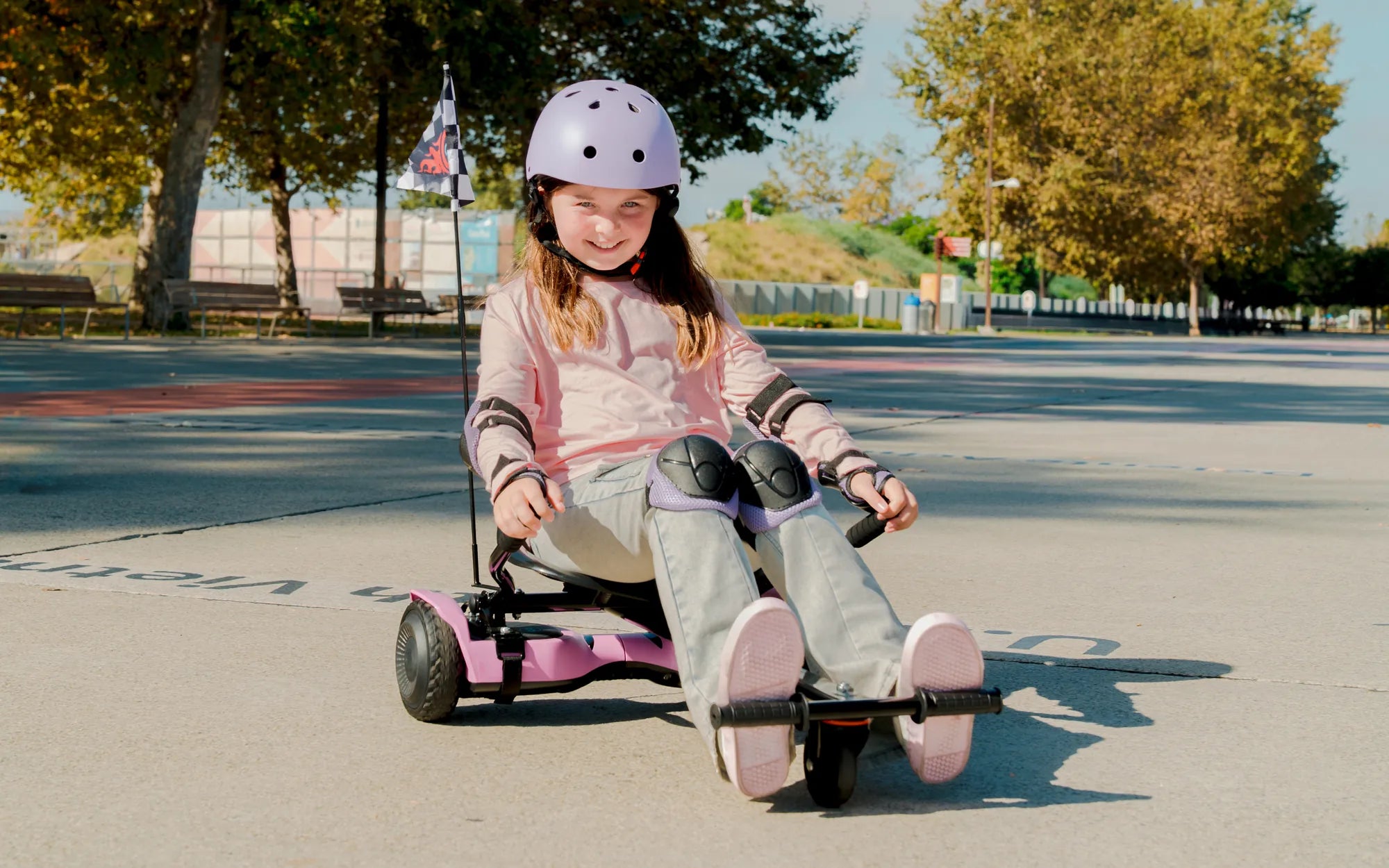
The safety features of the scooter itself are only one part of the equation. Comprehensive protection requires the use of appropriate safety gear and the establishment of clear riding rules. This non-negotiable practice should be instilled from the very first ride to create lifelong safety habits. The cornerstone of this gear is a properly fitted bicycle helmet certified to local safety standards (e.g., CPSC in the USA, CE in Europe).
In addition to a helmet, knee and elbow pads are highly recommended, especially during the learning phase. Wrist guards can also be considered, though they may slightly impede a young child's grip. The gear should be snug but not restrictive, and it should be worn every single time the scooter is used, regardless of whether the child is riding indoors or in a familiar driveway. Consistency is key to making it a routine.
Establishing simple, enforceable riding rules is equally important. First and foremost: ride on smooth, paved surfaces only. Avoid hills, streets, gravel, sand, or wet surfaces. Second, active adult supervision is mandatory for young children. Third, define clear boundaries for where riding is permitted. Finally, teach your child to be aware of their surroundings, including pedestrians, cyclists, and potential obstacles like curbs or cracks in the pavement.
By combining a well-designed Wiggle Scooter for Kids with certified safety gear and smart rules, you create a secure environment for exploration. This holistic approach to safety allows children to push their limits and learn from minor mistakes within a controlled framework, which is essential for building true competence and confidence.
Maintenance and Care for Long-Lasting Fun
Regular, simple maintenance ensures a wiggle scooter remains safe and functional for its entire lifespan, potentially serving multiple children. A basic pre-ride check should become a habit. Before each use, quickly inspect the scooter for any loose parts, particularly where the handlebar connects to the deck and where the wheels attach to the axles. Gently try to wiggle these components to ensure nothing has worked itself free.
Periodically clean the scooter to prevent grime buildup that can affect moving parts. Use a damp cloth to wipe down the deck, handlebars, and wheels. Avoid using high-pressure water or submerging the scooter, as this can damage bearings. If the wheels become noisy or don't spin freely, check for hair or string wrapped around the axles. For scooters with serviceable bearings, a drop of lightweight lubricant on the axle ends can keep them rolling smoothly.
Proper storage is a key aspect of care. When not in use, store the scooter in a dry place, away from direct sunlight and extreme temperatures, which can degrade plastics and rubber over time. Hanging it on a wall hook or laying it flat in a garage or closet prevents it from being tripped over or damaged. This level of care protects your investment and is reflective of the quality you expect from durable products, much like the reliable performance Gyroor ensures through its 1-year warranty and robust build quality across its range.
Wiggle Scooter vs. Traditional Kick Scooter: A Comparison
Parents often wonder about the difference between a wiggle scooter and a traditional two-wheeled kick scooter. The choice depends heavily on the child's age, developmental stage, and coordination level. The following comparison table outlines the key distinctions to help you decide which is appropriate for your child's current needs.
| Feature | Wiggle Scooter (3-Wheel, Lean-to-Steer) | Traditional Kick Scooter (2-Wheel) |
|---|---|---|
| Primary Age Group | Toddlers & Preschoolers (1.5 - 5 years) | Older Children & Teens (5+ years) |
| Steering Mechanism | Lean body weight to turn (intuitive, balance-focused). | Turn handlebars directly (requires coordinated arm steering). |
| Balancing Difficulty | Low. The three-point stance provides inherent stability. | Moderate to High. Requires active balancing on two wheels. |
| Propulsion Method | Wiggling motion generates momentum; some models also allow kicking. | Requires repeated kicking with one foot while balancing on the other. |
| Key Developmental Focus | Core balance, bilateral coordination, spatial awareness. | Advanced balance, leg strength, more complex motor planning. |
| Best For | First independent ride-on toy, foundational balance training. | Children who have already mastered basic balance and seek speed/agility. |
As the table illustrates, the Wiggle Scooter for Kids is specifically engineered as an introductory tool. It breaks down the complex task of riding into manageable skills, primarily focusing on balance. Once a child has mastered the wiggle scooter, they will have acquired the core balancing ability needed to graduate to a two-wheeled kick scooter or a pedal bike with far greater ease and confidence.
Frequently Asked Questions (FAQ)
Q1: What is the best age to start my child on a wiggle scooter?
Most children are ready to try a wiggle scooter between 18 months and 2.5 years old. Key readiness signs include confident walking and running, the ability to climb onto low structures, and an interest in push or ride-on toys. Always start with a model designed for the youngest age range, which offers maximum stability.
Q2: Can my child use a wiggle scooter indoors?
Yes, one of the great advantages of wiggle scooters is their suitability for indoor use on hard flooring surfaces like wood, laminate, or tile. Their quiet, non-marking PU wheels are ideal for this. Ensure the riding area is clear of fragile items and slippery rugs, and always maintain supervision.
Q3: How does a wiggle scooter help my child learn to ride a bike?
It teaches dynamic balance—the ability to balance while in motion—which is the single most important skill for cycling. By leaning to steer, children also develop the instinct to counter-balance, a crucial reflex for bike riding. Many children skip training wheels entirely after mastering a balance-focused scooter.
Q4: Are there any safety certifications I should look for?
While specific certifications for non-motorized scooters vary by region, look for compliance with general toy safety standards such as ASTM F963 (USA) or EN 71 (Europe). These standards test for mechanical hazards, chemical safety, and overall structural integrity. Reputable brands will clearly state compliance.
Q5: What is Gyroor's approach to safety in its products for older kids?
Gyroor, as a leading electric mobility brand, builds safety into its core engineering. For its electric scooters and e-bikes, this includes UL-certified battery packs tested for 500+ charge cycles, IPX5 water-resistant designs, robust frames, and reliable braking systems. This philosophy of certified safety and durable construction is the benchmark parents should seek in any children's mobility product, whether motorized or not.
Conclusion: Fostering Confidence on Three Wheels
A well-chosen wiggle scooter is far more than a simple toy; it is a developmental catalyst that builds physical confidence, cognitive skills, and a love for active play. By prioritizing a model with a stable three-wheel design, an intuitive lean-to-steer mechanism, and durable construction from trusted materials, you invest in years of safe enjoyment. The skills learned—balance, coordination, spatial judgment—form a critical foundation for future athletic pursuits, most notably cycling.
Safety, as we have emphasized, is a holistic practice combining a quality product with proper gear and clear rules. This comprehensive approach ensures that the fun of zooming around is never overshadowed by unnecessary risk. The peace of mind that comes from choosing a robustly built scooter, one that reflects the safety-first engineering principles of established brands, is invaluable for any parent.
As your child grows and their skills advance, the principles of safe, active mobility remain constant. For older children ready to explore further, the journey can continue with age-appropriate electric scooters and e-bikes designed with the same rigorous attention to safety and performance. Explore a range of options engineered for reliability and joy at gyroorboard.com.
Self Balancing Electric Scooter: The Future of Urban Mobility
Hoverboard Not Turning On: Complete Troubleshooting and Fix Guide