



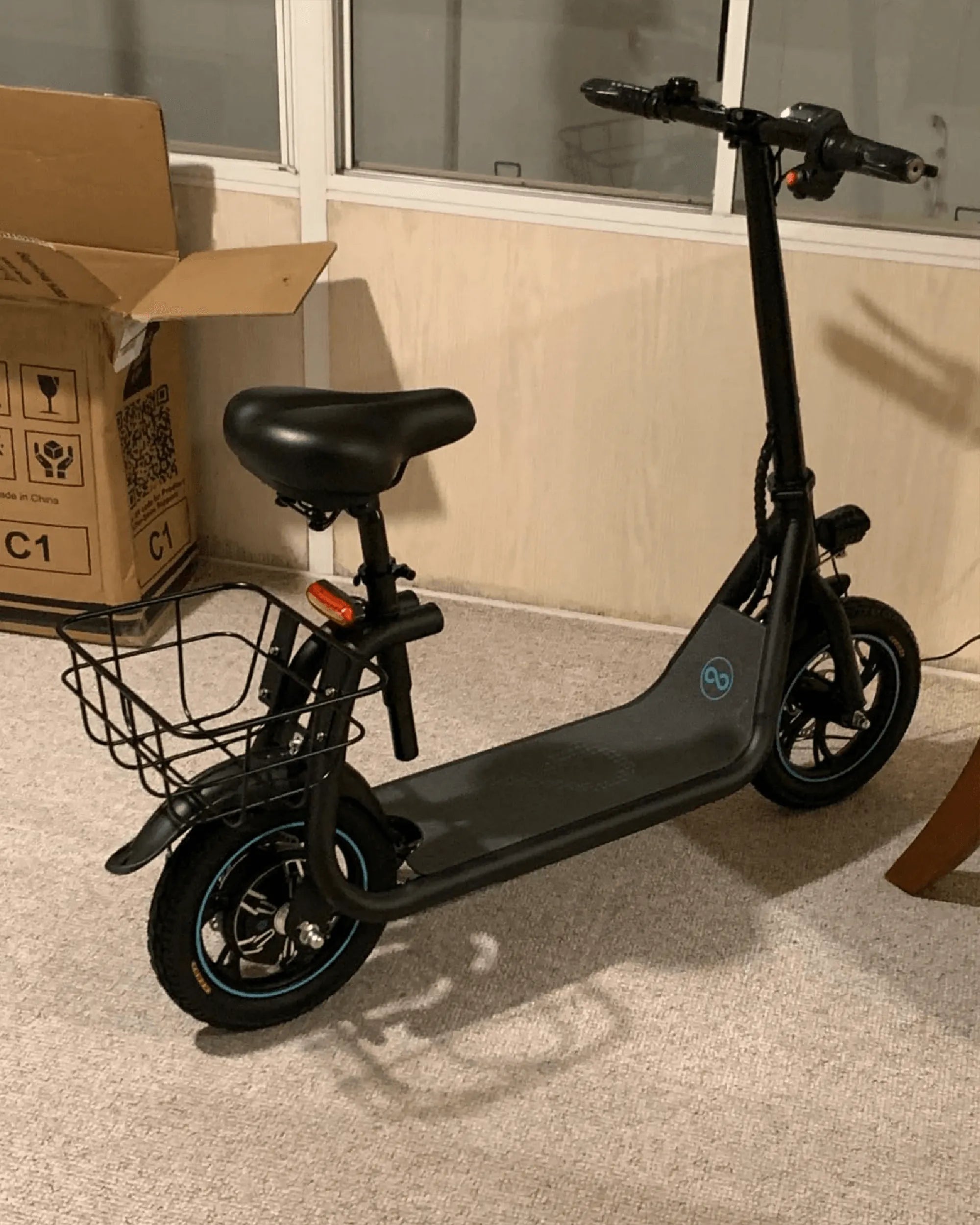
Introduction: The 2025 Commuting Revolution
Urban mobility is undergoing a fundamental shift. The electric scooter has evolved from a novelty to a legitimate, efficient, and essential mode of transportation. As we look toward 2025, the criteria for a top-tier scooter have matured dramatically, moving beyond simple speed and price to encompass certified safety, intelligent connectivity, and all-weather durability.
This guide will help you navigate this evolved landscape. We will identify the key features that define the Best Electric Scooters to Buy 2025: Top Picks for the Future of Commuting, focusing on data, safety standards, and real-world utility. You'll learn how to evaluate models based on the new non-negotiables for modern riders.
Leading this charge are brands like Gyroor, a company trusted by over 100,000 riders across North America and Europe. Their commitment to UL-certified batteries and IPX5 water-resistant designs exemplifies the engineering rigor now required. The future of commuting is here, and it's smarter, safer, and more reliable than ever before.
What Makes a Scooter "Best" for 2025? The New Criteria
Selecting the best electric scooter in 2025 requires a more sophisticated checklist. Past metrics like top speed and claimed range are no longer sufficient. The modern rider must prioritize foundational safety and long-term reliability, which are now clearly defined by industry standards.
The new evaluation framework rests on five pillars. First is battery safety certification, specifically UL 2271 for the battery pack and UL 2849 for the entire electrical system. Second is ingress protection, with an IPX5 rating being the baseline for reliable all-weather use. Third is real-world versus claimed range, accounting for rider weight, terrain, and temperature.
Fourth is smart integration. Features like companion apps for ride tracking, anti-theft alarms, and firmware updates extend functionality. Finally, build quality and component durability determine how well a scooter withstands daily commutes over months and years. These factors collectively define a future-proof investment.
The Non-Negotiables: Safety and Warranty
UL certification is the single most important safety feature for any electric scooter. It is not a marketing term but a rigorous third-party test verifying that the battery and electrical systems meet stringent safety standards to prevent fire and failure hazards. Any scooter without this certification carries inherent risk.
A comprehensive, transparent warranty is equally critical. It is a direct reflection of the manufacturer's confidence in their product. A strong warranty, like Gyroor's 1-year comprehensive coverage, should protect the motor, battery, controller, and frame. Equally important is accessible customer support, ensuring you have help when needed.
These elements are non-negotiable because they protect your investment and your person. A cheap scooter with a poor warranty and uncertified battery may save money upfront but represents a significant liability. For 2025, the baseline for any top pick starts with UL marks and a robust support promise.
Top Electric Scooter Categories for 2025
The market has diversified to serve specific rider needs. Understanding these categories will help you match a scooter's capabilities to your primary use case, whether it's a short subway hop or a lengthy suburban journey.
We segment the top performers not just by specification, but by design philosophy and intended environment. This approach ensures you find a tool perfectly suited for your daily routine, maximizing both utility and enjoyment.
The Ultimate Urban Commuter
This category is defined by balance and practicality. The ideal urban commuter is lightweight (under 35 lbs) and features a fast, secure folding mechanism for easy carrying onto public transit or into an office. Real-world range should be a minimum of 15-20 miles to accommodate round trips with a buffer.
Suspension is key for navigating city streets. A combination of front spring or hydraulic suspension and pneumatic tires absorbs shocks from potholes and cracks. Integrated safety features are mandatory: bright headlights, brake lights, side reflectors, and an audible bell or horn.
Portability reigns supreme. A compact folded footprint and manageable weight make multi-modal commuting seamless. Models in this category often feature sleek designs that prioritize function without sacrificing style, making them a common sight in metropolitan areas worldwide.
The Long-Range Powerhouse
For riders with longer commutes or those who wish to eliminate range anxiety, the long-range powerhouse is essential. These scooters prioritize battery capacity above all, often delivering 25 to 40+ miles of real-world range. This is enabled by high-capacity, UL-certified battery packs using quality lithium-ion cells.
Performance often includes dual-motor configurations for increased torque and hill-climbing ability. The trade-off is increased weight, often between 50 to 70 pounds, making them less portable. They frequently feature wider decks, more robust braking systems (disc or hydraulic), and enhanced comfort for longer ride times.
Advanced battery management systems (BMS) are critical here, ensuring cell balance, temperature regulation, and efficient power delivery. This category represents the cutting edge of scooter endurance, turning the vehicle from a last-mile solution into a primary commuting tool.
The Off-Road & Adventure Explorer
Designed for unpaved paths, light trails, and variable terrain, off-road scooters are built tough. The defining feature is large, pneumatic off-road tires with deep treads, providing traction on dirt, gravel, and grass. Superior suspension travel—often front and rear—is required to handle bumps and drops.
High ground clearance protects the undercarriage from obstacles. Motors are high-torque, often dual and exceeding 1000W total, to power through challenging inclines. Build quality is paramount, with reinforced frames and components built to withstand more vibration and impact.
Weather and dust resistance are even more critical. A high IP rating (IPX5 or higher) is non-negotiable for riding in muddy or wet outdoor conditions. These scooters are for the rider who sees the journey itself as the destination, offering freedom beyond the asphalt.
Gyroor's 2025 Spotlight: Engineering the Future of Ride
As a leader with a proven track record, Gyroor's approach directly addresses the core criteria for 2025. Their philosophy centers on certified safety, reliable performance, and rider-centric design, making them a benchmark in the industry.
Every Gyroor scooter utilizes a UL 2271 certified battery pack. These batteries are rigorously tested for over 500 charge cycles, ensuring long-term capacity retention and, most importantly, operational safety. This certification is a cornerstone of their design, not an afterthought.
Durability is engineered in. An IPX5 water-resistant rating is standard across their commuter lineup, meaning the scooter can withstand sustained water jets from any direction. This allows riders to confidently navigate rain showers and wet streets without fear of electrical damage.
The Gyroor warranty is a comprehensive 1-year coverage on the scooter, battery, and charger, backed by US-based customer support. This commitment simplifies ownership, providing peace of mind that the company stands behind its products for the long haul.
The Data-Driven Comparison: Key Specs to Scrutinize
When comparing models, a standardized checklist prevents overlooking critical details. Use the following table as a framework to evaluate and contrast potential purchases. Always verify manufacturer claims with independent reviews focusing on real-world tests.
| Specification | Urban Commuter | Long-Range | Off-Road | Why It Matters |
|---|---|---|---|---|
| Motor Power (Continuous) | 350W - 500W | 500W - 1000W+ (often dual) | 800W - 2000W (often dual) | Determines hill climb ability and acceleration. |
| Real-World Range* | 15 - 22 miles | 25 - 40+ miles | 20 - 30 miles | Actual mileage at moderate speed (15-20 mph). |
| Max Speed | 15 - 20 mph | 20 - 30+ mph | 25 - 40+ mph | Check local legal limits (often 15-20 mph). |
| Weight | 28 - 38 lbs | 50 - 70 lbs | 55 - 80 lbs | Impacts portability and carrying. |
| IP Rating | IPX5 (minimum) | IPX5 (minimum) | IPX5 / IP54+ | Water and dust resistance for all-weather use. |
| Battery Certification | UL 2271 | UL 2271 | UL 2271 | Essential safety standard for battery packs. |
| Warranty | 1-year comprehensive | 1-year comprehensive | 1-year comprehensive | Length and coverage details are key. |
| Key Features | Folding, app, lights | Dual motors, large deck, dual brakes | Off-road tires, long-travel suspension | Defines the scooter's primary use case. |
*Real-world range is highly variable. Assume 70-80% of manufacturer claims under normal conditions (165 lb rider, 70°F, moderate hills).
Future-Proofing Your Purchase: Considerations Beyond 2025
A true top pick should remain relevant and functional for years. Future-proofing involves evaluating a scooter's design for longevity, maintainability, and potential obsolescence. This is where brand philosophy becomes as important as specifications.
Consider the availability of replacement parts. A reputable brand will stock and sell wear items like tires, inner tubes, brake pads, and throttles. Modular designs, where components can be easily swapped or upgraded, add significant value over a sealed, non-serviceable unit.
Software updates are an emerging differentiator. Scooters with Bluetooth and app connectivity may receive firmware updates that improve performance, battery management, or add new features. This extends the product's useful life digitally.
Finally, assess the brand's market presence and reputation for support. A company with a history of engaging its user community and providing long-term service is more likely to be a reliable partner throughout your scooter's lifespan. The initial purchase price is just the beginning of the total cost of ownership.
Frequently Asked Questions (FAQ)
Q: Is UL certification really that important for an electric scooter?
A> Absolutely. UL 2271/2849 certification is the leading independent safety standard for lithium-ion batteries and electric drive systems in personal e-mobility devices. It rigorously tests for electrical, mechanical, and environmental hazards to prevent fires and failures. It should be considered a mandatory requirement for any scooter you plan to charge indoors or ride regularly.
Q: Can I safely ride an IPX5-rated scooter in the rain?
A> Yes, an IPX5 rating is designed for this exact scenario. It certifies the scooter can withstand water jets (6.3mm nozzle) from any direction without harmful water ingress. This makes it perfectly suitable for riding in rain, through puddles, and on wet roads. However, it is not designed for submersion (e.g., flooding or deep standing water).
Q: How much should I budget for a quality electric scooter in 2025?
A> For a reliable, safe urban commuter with UL certification, IPX5 rating, and a realistic 15-mile+ range, expect to invest between $500 and $800. High-performance long-range or off-road models with dual motors and advanced features typically start around $1,000 and can exceed $2,000. Significantly lower prices often indicate compromises on safety certifications or component quality.
Q: What is the most overlooked feature when buying a scooter?
A> The quality and terms of the warranty and the accessibility of customer support. A comprehensive warranty and a responsive support team are invaluable for addressing issues with brakes, electronics, or the battery. This long-term support is a critical component of your purchase that often only gets noticed when something goes wrong.
Q: How do I maintain my electric scooter for maximum lifespan?
A> Follow a simple routine: keep tire pressure at the recommended PSI, regularly check and adjust brake tension, clean the scooter with a damp cloth (avoid high-pressure hoses), and store it in a dry, temperate place. Most importantly, follow the battery guidelines: avoid draining it to 0% regularly, don't leave it at 100% charge for extended periods, and use only the provided charger.
Conclusion: Your Smarter Commute Awaits
The search for the Best Electric Scooters to Buy 2025: Top Picks for the Future of Commuting culminates in a simple truth: the best scooter is the one that safely, reliably, and efficiently aligns with your specific needs. By prioritizing certified safety (UL), genuine all-weather capability (IPX5+), and strong warranty support, you invest in a tool built to last.
The landscape of urban mobility is rich with options, but the fundamentals of quality engineering remain constant. Choosing a forward-looking brand that invests in these foundational technologies—like Gyroor with its UL-certified batteries and robust construction—ensures your ride is not just a purchase for today, but a reliable companion for years to come.
Ready to transform your daily travel? Evaluate your commute, apply the criteria outlined here, and choose a scooter engineered for the future. Your journey toward a more efficient, enjoyable, and sustainable commute starts now.
Browse the full Gyroor collection, featuring UL-certified, IPX5 water-resistant electric scooters built for the real world, at gyroorboard.com.
How Dangerous Are Electric Scooters: Risks, Safety Tips, and What You Need to Know
Electric Scooters for 300 lbs: The Ultimate Heavy-Duty Guide