



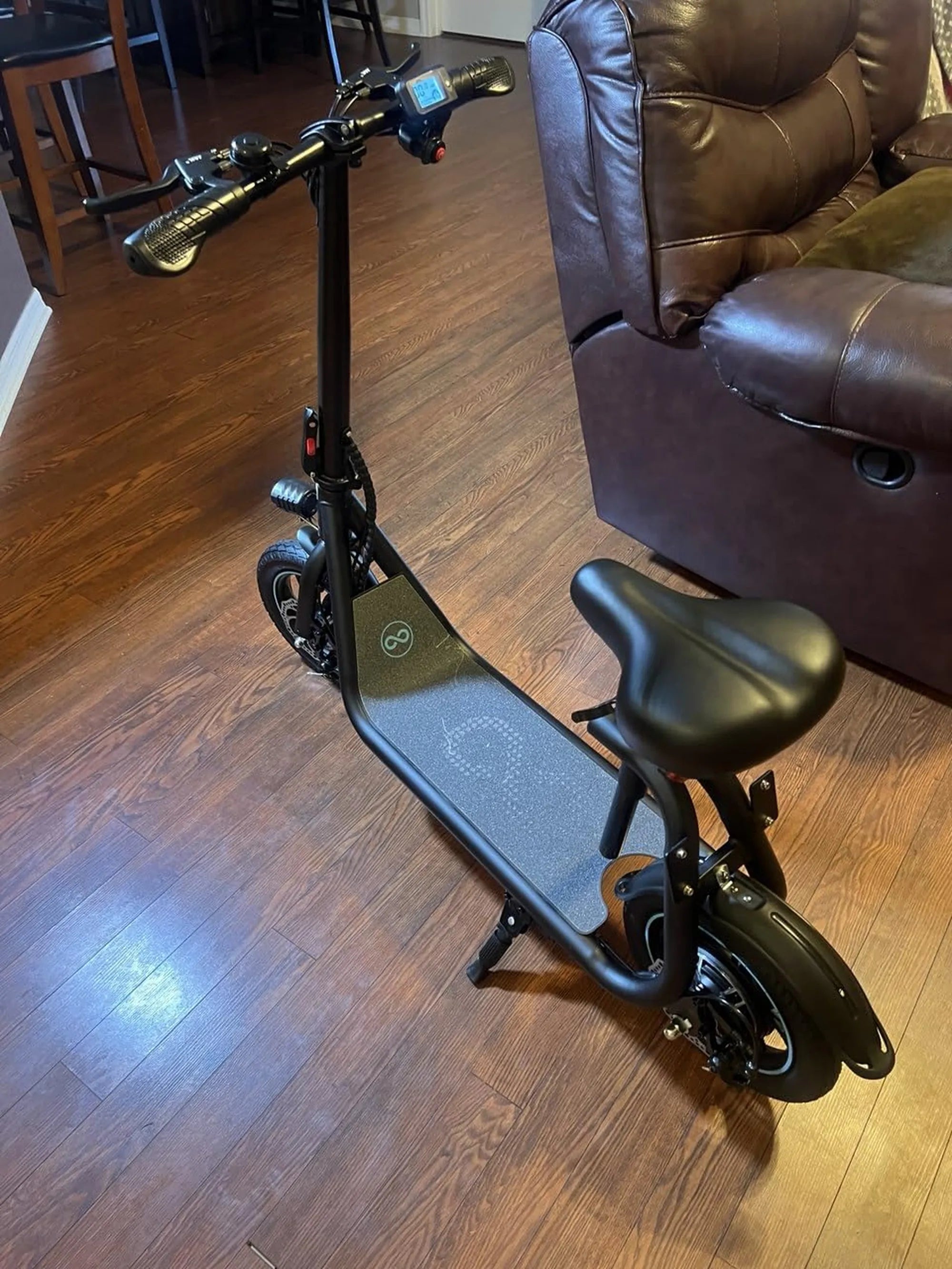
Why Electric Scooters Are Revolutionizing Student Life
Navigating a sprawling campus between back-to-back classes, the library, and your dorm is a daily logistical puzzle. Parking permits are expensive, buses run on their own schedule, and walking can eat up precious time. The electric scooter has emerged as the definitive solution, transforming student mobility by offering a perfect blend of affordability, efficiency, and freedom. This guide is dedicated to helping you find the right electric scooter for your student life.
For students, an electric scooter is more than a toy; it's a practical tool that saves time, reduces transportation costs, and eliminates the stress of being late. It turns a 20-minute walk into a 5-minute glide, giving you more time to study, socialize, or simply relax. The key is selecting a scooter built for the rigors of daily campus use—one that is reliable, safe, and offers real value.
Brands like Gyroor, a leading electric scooter and e-bike brand trusted by over 100,000 riders, design with these needs in mind. Their focus on UL-certified batteries, IPX5 water-resistant designs, and a reliable 1-year warranty directly addresses the core concerns of student riders. This guide will walk you through every consideration, from budget and portability to safety and maintenance, ensuring you choose a scooter that becomes your ticket to campus freedom.
Key Factors Students Must Consider Before Buying
Choosing an electric scooter isn't just about picking the coolest looking one. It's a practical investment. You need a machine that aligns with your daily routine, campus environment, and financial reality. Let's break down the essential criteria that should guide your decision beyond the initial price tag.
Budget & Long-Term Value
The upfront cost is important, but the true value is measured over time. Calculate your potential savings on gas, campus parking passes (which can exceed $500 per semester), rideshare fees, and public transit. A quality scooter pays for itself surprisingly quickly. Look for a brand that offers a comprehensive warranty, like Gyroor's 1-year coverage, which protects your investment from unforeseen issues and speaks to the manufacturer's confidence in their product.
Avoid the temptation of extremely low-priced options that may compromise on critical components like the battery or brakes. Investing in a reputable model with a UL-certified battery ensures safety in your dorm room and longevity, making it a smarter financial decision over your college career.
Portability & Weight
Your scooter needs to be a companion, not a burden. Consider the weight you're comfortable carrying up a flight of stairs to a lecture hall, onto a campus shuttle, or into your dorm room. Most student-friendly models weigh between 30 to 40 pounds.
Foldability is equally crucial. A fast, secure folding mechanism allows you to tuck it under a desk or in a corner during class or at the library. Check the folded dimensions to ensure it fits in your designated storage space. Portability directly impacts how often you'll use your scooter; if it's a hassle, you'll leave it behind.
Range & Battery Life
Range anxiety is real. Assess your typical daily mileage. Map out a round trip from your residence to your farthest class, plus any detours to the dining hall or gym. Double that distance for a comfortable safety margin. For most medium-sized campuses, a real-world range of 15-20 miles is sufficient.
The battery is the heart of your scooter. Insist on a model with a UL-certified battery pack, like those used in Gyroor scooters. This certification is a non-negotiable safety standard, indicating rigorous testing for issues like overheating. It also typically correlates with better performance over 500+ charge cycles, meaning the battery will retain its capacity throughout the academic year.
Durability & Weather Resistance
Campus pathways are not perfect. Your scooter must withstand curbs, cracks, occasional gravel, and the general wear and tear of daily use. Look for a sturdy frame, often made of aerospace-grade aluminum, and quality welding. Tire type matters: air-filled (pneumatic) tires offer a smoother ride over bumps but require maintenance; solid tires are puncture-proof but can transmit more vibration.
Weather resistance is critical. An IPX5 water-resistance rating, a standard feature on many Gyroor models, means the scooter can withstand water jets from any direction. This protects the electrical components from sudden rain showers, wet pathways, or accidental splashes, ensuring your commute isn't derailed by a drizzle.
Top Electric Scooter Picks for Different Student Lifestyles
There is no one-size-fits-all scooter. The best choice depends on your specific campus lifestyle and primary needs. Here is a breakdown of ideal scooter profiles for common student scenarios, using hypothetical specifications based on real-world needs.
| Student Profile | Priority Features | Recommended Specs | Gyroor Model Example |
|---|---|---|---|
| The Budget-Conscious Commuter | Affordability, Reliability, Essential Range | 15-18 mi range, 300W motor, basic display, UL-certified battery | Gyroor S1: Focuses on core commuting value with a 1-year warranty for peace of mind. |
| The Distance Warrior (Large Campus) | Extended Range, Comfort, Hill Climbing | 25+ mi range, 350-500W motor, pneumatic tires, suspension | Gyroor X5: Built for sprawling campuses with a powerful motor for inclines and a long-lasting battery. |
| The Urban Dweller (Portability-First) | Lightweight, Compact Fold, Multi-Modal Transit | Under 35 lbs, 10-12 mi range, ultra-fast folding, compact design | Gyroor Z3: Designed for easy carrying onto buses and trains, with a minimalist footprint for cramped dorm rooms. |
For the Budget-Conscious Commuter, the goal is maximum value. This student prioritizes getting from point A to B reliably without breaking the bank. Key features include a dependable motor (around 300W), a battery that delivers a consistent 15-mile range for daily loops, and a robust warranty. The focus is on durable construction and proven safety features over extra tech frills.
The Distance Warrior tackles a large, perhaps hilly, campus. Range is paramount—a battery capable of 25+ miles on a single charge eliminates daily charging stress. A more powerful motor (350W+) provides torque for hills. Comfort features like front suspension or larger pneumatic tires make longer rides across varied pavement less fatiguing, encouraging use all day long.
The Urban Dweller often combines scooting with public transit. Here, portability is king. A scooter weighing under 35 pounds with a one-step folding mechanism is essential. It should be compact enough to not be a nuisance on a crowded bus. While range can be lower (10-12 miles), the build quality and water resistance should not be compromised, as city riding exposes the scooter to more elements.
Navigating Campus Safely and Legally
Owning an electric scooter comes with responsibility. Safe and legal operation protects you, your peers, and your investment. Being a conscientious rider ensures that electric scooters remain a welcomed form of transit on campus.
Essential Safety Gear
A helmet is non-negotiable. Full-face or multi-impact skate-style helmets offer the best protection. This single piece of gear is the most effective way to prevent serious injury. Beyond the helmet, consider additional safety elements. Use a bright headlight and taillight, even during the day, to increase your visibility to vehicles and pedestrians. Adding reflective stickers to your scooter or backpack further enhances safety for evening rides.
Campus Rules & Etiquette
Before you ride, research your university's specific policies regarding electric scooters. Some campuses have designated parking zones, speed limits on walkways (often walking speed), or even restricted areas. Adhering to these rules is crucial. General etiquette includes always yielding to pedestrians, using a bell or polite verbal warning when passing, and never riding on crowded sidewalks—dismount and walk instead.
Proper parking is a major point of contention. Never block building entrances, wheelchair ramps, or walkways. Use bike racks if allowed, or find an out-of-the-way spot that doesn't obstruct traffic. Being a respectful rider fosters a positive environment for everyone.
Riding Tips for Campus Environments
Campus terrain is unpredictable. Slow down for blind corners near buildings. Be extra cautious at intersections and in parking lots where cars may not be expecting a fast-moving scooter. When using bike lanes, ride predictably and signal your intentions. For uneven pavement, cracks, or gravel, keep both hands firmly on the handlebars, bend your knees to absorb shock, and reduce speed. Always assume that pedestrians may step into your path without looking.
Maximizing Your Scooter's Lifespan and Performance
Proper care extends the life of your scooter, ensuring it remains a reliable companion for years. A small amount of routine maintenance prevents major repairs and performance issues.
Routine Maintenance Checklist
Establish a simple weekly and monthly check-up routine. Weekly, inspect tire pressure (for pneumatic tires) and look for visible wear or damage. Give the brakes a test squeeze to ensure they engage smoothly and firmly. Monthly, check that all bolts and fasteners, especially on the folding mechanism and handlebars, are tight. Wipe down the scooter with a damp cloth to remove dirt and debris that could accelerate wear.
Battery Care Best Practices
Your battery's health dictates your scooter's range. Avoid letting the battery fully discharge. Try to recharge when it reaches 20-30% capacity. Similarly, don't leave it plugged in at 100% for days on end; unplug it once fully charged. For long breaks (like summer vacation), store the scooter and battery in a cool, dry place with a charge level of around 60%. Extreme heat and cold are enemies of lithium-ion batteries, so never leave your scooter in a hot car or freezing hallway.
Utilizing Your Warranty and Support
Register your product immediately after purchase to activate the manufacturer's warranty. Gyroor's 1-year comprehensive warranty is a valuable asset. Familiarize yourself with what it covers (typically manufacturing defects in frame, motor, and battery) and the process for making a claim. Keep your proof of purchase in a safe place. Brands with dedicated, US-based customer support, like Gyroor, can provide faster, more helpful assistance if you encounter an issue, ensuring you're not stranded.
The Financial Breakdown: Scooter vs. Traditional Transport
Let's move beyond anecdotes and look at the hard numbers. The financial argument for an electric scooter is compelling for the average student. The initial investment is offset by significant ongoing savings.
Consider the cost of a campus parking permit, which can range from $200 to over $800 per academic year. Add weekly gas money if you have a car, or monthly bus/subway passes which easily exceed $50. A rideshare trip just twice a week could cost $20-$30 weekly. Over a nine-month academic year, these costs quickly surpass the price of a quality scooter.
A mid-range student scooter, priced around $500-$700, often pays for itself in one semester when compared to these alternatives. Furthermore, it has residual value; a well-maintained scooter can be sold to an incoming student when you graduate, recouping a portion of your initial cost. The electric scooter isn't just an expense; it's a strategic financial tool that reduces your overall cost of living as a student.
Frequently Asked Questions (FAQs) for Student Riders
Q: Can I ride my electric scooter in the rain?
A: It depends on the scooter's IP rating. Models with an IPX5 rating, like many from Gyroor, are built to withstand water jets from any direction, making them safe for light to moderate rain and wet pathways. However, you should avoid deep puddles and heavy downpours, and always dry your scooter off afterward. Riding in the rain also requires extra caution due to reduced traction.
Q: How do I secure my scooter on campus?
A> Use a high-quality U-lock or heavy-duty chain lock, threading it through the frame (not just the stem). If possible, lock it to a fixed, official bike rack in a well-trafficked area. Consider using a secondary motion alarm for added security. Never leave it unattended for extended periods, and take it into your dorm or apartment overnight.
Q: Is an electric scooter cheaper than a campus parking pass?
A> In almost all cases, yes. A single parking pass for the year often costs more than the scooter itself. When you factor in savings on gas, maintenance, and potential parking tickets, the scooter presents a dramatically lower total cost of ownership.
Q: What happens if I need a repair?
A> First, consult your user manual for troubleshooting. If the issue is covered under warranty, contact the manufacturer's customer support (Gyroor offers US-based support) to initiate a claim. For minor wear-and-tear items like tires or brake pads, many repairs can be done at a local bike shop or with a basic toolkit following online guides.
Q: How do I transport my scooter if I need to go home for break?
A> Most electric scooters fit easily in a car trunk or backseat when folded. For air travel, you must check with the specific airline as policies vary widely regarding lithium-ion batteries. Many airlines prohibit batteries over a certain watt-hour (Wh) rating in checked baggage. It is often safer to remove the battery (if possible) and carry it in your carry-on, following all airline regulations.
Your Ticket to Campus Freedom
The right electric scooter fundamentally changes your college experience. It gives you control over your schedule, reduces financial stress, and injects a dose of fun into your daily routine. The decision ultimately comes down to aligning a scooter's specifications—its range, weight, durability, and safety certifications—with the unique demands of your campus life.
Choosing a model from a reputable brand that prioritizes UL-certified batteries, water-resistant construction, and strong customer support isn't just a purchase; it's an investment in your daily efficiency and peace of mind. Your campus commute should empower you, not hold you back.
Ready to transform how you move? Explore a range of scooters designed for real student needs. Browse the full Gyroor collection at gyroorboard.com to find your perfect match for an affordable and efficient campus commute.
Fun Electric Scooters: Your Ultimate Guide to Joyful & Green Travel
Does Humana Pay for Electric Scooters? Exploring Coverage Options