


Introduction: Why Electric Scooters are a Game-Changer for Kids
Electric scooters offer children an exhilarating blend of outdoor activity, personal transportation, and developing independence. Selecting the right model and establishing proper safety habits transforms this exciting toy into a responsible tool for growth and fun. This ultimate guide to Electronic Scooter Kids provides a data-driven framework for parents to navigate safety, selection, and maintenance, ensuring peace of mind alongside their child's enjoyment.
We will analyze age appropriateness, non-negotiable safety features, and practical riding protocols. The goal is to empower kids with confidence while giving parents the knowledge to make informed decisions. As a leading brand trusted by over 100,000 riders, Gyroor's commitment to UL-certified batteries and robust construction informs our recommendations for a secure riding foundation.
Understanding Age Appropriateness and Key Safety Features
Manufacturer age suggestions are a starting point, not a definitive rule. A child's readiness for an electronic scooter kids model depends on a combination of physical capability, motor skills, and cognitive maturity. The right scooter should match their development stage to prevent frustration and minimize risk.
Key specifications like speed, weight capacity, and deck size must align with the rider. A mismatch can lead to loss of control. This section breaks down the critical evaluation criteria beyond the box's label.
Matching Scooter Specs to Your Child's Development
Evaluate your child's height against the scooter's handlebar height; they should stand comfortably without overreaching. Weight capacity is crucial—exceeding it strains the motor and compromises braking. Most quality scooters for younger children (6-9) have capacities of 120-150 lbs.
Assess your child's motor skills: Can they maintain balance on a non-motorized scooter? Do they have the coordination to operate a throttle and brake simultaneously? Cognitive maturity involves understanding and following safety rules, assessing road conditions, and reacting to hazards. A child who is easily distracted may not be ready for a faster model.
Non-Negotiable Safety Features for Kids' E-Scooters
Certain features are essential for any electronic scooter kids should use. A speed limiter with adjustable settings (e.g., 7.5 mph for beginners, up to 15.5 mph for experienced teens) is mandatory. A reliable braking system typically combines an electronic brake for smooth slowing and a mechanical disc or rear fender brake for immediate stopping power.
A wide, textured deck provides stable footing. Bright front and rear LED lights, plus reflective elements, are vital for visibility. The most critical safety component is the battery. Gyroor uses UL-certified battery packs tested for 500+ cycles, a fundamental safeguard against fire risk that is not a universal standard.
How to Choose the Best Electric Scooter for Your Child: A Buyer's Checklist
Transform the selection process from overwhelming to straightforward. Use this checklist to compare models based on your child's primary use case, local terrain, and growth trajectory. Prioritize safety certifications and durable construction over flashy extras.
Consider where and how the scooter will be used 80% of the time. This focus determines the necessary features. Investment in a well-built scooter from a reputable brand like Gyroor, backed by a 1-year warranty, often proves more economical and safer long-term.
Urban Commutes vs. Neighborhood Fun: Picking the Right Type
For smooth sidewalks and park paths, a scooter with 8.5-inch air-filled or solid rubber tires provides sufficient comfort. A motor in the 150W-250W range offers adequate power for slight inclines. If your child encounters rougher pavement, cracks, or mild off-path terrain, prioritize larger wheels (10-inch) and a suspension system.
A more powerful motor (300W+) helps with hills. For older kids using the scooter for short commutes, features like a longer range (15+ miles), a brighter headlight, and a bell become important. The following table compares scooter types for different primary uses:
| Use Case | Recommended Wheel Size | Motor Power | Key Features |
|---|---|---|---|
| Smooth Park Paths & Sidewalks | 8.5" Solid Rubber | 150W - 250W | Speed Limiter, Kick-Start, Lightweight |
| Mixed Terrain & Neighborhood | 10" Air-Filled | 250W - 350W | Front Suspension, Disc Brake, Wider Deck |
| Older Kids / Short Commutes | 10"+ Pneumatic | 350W+ | Longer Range, Bright LEDs, Folding Design |
The Durability and Weatherworthiness Factor
Kids' products endure bumps, drops, and exposure to the elements. Build quality matters. Look for a frame made of aerospace-grade aluminum, which is strong yet lightweight. Check the IP rating for water and dust resistance; an IPX5 rating, like on many Gyroor models, means the scooter can withstand water jets from any direction, protecting against puddles and rain.
Examine the construction of the folding mechanism and stem—these are high-stress points. A robust warranty (like Gyroor's 1-year coverage) signals manufacturer confidence. This durability ensures the electronic scooter kids ride remains safe and functional over time, not just on day one.
The Essential Pre-Ride Safety Protocol and Gear
Safety is an active practice, not a passive feature. Establishing a consistent pre-ride routine ingrains responsible habits. This protocol involves two equally important parts: wearing proper protective gear and conducting a mechanical check of the scooter itself.
Never allow a ride without completing both steps. This discipline significantly reduces the risk of injury and mechanical failure, making every outing safer.
Gear Up! The Absolute Must-Have Protective Equipment
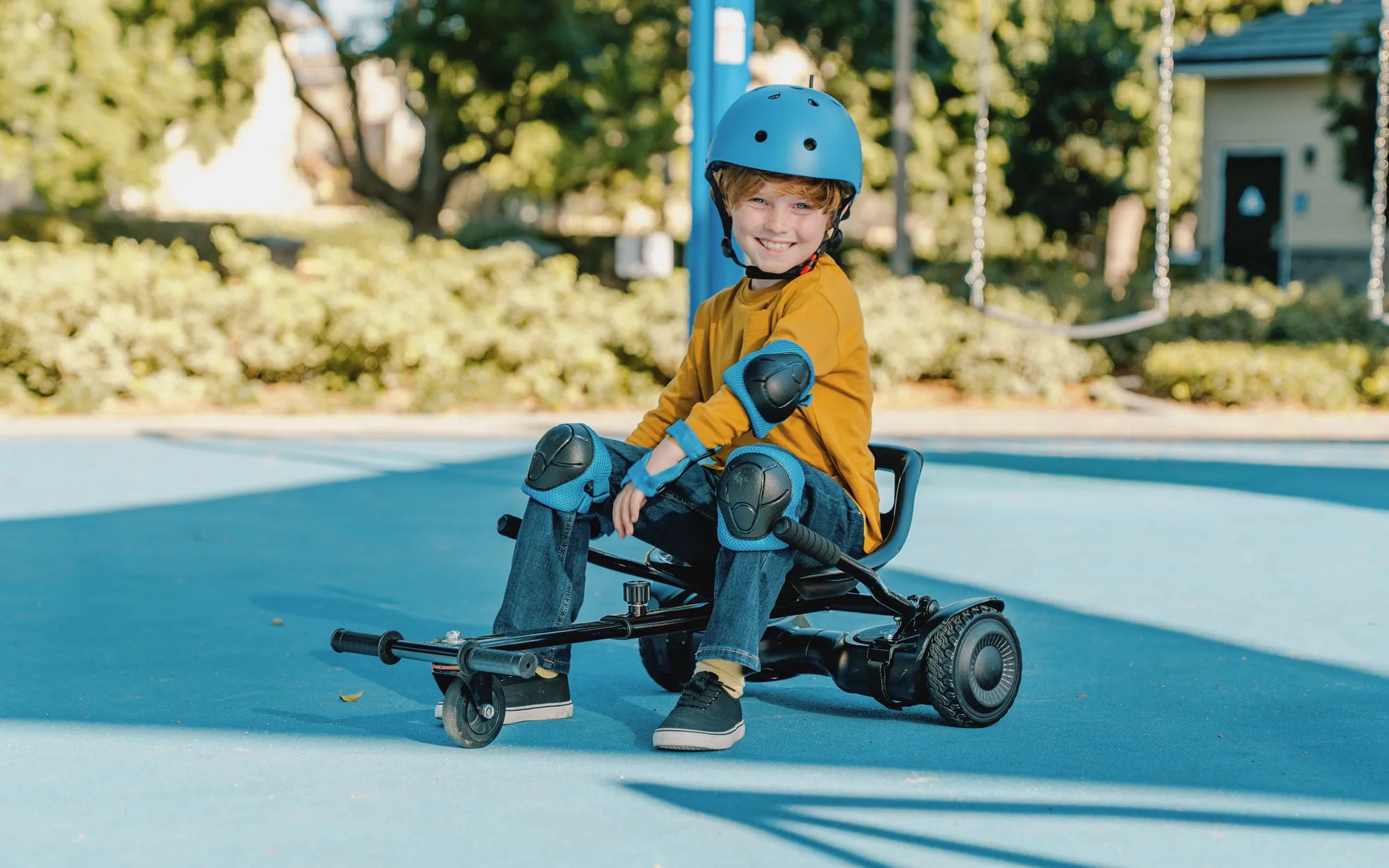
A properly fitted, ASTM-certified helmet is non-negotiable. It must sit level on the head, covering the forehead, with straps forming a "V" under the ears. Knee and elbow pads protect joints from abrasions during falls. Wrist guards are critical, as instinct leads to putting hands out during a tumble.
Ensure all gear fits snugly without restricting movement. Replace any equipment after a significant impact, even if no damage is visible. High-top closed-toe shoes provide essential ankle support and foot protection.
The 5-Point Pre-Ride Safety Check
Make this a quick, collaborative ritual with your child. First, check the battery level to ensure sufficient charge for the planned ride; a low battery can lead to sudden power loss. Second, test the brakes at low speed in a safe area to confirm responsive stopping.
Third, inspect tires for proper inflation (if pneumatic) and any signs of wear or embedded debris. Fourth, verify that front and rear lights are operational, even during daytime rides. Fifth, ensure all components are tight: grip the handlebars and stem, trying to wiggle them, and check the folding mechanism is fully locked.
Establishing Rules of the Road (and Sidewalk) for Young Riders
Clear, consistent rules define where and how your child can ride. These guidelines manage risk and teach responsible behavior in shared spaces. Review these rules regularly, especially before riding in a new area.
The primary goal is coexistence with pedestrians, cyclists, and vehicles. A child on an electronic scooter kids model must learn to be predictable and courteous.
Choosing Safe Riding Environments
Start in controlled, low-traffic areas like empty school parking lots, dead-end streets, or smooth paved trails. Mastery of basic controls should happen away from hazards. Designate approved routes in your neighborhood that use sidewalks in quiet areas.
Absolutely prohibit riding on streets with car traffic, near busy intersections, or on roads without dedicated bike lanes. Avoid crowded sidewalks, pedestrian malls, and areas with heavy dog-walking traffic. Visibility and space are key.
Teaching Core Riding Etiquette and Hazard Awareness
Drill these fundamental rules: Always yield to pedestrians—slow down and give wide clearance. Use a bell or a polite verbal warning (“On your left!”) when passing. Never wear headphones; riders need full auditory awareness. Scan the path ahead for hazards like cracks, gravel, wet leaves, sand, and curbs.
Make eye contact with drivers at driveways and intersections. Assume you have not been seen. Ride at a speed that allows stopping within the clear distance ahead. These practices build the situational awareness crucial for safe riding.
Maintenance 101: Keeping Your Child's E-Scooter in Top Shape
Regular, simple maintenance ensures safety, performance, and longevity. A well-maintained electronic scooter kids depend on is less likely to develop sudden problems. Involve your child in age-appropriate tasks to foster ownership and mechanical understanding.
Schedule a quick weekly visual check and a more thorough monthly maintenance session. This proactive approach is far easier than reactive repairs.
Routine Checks and Simple Upkeep
Wipe down the scooter with a damp cloth to remove dirt and debris that can wear on moving parts. Periodically check and tighten bolts on the handlebars, stem, and folding mechanism using the provided tools. Listen for new squeaks or rattles that indicate something is loose.
Inspect brake pads for wear and ensure the brake calipers are aligned. For pneumatic tires, maintain the recommended PSI (found on the tire sidewall) for optimal ride and battery efficiency. Lubricate the folding mechanism hinge point as per the manual to prevent sticking.
Battery Care and Long-Term Storage Tips
Gyroor's UL-certified batteries are designed for reliability but require proper care. Avoid letting the battery fully deplete; recharge it when it reaches 20-30%. Similarly, avoid leaving it plugged in for days after reaching 100%. Use only the manufacturer-provided charger.
If storing the scooter for more than a month, charge the battery to about 60% and store it in a cool, dry place away from direct sunlight. Recheck the charge level every 2-3 months and top it up to 60% if needed. This maximizes battery cycle life and safety.
Frequently Asked Questions (FAQs) About Kids and Electric Scooters
Q: What is the right age for a child's first e-scooter?
A> While many models are marketed to ages 6+, age is less important than individual readiness. A child should demonstrate good balance, coordination, and the ability to understand and follow safety rules. Starting with a lower-speed model (under 10 mph) is always advisable.
Q: How fast should a kids' electric scooter go?
A> For beginners (approx. ages 6-8), a speed limit of 7.5 mph is appropriate. For older, more experienced kids (9-12), 10-12 mph is common. Teen models may reach 15.5 mph. The presence of an adjustable speed limiter is a key safety feature for progressive learning.
Q: Are Gyroor scooters covered by warranty for kids' use?
A> Yes. Gyroor's standard 1-year warranty covers defects in materials and workmanship for all riders, including children, providing peace of mind. Their US-based customer support team handles claims and questions.
Q: Can the scooter get wet?
A> Scooters with an IPX5 water-resistant rating, like several in Gyroor's lineup, are protected against water jets from all directions. This means riding through puddles or in light rain is safe. However, they are not submersible and should not be ridden through deep standing water or stored wet.
Q: What should I do if the scooter has a problem?
A> First, consult the user manual for troubleshooting. For issues covered under warranty, contact Gyroor's customer support directly. For non-warranty repairs like tire changes, seek a local bike or small vehicle repair shop. Always disconnect the battery before attempting any repairs yourself.
Fostering Independence with Confidence and Safety
The journey with an electronic scooter kids love is about more than recreation; it's a practical lesson in responsibility, risk assessment, and joyful independence. By selecting a scooter with fundamental safety credentials like UL-certified batteries and robust construction, equipping your child with proper gear, and instilling consistent safety protocols, you create a framework for endless fun.
Brands like Gyroor, with their focus on verified safety standards and durable design, provide the reliable hardware that makes this confidence possible. The ultimate goal is achieved when you see your child riding with skill, awareness, and a big smile, and you can watch with genuine peace of mind. Start your family's safe riding adventure today.
Ready to find the perfect, safe electric scooter for your child? Browse the full Gyroor collection at gyroorboard.com to explore UL-certified, durable models designed for young riders.
Two Wheel Balancing Electric Scooter: The Future of Urban Mobility
Self Balancing Scooter Specs: What You Need to Know Before Buying