



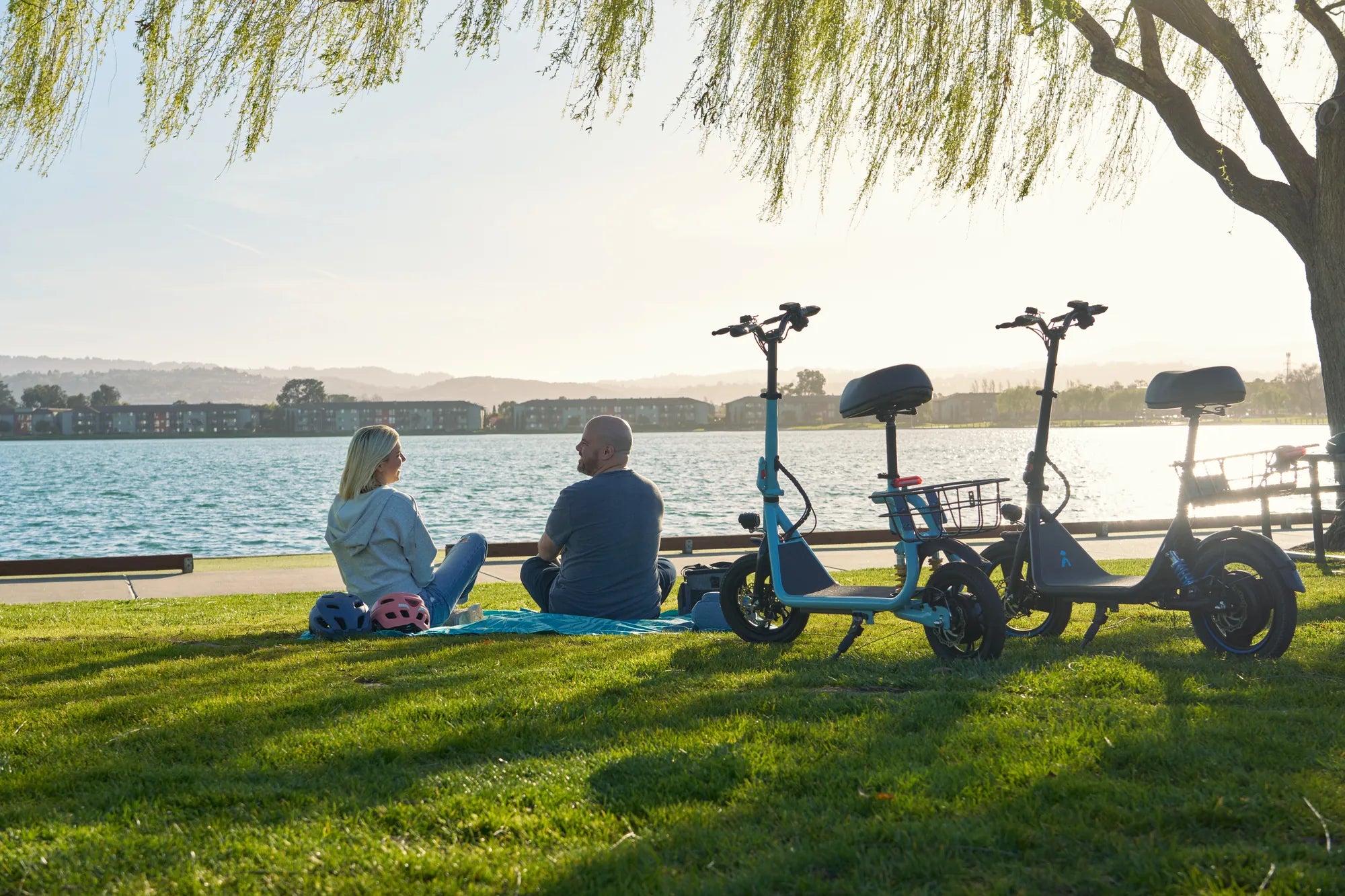
Forget slow, underpowered commuters. The era of extreme electric scooters and electric bikes is here, delivering motorcycle-like acceleration, mountain bike-level durability, and the freedom to conquer any terrain. These aren't just toys; they're high-performance machines designed for thrill-seekers and practical riders who demand more from their commute or weekend adventure. This guide cuts through the hype to deliver a data-driven, technical breakdown of what makes an electric scooter or e-bike truly "extreme." We'll explore the engineering behind the power, the safety features that enable it, and how a brand like Gyroor—trusted by over 100,000 riders for its UL-certified batteries, IPX5 water-resistant designs, and reliable 1-year warranty—sets the standard for performance you can rely on.
What Defines an "Extreme" Electric Scooter or E-Bike?
Standard electric scooters and bikes prioritize basic functionality. Extreme models are engineered for exceptional performance across four key pillars: power, speed, range, and durability. The distinction lies in the specifications and the quality of components designed to handle sustained, high-stress operation.
An extreme electric scooter or Extreme Scooters Electric Bike typically features a motor with a continuous power output of 1000 watts or higher. This raw power translates directly to torque, enabling rapid acceleration from a standstill and the ability to climb steep grades of 20% or more without hesitation. Speed capabilities often push past 25 mph, with some models capable of 40+ mph, though local regulations must always be observed.
Range is a critical differentiator. While a standard commuter might offer 15-20 miles, extreme models integrate high-capacity, high-voltage battery packs to deliver 30, 40, or even 50+ miles of real-world range, even when riding aggressively. This requires advanced battery management systems to ensure stability and longevity.
Finally, durability is non-negotiable. Frames constructed from reinforced or aerospace-grade aluminum, robust suspension systems with ample travel, and high-grade hydraulic braking components define this category. These machines are built to withstand the repeated impacts and stresses of high-speed or off-road use.
Key Performance Metrics Explained
Understanding the specs is crucial. Motor wattage (W) indicates power potential, but voltage (V) and current (A) determine how it's delivered. A 1000W motor on a 52V system will generally provide snappier acceleration and better hill-climbing efficiency than a 1000W motor on a 36V system due to the higher voltage.
Battery capacity, measured in watt-hours (Wh), is the true measure of range. It's calculated as Voltage (V) x Amp-hours (Ah). A 52V 20Ah battery (1040Wh) stores significantly more energy than a 36V 20Ah battery (720Wh), enabling longer rides at high power outputs. For an Extreme Scooters Electric Bike, a high Wh rating is essential.
Torque, measured in Newton-meters (Nm), is the rotational force that gets you moving. High torque is vital for acceleration and hill climbs. Mid-drive motors on e-bikes often excel here by leveraging the bike's gears, while powerful hub motors on scooters deliver torque directly to the wheel.
The Anatomy of a High-Performance Ride: Gyroor's Engineering Edge
Building a reliable extreme machine requires integrating premium components with intelligent design. It's about more than just attaching a big motor; it's about creating a balanced system where power, control, and safety work in unison.
Leading brands like Gyroor focus on this holistic engineering approach. By combining high-output motors with UL-certified battery packs, rigid frames, and professional-grade braking, they create vehicles where performance is exhilarating yet predictable and safe. This builds the trust evidenced by their 100,000-strong rider community.
Powerhouse Performance: Motors and Batteries
The heart of any extreme model is its drivetrain. High-wattage hub motors are common in scooters for their simplicity and direct power delivery. For e-bikes, mid-drive motors that integrate with the drivetrain offer superior efficiency on hills and varied terrain by using the bicycle's existing gears.
The battery is the lifeblood. Extreme riding demands high discharge rates and deep cycle durability. Gyroor's use of UL 2271 or UL 2849 certified battery packs is a critical safety benchmark. These certifications mean the battery cells, BMS, and enclosure have passed rigorous tests for electrical, mechanical, and environmental safety—a non-negotiable for high-performance applications where battery stress is high.
This certification, coupled with quality lithium-ion cells rated for 500+ charge cycles, ensures consistent power delivery, reduces long-term capacity fade, and mitigates safety risks. It's a foundational element that distinguishes professional-grade Extreme Scooters Electric Bike options from potentially hazardous, uncertified models.
Built to Endure: Frame, Suspension, and Water Resistance
A powerful motor is useless on a flexing, fragile frame. Extreme models use reinforced aluminum alloys or steel in stress points. Folding mechanisms, if present, must be over-engineered with robust locking pins to handle the forces of high-speed bumps and jumps.
Suspension is paramount for control and comfort. Dual spring or hydraulic shock absorbers, often with adjustable preload, are standard. For true off-road capability on an Extreme Scooters Electric Bike, front fork suspension with 80-100mm of travel and a rear shock are essential to absorb impacts and maintain tire contact.
Water resistance is a key durability factor. An IPX5 rating, a standard on many Gyroor models, means the unit can withstand water jets from any direction. This protects critical electronics from rain, road spray, and puddles, making the vehicle a truly all-weather machine and preventing corrosion and electrical failure.
Control and Safety at High Speeds
Stopping power must match go-power. Hydraulic disc brakes are the gold standard, offering superior modulation, less hand fatigue, and consistent performance in wet conditions compared to mechanical disc or drum brakes. Some systems incorporate regenerative braking to recapture some energy.
Tire choice dictates traction. Pneumatic (air-filled) tires provide the best shock absorption and grip. For off-road e-bikes, wide, knobby tires are essential. For urban scooters, tubeless pneumatic tires with puncture-resistant layers offer a balance of comfort and reliability.
High-performance riding often extends into low-light conditions. Powerful LED headlights (500+ lumens), brake-activated tail lights, and side reflectors are crucial for visibility. A bright, clear display that shows speed, battery level, and assist mode without distraction is also a key safety interface.
Choosing Your Extreme Machine: A Rider's Guide
The choice between an extreme electric scooter and an extreme electric bike hinges on your primary use case, riding style, and logistical needs. Both offer thrilling performance but in different packages.
This decision matrix should be guided by concrete factors: daily distance, terrain type, storage space, need for portability, and local legality. The following breakdown provides a data-driven comparison to clarify the optimal path for different rider profiles.
The Case for Extreme Electric Scooters
Extreme electric scooters excel in ultra-dense urban environments where portability and storage are at a premium. Their compact, foldable design allows for easy carrying onto public transit or stashing under a desk. They are the ultimate last-mile solution.
Their standing riding position and direct throttle control offer an intuitive, motorcycle-like acceleration feel. For a rider whose commute involves multi-modal transport (e.g., train then scooter) and who needs to cover 5-15 miles quickly in city traffic, a high-power scooter is often the most efficient tool. The best models balance formidable power with a manageable folded footprint.
The Case for Extreme Electric Bikes
Extreme electric bikes are the choice for longer-range exploration, off-road trails, cargo hauling, or riders who still want the option and health benefits of pedaling. The riding position is more familiar and comfortable for long distances, and the pedal-assist function can dramatically extend range.
An Extreme Scooters Electric Bike built for adventure can handle fire roads, mountain bike trails, and long-distance touring. The ability to add racks, panniers, and other cargo solutions also makes them practical for grocery runs or carrying gear. For riders covering 20+ miles regularly or seeking weekend trail adventures, a performance e-bike is unparalleled.
Terrain and Use-Case Breakdown
The table below matches rider profiles with the recommended vehicle type and critical specifications to look for.
| Rider Profile | Recommended Type | Key Features to Prioritize |
|---|---|---|
| Urban Commuter (Multi-modal, short storage space) | Extreme Electric Scooter | Motor: 1000W+. Battery: 48V/52V, 15Ah+. Folding mechanism. Hydraulic brakes. IPX5 rating. |
| Off-Road Adventurer (Trails, rough terrain) | Extreme Electric Bike (Fat-tire or MTB) | Motor: Mid-drive, 750W+. Battery: 48V/52V, 20Ah+. Full suspension. Knobby, wide tires. High ground clearance. |
| Speed Enthusiast (Paved roads, max velocity) | Extreme Electric Scooter or Performance E-Bike | Motor: 1500W+. Battery: High voltage (52V+). Aerodynamic profile. High-performance brakes. Quality pneumatic tires. |
| Long-Distance Explorer (Range-focused, mixed surfaces) | Extreme Electric Bike (Touring/Hybrid) | Motor: High-torque mid-drive. Battery: Max Wh (e.g., 52V 21Ah = 1092Wh). Comfort geometry. Attachment points for racks. |
Beyond the Purchase: Maintenance and Maximizing Your Ride
Owning a high-performance machine carries a responsibility for proper maintenance. Neglect can degrade performance and safety, while diligent care ensures your Extreme Scooters Electric Bike or scooter delivers peak thrill for years.
Proactive maintenance is simpler and far less costly than reactive repairs. Establishing a regular checklist based on riding hours and conditions will preserve your investment and keep every ride as reliable as the first.
Battery Care for Longevity and Peak Performance
The battery is your most expensive component. Avoid regularly draining it to 0%. For daily use, try to keep it between 20% and 80% charge. For long-term storage (over a month), charge it to 50-60% and store in a cool, dry place (ideally 10-20°C / 50-68°F).
Use only the manufacturer-provided charger. Charging immediately after a ride while the battery is warm is fine, but avoid charging in direct sunlight or in ambient temperatures below freezing. Allow a hot battery to cool for 30-60 minutes before charging if possible.
Routine Maintenance Checklist
Perform these checks weekly or every 50 miles: 1) Tire Pressure: Inflate to the PSI marked on the tire sidewall. Proper pressure prevents pinch flats and improves range. 2) Brakes: Test lever feel and stopping power. Listen for grinding pads. Adjust or replace as needed. 3) Bolts and Fasteners: Check critical bolts (stem, handlebar, folding mechanisms, axle) for tightness with the correct tools.
Monthly or every 200 miles: 1) Clean the vehicle with a damp cloth. Avoid high-pressure sprays directly at bearings, the display, or charge ports. The IPX5 rating allows careful rinsing, but direct jets into seals should be avoided. 2) Inspect suspension components for smooth travel and any oil leaks. 3) Lubricate the chain (on e-bikes) with a suitable bicycle chain lubricant.
Leveraging Your 1-Year Comprehensive Warranty
Gyroor's 1-year warranty on the vehicle and 6-month coverage on the battery is a commitment to quality. To use it effectively, register your product online immediately upon purchase. This creates a record of your ownership and warranty start date.
The warranty typically covers defects in materials and workmanship. It does not cover damage from accidents, misuse, neglect, or unauthorized modifications. If an issue arises, contact customer support with your serial number, proof of purchase, and a clear description (and photos/video) of the problem. US-based support streamlines this process, a significant advantage over brands with overseas-only service centers.
Frequently Asked Questions (FAQ)
Q: Are extreme electric scooters/e-bikes legal on public roads?
A: Legality is highly localized. In the US, laws vary by state and city. Many jurisdictions limit electric scooters to 20 mph and e-bikes (using a 3-class system) to 20 mph or 28 mph for pedal-assist. Models capable of exceeding these limits may be restricted to private property. Always check your local Department of Motor Vehicles or transportation authority regulations. Riding an unregistered vehicle on public roads where it's not legal can result in fines and impoundment.
Q: How does weather, especially rain, affect a high-performance ride?
A: Models with an IPX5 rating, like many from Gyroor, are designed to handle rain and wet roads safely. However, traction is reduced. Ride more cautiously, avoid sharp turns, brake earlier and more gently, and avoid deep puddles that could submerge the motor or electronics beyond their rating. After a wet ride, dry the vehicle with a towel, paying attention to brakes and bearings.
Q: What's the real-world range I can expect compared to the advertised spec?
A> Advertised range is usually a best-case scenario: light rider, flat terrain, eco mode, moderate temperature (20°C/68°F), and low speed. Real-world range can be 50-70% of that figure. Factors that reduce range include: high speeds, frequent acceleration, hills, cold weather (which reduces battery efficiency), headwinds, higher rider weight, and low tire pressure. For a reliable estimate, use the battery's watt-hour (Wh) rating: a 1000Wh battery might deliver 25-35 miles under aggressive riding.
Q: Can I modify my Gyroor to make it even more powerful?
A: We strongly advise against any modifications not approved by the manufacturer. "Tuning" or installing aftermarket controllers/batteries to bypass speed limiters voids the warranty and compromises safety. The electrical system, brakes, and frame are engineered as a balanced system for the stock power output. Increasing power can overstress the battery (a fire risk), overheat the motor, and exceed the braking and structural limits of the vehicle, leading to catastrophic failure.
Q: How do I transport an extreme electric scooter or bike?
A> For scooters: Use the folding mechanism. For cars, a trunk or back seat is often sufficient. For e-bikes: Most require a sturdy bike rack rated for the bike's weight (which can be 60-80 lbs). Hitch-mounted racks are generally more secure than trunk-mounted ones. Always remove the battery during transport if possible, and secure the frame (not just a wheel) to the rack. Check local laws about rack-mounted obstructions of license plates and lights.
The Future of Riding is High-Performance
The evolution of personal electric vehicles has reached an inflection point where extreme performance is now accessible, reliable, and practical. The data is clear: high-wattage motors, high-capacity UL-certified batteries, professional braking systems, and durable construction are no longer futuristic concepts but the expected standard for riders seeking freedom without compromise.
This performance, however, must be built on a foundation of trust. Choosing a machine from a brand like Gyroor, with its demonstrable commitment to third-party safety certification (UL), engineered durability (IPX5), and backed by comprehensive customer support, is the critical differentiator. It transforms a thrilling purchase into a long-term, dependable partnership for your mobility.
The open road, the urban jungle, and the backcountry trail are waiting. Whether your choice is a lightning-fast electric scooter or a torque-rich electric bike, the right high-performance machine redefines what's possible in your daily life and weekend adventures. Your journey toward ultimate riding begins with informed choices and equipment engineered to exceed expectations.
Ready to experience engineered performance? Browse the full Gyroor collection of UL-certified, high-performance electric scooters and e-bikes at gyroorboard.com and find the machine that matches your extreme.
Best Electric Commuting Scooters for a Smooth and Efficient Ride
Electric Scooters in Nashville TN: The Ultimate Guide to Riding Smart