

Introduction: The World of Kids' Hoverboards
Finding the perfect gift that combines exhilarating fun with developmental benefits and robust safety can be a challenge for parents. A hoverboard for kids ages 6-12 often emerges as a top contender, promising outdoor adventure and a modern twist on personal mobility. This guide is your comprehensive resource, cutting through the marketing noise to deliver factual, data-driven advice for choosing, using, and enjoying a hoverboard safely. We'll balance the undeniable excitement with the critical safety protocols every parent must know, referencing the engineering standards set by leading brands like Gyroor, a trusted name in electric mobility trusted by over 100,000 riders.
Why a Hoverboard is More Than Just a Toy
While the thrill is obvious, a hoverboard for kids ages 6-12 offers significant developmental advantages. It's a powerful tool for promoting outdoor activity in an increasingly digital age, getting children away from screens and into the fresh air. The physical benefits are substantial: mastering a hoverboard develops core strength, enhances overall balance, and refines fine motor skills and coordination through subtle weight shifts and steering adjustments.
Beyond the physical, the learning curve builds mental resilience and confidence. The process of practicing, falling, and getting back up teaches perseverance. Successfully navigating a path boosts self-esteem and provides a tangible sense of achievement. Furthermore, hoverboarding can be a social activity, encouraging group play, shared learning experiences, and outdoor exploration with friends and family, making it far more impactful than a simple toy.
Key Safety Features Every Parent Must Look For
Safety is the non-negotiable foundation of any hoverboard purchase. The market's history has underscored the vital importance of specific engineering standards. Ignoring these features is an unacceptable risk. This section details the essential benchmarks that separate a safe, reliable product from a potentially hazardous one. A proper hoverboard for kids ages 6-12 must be built with these protections as a baseline.
UL 2272 Certification: The Non-Negotiable Standard
This is the single most critical feature. UL 2272 certification is a rigorous set of tests conducted by the global safety science leader, UL Solutions. It evaluates the entire electrical system—battery pack, charger, and motor circuitry—for over 100 potential failure points, including electrical, mechanical, and environmental stressors. A certified board has proven resistance to overcharging, short circuits, and extreme temperatures, drastically reducing any risk of fire. Never, under any circumstances, purchase a hoverboard without this certification. All reputable brands, including Gyroor, design their products to meet and exceed this standard.
Stable Learning Modes and Intelligent Speed Limits
For a child aged 6-12, raw speed is not the goal; controlled, confidence-building progression is. Look for models with a dedicated beginner or training mode. This feature electronically limits the maximum speed, often to a gentle 4-6 mph, allowing the child to focus on balance and steering without intimidation. Advanced gyro-stabilization technology is also crucial, providing a stable, responsive platform that reacts intuitively to a rider's movements, making the learning process smoother and safer.
Durable, Non-Slip Foot Pads and Wheel Design
Traction is paramount. The foot pads should be made from a textured, rubberized material that provides a secure, non-slip surface even when wet. This prevents feet from sliding during acceleration or braking. Wheel design directly impacts stability. For younger riders (6-9), smaller (6.5-inch) rubber-coated wheels offer good maneuverability on smooth surfaces. For older or more adventurous kids (9-12), larger (8.5-inch) all-terrain or air-filled tires provide greater stability, shock absorption, and the ability to handle grass, gravel, and slight inclines more comfortably.
Choosing the Right Hoverboard: A Buyer's Checklist
With safety features confirmed, the next step is matching the right specifications to your child's age, size, and intended use. This checklist transforms technical jargon into practical parenting decisions. A well-chosen hoverboard for kids ages 6-12 will fit the rider properly and suit their environment, ensuring longevity and satisfaction.
Age, Weight, and Size: Matching the Rider
Manufacturer recommendations are the best starting point. Boards are typically rated for a minimum and maximum rider weight. A model rated for 44-120 lbs is ideal for the 6-12 range. For a lighter 6-year-old (45-55 lbs), a board with a lower minimum weight ensures the gyroscopic sensors activate correctly. Physically, a board with a narrower deck and smaller wheelbase is easier for a younger child to straddle and control. As children grow, a standard-sized deck becomes more appropriate.
Battery Life and Range: Translating Specs to Playtime
Battery capacity, measured in Watt-hours (Wh) or Amp-hours (Ah), determines ride time. For this age group, a quality battery providing 6-12 miles (or 1-2 hours) of mixed use per charge is standard. This allows for extended play sessions or neighborhood cruising. Charging time is equally important; a 2-4 hour full charge is typical. Always prioritize models with UL-certified battery packs, like those used by Gyroor, which are tested for 500+ charge cycles for long-term reliability. Teach your child to monitor battery indicators and avoid completely draining the battery.
Durability and the IP Rating for Real-World Play
Kids are not gentle. A hoverboard must withstand bumps, scrapes, and occasional wet conditions. A sturdy, reinforced frame is essential. Crucially, check the Ingress Protection (IP) rating. This two-digit code indicates resistance to solids (like dust) and liquids. An IPX4 rating protects against splashing water from any direction, while a higher rating like Gyroor's IPX5 can handle water jets from a nozzle, meaning it can safely ride through puddles and wet sidewalks. This feature is invaluable for real-world, adventurous play.
Essential Safety Gear and Established Riding Rules
The safest hoverboard is ineffective without proper rider preparation. Safety gear is not optional, and clear rules create a framework for responsible fun. This combination of equipment and education is what transforms a potentially risky activity into a safe, enjoyable pastime for a hoverboard for kids ages 6-12.
Mandatory Protective Equipment: Helmet and Pads
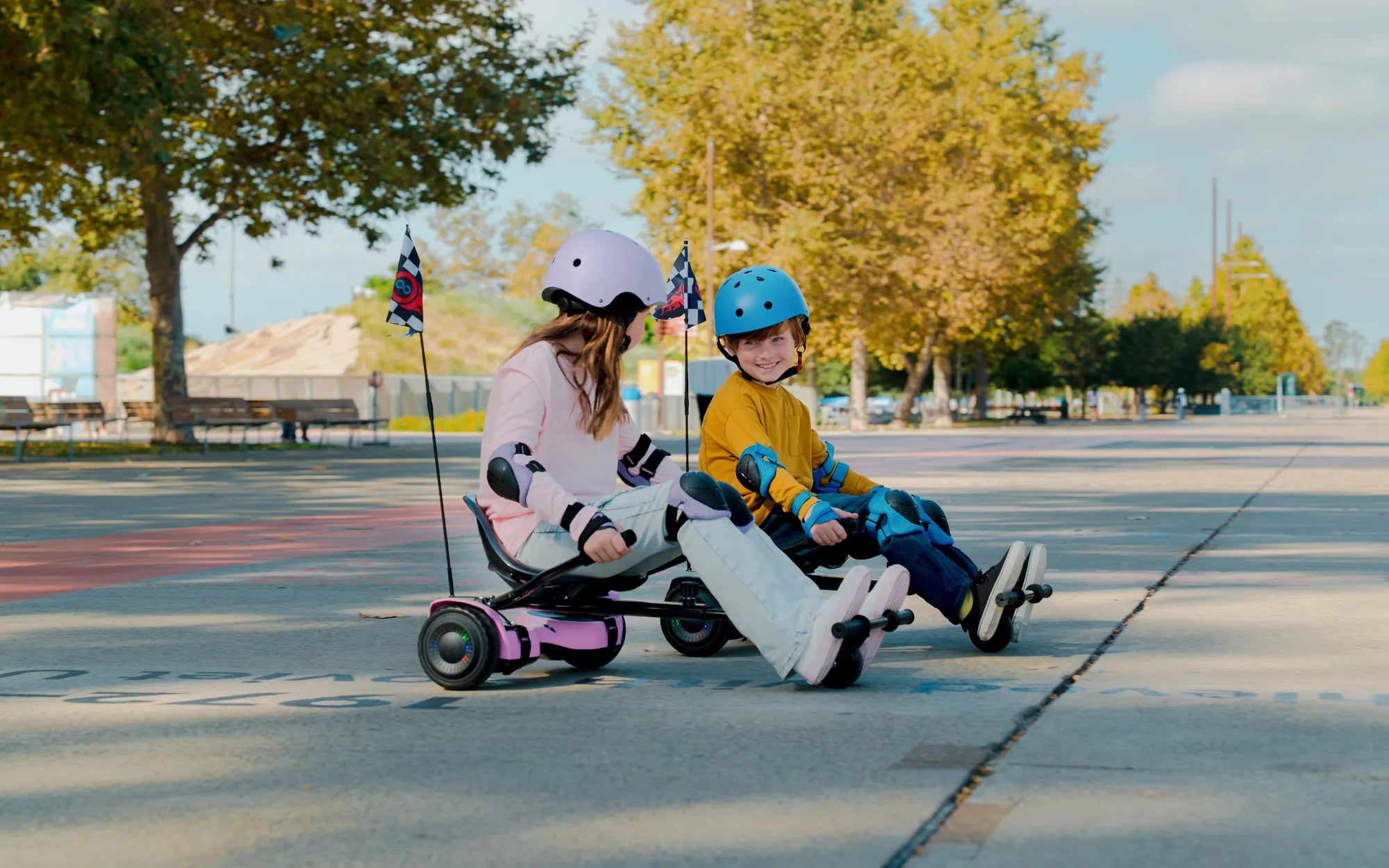
A properly fitted, certified helmet is the absolute minimum. Look for a CPSC (for bicycle) or ASTM F1492 (skateboard) certification sticker. Wrist guards are arguably the next most important item, as falls often involve putting hands out to brace. Knee and elbow pads are highly recommended, especially during the learning phase. This gear should be worn every single time the hoverboard is used, without exception.
Teaching Your Child to Ride: A Parent's Step-by-Step Guide
Start on a flat, smooth, open area like a driveway or empty tennis court, away from traffic and slopes. 1) Help your child mount the board, holding their hands while they find their balance with the board powered off. 2) Power on the board (in beginner mode) and have them practice subtle forward and backward leans while you provide support. 3) Introduce gentle steering by showing how pressure on the toes or heels turns the board. 4) Practice controlled dismounts by stepping backward off the board, one foot at a time. Patience is key; progress at their comfort level.
Establishing Non-Negotiable Ground Rules
Set clear boundaries before the first independent ride. Rules must include: riding only on sidewalks, bike paths, or paved parks (never on roads); riding only in daylight or well-lit conditions; avoiding public streets and crowded areas; never wearing headphones while riding; and always informing an adult before going out. For children under 10, direct adult supervision is strongly advised. Consistent enforcement of these rules is critical for long-term safety.
Performance and Model Comparison
To aid in decision-making, the table below contrasts key specifications relevant to different needs within the 6-12 age bracket. This data illustrates how features align with a rider's age and experience level.
| Feature / Use Case | Young Beginner (Ages 6-8) | Older/Experienced Rider (Ages 9-12) | All-Terrain Adventurer |
|---|---|---|---|
| Ideal Wheel Size & Type | 6.5" - 7.5" Rubber-coated | 8.5" Rubber-coated | 8.5"+ Air-filled / All-Terrain |
| Recommended Max Speed | 7 mph (with beginner mode) | 9-10 mph | 10 mph |
| Key Priority | Low-speed stability, lightweight design | Balanced speed & range, durability | Shock absorption, grip on uneven surfaces |
| Typical Weight Limit | 44 - 120 lbs | 44 - 165 lbs | 44 - 220 lbs |
| Essential Feature | Responsive beginner mode | Sturdier frame, longer range | High IP rating (e.g., IPX5), robust tires |
Maintenance and Care for Longevity
A well-maintained hoverboard for kids ages 6-12 is a safer and longer-lasting one. Simple, regular checks can prevent issues. Keep the board clean by wiping it down with a damp cloth; avoid high-pressure hoses unless the IP rating specifically permits it. Regularly inspect the tires for wear, cracks, or embedded debris, and ensure they are properly inflated if they are air-filled. Check that all screws on the frame and foot pads are tight. Store the board in a cool, dry place, and avoid leaving it at full or zero charge for extended periods; a 50-80% charge is ideal for storage.
Frequently Asked Questions (FAQ) for Concerned Parents
Q1: Are hoverboards safe for a 6-year-old?
A1: With the right precautions, yes. The cornerstone is choosing a UL 2272 certified board designed for lighter weights. Combine this with mandatory safety gear (helmet, pads), initial training in a safe, flat area, and direct adult supervision. This creates a controlled environment where a 6-year-old can safely learn and enjoy.
Q2: How long does the battery last on a single charge, and how long does it take to charge?
A2: A quality hoverboard for this age group typically offers 1 to 2 hours of continuous ride time, translating to 6-12 miles depending on terrain, rider weight, and speed. A full charge from empty usually takes between 2 to 4 hours. Always use the manufacturer-provided charger and never leave the device charging unattended or overnight.
Q3: What kind of warranty should I expect, and what does it cover?
A3: Reputable brands stand behind their products. A comprehensive warranty, like the 1-year standard offered by Gyroor, covers manufacturing defects in core components such as the battery, motor, control board, and frame. Always read the warranty terms to understand the claim process and what constitutes normal wear and tear versus a covered defect.
Q4: Can my child ride a hoverboard in the rain or through puddles?
A4: This depends entirely on the board's IP rating. A board with a low or unspecified rating should be kept completely dry. A board with a rating of IPX4 or higher, such as an IPX5 model, is designed to withstand water splashes and jets, making it safe for wet sidewalks and puddles. Always check the manual and err on the side of caution.
Q5: My child has outgrown their beginner hoverboard. What should we look for in an upgrade for a pre-teen?
A5: An upgrade should focus on increased performance and durability. Look for a higher weight capacity (up to 165-220 lbs), a longer range (12+ miles), larger wheels (8.5"+) for stability, and a more powerful motor for handling slight hills. Features like Bluetooth speakers or app connectivity might also appeal to this age group, but never compromise on core safety certifications.
Investing in Safe, Lasting Fun
Choosing the right hoverboard for kids ages 6-12 is an investment in active play, developmental growth, and countless hours of outdoor fun. The process hinges on informed decisions: prioritizing verified safety certifications like UL 2272, meticulously matching the model's specifications to your child's age and environment, and enforcing the consistent use of protective gear and smart riding rules. By following this guide, you equip yourself not just to buy a product, but to foster a safe and rewarding new hobby for your child. The result is a gift that promotes confidence, coordination, and joy for years to come.
Ready to explore models that combine rigorous safety with exceptional performance? Browse the full collection of UL-certified, rider-tested hoverboards and electric scooters at gyroorboard.com, where innovation meets peace of mind for every family.
Hoverboard Smells Like Burnt Rubber: Causes, Risks, and Solutions
Best Hoverboard for Kids Canada: Top Picks and Buying Guide