



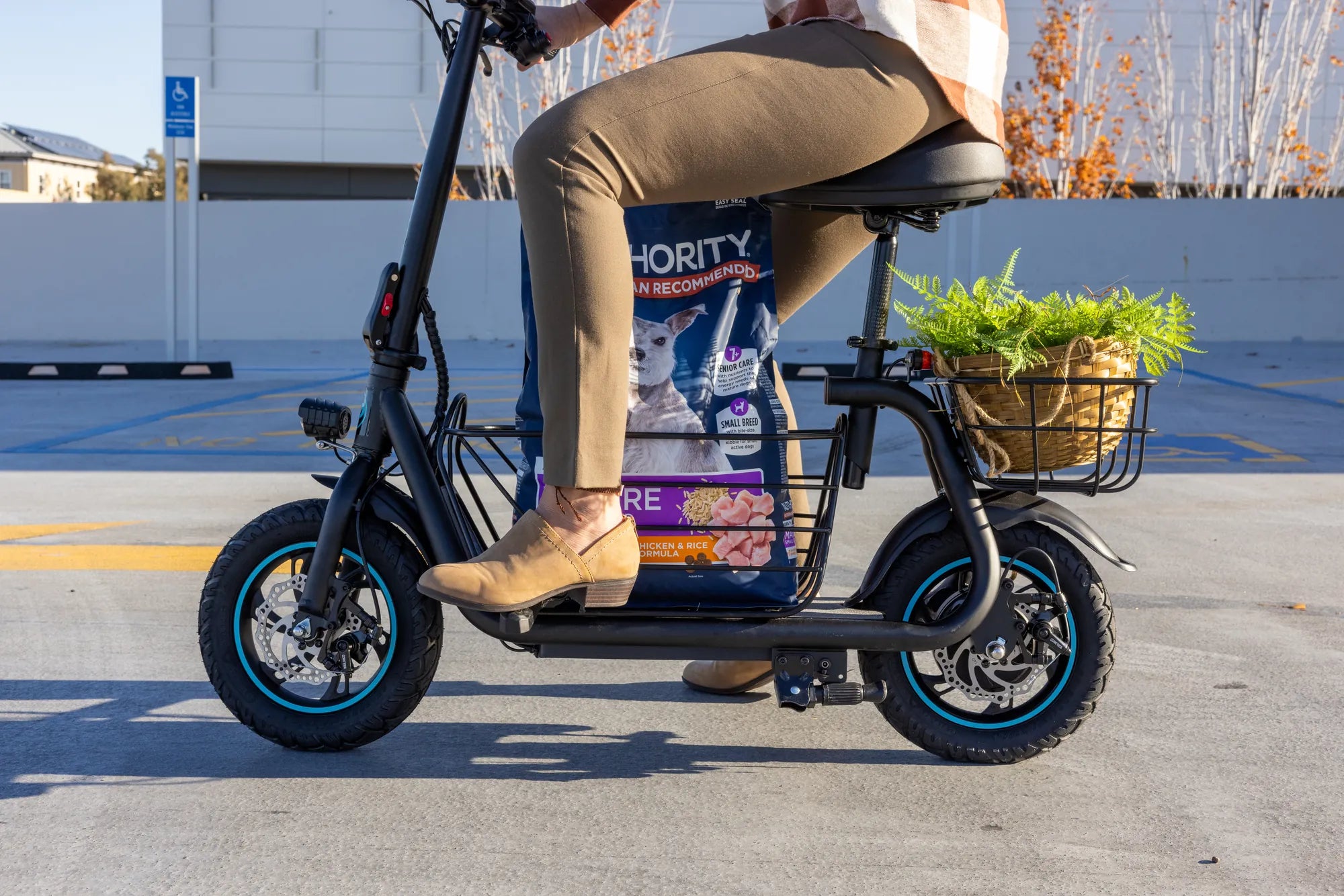
Introduction: What is a Level 2 E-Bike and Why It's the Urban Commuter's Sweet Spot
A Level 2 e-bike, often referred to as a Class 2 electric bicycle, is defined by a specific combination of motor assistance and operational features. It provides pedal-assist power up to 20 miles per hour and is equipped with a throttle that can propel the bike without pedaling. This classification places it within a standardized three-tier system that governs electric bicycle use across North America.
The Level 2 e-bike has emerged as the premier choice for urban and suburban transportation. It offers a perfect equilibrium between enhanced capability and broad legal accessibility. For brands like Gyroor, which prioritize user-friendly innovation, the Level 2 category is a focal point because it solves real-world mobility problems without introducing regulatory complexity.
This guide will provide a comprehensive analysis of Level 2 electric bicycles. You will learn about their technical specifications, legal framework, and practical benefits. We will also detail the critical features that define a quality, reliable model suited for daily use.
Understanding the Level 2 e-bike is essential for making an informed purchase. It represents a significant upgrade from traditional cycling while remaining distinctly separate from mopeds or motorcycles in the eyes of the law.
Understanding the Three-Class System: Where Level 2 Fits In
The three-class system for electric bicycles was established to create clear, consistent regulations. This framework helps riders, law enforcement, and policymakers distinguish between different types of e-bikes based on their performance and how they are operated.
Class 1 e-bikes are pedal-assist only, with no throttle. The motor provides assistance only when the rider is pedaling and ceases at 20 mph. Class 2 e-bikes, the focus here, include both pedal-assist and a throttle-operated mode, with a maximum assisted speed of 20 mph. Class 3 e-bikes are typically pedal-assist only but can assist up to 28 mph, and may have additional restrictions like age limits or mandatory speedometers.
The following table clarifies the key distinctions:
| Feature | Class 1 E-Bike | Class 2 E-Bike (Level 2) | Class 3 E-Bike |
|---|---|---|---|
| Maximum Assisted Speed | 20 mph | 20 mph | 28 mph |
| Throttle | Not Permitted | Permitted | Not Permitted (in most states) |
| Pedal-Assist Required? | Yes | No (Throttle available) | Yes |
| Typical Legal Access | Bike paths, lanes, trails | Bike paths, lanes, trails | Often restricted from certain bike paths; road use typical |
This classification system directly informs where you can legally ride. The Level 2 e-bike's 20 mph cap and bicycle-like treatment make it the most universally accepted class for multi-use paths and bike lanes alongside traditional bicycles.
Key Distinctions: Throttle vs. Pedal-Assist
The defining characteristic of a Level 2 e-bike is its dual-mode operation. The throttle function provides immediate, on-demand power with a simple twist or press of a button, independent of pedaling. This is invaluable for pulling away from a complete stop at traffic lights, navigating steep hills from a standstill, or giving the rider a rest while maintaining momentum.
Pedal-assist, common to all classes, amplifies the rider's own pedaling effort. Sensors detect cadence or torque and provide proportional motor power. This mode offers a more traditional cycling feel with a significant boost, ideal for exercise, longer rides, and maximizing battery range.
The combination is what creates unparalleled versatility. A rider can use pure throttle for quick, effortless launches, switch to pedal-assist for efficient cruising, or use both intermittently based on terrain and fatigue. This flexibility is a core reason for the Level 2 e-bike's popularity among commuters and casual riders alike.
The Core Advantages of Choosing a Level 2 E-Bike
Selecting a Level 2 e-bike over other classes or traditional transportation offers a suite of compelling benefits. These advantages address practical concerns around accessibility, legality, and daily utility, making it a rational choice for a wide demographic.
The primary benefit is reduced barrier to entry. The throttle eliminates the need for strong initial pedaling effort, making cycling accessible to individuals of varying fitness levels, those recovering from injury, or riders facing challenging terrain. It democratizes personal electric mobility.
From a regulatory perspective, Level 2 e-bikes enjoy widespread acceptance. In the vast majority of U.S. states and localities, they are legally treated as bicycles. This means no driver's license, vehicle registration, or insurance is required. They are generally permitted anywhere a traditional bicycle can go, including bike lanes and many paved trails.
The performance is thoughtfully balanced for urban and suburban environments. A top assisted speed of 20 mph is fast enough to significantly reduce commute times and keep pace with city traffic on calm streets, yet slow enough to be safe for shared-use paths. It provides a substantial efficiency boost without venturing into the higher-speed, more regulated territory of Class 3.
Unmatched Versatility and Ease of Use
The throttle transforms the user experience. It allows the bike to function as a true electric vehicle for short trips, enabling riders to carry groceries or luggage without the added exertion of pedaling. This utility makes it a viable replacement for many car journeys under five miles.
For commuters, this versatility is key to a sweat-free arrival. A rider can use throttle assistance on inclines or through high-traffic areas to manage effort, then switch to pedal-assist or manual pedaling on flatter, safer sections. This control over exertion level is not possible with a Class 1 or traditional bike.
The ease of use also extends to learning. New riders, especially those less confident with cycling, appreciate the simple, intuitive control of a throttle. It provides a safety net, ensuring they can always get moving easily, which encourages more frequent use and faster adoption.
Legal Clarity and Where You Can Ride
The legal landscape for Level 2 e-bikes is remarkably clear and favorable. Adopted from model legislation, the three-class system has been enacted into law in over 40 states. This provides consistent rules that riders can rely on when traveling or relocating.
Because they are capped at 20 mph and lack the higher speeds of Class 3, Level 2 e-bikes face fewer access restrictions. They are commonly allowed on bicycle paths, in bicycle lanes, and on streets. This contrasts with some local ordinances that prohibit Class 3 e-bikes from certain multi-use trails due to their higher speed potential.
This legal clarity empowers riders. You can plan your route with confidence, knowing your Level 2 e-bike has the same access rights as a conventional bicycle in most jurisdictions. This eliminates the anxiety of inadvertently breaking local vehicle codes, a concern with faster or unclassified electric vehicles.
Balanced Performance for Everyday Needs
The 20 mph performance ceiling is a deliberate and practical engineering choice. It aligns with the average safe operating speed for mixed-use environments where bicycles, pedestrians, and obstacles coexist. This speed allows for efficient commuting without dramatically increasing stopping distances or the severity of potential collisions.
Motor and battery systems designed for Level 2 are optimized for torque and range at this speed, not for maximum velocity. This means components can be more durable and energy-efficient, as they are not stressed to achieve 28+ mph. Riders benefit from reliable performance and potentially longer component lifespans.
For everyday tasks—commuting to work, running errands, meeting friends, or recreational riding—the Level 2 e-bike delivers all necessary performance. It conquers hills, reduces travel time, and carries cargo without the complexity, cost, or regulatory hurdles associated with more powerful electric mopeds or scooters.
Key Features to Look for in a Reliable Level 2 E-Bike
Not all Level 2 e-bikes are created equal. Discerning buyers should evaluate specific features that directly impact safety, durability, and long-term satisfaction. Prioritizing these elements ensures your investment delivers reliable service for years.
The foundation of a quality e-bike is a robust frame and reliable braking system. Look for frames constructed from aluminum alloy or steel, with welded joints that appear clean and strong. Disc brakes, whether mechanical or hydraulic, are essential for consistent stopping power in all weather conditions, especially given the additional weight and speed of an e-bike.
Comfort and ergonomics are critical for daily use. An adjustable seat post, ergonomic grips, and a geometry that suits your riding style (upright for comfort, forward-leaning for efficiency) make a significant difference. Integrated lighting—powered by the main battery—is a vital safety feature for visibility during dawn, dusk, or night riding.
Finally, consider the display and control interface. A clear, easy-to-read display that shows speed, battery level, assist mode, and trip data is important. Intuitive controls for switching between assist levels and activating the throttle should be within easy reach without requiring you to look away from the path ahead.
Battery Safety and Certification: The Non-Negotiable
The battery is the heart of an e-bike and its most critical safety component. Insist on a battery pack that is UL 2849 certified. This stringent standard tests the entire electrical drive train system—battery, charger, and motor controller—for electrical and fire safety.
Gyroor, for instance, equips its e-bikes with UL-certified battery packs tested for over 500 charge cycles. This certification is not merely a marketing claim; it is a verified assurance that the battery management system (BMS) protects against overcharging, short-circuiting, overheating, and over-discharging. It is the single most important factor in preventing battery-related incidents.
Beyond safety, certification correlates with quality and longevity. A properly engineered and certified battery will maintain its capacity longer, provide consistent power output, and come from a reputable cell manufacturer. Always verify this certification; it is a primary indicator of a responsible manufacturer.
Motor Power and Responsiveness
For a Level 2 e-bike, motor power is less about top speed (capped at 20 mph) and more about torque—the rotational force that gets you moving and climbs hills. Motors in the 350W to 750W range are common and effective for Level 2.
A 500W geared hub motor, for example, often provides an excellent balance of torque for hill climbing and efficiency for range. Mid-drive motors, which leverage the bike's gears, can offer even more efficient hill-climbing performance but often at a higher price point. The responsiveness of the motor to both pedal-assist sensors and throttle input should be smooth and immediate, not jerky or delayed.
Evaluate the motor in the context of your local terrain. If your routes are hilly, prioritize torque ratings and consider a mid-drive or a higher-torque hub motor. For flatter areas, a standard hub motor will be perfectly sufficient and is often more affordable and simpler to maintain.
Build Quality and Weather Resistance
An e-bike is an investment meant for daily use in real-world conditions. Build quality determines its ability to withstand that use. Look for details like sealed bearings, rust-resistant components, and quality finishes. The wiring should be neatly routed and protected, not dangling or exposed.
Weather resistance is crucial. An Ingress Protection (IP) rating indicates how well the electrical components are sealed against dust and water. An IPX5 rating, like that found on Gyroor models, means the e-bike can withstand water jets from any direction. This level of protection allows you to ride confidently in the rain or through puddles without worrying about immediate damage to the motor, battery, or controller.
This durability extends the life of the bike and reduces maintenance costs. A well-built, weather-resistant Level 2 e-bike is a tool for transportation, not a fair-weather toy, and its construction should reflect that purpose.
Warranty and Support as a Trust Signal
The length and terms of a warranty are a direct reflection of the manufacturer's confidence in their product. A comprehensive warranty should cover the frame, motor, battery, and electronic components for a significant period. Gyroor backs its e-bikes with a reliable 1-year warranty, providing peace of mind for the rider.
Strong customer support is equally important. Before purchasing, research the brand's reputation for responsiveness. Are replacement parts readily available? Can you get technical support via phone, email, or chat? A brand that stands behind its products with accessible support saves you time, money, and frustration down the road.
For a complex product like an e-bike, post-purchase support is part of the product experience. A robust warranty and helpful support team transform a purchase from a transaction into a long-term relationship, ensuring you get the most value from your Level 2 e-bike.
Level 2 E-Bikes in Action: Ideal Use Cases and Scenarios
The theoretical advantages of a Level 2 e-bike become concrete in specific, everyday scenarios. Understanding these use cases helps potential buyers visualize how an e-bike would integrate into and improve their daily lives.
The most impactful application is replacing short car trips. Studies show a significant portion of urban car journeys are under three miles—a distance ideal for an e-bike. A Level 2 e-bike makes these trips faster than a car in congested traffic, eliminates parking hassles, and has near-zero operational cost.
It also serves as a gateway to increased physical activity for those who find traditional cycling too daunting. The assured assistance lowers the perceived effort, encouraging people to ride more often and for longer distances, gradually building fitness in a sustainable way.
Furthermore, it provides a reliable primary transportation option for individuals who cannot or choose not to drive. Seniors, young adults, or those with suspended licenses can maintain independence and mobility with a Level 2 e-bike, accessing groceries, medical appointments, and social activities within a reasonable radius.
The Daily Urban Commuter
For the urban commuter, a Level 2 e-bike is a transformative tool. It consistently beats car traffic during rush hour, provides door-to-door travel without parking fees, and eliminates the cost of fuel or public transit fares. The throttle assist is key for navigating stop-and-go traffic effortlessly.
Commuting by Level 2 e-bike also promotes mental and physical well-being. It incorporates light exercise and fresh air into the daily routine without causing excessive fatigue or sweat, especially when using throttle assistance for the final leg of the journey. Many models feature cargo racks or baskets, enabling the transport of a laptop, change of clothes, or lunch.
The reliability of a well-made e-bike from a brand like Gyroor, with its UL-certified battery and weather-resistant design, means the commuter can depend on it in all seasons. This turns the e-bike from an occasional alternative into a dependable primary commute vehicle.
The Errand Runner and Neighborhood Explorer
For local trips under five miles, the Level 2 e-bike is supremely efficient. A quick trip to the grocery store, pharmacy, or coffee shop becomes a pleasant few minutes rather than a chore involving car keys and parking. The throttle allows for easy starts even when the bike is loaded with bags.
It also unlocks casual, spontaneous exploration. Riders can discover new parks, neighborhoods, or local trails without worrying about distance or fatigue. The ability to switch between pedal-assist for exercise and pure throttle for relaxed sightseeing makes every ride adaptable to the rider's mood.
This use case highlights the e-bike's role in building community connectivity. It encourages local commerce and increases casual social interaction, all while providing enjoyable, low-impact mobility that doesn't contribute to traffic congestion or emissions.
The Rider Seeking an Accessible Fitness Boost
For individuals looking to increase their activity levels, a Level 2 e-bike is an ideal partner. The adjustable assist allows riders to set their own challenge. They can start with higher assist levels or use the throttle on hills, gradually reducing assistance as their fitness improves.
This reduces the risk of injury or burnout from overexertion early on. Riders are more likely to stick with a routine that is enjoyable and adaptable. The e-bike removes the intimidation factor of long distances or steep hills, which often deter new cyclists.
It also enables partners or friends of differing fitness levels to ride together comfortably. A more experienced rider can lower their assist level for a workout, while another can use higher assist or throttle to keep pace, ensuring shared enjoyment of the activity.
Frequently Asked Questions About Level 2 E-Bikes
Prospective riders often have common questions and concerns. Addressing these directly helps clarify misconceptions and builds confidence in the decision to choose a Level 2 e-bike.
Q: Do I need a license, registration, or insurance for a Level 2 e-bike?
A: In nearly all U.S. states that follow the three-class system, no. A Level 2 e-bike is legally treated as a bicycle. You do not need a driver's license, vehicle registration, or mandatory insurance. However, it's always prudent to check your specific local ordinances for any unique restrictions.
Q: How far can I typically go on a single charge?
A>Range varies significantly based on battery capacity (measured in Watt-hours), rider weight, terrain, assist level use, and wind. A typical 48V 10Ah (480Wh) battery might offer 20-40 miles of range. Using throttle exclusively will reduce range compared to using lower pedal-assist levels. Brands like Gyroor provide realistic range estimates based on testing protocols.
Q: Can I still pedal the bike if the battery runs out?
A>Yes. A Level 2 e-bike functions as a standard, albeit heavier, bicycle when the motor is off or the battery is depleted. You can pedal it manually to your destination or a charging point. The motor does not create significant drag when not powered.
Q: Are Level 2 e-bikes allowed on all bike trails and paths?
A>Generally, yes, because they are limited to 20 mph. However, some local jurisdictions or specific trail authorities (like certain mountain bike or nature trails) may have rules prohibiting any motorized vehicles, including e-bikes. It is the rider's responsibility to know and follow the rules of the specific path they are using.
Q: How does using the throttle impact battery range compared to pedal-assist?
A>Using the throttle exclusively consumes battery power at the maximum rate, as the motor is doing 100% of the work. Using pedal-assist, especially at lower levels, significantly extends range because the rider's effort is supplemented, not replaced. For maximum range, use a low level of pedal-assist and contribute meaningful pedaling effort.
Conclusion: Empowering Your Ride with the Right Choice
The Level 2 e-bike stands as a testament to practical innovation in personal mobility. It successfully bridges the gap between human-powered cycling and full-electric vehicles, offering a blend of accessibility, legal simplicity, and everyday utility that is unmatched by other classes. Its defining feature—the throttle—provides a layer of confidence and ease that welcomes a broader range of riders into the world of cycling.
Choosing the right Level 2 e-bike means looking beyond basic specifications to the fundamentals of safety and durability. Prioritizing UL-certified batteries, weather-resistant construction, and strong warranty support from a trusted brand is non-negotiable for a reliable, long-term investment. These features ensure your e-bike is a dependable partner for commuting, errands, and exploration.
As urban landscapes evolve and the demand for efficient, sustainable transportation grows, the Level 2 e-bike is perfectly positioned as a mainstream solution. It reduces congestion, lowers transportation costs, and promotes a healthier, more engaged lifestyle. By understanding its capabilities and selecting a quality model, you are not just buying a product; you are investing in a smarter way to move.
Ready to experience the perfect balance of power and accessibility? Explore Gyroor's range of thoughtfully engineered Level 2 e-bikes, designed with UL-certified safety, IPX5 weather resistance, and backed by a reliable 1-year warranty. Find the model that fits your journey and transform your daily commute and adventures. Browse the full Gyroor collection at gyroorboard.com.
Off Road Ebike Reviews: The Ultimate Guide to Conquering the Trails
72V 50Ah E-Bike Battery: The Ultimate Power & Range Solution