



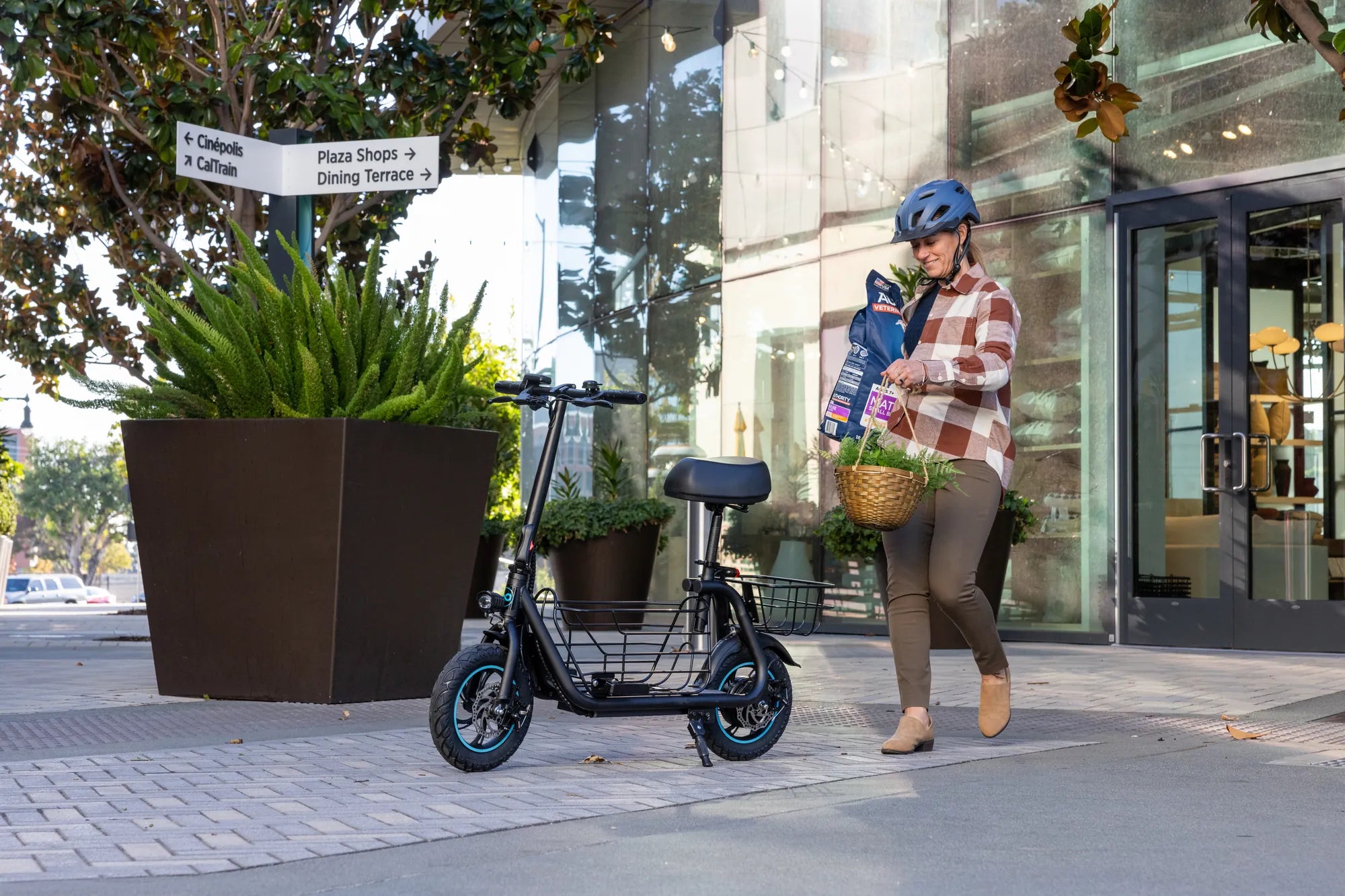
Introduction to the Little eBike Phenomenon
A little ebike is more than just a scaled-down bicycle; it's a reimagined tool for urban mobility. Characterized by compact, lightweight frames, often with step-through designs and folding mechanisms, these electric bikes are engineered for the realities of city living, apartment dwelling, and multi-modal commuting. Their surging popularity stems from a powerful value proposition: delivering full electric-assist capability while solving the traditional pain points of storage, portability, and accessibility.
The core appeal of a little ebike lies in its ability to maximize convenience without sacrificing performance. For the urban commuter, it bridges the gap between home, transit, and office seamlessly. For students or those with limited living space, its foldable nature means it can be stored in a closet or under a desk. This category democratizes electric biking, making it a practical choice for a far wider audience than traditional, bulkier e-bikes.
This guide will dissect what makes a great little ebike, from its technical specifications to its real-world applications. We'll move beyond marketing fluff to provide a data-driven analysis of features, compare models for different use cases, and underscore the non-negotiable elements of safety and reliability that protect your investment. By the end, you'll have a clear framework for selecting the compact electric bike that best fits your lifestyle.
Key Features to Look for in a Compact Electric Bike
Choosing a quality little ebike requires careful attention to specific specifications that directly impact performance, convenience, and longevity. Unlike standard bicycles, these components define the riding experience and practicality of the electric assist system.
Motor Power and Riding Modes
The motor is the heart of any little ebike. Most models in this category utilize rear or front hub motors ranging from 350W to 500W. This power band is ideal for urban environments, providing ample assistance for flat terrain and moderate inclines without excessive weight or cost. More important than peak wattage is torque, measured in Newton-meters (Nm), which determines how effectively the bike can accelerate from a stop and tackle hills.
Riding modes are equally crucial. A quality little ebike will offer multiple levels of pedal assist (PAS), allowing you to customize the motor's input from a gentle boost to maximum power. Many models also include a thumb or twist throttle, providing on-demand power without pedaling—a key feature for starting from a standstill in traffic or navigating tricky intersections. The combination of a torque-sensing motor and intuitive controls creates a smooth, natural riding feel.
Battery Range and Charging Convenience
Battery capacity, measured in watt-hours (Wh), dictates your realistic range. A little ebike typically houses a battery from 360Wh to 500Wh, translating to a real-world range of 15 to 40 miles per charge, depending on rider weight, terrain, and assist level used. It's vital to view manufacturer range claims as best-case scenarios and factor in a 20-30% buffer for real-world conditions.
For urban riders, charging convenience is paramount. A removable battery is a game-changer, allowing you to charge the pack indoors at your desk or apartment, eliminating the need to bring the entire bike to an outlet. Safety is non-negotiable; insist on a battery pack with UL certification, like those standard in Gyroor's lineup. UL-certified batteries undergo rigorous testing for over 500 charge cycles, ensuring protection against overcharging, short circuits, and thermal runaway, which is essential for peace of mind.
Portability and Storage Solutions
Portability defines the little ebike category. The folding mechanism must be robust, intuitive, and secure. Look for a design that locks in both the riding and folded positions. Once folded, key dimensions to check are the height, width, and depth—many compact models collapse to a size similar to a large suitcase, enabling storage in car trunks or tight spaces.
Weight is a critical factor. Frames constructed from lightweight aluminum alloys keep total weight between 45 to 65 pounds, making the bike manageable to carry short distances, up stairs, or onto public transit. Integrated features like a central carrying handle or rolling wheels in the folded position significantly enhance practicality, transforming the bike from a vehicle into a portable package for true multi-modal commuting.
Comparing Little eBikes: Urban Commuter vs. Off-Road Lite
Not all little ebikes are created equal. Your primary use case should dictate your choice. The following table provides a clear, data-driven comparison between models optimized for city streets and those built for light trail adventures.
| Feature | Urban Commuter Little eBike | Off-Road Lite Little eBike |
|---|---|---|
| Primary Use | Paved roads, bike paths, city commuting | Unpaved paths, gravel, light trails, park exploration |
| Tire Type | Slick or semi-slick tires (e.g., 20" x 1.75") for low rolling resistance and quiet ride. | Wider, knobbier tires (e.g., 20" x 2.4") for enhanced traction and puncture resistance on loose surfaces. |
| Motor Emphasis | Efficiency and smooth acceleration; sufficient torque for urban hills and stop-and-go traffic. | Higher torque output for climbing gentle trail inclines and navigating variable terrain. |
| Suspension | Often a rigid fork or basic seat post suspension for comfort on pavement imperfections. | Front suspension fork and/or upgraded seat post suspension to absorb bumps from roots and rocks. |
| Frame & Build | Lightweight priority; may include integrated fenders, lights, and a rear rack for practicality. | Reinforced frame joints and more durable components to handle mild off-road stresses. |
| Ideal Rider | The daily commuter, student, or errand-runner needing maximum convenience and pavement efficiency. | The weekend explorer who wants to access greenways, forest paths, and campgrounds beyond paved roads. |
The City Slicker: Optimized for Pavement
The urban-optimized little ebike is a tool for efficiency. Its geometry promotes an upright, comfortable riding position for better visibility in traffic. Slick tires reduce rolling resistance, conserving battery life and allowing for quieter travel. Integrated elements are key: built-in headlights and taillights with brake light functions are essential for safety during dawn, dusk, or night rides.
Fenders are a must-have to keep the rider clean from road spray, and a rear rack or basket compatibility turns the bike into a practical vehicle for groceries or a work bag. The motor tuning should prioritize smooth, predictable power delivery for navigating traffic and intersections safely, rather than raw top speed. This configuration makes the little ebike a reliable replacement for short car trips and public transit delays.
The Trail Explorer: Capable of Light Adventures
The off-road lite little ebike expands your riding terrain without the bulk of a full-sized mountain e-bike. The wider, knobbier tires provide the necessary grip and stability on dirt, gravel, and grass. A more powerful motor, often at the 500W range with higher torque, provides the necessary grunt for unpaved inclines where momentum is less consistent than on city streets.
Suspension becomes valuable here. A front suspension fork with 50-80mm of travel can smooth out ruts and small roots, while a quality suspension seat post enhances rider comfort on longer explorations. The frame and components, while still foldable, will have a more robust feel to handle the added vibrations and stresses of light trail use. This model is for the rider who sees a little ebike as a key to accessing parks and nature, not just navigating concrete.
Why Safety and Warranty Are Non-Negotiable
The compact size of a little ebike should never equate to compromises on fundamental safety and long-term reliability. These factors protect your investment and, more importantly, your well-being. Prioritizing certified components and strong manufacturer support separates a quality product from a disposable one.
Build Quality and Water Resistance
A durable frame is the foundation of safety. Look for clean, consistent welding on aluminum joints—a sign of quality manufacturing. The electrical system, including the motor controller, wiring harness, and display, must be well-sealed against the elements. An IPX5 water-resistance rating, which Gyroor incorporates across its models, is a critical benchmark.
An IPX5 rating means the bike can withstand water jets from any direction, making it capable of riding through rain showers and puddles without immediate risk of electrical failure. This level of ingress protection ensures the electronics are guarded for daily, real-world use, significantly enhancing the bike's durability and all-weather usability. Never settle for a model with unspecified or low water resistance for a vehicle meant to be used outdoors.
The Value of Comprehensive Support
The warranty is a direct reflection of the manufacturer's confidence in their product. A comprehensive warranty, such as the 1-year coverage on the frame, motor, battery, and electronics offered by trusted brands, is essential. It safeguards you against defects in materials and workmanship, providing a clear recourse if an issue arises.
Equally important is the accessibility of customer support. A brand that provides prompt, knowledgeable, and U.S.-based support demonstrates a commitment to its customer base post-purchase. This support structure is invaluable for troubleshooting, obtaining replacement parts, and ensuring your little ebike remains a dependable asset for years, not just months. This peace of mind is a critical component of the total value proposition.
Frequently Asked Questions About Little eBikes
Q1: How fast can a typical little eBike go?
Most little ebikes are classified as Class 1 or Class 2 electric bicycles in the U.S., meaning their motor assistance cuts off at 20 mph. Some may have modes that allow the rider to pedal beyond that speed, but the electric assist will not contribute beyond the 20 mph limit. This speed is ideal for urban commuting, balancing efficiency with safety in shared spaces.
Q2: Do I need a license or registration to ride one?
In the vast majority of U.S. states and localities, a little ebike that conforms to the three-class system (with a 20 mph max assisted speed and a motor under 750W) does not require a driver's license, vehicle registration, or insurance. However, riders must follow local bicycle laws. Always check your specific state and municipal regulations, as rules can vary.
Q3: Can it handle hills with a smaller motor?
Yes, a well-designed little ebike with a 350W-500W motor and adequate torque can handle moderate hills, especially with the rider pedaling. The key is torque (Nm). A higher-torque motor will perform better on inclines. For very hilly areas, opting for a 500W model and using a lower gear while pedaling is recommended. It may slow on steep grades, but it should not stall.
Q4: Is it suitable for taller or heavier riders?
Many little ebikes have adjustable seat posts and handlebars to accommodate a range of heights, but their compact frame geometry may not be comfortable for riders over 6'2" for extended periods. Always check the manufacturer's recommended rider height and weight capacity. Most quality models support riders up to 220-265 pounds, including the bike's weight and any cargo.
Q5: How do I secure a lightweight eBike from theft?
Lightweight bikes are attractive targets. Use a high-quality, hardened steel U-lock or heavy-duty folding lock to secure the frame and rear wheel to a fixed, immovable object. Consider a secondary cable lock for the front wheel. If possible, never leave it outside overnight. The removable battery is an advantage—take it with you, as it's a valuable component and leaving the bike without it can be a minor theft deterrent.
Conclusion: Finding Your Perfect Compact Companion
Selecting the right little ebike is an exercise in matching engineering to lifestyle. Begin by honestly assessing your primary use case: is it dense urban commuting, or do you crave light trail access? Let that answer guide your priorities in motor type, tire selection, and accessory needs. Remember that core safety features—UL-certified batteries, IPX5 water resistance, and robust frame construction—are not optional extras but fundamental requirements for a reliable vehicle.
Your choice of brand matters deeply. Opt for a manufacturer that stands behind its product with a transparent, comprehensive warranty and accessible customer support. This long-term support is what transforms a purchase into a sustainable transportation solution. A well-chosen little ebike is more than a gadget; it's a transformative tool that redefines personal mobility, offering an efficient, enjoyable, and eco-friendly way to navigate your world.
Ready to explore a range of compact electric bikes built with these principles in mind? Browse the full Gyroor collection, featuring UL-certified batteries, IPX5 water-resistant designs, and a reliable 1-year warranty, at gyroorboard.com.
500 Watt E Bike: The Ultimate Guide to Power, Range & Choosing Yours
How to Turn On an E-Bike: Your Complete Guide to Powering Up