



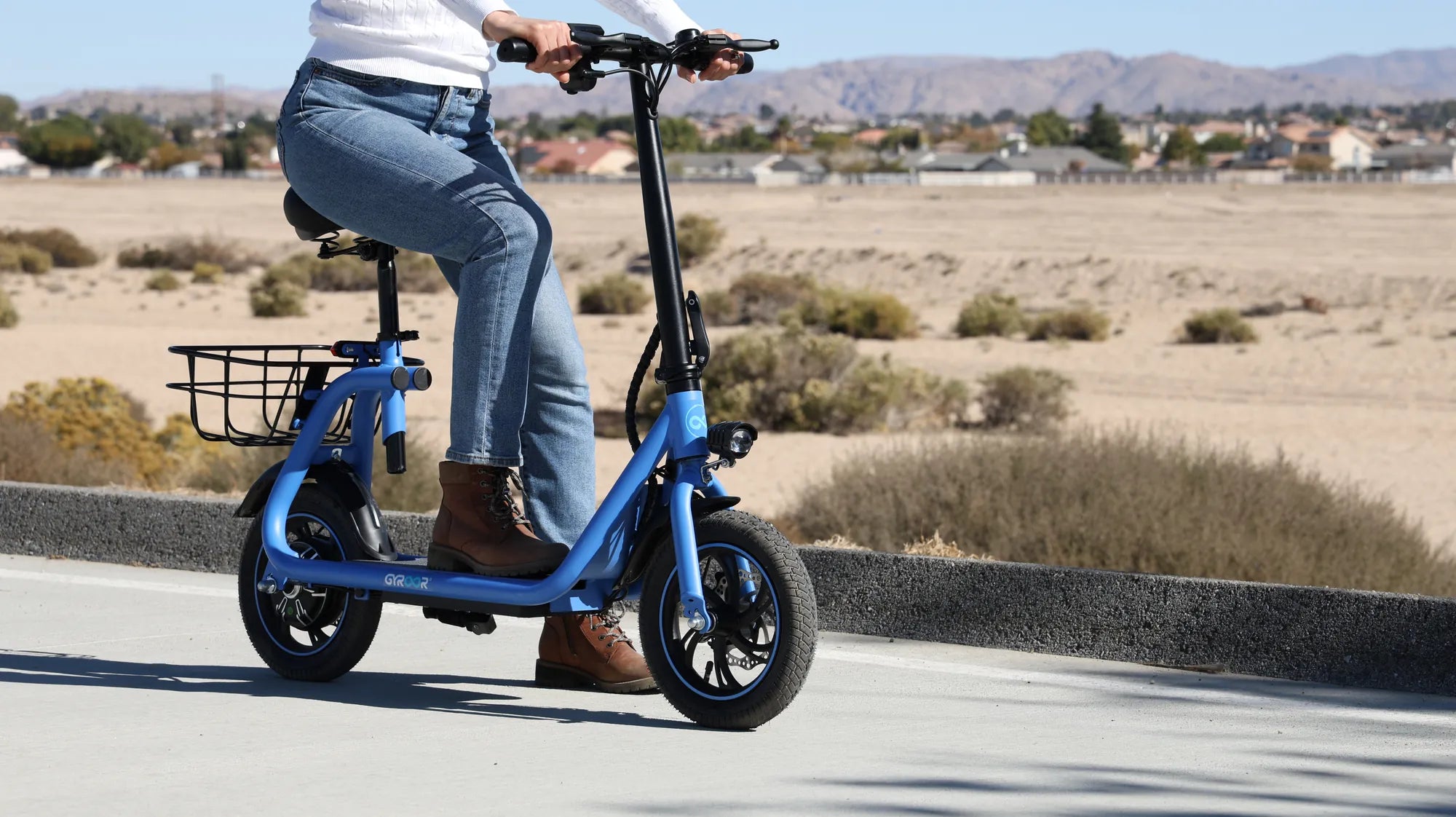
Why Your Next Commuter Ebike Should Be Mid-Drive
Forget everything you think you know about electric bikes. The mid drive commuter ebike represents a fundamental shift in design philosophy, prioritizing intelligent power delivery over simple brute force. This isn't just another motor option; it's the engineering standard for riders who view their commute as a daily performance, not a chore.
At its core, a mid-drive system places the motor at the bike's crankset, directly powering the chainring. This strategic positioning allows it to leverage the bicycle's existing gear system. The result is a riding experience that feels intuitive, powerful, and remarkably efficient, transforming hills into manageable slopes and headwinds into minor inconveniences.
This article will dissect the mechanical genius behind the mid-drive motor, providing a data-driven analysis of why it outperforms hub-drive alternatives for the urban environment. You'll learn how to identify key specifications, understand real-world range, and select an ebike built for longevity and safety. For the discerning commuter, the choice is clear: the mid-drive system is the smart, sustainable engine for the modern city.
The Engineering Superiority of the Mid-Drive System
The mid-drive motor's advantage is rooted in fundamental physics. By integrating directly with the drivetrain, it works with the bicycle's mechanics rather than as a separate, add-on component. This synergy creates performance characteristics that are perfectly suited to the stop-and-go, variable-terrain nature of city commuting.
When you pedal a mid-drive ebike, the motor's torque sensor measures your input and adds proportional power at the cranks. This power is then sent through the chain and into the selected gear on the rear cassette. This process allows the motor to operate within its most efficient RPM range, regardless of whether you're accelerating from a stoplight or cruising at top speed.
This stands in stark contrast to hub motors, which are fixed to the wheel and apply force directly to the axle. A hub motor must overcome inertia and terrain challenges from a single, fixed gear ratio. The mid-drive system, by utilizing the gear range, effectively multiplies its torque, making it a far more adaptable and efficient powertrain.
Unmatched Power Efficiency and Hill Dominance
Hill climbing is where the mid drive commuter ebike truly separates itself. Because it uses the bike's gears, a mid-drive motor can downshift to maintain high torque at low wheel speeds. This means a nominally lower-wattage mid-drive can often outperform a more powerful hub motor on a steep incline.
Consider this practical comparison: A 500W mid-drive motor with 80Nm of torque, when paired with a low gear, can provide the equivalent climbing force of a 750W or even 1000W direct-drive hub motor. This efficiency translates directly to battery conservation. The motor works smarter, not harder, drawing less current to achieve the same or better result, which extends your potential range per charge significantly.
Optimal Weight Distribution for Confident Handling
Handling is paramount for urban safety. A mid-drive motor's central, low-slung placement creates a near-perfect center of gravity. This balanced weight distribution between the front and rear wheels makes the bike feel planted and stable, whether you're navigating potholes, executing a tight turn, or loading it onto a bus rack.
Hub motors, especially heavier direct-drive rear hubs, add unsprung weight to the wheel. This can negatively affect suspension performance, make the bike feel less agile in quick maneuvers, and even impact the ease of changing a flat tire. The mid-drive design preserves the natural, bike-like feel that experienced cyclists appreciate, while adding seamless power.
Gyroor's Blueprint for Reliable Daily Transportation
Advanced motor technology is only one part of the equation for a dependable commuter ebike. The integration, safety, and durability of the entire system define its long-term value. Leading brands like Gyroor engineer their mid drive commuter ebike models around core principles that ensure rider trust and vehicle longevity for a community of over 100,000 riders.
The philosophy is simple: build a machine that disappears into your daily routine as a reliable tool. This requires components that can withstand daily use, weather variations, and the rigors of city streets. It's not just about peak power; it's about consistent, safe performance day after day, year after year.
UL-Certified Battery Packs: The Foundation of Safety
The heart of any ebike is its battery, and for a daily commuter, safety is non-negotiable. Gyroor equips its models with UL-certified lithium-ion battery packs. This certification means the battery cells, BMS (Battery Management System), and housing have undergone rigorous independent testing for electrical, mechanical, and environmental safety.
This standard mitigates risks associated with thermal runaway, overcharging, and short circuits. For the commuter, this translates to peace of mind when charging at home overnight or in a workplace storage room. Furthermore, these quality cells are rated for 500+ charge cycles while maintaining significant capacity, ensuring the battery remains a reliable component for the long haul.
IPX5 Water-Resistant Engineering: Built for All Conditions
A true commuter vehicle cannot be a fair-weather friend. Gyroor designs its mid-drive commuter ebike frames and electronics with an IPX5 water-resistant rating. This engineering standard means the critical components—motor, display, controller, and wiring harness—are protected against water jets from any direction.
In practical terms, an IPX5 rating means you can confidently ride through heavy rain, road spray, and wet city streets without worrying about immediate damage or long-term corrosion. This durability is essential for anyone relying on their ebike for daily transport, eliminating the anxiety of an unexpected downpour during the evening commute.
The Commuter's Essential Feature Checklist
Choosing the right mid drive commuter ebike involves looking beyond marketing claims to evaluate tangible specifications and build quality. This checklist will help you prioritize features that directly impact your daily ride experience, comfort, and total cost of ownership.
Focus on the integration of the system. A well-designed commuter ebike will have a streamlined appearance with internally routed cables, integrated lighting powered by the main battery, and a sturdy rear rack ready for panniers or a cargo platform. These features reduce maintenance, enhance security, and increase utility.
Understanding Motor Torque (Nm) and Power
For mid-drive motors, the torque rating in Newton-meters (Nm) is more informative than wattage alone. Torque measures the rotational force, which equates to acceleration and hill-climbing prowess. For urban commuting with moderate hills, look for a motor in the 60-85Nm range.
A motor with 75Nm of torque will provide brisk acceleration from stoplights and easily handle grades up to 10-15% without straining the rider. Higher torque ratings (85Nm+) are beneficial for riders who carry heavy cargo, tackle very steep hills, or simply want maximum assist for a effortless ride.
Decoding Real-World Battery Range
Manufacturer range estimates are often based on ideal laboratory conditions. To estimate your real-world range, consider the battery's watt-hour (Wh) capacity and your riding style. A 500Wh battery is a common and capable size for commuting.
On a mid-drive system using moderate pedal assist (PA level 2 or 3), a rider can reasonably expect 40-60 miles per charge on mixed terrain. The mid-drive's efficiency in hills means you lose less range on inclines compared to a hub motor. Factors that reduce range include higher assist levels, constant stop-and-go traffic, rider/cargo weight, and strong headwinds.
The Critical Importance of Warranty and Support
A comprehensive warranty is a direct reflection of a manufacturer's confidence in their product. Gyroor supports its mid-drive commuter ebike models with a robust 1-year warranty covering the motor, battery, frame, and electronic components. This warranty is backed by accessible, US-based customer support.
This level of coverage is crucial for a daily-use vehicle. It protects your investment and ensures that any rare issues are resolved promptly, minimizing downtime. A strong warranty often correlates with higher-quality components and better overall assembly, reducing the likelihood of problems in the first place.
<Mid-Drive vs. Hub-Drive: A Data-Driven Comparison
To make an informed decision, a direct comparison of the two dominant motor systems is essential. The following table breaks down their performance across key metrics relevant to the urban commuter. This objective analysis highlights why the mid-drive system is often the preferred choice for performance-oriented, daily riding.
| Feature | Mid-Drive Motor | Hub-Drive Motor (Rear) |
|---|---|---|
| Optimal Use Case | Hilly terrain, variable speeds, long-range commuting, performance riding. | Flat to moderately rolling terrain, casual riding, simplicity-focused users. |
| Hill Climbing Efficiency | Excellent. Leverages bike's gears for high torque at low speed. | Fair to Good. Power is fixed; struggles on steep grades without high wattage. |
| Weight Distribution | Superior. Central, low weight improves balance and handling. | Can be unbalanced. Weight in rear wheel can affect handling. |
| Drivetrain Wear | Higher. Chain and cassette bear motor torque, requiring more frequent maintenance. | Lower. Motor is independent of drivetrain; chain wear is normal. |
| Maintenance Complexity | Motor service is specialized, but standard bike parts are used. | Hub motor repair can be complex; wheel removal is easier for flats. |
| Typical Cost | Higher initial investment due to complex engineering. | Generally more affordable, offering a lower entry point. |
| Riding Feel | Natural, bike-like, with power feeling integrated into pedaling. | Can feel more like being pushed or pulled, especially with throttle-only use. |
The table reveals a clear trade-off. Hub-drive systems offer simplicity and a lower cost of entry. However, for the commuter who faces hills, values efficient battery use for longer range, and prioritizes a balanced, responsive ride, the mid-drive system's advantages justify its premium. The increased drivetrain maintenance is a known factor, but it involves standard, serviceable bicycle components.
Advanced Considerations for the Serious Commuter
Once you understand the core benefits of a mid drive commuter ebike, delving into advanced features can further refine your choice. These elements enhance security, connectivity, and overall integration, transforming the ebike from a vehicle into a seamless part of your digital and urban life.
Look for models with advanced torque sensors (vs. cadence sensors). A premium torque sensor provides instantaneous, proportional power that intuitively matches your pedal stroke, offering a feeling of superhuman strength rather than artificial assist. This results in smoother starts and more precise control in traffic.
Integrated smart features are becoming standard. Bluetooth connectivity paired with a dedicated app can allow for ride tracking, custom power profile tuning, anti-theft alarms, and system diagnostics. Some systems even offer GPS tracking modules for added security, a vital feature for city parking.
The Role of Frame Geometry and Components
The motor is the engine, but the frame is the chassis. A commuter-specific frame will feature a more upright geometry for better visibility in traffic and comfort over long distances. Key component upgrades to seek include hydraulic disc brakes for consistent, all-weather stopping power, puncture-resistant tires, and a suspension fork or seatpost to absorb urban road imperfections.
These components work in concert with the mid-drive system. Powerful brakes safely manage the increased speed and weight, quality tires improve efficiency and reduce flats, and suspension maintains comfort, allowing you to arrive at your destination ready to work, not fatigued from the journey.
Frequently Asked Questions (FAQ)
Q: Is a mid-drive e-bike much harder to maintain than a hub-drive model?
A: The maintenance profile is different, not necessarily harder. The mid-drive motor itself is a sealed, reliable unit. The increased torque does lead to faster wear on the chain, cassette, and chainring—standard bicycle parts. Regular cleaning, lubrication, and timely replacement of these consumables (tasks any local bike shop can handle) will keep it running perfectly. Hub motors can have their own complex repair issues if they fail.
Q: I live in a very flat city. Is a mid-drive e-bike overkill for my commute?
A> Not at all. While its hill-climbing prowess is legendary, the mid-drive's efficiency shines on flat ground too. By keeping the motor in its optimal RPM range, it maximizes battery range. Furthermore, the superior weight distribution and natural riding feel enhance safety, control, and enjoyment in dense urban traffic, making it a premium choice for any terrain.
Q: Why is torque (Nm) so important for a mid-drive motor?
A> Torque is the measure of rotational force. In practical terms, higher Newton-meter (Nm) numbers translate to stronger acceleration from a stop and easier climbing on steep hills. It's the feeling of immediate, powerful push when you step on the pedals. For commuting, ample torque (60Nm+) means effortless starts at traffic lights and confidence on any incline.
Q: Can I still pedal a mid-drive e-bike normally if the battery dies?
A> Yes, but it will be noticeably heavier than a standard bicycle due to the motor and battery weight. The mid-drive system typically has a freewheeling mechanism that disengages the motor, so there is no magnetic drag. However, the added weight (often 50-60 lbs total) makes pedaling without assist a workout. It's always best to manage your battery to avoid a complete drain.
Q: Why does Gyroor back its mid-drive commuter e-bikes with a comprehensive 1-year warranty?
A> This warranty is a statement of confidence. It reflects the brand's investment in quality-integrated motor systems, UL-certified battery packs for safety, and IPX5 water-resistant construction for durability. Gyroor builds its e-bikes to be dependable daily transportation, and the warranty ensures that riders are supported, protecting their investment in a reliable, long-term commuting solution.
Your Next Step Towards a Smarter Commute
The evidence is compelling. A mid drive commuter ebike is not merely a purchase; it's an investment in reclaiming your time, enhancing your health, and reducing your environmental footprint. The engineering advantages—superior efficiency, intuitive handling, and hill-conquering torque—directly address the pain points of urban travel.
When this advanced drivetrain is paired with a focus on foundational quality—like the UL-certified batteries, weather-resistant builds, and strong warranty offered by Gyroor—you secure a vehicle built for the long term. You are choosing a machine designed to perform reliably through thousands of commutes, in sun or rain, over flats and hills.
The initial cost is balanced by the long-term savings on fuel, parking, and public transit fares, not to mention the invaluable benefit of consistent, stress-free travel. Your commute transforms from a daily slog into an enjoyable, empowering part of your day. You arrive at your destination energized, not drained.
Ready to experience the difference a purpose-built mid-drive system can make? Explore engineering that prioritizes performance, safety, and durability. Browse the full Gyroor collection, including advanced mid-drive commuter ebike models, and find the perfect electric companion for your urban journey at gyroorboard.com.
What Does Scooter Mean: From Kick-Powered Toy to Electric Urban Revolution
Delivery Scooter for Sale: The Ultimate 2024 Buyer's Guide for Couriers