


Introduction: The Rise of the Modern Scooter Moped
Forget choosing between a nimble scooter and a powerful moped. The scooter moped scooter represents a new category of personal electric vehicle designed for the serious urban commuter. This hybrid blends the compact, portable form factor of an electric scooter with the seated comfort, extended range, and robust performance traditionally associated with mopeds. It's the answer for anyone seeking a legitimate, car-alternative for daily trips across town, offering a perfect balance of practicality and fun. In this guide, you will learn what defines this vehicle, its key advantages, how to choose the right model, and the critical safety and engineering standards that separate reliable brands from the rest. As a leader in this space, Gyroor has built its reputation on integrating these principles, offering riders across North America and Europe a trusted entry into efficient urban mobility.
What is a Scooter Moped? Defining the Hybrid Commuter
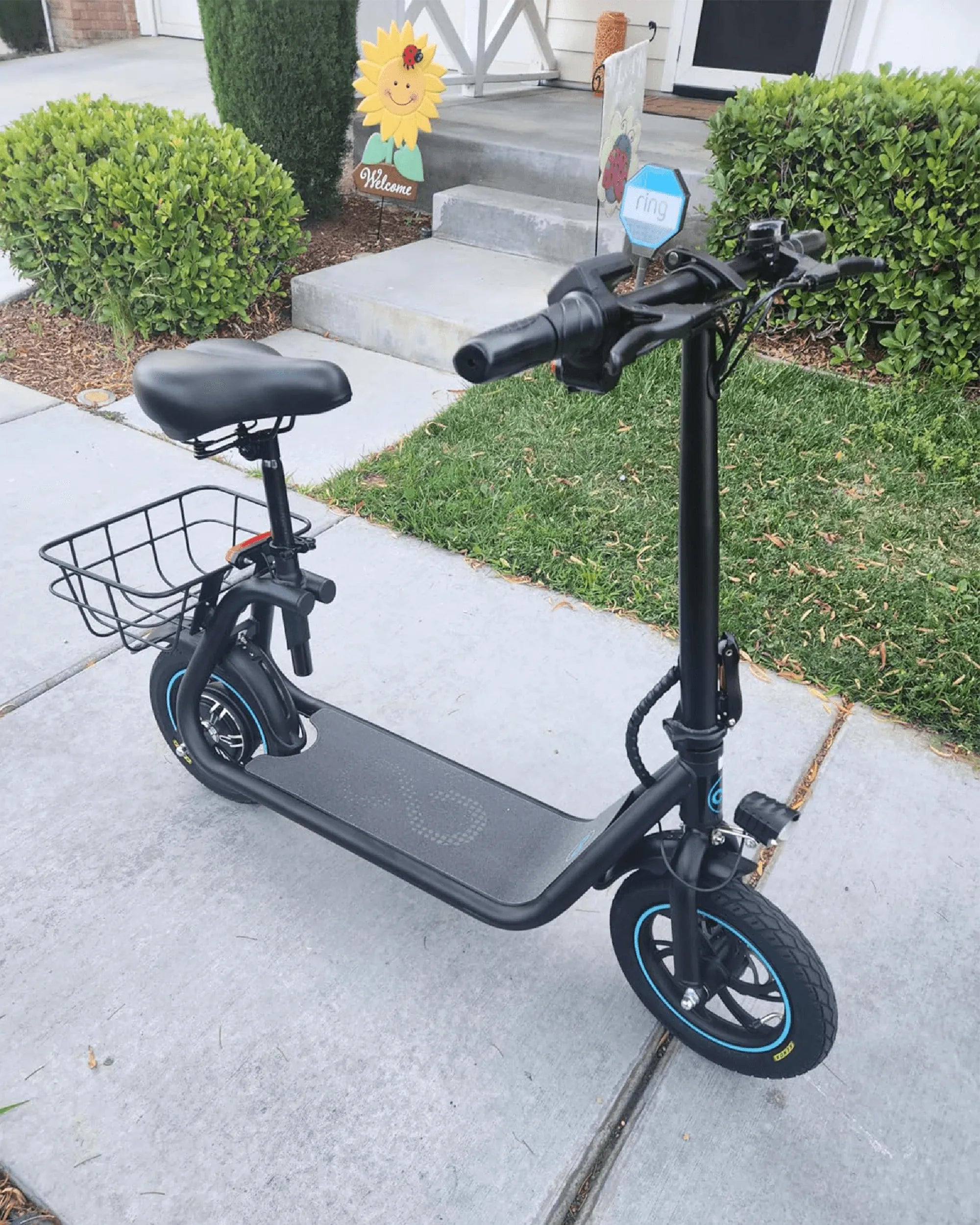
A scooter moped scooter is distinct from both a standard electric kick scooter and a traditional gas-powered moped. While a typical e-scooter is designed for standing, short-range trips, and a moped is often heavier and requires licensing, the scooter moped occupies a strategic middle ground. Its core design philosophy centers on making longer, more comfortable commutes not just possible, but enjoyable. The defining characteristic is the inclusion of a seat, which fundamentally changes the riding experience from a quick last-mile solution to a primary mode of transport.
This vehicle class typically features larger wheels—often 10 inches or more—which provide greater stability and a smoother ride over urban imperfections like cracks and potholes. Power is a key differentiator; scooter mopeds are equipped with motors ranging from 500W to 1000W or more, enabling higher top speeds (often 20-28 mph) and better hill-climbing capability than most basic e-scooters. The battery systems are correspondingly larger, offering ranges that can realistically cover a round-trip commute without range anxiety. This combination of features creates a vehicle that is less of a toy and more of a practical tool for daily life.
Key Features That Set Scooter Mopeds Apart
Understanding the components is crucial to appreciating the value of a scooter moped scooter. The powertrain is built around a high-torque hub motor, often in the rear wheel, providing direct and efficient propulsion. The battery is the heart of the system; quality models use lithium-ion packs with management systems for safety and longevity. For instance, Gyroor equips its models with UL-certified battery packs tested for over 500 charge cycles, a non-negotiable standard for fire safety and reliability.
Beyond the motor and battery, integrated systems are standard. This includes bright LED headlights and taillights for visibility, robust disc or drum brakes for confident stopping power, and often, digital displays showing speed, battery level, and riding mode. Practicality is enhanced with features like rear racks for cargo, foldable designs for storage, and comprehensive water resistance. Gyroor's IPX5-rated designs, for example, ensure the scooter moped scooter can handle rain and puddles, making it a truly all-weather commuter option backed by a reliable 1-year warranty.
The Practical Advantages: Why Choose a Scooter Moped for Your Commute?
The decision to adopt a scooter moped scooter is driven by compelling, data-backed advantages. Financially, the savings compared to car ownership are substantial. Eliminate costs for fuel, high insurance premiums, parking fees, and significant maintenance. The electricity cost to charge a scooter moped is mere cents per day, representing a fraction of the cost of a single gallon of gasoline. This makes the scooter moped an incredibly efficient personal transport solution.
Time is another critical factor. In congested urban corridors, a scooter moped scooter can often match or exceed average car speeds by utilizing bike lanes and filtering through traffic. The ease of parking is transformative; instead of circling blocks, you can secure your vehicle to a bike rack or, with some models, even bring it inside. Environmentally, the benefit is direct: zero tailpipe emissions, a reduced carbon footprint, and less noise pollution. For daily commutes under 15 miles, the scooter moped scooter isn't just an alternative—it's often the optimal choice.
Navigating Regulations: License, Registration, and Road Rules
Operating a scooter moped scooter responsibly requires understanding local laws, which vary significantly. In most jurisdictions, these vehicles are classified based on their maximum speed and motor power. Models with a top speed of 20 mph may be regulated as electric bicycles in many areas, often not requiring a license, registration, or insurance. However, a scooter moped scooter capable of 28 mph or more may be classified as a motorized scooter or moped, potentially necessitating a driver's license, registration, and helmet use.
It is the rider's imperative responsibility to check with their local Department of Motor Vehicles (DMV) or transportation authority. Rules regarding where you can ride—bike lanes, roads, or sidewalks—also vary by city. As a best practice, always wear a helmet regardless of the law, use lights day and night, and ride defensively as you would on a bicycle. Proper knowledge ensures not only your safety but also the positive perception and longevity of this form of micro-mobility.
Choosing Your Ride: A Scooter Moped Buyer's Guide
Selecting the right scooter moped scooter requires a methodical assessment of your needs. Start by defining your primary use case: What is your round-trip commute distance? Do you encounter steep hills? Will you need to carry a backpack, laptop, or groceries? Your answers will directly point to the necessary specifications. A longer commute demands a larger battery capacity (measured in Watt-hours, Wh), while hilly terrain necessitates a more powerful motor (750W or higher).
Key specs to compare include motor wattage (for power), battery capacity (for range), maximum speed, weight capacity, tire type (air-filled for comfort vs. solid for puncture resistance), and braking system. Don't overlook practical aspects like the vehicle's weight if you need to carry it upstairs, and the quality of the display and controls. The following table provides a clear comparison framework for evaluating different scooter moped scooter models based on core performance criteria.
| Specification | Entry-Level Commuter | Performance Commuter | All-Terrain Capable |
|---|---|---|---|
| Motor Power | 350W - 500W | 500W - 750W | 750W - 1000W+ |
| Max Speed | 15 - 20 mph | 20 - 28 mph | 25 - 30+ mph |
| Typical Range | 15 - 25 miles | 25 - 40 miles | 30 - 50 miles |
| Battery (Typical) | 36V, 10Ah (360Wh) | 48V, 13Ah (624Wh) | 48V, 15Ah+ (720Wh+) |
| Ideal For | Flat terrain, short trips | Daily city commuting, moderate hills | Long commutes, steep hills, varied surfaces |
Safety First: Essential Gear and Riding Practices
With the increased capability of a scooter moped scooter comes increased responsibility for safety. A certified bicycle or multi-impact helmet is an absolute necessity, not an accessory. Supplement this with riding gloves for grip and protection, durable shoes, and high-visibility or reflective clothing, especially in low-light conditions. Your scooter moped scooter should have functioning front and rear lights; adding extra aftermarket lights is a wise investment.
Develop a routine of pre-ride checks: inspect tire pressure and for wear, test brake lever responsiveness, ensure all lights are working, and confirm the throttle and controls function smoothly. When riding, adopt a defensive posture. Assume cars may not see you, avoid blind spots, signal your intentions clearly, and always obey traffic signals. Respect pedestrians, especially when using shared paths. Mastering smooth acceleration and braking will make you a more predictable and safer rider on your scooter moped scooter.
Gyroor's Commitment: Engineering Trust into Every Ride
The theoretical benefits of a scooter moped scooter only materialize with a vehicle built to last. This is where Gyroor's engineering philosophy directly addresses rider concerns. The cornerstone is battery safety. Every Gyroor scooter moped scooter uses a UL-certified battery pack, meaning it has passed rigorous independent testing for electrical, mechanical, and fire safety—a critical distinction that should be a minimum requirement for any rider.
Durability is engineered for real-world conditions. An IPX5 water-resistance rating means the electrical components are protected against low-pressure water jets from any direction, safeguarding your investment against rainy commutes and wet roads. This reliability is backed by a comprehensive 1-year warranty and supported by a US-based customer service team. It's this combination of certified safety, practical durability, and dependable support that has earned the trust of over 100,000 riders, making Gyroor a leading choice for those seeking a serious scooter moped scooter.
Frequently Asked Questions (FAQ)
Q: Do I need a license to ride a Gyroor scooter moped scooter?
A: Licensing requirements depend entirely on your local laws and the specific model's top speed. Models with a speed capped at 20 mph may not require a license in many areas, while faster models might. Always consult your state or provincial DMV website for the most accurate and current regulations.
Q: How far can a typical scooter moped scooter go on one charge?
A: Real-world range varies based on battery capacity, rider weight, terrain, temperature, and assist level. A model with a 48V, 13Ah (624Wh) battery typically offers 25-35 miles per charge. Always consider the manufacturer's tested range as a best-case scenario and factor in a buffer for your daily needs.
Q: Can a scooter moped scooter handle hills?
A: Yes, but capability varies. Models with 500W motors can manage gentle slopes, while 750W or 1000W motors are designed for moderate to steep hills. On very steep inclines, you may experience a reduction in speed. Checking the motor's torque rating (in Newton-meters, Nm) can provide further insight into hill-climbing power.
Q: Where is it legal to ride my scooter moped scooter?
A: Generally, these vehicles are permitted on roads with speed limits at or below 35 mph and in designated bicycle lanes. Riding on sidewalks is prohibited in most cities due to pedestrian safety concerns. Specific laws vary, so checking your local municipal codes is essential before your first ride.
Q: How do I maintain my scooter moped scooter?
A: Regular maintenance is simple but crucial. Keep tires properly inflated, regularly check and adjust brake pads, keep the bike clean (especially after wet rides), and avoid storing it with a fully depleted or fully charged battery. Periodically check for loose bolts and consult the user manual for specific lubrication points.
Conclusion: Your Next Chapter in Urban Mobility
The scooter moped scooter is more than a trend; it's a logical evolution in personal transportation for dense urban environments. It delivers a powerful combination of efficiency, cost savings, and practicality that directly addresses the frustrations of modern commuting. By choosing a model from a reputable brand that prioritizes certified safety, durable construction, and rider support, you invest in a reliable tool for daily freedom. As cities continue to evolve, embracing efficient micro-mobility solutions like the scooter moped scooter is a smart step toward a more sustainable and enjoyable daily routine. Explore the engineering and design that goes into a trusted ride—browse the full Gyroor collection, including our latest scooter moped scooter models, at gyroorboard.com.
How Does a Scooter Work: The Complete Guide to E-Scooter Mechanics
Small Portable Scooter for Adults: The Ultimate Urban Mobility Guide