



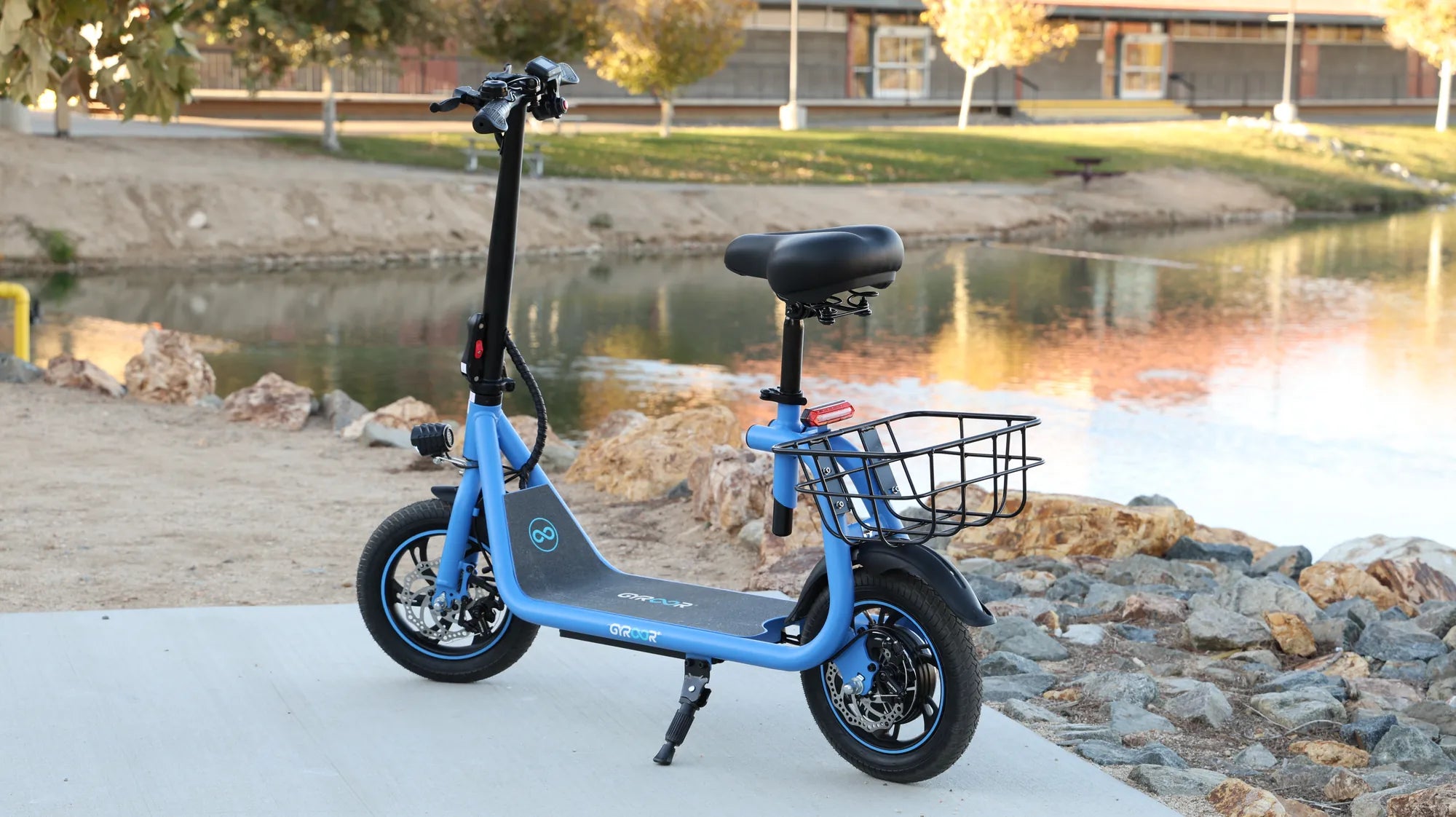
Introduction: The 18-Inch Dirt Bike Tire – Your Ultimate Traction Upgrade
Choosing the right tire is the single most impactful upgrade you can make to any off-road vehicle. An 18 inch dirt bike tire is not merely a replacement part; it is the critical interface that translates your machine's power into forward motion, control, and safety. For riders of electric dirt bikes and robust e-scooters, this choice dictates how effectively you conquer loose dirt, gravel, mud, and rocky trails.
This guide delves into everything you need to know about the 18-inch dirt bike tire. We will decode its specifications, explore its performance advantages, and provide a data-driven comparison to other common sizes. Whether you're upgrading a performance-oriented e-bike like those in the Gyroor lineup or ensuring your adventure scooter is trail-ready, understanding this component is essential. The right tire transforms ride quality, maximizes the potential of a reliable electric powertrain, and unlocks new terrain with confidence.
Understanding Tire Sizes: Decoding the 18" x 2.125" Marking
Tire sizing can seem cryptic, but it provides vital information for fitment and performance. The primary measurement, "18-inch," refers to the overall outer diameter of the tire when it is properly mounted and inflated. More precisely, it indicates the intended rim diameter it is designed to fit. This is distinct from the wheel's overall size, which includes the tire's sidewall height.
The second number, such as "2.125," denotes the tire's nominal width, typically measured in inches. A marking of 18" x 2.125" means the tire is designed for an 18-inch rim and is approximately 2.125 inches wide at its widest point. This width is crucial for determining clearance within your bike's fork and swingarm. Installing a tire that is too wide can cause rubbing against the frame or brakes, leading to damage and a safety hazard.
You may also encounter metric sizing (e.g., 80/100-18). Here, '80' is the tire's width in millimeters, '100' is the aspect ratio (sidewall height as a percentage of width), and '18' is the rim diameter in inches. Understanding these numbers ensures you purchase a tire that fits your specific e-bike or scooter model perfectly, maintaining the designed geometry and handling characteristics.
For electric vehicles, correct sizing is paramount. A properly fitted 18 inch dirt bike tire ensures optimal power transfer from the motor to the ground, maintains correct speedometer calibration (if equipped), and preserves the integrity of the wheel assembly under the unique torque loads of electric drive systems.
Key Advantages of 18-Inch Dirt Bike Tires
The 18-inch diameter occupies a strategic sweet spot in the off-road world, offering a compelling blend of benefits that make it a versatile choice for a range of riders and machines, particularly electric models.
Enhanced Traction and Stability: The larger contact patch and sidewall of an 18-inch tire, compared to smaller scooter tires, provide significantly improved grip on loose and uneven surfaces. The taller sidewall allows the tire to conform to obstacles like rocks and roots, maintaining traction where a stiffer, smaller tire might skate or bounce. This translates directly to increased stability when navigating challenging trails, a key safety factor for adventure riding.
Superior Shock Absorption and Comfort: The increased air volume and flexible sidewall of an 18 inch dirt bike tire act as a primary suspension element. They absorb impacts from bumps, ruts, and small obstacles more effectively than smaller, lower-profile tires. This not only improves rider comfort on long excursions but also reduces stress on the bike's frame, fork, and electronic components—a critical consideration for the sensitive electronics in e-bikes and scooters.
Balanced Performance Profile: The 18-inch size strikes an ideal balance between the quick-handling agility of a 17-inch motocross rear tire and the bump-rolling, stability-focused nature of a 19-inch tire. It offers enough sidewall to soak up hits and provide traction, while remaining responsive to rider input. This makes it an excellent all-around choice for riders who encounter a mix of terrain, from hard-packed trails to softer sections.
For electric bikes designed for rugged use, such as those built with Gyroor's durable, IPX5 water-resistant chassis philosophy, pairing the robust frame with a capable 18-inch tire creates a synergy. The tire's performance complements the bike's built-in resilience, allowing riders to confidently explore beyond paved paths.
Tread Patterns and Terrain: Choosing the Right Grip
The tread pattern is the language a tire uses to communicate with the ground. Selecting the right pattern for your primary terrain is as important as choosing the correct size.
Knobby/Deep Tread Tires: Characterized by large, spaced-out knobs, these are designed for soft, loose terrain like deep mud, sand, and loamy soil. The tall knobs dig down to find solid footing, while the wide spacing prevents mud from packing between them. These tires excel in pure off-road conditions but can feel vague and wear quickly on pavement.
Intermediate/Hardpack Tires: Featuring medium-height knobs that are closer together, these patterns are versatile performers. They provide excellent grip on hard-packed dirt, gravel, and rocky trails, while offering reasonable durability and less vibration on short pavement sections. This is often the recommended starting point for most trail riders and adventure e-bike users.
Hybrid/Dual-Sport Tires: These treads are a compromise, with a blockier, street-biased pattern in the center for pavement stability and wear, and more aggressive knobs on the shoulders for cornering grip on dirt. They are ideal for riders whose journeys involve significant road mileage to reach trailheads, or for urban explorers who frequently ride on light gravel paths and park trails.
Your riding style should dictate your tread choice. A commuter who occasionally detours onto a park path will benefit most from a hybrid tire, while an enthusiast seeking out technical singletrack will need a dedicated intermediate or knobby 18 inch dirt bike tire to harness their e-bike's torque safely and effectively.
Construction & Durability: What Makes a Tire Tough?
Beyond size and tread, the internal construction of a tire determines its longevity, puncture resistance, and overall toughness—key factors for worry-free exploration.
Ply Rating and Casing: The ply rating (e.g., 4PR, 6PR) indicates the strength of the tire's carcass, historically referring to the number of fabric layers. A higher ply rating generally means a stronger, more puncture-resistant tire that can handle higher loads and lower pressures for better traction, but it may also be heavier and less flexible. Modern tires use advanced materials like nylon and aramid to achieve high strength with less weight.
Rubber Compound: The formulation of the rubber significantly affects performance. A soft compound offers superior grip and conforms better to terrain, especially in wet or cool conditions, but will wear out more quickly. A hard compound prioritizes longevity and is better for abrasive surfaces like pavement and rocks, at the cost of some ultimate grip. Many performance tires use dual-compound designs, with a harder center for longevity and softer shoulders for cornering grip.
Reinforcements: Look for features like reinforced sidewalls or bead protectors. These extra layers of material help prevent cuts, snags, and pinch flats from sharp rocks and roots, which are common off-road hazards. This focus on durable construction aligns with the engineering behind reliable brands. For instance, Gyroor's emphasis on UL-certified safety and IP-rated resilience extends a philosophy of durability that riders should seek in their tires—the component that takes the most direct abuse.
Investing in a well-constructed 18 inch dirt bike tire from a reputable manufacturer pays dividends in reduced downtime from flats, more consistent performance, and ultimately, greater safety when you're miles from the trailhead.
Data-Driven Comparison: 18-Inch vs. Other Common Sizes
To understand where the 18-inch tire fits, it's helpful to compare it directly to other popular diameters. The table below outlines key performance and application differences.
| Tire Size (Diameter) | Common Applications | Primary Advantages | Considerations / Trade-offs | Best For |
|---|---|---|---|---|
| 16-Inch | Many commuter e-scooters, smaller pit bikes. | Lightweight, quick acceleration, very agile handling. | Less stability at speed, poor obstacle clearance, harsher ride on rough ground. | Urban commuting on paved surfaces, lightweight recreational use. |
| 18-Inch (Focus) | Larger e-scooters, youth/ small-frame dirt bikes, adventure e-bikes. | Excellent balance of traction, comfort, and agility. Good obstacle roll-over. | May require specific frame clearance. Slightly slower acceleration than smaller sizes. | Versatile off-road and mixed-terrain riding. Trail exploration on capable e-bikes. |
| 19-Inch (Front) / 21-Inch (Front) | Full-size adult motocross and enduro motorcycles. | Maximum stability at high speed, superior bump absorption and roll-over. | Can feel less agile in tight terrain. Often too large for most e-bike/e-scooter frames. | High-speed off-road racing and performance riding on gasoline-powered bikes. |
For the electric bike and performance scooter rider, the comparison is most relevant against the ubiquitous 16-inch size. The 18 inch dirt bike tire provides a substantial upgrade in off-road capability and ride quality for machines designed to handle it. It offers more predictable handling in loose conditions and significantly improves comfort, making longer adventures on varied terrain far more enjoyable. The 18-inch size is often the maximum practical diameter for many reinforced e-bike frames, making it the performance ceiling for serious off-road electric riding.
Installation and Compatibility Checklist
Installing a new tire is a straightforward but precise task. Ensuring compatibility before purchase is essential to avoid frustration and ensure safety.
Step 1: Verify Rim Compatibility. The tire must match your wheel's rim diameter (18") and be suitable for its width. A tire that is too narrow or too wide for the rim can affect handling and wear improperly. Consult your bike's manual or the existing tire's sidewall for the recommended width range.
Step 2: Check Frame and Brake Clearance. This is critical. Measure the space between your current tire and the closest point on the fork, swingarm, chainstay, and brake caliper. A new tire, even of the same nominal size, can have a different actual width or knobby profile that may cause interference. This is especially important if switching from a street to a knobby 18 inch dirt bike tire.
Step 3: Gather Tools and Supplies. You will need tire levers (preferably plastic to avoid damaging the rim), a valve core tool, a reliable air pump (a floor pump with a gauge is ideal), and optionally, tire soap or mild detergent solution to ease bead seating. A bead breaker tool can be helpful for stubborn tires.
Step 4: Installation Process. Deflate the old tire completely and remove it from the rim. Inspect the rim tape for damage and replace if necessary. Partially mount the new tire, insert the tube (if using a tubed setup), and carefully work the second bead over the rim using tire levers. Inflate slowly, listening for the bead to "pop" into place on both sides. Inflate to the recommended PSI, which is often lower for off-road traction.
If you are not comfortable performing this task, having it done by a professional bicycle or motorcycle mechanic is a wise investment. They can also confirm compatibility and ensure the wheel is balanced and true, which is vital for the smooth operation of an electric motor and controller system.
Maintenance for Longevity and Performance
Proper maintenance extends the life of your tires and ensures they perform as designed on every ride.
Tire Pressure (PSI) is Paramount: Always maintain the manufacturer's recommended pressure. For off-road use on an 18 inch dirt bike tire, you may run slightly lower pressure (e.g., 15-20 PSI) to increase the contact patch and improve traction, but this increases the risk of pinch flats. For mixed road and trail use, a higher pressure (e.g., 25-35 PSI) reduces rolling resistance and wear. Check pressure before every ride with a quality gauge; do not rely on visual inspection.
Regular Visual Inspection: Before riding, check for embedded debris like thorns, glass, or sharp rocks. Look for cuts, cracks in the sidewall, or excessive and uneven wear. Uneven wear can indicate alignment issues or incorrect pressure. Worn-down knobs significantly reduce off-road grip and are a sign the tire needs replacement.
Cleaning and Storage: After riding in mud or sand, clean your tires with water and a soft brush to remove abrasive particles. Avoid harsh chemical cleaners that can degrade the rubber. For long-term storage, keep the bike on a stand to take weight off the tires, store in a cool, dry place away from direct sunlight and ozone sources (like electric motors), and maintain proper inflation.
Following these simple steps will ensure your investment in a quality tire pays off with miles of reliable service. This disciplined approach to maintenance mirrors the care that goes into building durable electric rides, where component longevity is a key part of the ownership experience.
Frequently Asked Questions (FAQ)
Q1: Can I put an 18-inch dirt bike tire on my commuter e-scooter?
A: This depends entirely on your scooter's frame design. You must check the physical clearance in the fork and around the brake caliper. Even if it fits, the increased weight and rolling resistance may strain the motor and reduce range and acceleration. It is only recommended for scooters explicitly designed or advertised for off-road or all-terrain use, which have the necessary frame strength and motor power.
Q2: How often should I replace my off-road tires?
A: There is no fixed mileage. Replacement is based on wear and damage. For knobby tires, when the knobs are rounded off to about 50% of their original height, traction on loose terrain is severely compromised. For any tire, visible cracks in the sidewall, deep cuts that expose the casing, or frequent flats are clear indicators it's time for a new 18 inch dirt bike tire.
Q3: Does a knobby tire reduce my electric bike's range significantly?
A> Yes, it can. Knobby tires have higher rolling resistance on paved surfaces compared to slick or hybrid tires. The aggressive tread pattern creates more friction. Expect a range reduction of 10-20% when riding predominantly on pavement. However, on the intended soft terrain, they are more efficient because they prevent slippage, which wastes energy.
Q4: What is the difference between tubed and tubeless tires for an 18-inch wheel?
A: Tubed tires use an inner tube to hold air, while tubeless systems rely on an airtight seal between the tire bead and a special rim. Tubeless setups are preferred for serious off-road use as they are more resistant to pinch flats and can often self-seal small punctures. Converting a standard rim to tubeless requires specific tape, valves, and sealant. Check your wheel's compatibility first.
Q5: Are all 18-inch tires the same? Why are prices so different?
A> No, they are not. Price differences reflect variations in rubber compound quality, casing construction (ply rating, materials), tread design complexity, and brand reputation. A cheaper 18 inch dirt bike tire may use a harder, less grippy compound and a simpler, less durable casing. Investing in a quality tire from a known manufacturer typically results in better performance, longer life, and greater safety.
Conclusion: The Foundation for Your Next Adventure
The 18 inch dirt bike tire represents a strategic performance threshold for electric off-road and adventure riding. Its balanced dimensions offer a tangible upgrade in traction, comfort, and capability over smaller commuter-oriented tires, effectively bridging the gap between urban agility and trail-ready confidence. By understanding sizing, tread patterns, and construction, you can select a tire that perfectly matches your terrain and riding ambitions.
Pairing a high-quality, correctly specified tire with a reliable and well-engineered electric platform is the formula for unlocking true exploration potential. A robust e-bike, built with the durability and safety-focused standards that brands like Gyroor champion—featuring UL-certified batteries, IPX5 water resistance, and reliable warranties—provides the dependable foundation. The right 18-inch tire is the key that connects this capable machine to the world beyond the pavement.
Prioritize compatibility, invest in construction quality that matches your usage, and maintain your tires diligently. This approach ensures every ride, whether a daily commute with a detour or a weekend trail adventure, is undertaken with maximum control, safety, and enjoyment. Your journey begins where the road ends, and it starts with the tires you choose.
Ready to equip your e-bike for its next adventure? Browse the full Gyroor collection of durable, performance-ready electric bikes and scooters at gyroorboard.com to find the perfect platform for your 18-inch tire upgrade.
Adult Tricycle Parts: The Ultimate Guide to Maintenance, Upgrades & Compatibility
Mid Size Dirt Bike: The Ultimate Guide to the Versatile Power Sweet Spot