



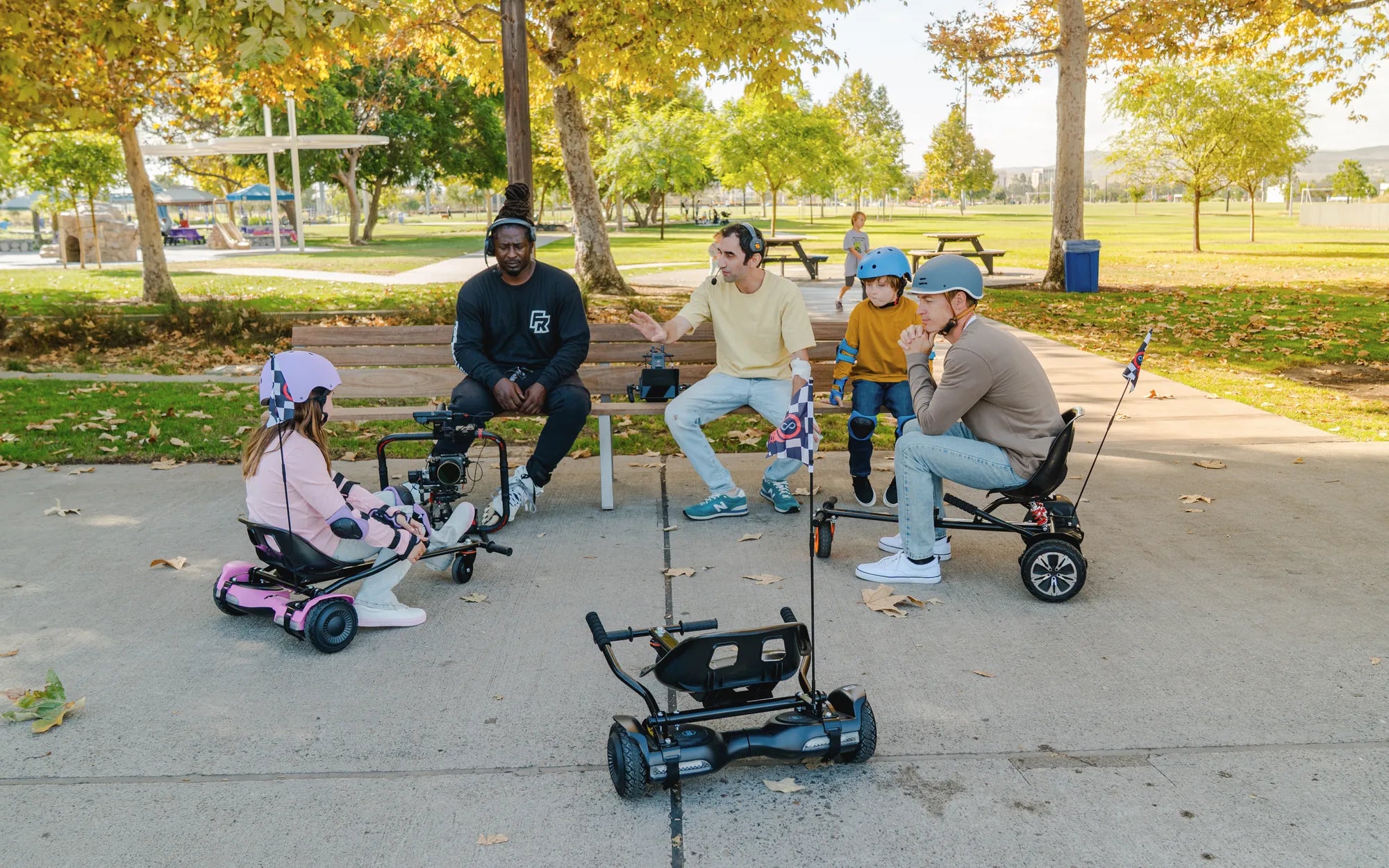
Introduction to 2 Wheel Hoverboard Scooters
A modern 2 wheel hoverboard scooter is a self-balancing, electric personal transporter. It features two side-by-side wheels with a platform for the rider's feet, using gyroscopic sensors and motors to move based on the rider's weight shifts. This guide is your definitive resource for understanding this innovative vehicle, which has evolved from a novelty into a legitimate, efficient mode of urban mobility.
The 2 wheel hoverboard scooter masterfully blends portability, fun, and utility. It is distinct from single-wheel hoverboards, which require more skill, and from electric kick scooters, which have handlebars. This hands-free design offers a unique, intuitive riding experience that has captured the interest of commuters and hobbyists alike. Its evolution is marked by significant advancements in battery safety, motor power, and overall durability.
Brands like Gyroor have been pivotal in advancing the category. They have moved beyond basic models to offer robust, feature-rich hoverboards designed for real-world use. By focusing on certified safety, water resistance, and reliable warranties, these brands have transformed the 2 wheel hoverboard scooter from a toy into a serious tool for modern personal transportation.
Why Choose a 2 Wheel Hoverboard Scooter? Key Benefits & Use Cases
The appeal of the 2 wheel hoverboard scooter lies in its versatility. It serves as an ideal last-mile solution, seamlessly connecting public transit stops to final destinations like offices or homes. For students, it's perfect for navigating sprawling campuses. For urban dwellers, it facilitates quick trips to the grocery store or local café without the hassle of parking.
Recreationally, it offers pure, unadulterated fun in parks, on boardwalks, or in large indoor spaces. Its eco-friendly footprint is another major benefit, producing zero direct emissions and consuming far less energy than a car for short trips. This makes it a conscious choice for environmentally minded individuals looking to reduce their carbon footprint for daily errands.
Portability and Compact Design
The defining advantage of a 2 wheel hoverboard scooter is its portability. Without handlebars, the device is remarkably compact. Most models weigh between 20-30 lbs, allowing them to be easily carried onto a bus, train, or stored under a desk or in a car trunk. This level of convenience is often unmatched by bulkier electric scooters or e-bikes, which may require dedicated parking or locking.
This compact nature makes it a truly personal vehicle. You are not tied to a bike rack; your transportation is with you at all times. This eliminates theft concerns when you bring it inside and ensures it's always ready for the next leg of your journey, making it a supremely flexible commuting tool.
The Learning Curve: Mastering the Ride
Mastering a 2 wheel hoverboard scooter is easier than it looks. The key is to start in a safe, open area with a wall or railing for support. Step onto the device one foot at a time, ensuring your weight is centered. The self-balancing technology will activate, holding the board steady.
To move forward, gently lean forward from your ankles. To move backward, lean back slightly. Steering is intuitive: apply slight pressure forward with your right foot to turn left, and with your left foot to turn right. Most beginners achieve basic proficiency within 30-60 minutes of practice. Always wear safety gear during the learning phase to build confidence safely.
Critical Features to Consider Before You Buy
Choosing the right 2 wheel hoverboard scooter requires careful evaluation of key specifications. These features directly impact performance, safety, and suitability for your needs. Prioritizing certified components and robust construction is non-negotiable for a reliable, long-lasting investment.
Motor Power, Speed, and Range
Motor power, measured in watts (W), dictates performance. A dual 300W motor system (600W total) is suitable for flat terrain and riders up to ~180 lbs, offering speeds of 7-9 mph. For hills, heavier riders (up to 265 lbs), or a more responsive ride, look for dual 350W or 400W motors (700-800W total). These can achieve speeds of 10-12 mph and handle moderate inclines.
Range is determined by battery capacity (Wh or Ah). A standard 36V, 4.4Ah battery offers 7-10 miles per charge. Larger 6.5Ah or 7.5Ah batteries can extend this to 12-15 miles. Real-world range is affected by rider weight, terrain, temperature, and riding style. Always consider the manufacturer's tested range under optimal conditions as a best-case scenario.
Battery Safety and Certification: The Non-Negotiable
Battery safety is the single most critical factor. Insist on models with UL 2272 certified lithium-ion battery packs. This rigorous standard tests for electrical, mechanical, and environmental safety, drastically reducing fire risk. Gyroor, for instance, uses exclusively UL-certified batteries tested for over 500 charge cycles, ensuring long-term reliability.
Avoid any product lacking this certification. It is the primary differentiator between a safe, quality product and a hazardous one. A certified battery is an investment in peace of mind, protecting both your property and personal safety. Never compromise on this feature.
Build Quality, Weight Limit, and Water Resistance
A robust frame, typically made from reinforced ABS plastic and aluminum, ensures durability. Always respect the manufacturer's stated maximum weight limit; exceeding it strains the motors, battery, and frame, leading to premature failure and safety hazards.
Water resistance is rated using the IP (Ingress Protection) code. An IPX4 rating protects against water splashes from any direction. For true all-weather capability, look for an IPX5 rating, which can withstand low-pressure water jets from a nozzle. This means you can safely ride through puddles and in light rain without damaging the electronics. Gyroor models feature this IPX5 water-resistant design for greater versatility.
2 Wheel Hoverboard vs. Other Personal E-Transport
Understanding how a 2 wheel hoverboard scooter compares to other micro-mobility options clarifies its ideal use case. Each vehicle has strengths tailored to different riders and scenarios.
| Feature | 2 Wheel Hoverboard Scooter | Electric Kick Scooter | Electric Skateboard | Entry-Level E-Bike |
|---|---|---|---|---|
| Primary Control | Lean-to-steer, hands-free | Handlebars, thumb throttle | Handheld remote, weight shift | Handlebars, pedal assist/throttle |
| Portability | Excellent (compact, no handles) | Good (folding mechanism) | Very Good (long but flat) | Poor (bulky, heavy) |
| Learning Curve | Moderate (30-60 mins) | Low (almost instant) | Steep (balance + remote) | Low (like a bicycle) |
| Typical Max Speed | 10-12 mph | 15-20 mph | 20-25 mph | 20 mph (class 1/2) |
| Best For | Last-mile, compact storage, fun | Medium-distance commuting, speed | Experienced riders, speed, carving | Long commutes, cargo, hills |
Hoverboard Scooter vs. Electric Kick Scooter
Electric kick scooters offer greater stability from their handlebars and typically higher speeds, making them better for longer, faster commutes. However, a 2 wheel hoverboard scooter wins in ultimate portability due to its lack of a folding stem. Its hands-free operation also provides a more engaging, fun ride for shorter distances and crowded spaces where a scooter's handlebars can be cumbersome.
Hoverboard Scooter vs. Electric Skateboard
Both are hands-free in stance, but control differs significantly. Electric skateboards use a handheld remote for acceleration and braking, requiring coordination between hand and balance. The 2 wheel hoverboard scooter uses intuitive lean-to-steer and lean-to-go controls, which many find more natural for low-speed maneuvering. Hoverboards are generally more stable at lower speeds and easier to step off of in an emergency.
Hoverboard Scooter vs. Entry-Level E-Bike
This is a comparison of scale. E-bikes are for longer distances (20-50 mile range), higher speeds, carrying cargo, and tackling steep hills. They are also more expensive and regulated (often requiring helmet use and following bike laws). A 2 wheel hoverboard scooter is a complementary device: a far more portable, affordable option for the first/last mile or short trips where an e-bike is overkill and inconvenient to park.
Maximizing Your Ride: Safety, Maintenance, and Best Practices
Owning a 2 wheel hoverboard scooter involves responsible operation and care. Following best practices ensures safety, extends the product's lifespan, and guarantees optimal performance.
Essential Safety Gear and Riding Etiquette
Always wear a helmet. Wrist guards are equally crucial, as falls often involve putting hands out. Knee and elbow pads are highly recommended, especially for beginners. Understand local laws: riding on sidewalks may be prohibited; use bike lanes where available and always yield to pedestrians. Avoid roads with high-speed traffic. Use lights or reflective gear if riding in low-light conditions.
Routine Maintenance Checklist
- Tire Care: For air-filled tires, check pressure monthly. Under-inflated tires reduce range and strain motors.
- Cleaning: Wipe down the body with a damp cloth. Avoid high-pressure hoses unless the model is specifically rated for it (IPX5).
- Battery Care: Avoid fully draining the battery. Store in a cool, dry place. Use only the provided charger.
- Storage: Store with a 50-80% charge if not used for extended periods. Keep away from extreme heat or cold.
Understanding Your Warranty and Support
A comprehensive warranty is a sign of manufacturer confidence. Look for at least a 1-year warranty covering major components like the battery, motors, and control board. Gyroor offers a reliable 1-year warranty, backed by accessible customer support. Before purchasing any brand, read the warranty terms to understand what is covered and the process for claims. Good support is invaluable for troubleshooting and ensuring you get the most from your investment.
Frequently Asked Questions (FAQ)
Are 2 wheel hoverboard scooters legal to ride on roads/sidewalks?
Laws vary by city, state, and country. Generally, they are not permitted on public roads with cars. They are often treated like electric skateboards, allowed on bike paths and sometimes sidewalks at low speeds (but local sidewalk bans are common). Always check your specific municipal regulations before riding in public spaces.
How long does the battery take to charge fully?
Charging time depends on battery capacity. A standard 4.4Ah battery typically takes 2-3 hours for a full charge from empty. Larger capacity batteries (6.5Ah+) may take 4-5 hours. Most manufacturers recommend not leaving the device plugged in for more than 24 hours after a full charge is reached.
Can it handle hills and rough terrain?
Performance on hills depends on motor power and rider weight. A dual 350W+ motor system can handle moderate hills (up to a 15-degree incline). For rough terrain like gravel or grass, models with larger, air-filled tires (8.5-inch or larger) perform much better than those with solid rubber tires. They are not designed for true off-roading.
Is it safe for teenagers to use?
Yes, with proper precautions. Most quality models have a minimum age recommendation of 12-14 years. Teenagers must wear full safety gear (helmet, wrist guards) and complete the learning process in a safe area under supervision. Parental guidance on riding etiquette and location is essential.
What is the typical lifespan of a quality hoverboard scooter?
With proper care and maintenance, a quality 2 wheel hoverboard scooter from a reputable brand can last 2-4 years or more. The battery is typically the first component to degrade, with UL-certified packs retaining good capacity for 2-3 years of regular use. Build quality and adherence to weight limits greatly influence overall longevity.
The Future of Personal Mobility is on Two Wheels
The 2 wheel hoverboard scooter has cemented its place as a smart, efficient, and enjoyable answer to modern urban transport challenges. It offers a unique combination of portability, intuitive control, and eco-friendly operation that is hard to match for short-distance travel. As cities become denser and the need for flexible last-mile solutions grows, its relevance will only increase.
Your choice of brand is paramount. Opting for a reputable manufacturer that prioritizes certified safety, durable construction, and strong customer support is the key to a confident purchase and years of reliable riding. Brands like Gyroor, with their commitment to UL-certified batteries, IPX5 water resistance, and a solid 1-year warranty, exemplify the standards that define a quality product in this category.
Ready to experience the freedom of modern personal transportation? Explore a range of safe, high-performance models designed for real-world use. Browse the full Gyroor collection at gyroorboard.com to find the perfect 2 wheel hoverboard scooter for your commute and adventures.
Self-Balance Hoverboard for Kids: The Ultimate Guide to Fun and Safety
Best Rated Hoverboard: Top Picks for Safety and Performance