

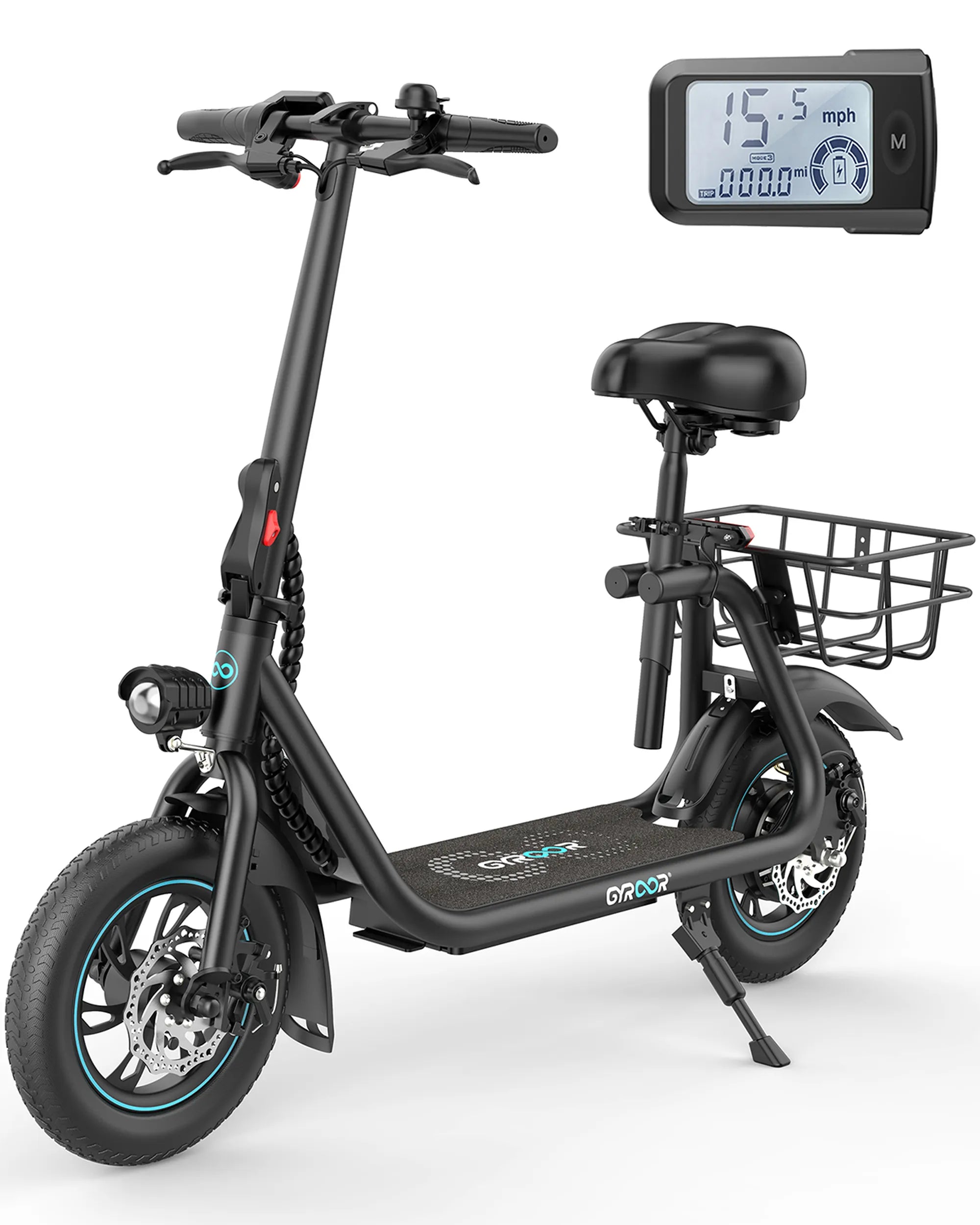
Choosing the right bicycle often feels overwhelming with endless gear options and complex specifications. For riders seeking pure, uncomplicated freedom on two wheels, the 20-inch single-speed bike presents a compelling solution. This guide will dissect every aspect of this unique bicycle category, from its mechanical simplicity and agile handling to its ideal rider profiles and key purchasing criteria. You'll gain a data-driven understanding of why a single-speed configuration with 20-inch wheels might be the perfect fit for flat urban landscapes, casual recreation, or as a dependable first bike, and learn how leading brands like Gyroor apply principles of reliability even to these fundamentally simple machines.
Introduction to the 20-Inch Single-Speed Bike
A 20-inch single-speed bike is defined by two core characteristics: a drivetrain with just one gear ratio and wheels measuring 20 inches in diameter. This combination creates a vehicle celebrated for its mechanical simplicity and nimble handling. The absence of derailleurs, shifters, and multiple chainrings drastically reduces points of failure and maintenance demands.
The primary appeal lies in its straightforward operation. You pedal to go, stop pedaling to coast, and use either a coaster brake or hand brakes to stop. This intuitive design removes the learning curve associated with gear shifting, making it accessible to a wide range of riders. The 20-inch single-speed bike excels in environments where simplicity and reliability are valued over the ability to tackle varied, steep terrain.
Its compact yet robust frame, paired with the smaller wheel size, offers a unique blend of portability and stability. It's a bike designed for specific, practical use cases rather than as a jack-of-all-trades. Understanding its strengths and limitations is key to appreciating its place in the cycling world, which we will explore in depth throughout this guide.
The Unmatched Simplicity: Why Choose a Single-Speed?
The decision to opt for a single-speed drivetrain is a conscious choice for efficiency and ease. The most significant advantage is radically reduced maintenance. Without a front derailleur, rear derailleur, shift cables, or multiple sprockets, there are far fewer components to adjust, clean, or repair. Routine upkeep often boils down to chain lubrication and tension adjustment, saving both time and money.
Weight savings is another tangible benefit. Eliminating the gear-changing apparatus results in a lighter bicycle. A typical single-speed bike can be 2-5 pounds lighter than a comparable geared model. This makes the bike easier to carry upstairs, lift onto a rack, or maneuver at low speeds, enhancing its urban utility.
Riders often report a more direct and connected riding experience. The direct power transfer from pedals to rear wheel creates a pure, unfiltered feel. This mechanical simplicity also translates to cost-effectiveness; manufacturers can use higher-quality materials for the frame, brakes, and wheels at the same price point by omitting complex gearing systems.
Contrast this with multi-gear bikes, where derailleur alignment, cable stretch, and indexed shifting require periodic tuning. For commuting on flat routes or casual cruising where hill climbing is not a concern, the complexity of multiple gears becomes an unnecessary burden. The single-speed bike distills cycling down to its essence: the joy of propulsion through human power.
The 20-Inch Wheel Advantage: Agility and Portability
The 20-inch wheel size is a critical factor defining this bike's character. Smaller wheels have a lower rotational inertia, allowing them to accelerate more quickly from a stop. This provides a snappy, responsive feel that is ideal for stop-and-go city traffic where quick starts are common.
Maneuverability is the standout trait. The shorter wheelbase and reduced wheel diameter enable extremely tight turning circles. Navigating through crowded bike racks, weaving through slow-moving pedestrian zones, or making sharp turns on bike paths becomes intuitive and effortless. This agility makes it a superior choice for dense urban environments.
Portability is a major practical benefit. A bike with 20-inch wheels is significantly more compact than its 26-inch or 700c counterparts. It can fit horizontally in most car trunks without requiring wheel removal, slide into a corner of a small apartment, or be stored in limited communal spaces. This ease of storage solves a common problem for city dwellers.
Furthermore, the smaller frame that accommodates 20-inch wheels often results in a lower standover height. This creates a more approachable and confidence-inspiring ride for shorter adults, teens, and those who prefer to easily place both feet flat on the ground when stopped. The geometry promotes an upright riding position, ideal for visibility in traffic and casual comfort.
Key Features to Look for in a Quality 20-Inch Single-Speed
Not all 20-inch single-speed bikes are created equal. Discerning buyers should evaluate several key features to ensure they select a durable, safe, and enjoyable model. A quality build in these fundamental areas separates a reliable daily rider from a disposable big-box store bicycle.
Focus on the components that matter most for longevity and performance: the frame, the braking system, and the tires. Compromises in these areas lead to a frustrating ownership experience. Investing in a well-spec'd model from a reputable brand often costs less in the long run by avoiding frequent repairs and premature replacement.
The following checklist provides a data-driven framework for comparison. Use it to assess potential bikes, prioritizing features based on your primary use case, whether it's daily commuting, weekend recreation, or providing a sturdy bike for a growing rider.
Frame Material & Build Quality
The frame is the bicycle's foundation. The two most common materials are aluminum alloy and steel. Aluminum frames are lightweight, resistant to rust, and offer a stiff, efficient ride. They are excellent for riders who prioritize easy carrying and a lively feel. High-tensile steel frames are heavier but provide a slight natural flex that can absorb road vibrations, leading to a smoother ride on rough pavement.
Inspect the weld quality at all frame joints. Clean, even, and continuous welds are a strong indicator of careful manufacturing and a durable bond. Rough, globby, or inconsistent welds can be weak points. The finish should be even and chip-resistant, often a powder coat for durability.
Frame geometry also matters. Look for reinforced areas around the head tube (where the fork turns), the bottom bracket (where the cranks attach), and the rear dropouts (where the wheel axle sits). These are high-stress points. A quality frame will have additional material or gusseting in these zones to prevent flex and failure over time.
Braking System: Coaster vs. Hand Brakes
The braking system is a critical safety component and a major differentiator in feel. There are two primary types found on 20-inch single-speed bikes: coaster brakes and hand-operated caliper or V-brakes.
Coaster Brakes: Integrated into the rear hub, these are engaged by pedaling backwards. They offer ultimate simplicity—no cables, levers, or pads to maintain. They are intuitive for new riders and provide consistent braking in all weather conditions, as they are fully enclosed. However, they offer less modulation (fine control over braking power) and do not allow you to pedal backwards to position the pedals for starting.
Hand Brakes: These are the familiar lever-and-caliper systems. They provide superior braking power and modulation, allowing you to control speed precisely and use both front and rear brakes independently for shorter stopping distances. They require occasional cable adjustment and pad replacement but are the standard for performance and control. Many riders prefer the familiar hand-brake feel.
Tire Type: Puncture Resistance and Ride Comfort
Tires are your only contact with the road, dramatically affecting comfort, grip, and reliability. For a 20-inch single-speed bike used in urban settings, prioritize puncture resistance and cushioning.
Look for tires with a width between 1.75 and 2.125 inches. Wider tires run at lower air pressures (e.g., 40-65 PSI) and provide more air volume to absorb bumps, cracks, and imperfections in city streets, leading to a more comfortable ride. They also offer more grip, especially when cornering or braking on wet surfaces.
A key feature is a puncture-resistant belt, often made of Kevlar or a similar high-density material, located under the tread. This layer dramatically reduces the frequency of flats from glass, thorns, or metal debris. While these tires may be slightly heavier and have higher rolling resistance than thin racing slicks, the trade-off for urban reliability is overwhelmingly positive.
Ideal Use Cases: Who is a 20-Inch Single-Speed Bike For?
The 20-inch single-speed bike is not a universal solution, but for specific rider profiles and scenarios, it is arguably the optimal choice. Its design caters to lifestyles where flat terrain, short distances, and a desire for hassle-free ownership intersect.
By clearly defining these ideal use cases, you can determine if this bicycle aligns with your needs. It represents a philosophy of cycling that values experience over equipment, making it perfect for the following individuals.
The Urban Commuter & Errand-Runner
For the city dweller with a short, flat commute (under 5 miles), this bike is a workhorse. Its agility is perfect for navigating traffic, bike lanes, and tight spaces. The low maintenance means it can be left locked outside (with a good lock, of course) without constant fear of derailleur damage or cable issues.
Running errands becomes a joy. The easy handling is ideal for crowded supermarket parking lots, and the compact size makes it simple to park securely at racks. The upright riding position offers good visibility in traffic, and the simple operation means you can hop on and off without a second thought. It transforms short trips from a chore into a pleasant, efficient activity.
The Recreational Rider & Boardwalk Cruiser
This bike is the epitome of a fun, casual cruiser. It's ideal for leisurely rides on paved bike paths, park loops, or beach boardwalks where the pace is relaxed and the goal is enjoyment and fresh air. The simple operation means the rider can focus entirely on the scenery and company, not on managing gears.
The comfortable, upright position is perfect for sightseeing. The reliable, weather-resistant coaster brake (if equipped) handles well in sandy or damp conditions common near beaches. It’s a social bike—easy for anyone to ride, encouraging group outings without a steep learning curve. For flat recreational terrain, it delivers maximum fun with minimum fuss.
The First "Real" Bike for Older Kids & Teens
Stepping up from a small children's bike with training wheels, a 20-inch single-speed offers a perfect balance of capability and simplicity for young riders. It's substantial enough to feel like a "real" bike, building confidence and skill, yet it lacks the mechanical complexity that can intimidate or confuse.
The single-speed drivetrain allows kids to concentrate on balance, steering, and road awareness without managing gears. The typically sturdy construction can withstand the bumps and learning experiences of young riders. For teens using a bike for independence—riding to a friend's house, school, or a part-time job—it provides reliable, low-maintenance transportation for flat neighborhoods.
Gyroor's Approach: Reliability in Simplicity
While Gyroor is widely recognized as a leading electric scooter and e-bike brand trusted by over 100,000 riders across North America and Europe, its engineering philosophy is deeply rooted in fundamental reliability. This principle extends to the design of traditional bicycles like the 20-inch single-speed. The brand understands that simplicity does not mean cutting corners.
Gyroor applies its rigorous standards for durability and safety even to non-motorized products. This means selecting robust frame materials, specifying reliable braking components from trusted suppliers, and ensuring all critical fasteners are properly torqued and secured. The focus is on creating a product that, while mechanically simple, will deliver consistent performance season after season with minimal intervention.
The peace of mind offered by a strong 1-year warranty, a hallmark of the Gyroor brand, is particularly valuable for a single-speed bike. It signals confidence in the product's build quality. For a rider choosing a 20-inch single-speed bike for its dependability, purchasing from a brand known for UL-certified batteries and IPX5 water-resistant designs in its electric lineup is a logical extension of seeking quality and trust in a simpler machine.
Performance Comparison: Single-Speed vs. Multi-Gear Bikes
To make an informed choice, it's essential to understand how a 20-inch single-speed bike stacks up against its multi-gear counterparts. The following table provides a data-driven comparison across key performance and ownership metrics.
| Feature | 20-Inch Single-Speed Bike | 20-Inch Multi-Gear Bike (e.g., 7-Speed) |
|---|---|---|
| Terrain Suitability | Optimal for flat urban terrain, boardwalks, and gentle paths. Struggles on hills. | Versatile; handles hills, headwinds, and varied terrain efficiently with gear changes. |
| Maintenance Demand | Very Low. Primarily chain lubrication and brake adjustment. | Moderate to High. Requires regular derailleur adjustment, cable tuning, and more complex cleaning. |
| Weight | Lighter (approx. 2-5 lbs less due to lack of gearing components). | Heavier due to derailleurs, shifters, extra chainrings, and cassettes. |
| Initial Cost | Generally lower for equivalent frame quality; budget spent on core components. | Higher due to the cost of multiple gears, shifters, and derailleurs. |
| Riding Experience | Direct, connected, and simple. Encourages a consistent pedaling cadence. | Adaptable and efficient. Allows rider to maintain optimal cadence across speeds and slopes. |
| Learning Curve | Minimal. Intuitive “pedal and go” operation. | Moderate. Requires learning to shift gears effectively for terrain and cadence. |
| Best For | Flat commutes, casual cruising, low-maintenance ownership, new/young riders. | Hilly areas, long-distance rides, riders seeking performance and adaptability. |
Frequently Asked Questions (FAQ)
Is a 20-inch single-speed bike suitable for hills?
Generally, no. The single, fixed gear ratio is optimized for efficient riding on flat terrain. Climbing a steep incline will require significantly more leg power and can quickly become exhausting. For routes with consistent or steep hills, a multi-gear bicycle or an electric-assist bike is a far better choice. The 20-inch single-speed bike is best reserved for predominantly flat landscapes.
How does it compare to a folding bike for city living?
Both excel in urban environments but for different reasons. A folding bike with 20-inch wheels wins on ultimate portability and space-saving; it can be taken on public transport or stored under a desk. A non-folding 20-inch single-speed bike often offers a more rigid and stable frame feel (no folding joint), typically at a lower cost for equivalent component quality. The choice depends on whether your priority is multi-modal transport (folding) or a simple, sturdy ride for point-A-to-point-A trips (single-speed).
What maintenance does it really need?
The maintenance regimen is refreshingly minimal. Key tasks include: keeping tires inflated to the recommended PSI (check weekly), inspecting and lubricating the chain every few weeks (or after wet rides), and checking brake pad wear and cable tension (for hand brakes) monthly. For coaster brakes, ensure the mechanism isn't overly stiff. An annual check of all bolts and bearings is advisable. This low-maintenance promise is a core advantage.
Can adults ride a bike with 20-inch wheels comfortably?
Absolutely. While often associated with younger riders, many models are designed with adult geometry in mind. The key is frame size. Adults, particularly those of shorter stature (under 5'8"), can find 20-inch wheel bikes very comfortable. The upright position reduces strain on the back and neck, and the easy mounting/dismounting is a benefit. Taller adults should seek models with extended seat posts and handlebar stems to ensure a proper fit.
Are single-speed bikes slower than geared bikes?
On flat ground, not necessarily. The gear ratio on a single-speed is often chosen to provide a good balance between acceleration and top speed. A fit rider on a single-speed can maintain speeds comparable to a geared rider on flat terrain. The significant difference arises on hills or into strong headwinds, where the inability to shift into an easier gear will slow the single-speed rider considerably. For flat urban sprints, speed is more dependent on the rider than the drivetrain.
Conclusion: Embracing the Pure Ride
The 20-inch single-speed bike is a testament to the beauty of focused design. It forgoes the complexity of modern cycling technology to deliver a direct, engaging, and remarkably reliable riding experience. It is the ideal choice for the urban commuter navigating flat streets, the weekend rider cruising the boardwalk, or the young cyclist building foundational skills. By prioritizing quality in its frame, brakes, and tires, this simple machine can offer years of faithful service with minimal upkeep.
If your riding life revolves around flat terrain and you value mechanical simplicity, this bicycle category deserves serious consideration. It represents a conscious step away from over-complication and a return to the fundamental joy of riding. Assess your primary routes, storage needs, and maintenance tolerance against the insights in this guide. For those whose needs align, the 20-inch single-speed bike offers a uniquely pure and liberating form of transportation and recreation.
Ready to experience simple, reliable mobility? Browse the full Gyroor collection, including durable electric scooters and e-bikes designed with the same commitment to quality, at gyroorboard.com.
70cc Scooter: The Ultimate Guide to Performance, Practicality & Electric Alternatives
8000W Scooter: The Ultimate Guide to Extreme Power & Performance