



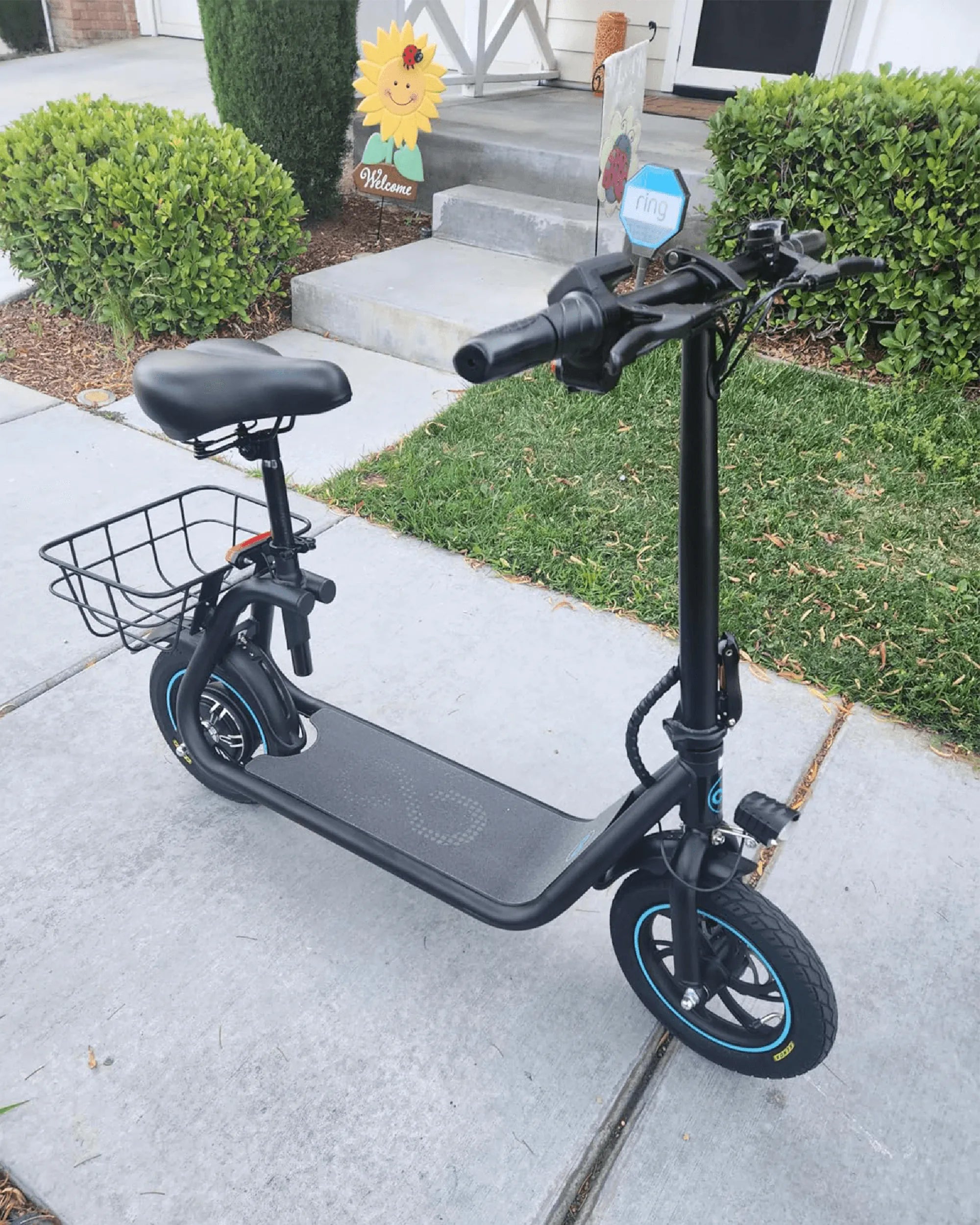
Navigating the 2025 Urban Mobility Landscape
The urban commute is undergoing a silent revolution. By 2025, electric scooters have evolved from novel gadgets into a cornerstone of efficient city transportation. This shift is driven by technological maturity, clearer regulations, and a critical mass of riders demanding reliable performance.
This article serves as your definitive guide to understanding this pivotal moment. We will examine the engineering breakthroughs that make 2025 models safer and more capable, provide a practical checklist for buyers, and analyze the broader urban ecosystem. The era of experimentation is over; the future of practical, daily urban mobility is here.
The Core Technologies Defining 2025's Top Models
The defining feature of the 2025 electric scooter is the integration of advanced technologies that directly enhance the rider's experience, safety, and convenience. These are no longer premium add-ons but expected standards in a competitive market.
Manufacturers are focusing on holistic system design. This means the motor, battery, controller, and software are developed to work in seamless harmony. The result is a smoother ride, more predictable performance, and significantly improved durability under daily use.
Battery Evolution: Beyond Basic Range
The single most critical advancement is in battery technology and safety. In 2025, a UL 2271 or UL 2843 certification for the battery pack and electrical system is an absolute non-negotiable baseline for any reputable model. This independent testing verifies rigorous safety standards, drastically reducing fire risk.
Beyond safety, energy density has improved. Leading brands now utilize high-grade lithium-ion cells that offer real-world ranges of 30 to 50 miles on a single charge, effectively eliminating range anxiety for most urban commuters. Charging times have also dropped, with many models achieving a full charge in under 4 hours.
Smarter Battery Management Systems (BMS) are now standard. These systems monitor cell voltage, temperature, and current in real-time, optimizing performance and extending the overall battery lifespan well beyond 500 charge cycles with proper care. This is a standard upheld by manufacturers like Gyroor across their UL-certified lineup.
Smarter, Safer Riding: Connectivity and Control
Connectivity has moved from a gimmick to a core utility. Companion smartphone apps now offer deep functionality: detailed ride analytics (speed, distance, battery consumption), GPS-enabled anti-theft tracking and geofencing, and customizable performance profiles.
Riders can now tailor their experience. Through an app, one can adjust acceleration sensitivity, regenerative braking strength, and even top speed limits. Perhaps most importantly, Over-the-Air (OTA) firmware updates allow manufacturers to deploy performance enhancements, bug fixes, and new features directly to the scooter long after purchase.
This digital layer transforms the scooter from a static product into a platform that can improve over time. It also provides invaluable data for diagnostics, making troubleshooting and maintenance more straightforward for both the user and service technicians.
Durability by Design: Materials and Build Quality
Build quality has seen a generational leap. The widespread use of aerospace-grade aluminum alloys provides an optimal balance of strength and lightweight design. Folding mechanisms, once a common point of failure, now employ robust locking pins and reinforced hinges designed for thousands of cycles.
Weather resistance is paramount for a true commuting vehicle. An IPX5 water-resistance rating, which protects against water jets from any direction, has become the expected standard for all-weather readiness. This rating, featured on models from brands like Gyroor, means riders can confidently navigate rainy streets and wet conditions without compromising the scooter's electronics.
The focus is on engineered resilience. From reinforced stems to wider decks with improved grip tape, every component is designed to withstand the rigors of daily urban use, from potholes to curbs, ensuring long-term reliability and rider confidence.
The 2025 Rider's Checklist: What to Prioritize When Buying
Navigating the 2025 market requires a shift in perspective from looking at peak specs to evaluating daily usability and long-term ownership. This checklist focuses on the factors that truly impact your commute.
Forget simply comparing motor wattage. The modern evaluation requires a holistic view of safety certifications, real-world performance metrics, and integration features that fit your specific urban lifestyle. This approach ensures your investment pays off in daily convenience and reliability.
Safety Certifications: The Non-Negotiables
Your first filter must be safety certifications. Insist on verified UL 2271 (for the battery) or UL 2843 (for the entire electrical system) certification. This is the most reliable indicator of a manufacturer's commitment to safety and quality control. Do not compromise on this point.
Next, examine the active safety features. Integrated lighting is crucial: bright front and rear lights are standard, but look for models with automatic brake lights and, increasingly, turn signals. A wider deck (over 7 inches) provides better stability, and dual braking systems—such as a combination of electronic regenerative braking and a mechanical disc or drum brake—are essential for controlled, reliable stopping power in all conditions.
Performance Metrics That Actually Matter
Motor power (e.g., 500W, 1000W) is less informative than understanding torque and real-world performance. A motor with high torque will provide better acceleration from a stop and more power for climbing hills, which is more relevant for urban terrain than a high top speed alone.
Interpreting range claims is critical. Manufacturers often list a "maximum" range under ideal conditions. Deduct 20-30% for real-world factors like rider weight, hills, frequent stops, and colder temperatures. A model claiming a 40-mile range will reliably deliver 25-30 miles for an average commuter, which is often sufficient.
A comprehensive warranty is a key data point. A confident manufacturer backs its product. A robust 1-year warranty that covers the motor, battery, and controller, like that offered by Gyroor, signals trust in the product's durability and provides peace of mind against unexpected repair costs.
Urban Integration Features
Consider how the scooter fits into your multimodal life. Compact folding dimensions and a manageable weight (ideally under 40 lbs) are vital if you need to carry it onto public transit or into an office. Check the folded size against your storage space at home or work.
Pay attention to practical design elements. Built-in cable management keeps wires tidy and protected. A clear, intuitive display that is visible in sunlight is essential. Finally, consider maintenance: tubeless tires or advanced airless tires reduce the risk of flats, while sealed bearings and belt-driven systems can minimize routine upkeep.
The Broader Ecosystem: How Cities and Tech Are Adapting
The success of electric scooters is not solely dependent on the vehicle itself. It is equally shaped by the urban environment and regulatory framework. 2025 marks a period of significant maturation in this ecosystem, moving from ad-hoc pilot programs to integrated city planning.
Cities are recognizing micromobility as a legitimate and necessary component of their transportation networks. This shift is leading to tangible infrastructure investments and smarter regulations that enhance safety and accessibility for all road users, from pedestrians to car drivers.
Regulatory Maturity and Dedicated Micromobility Lanes
Regulatory chaos is giving way to standardized rules. Many major cities have now established clear regulations governing where scooters can be ridden (bike lanes, slow streets), speed limits in pedestrian-dense zones (often 15 mph), and designated parking corrals to prevent sidewalk clutter.
The most impactful development is the rapid expansion of dedicated, protected micromobility lanes. Separated from both vehicle traffic and sidewalks, these lanes dramatically increase rider safety and confidence, making scooter commuting a more attractive and viable option for a broader demographic, including less experienced riders.
The Sustainability Equation: A Data-Driven View
The environmental argument for e-scooters is now backed by substantial lifecycle analysis. While manufacturing has a carbon footprint, the operational phase is exceptionally clean, especially when charged on a grid increasingly powered by renewables.
Studies consistently show that for short trips under 3 miles, a shared or privately owned e-scooter replaces a significant number of car trips. This directly reduces urban congestion, lowers localized air pollution (NOx, particulate matter), and cuts greenhouse gas emissions. When viewed as a complement to public transit for solving the "last mile" problem, their role in creating sustainable, efficient cities becomes undeniable.
Comparing 2025 Electric Scooter Categories
Understanding the market segments helps align a model's capabilities with your specific needs. The following table breaks down the primary categories for 2025.
| Category | Typical Specs | Best For | Key Considerations |
|---|---|---|---|
| Ultra-Portable Commuter | Motor: 300-500W Range: 15-25 mi Weight: < 30 lbs Folded Size: Very Compact |
Multimodal commuters (train/bus), students, urban errands, easy storage in tight spaces. | Prioritize weight and fold size. Range may be limited. Ensure it has sufficient power for your local terrain. |
| Mainstream Urban Commuter | Motor: 500-800W Range: 25-40 mi Weight: 35-45 lbs Features: App, good suspension |
The daily commuter (5-15 miles), all-weather riding, riders seeking a balance of performance and portability. | Look for UL certification, IPX5+ rating, and a robust warranty. This is the most versatile category for city dwellers. |
| Performance / Long-Range | Motor: 1000W+ Range: 40-60+ mi Weight: 50-70 lbs Features: Dual suspension, dual brakes |
Longer commutes, hilly cities, riders who value power and comfort over portability. | Heavier and less portable. Higher upfront cost. Offers car-replacement potential for many urban trips. |
FAQ: Your 2025 Electric Scooter Questions, Answered
Q: Are 2025 e-scooters safe for daily commuting in rain?
A: Models with a true IPX5 water-resistant rating or higher are engineered to withstand rain and road spray. Brands like Gyroor design their commuter models to this standard. Always check the manufacturer's specified IP rating and avoid submerging any scooter in water.
Q: What's the real cost of ownership beyond the purchase price?
A: Operating costs are low: electricity costs are minimal (cents per charge). Plan for periodic maintenance: tire replacements (every 500-1500 miles depending on type), brake pad changes, and occasional bearing service. A strong warranty is your best hedge against major component costs.
Q: How do I ensure I'm buying a future-proof model?
A: Prioritize brands with a track record of software support (OTA updates) and available parts. UL-certified components ensure ongoing safety compliance. Choose a model from a company with an established service network and community, indicating they plan to support the product for years.
Q: Is the higher cost of a UL-certified scooter worth it?
A: Absolutely. This certification is the most reliable proxy for overall build quality and safety engineering. It mitigates the risk of battery failure, which can be dangerous and costly. It is an investment in safety and long-term reliability, not just a regulatory checkbox.
Q: Can I legally ride my e-scooter on bike paths and roads?
A: Laws vary by city and state. Generally, e-scooters are permitted in bike lanes and on roads with speed limits at or below 35 mph. They are typically prohibited on sidewalks. It is your responsibility to know and follow your local regulations, which are becoming more standardized and accessible in 2025.
Conclusion: Embracing a Smarter, Smoother Commute
The 2025 electric scooter represents a mature, reliable, and intelligent solution to the age-old problem of urban congestion. The convergence of certified safety, robust engineering, smart connectivity, and supportive urban policy has created a product category ready for mass adoption. This isn't about a trendy gadget; it's about a fundamental tool for efficient city living.
Your choice now is not about whether to consider an electric scooter, but about selecting the right tool for your specific urban journey. Use the checklist provided to prioritize certified safety, real-world range, and durable construction. Choose a brand that stands behind its product with a strong warranty and customer support. The future of urban mobility is personal, electric, and already here. Make your move towards a cleaner, more efficient, and more enjoyable commute.
Ready to explore a range of UL-certified, feature-rich electric scooters designed for the 2025 commuter? Browse the full Gyroor collection at gyroorboard.com.
Electric Scooters for Adults 40 mph: Ultimate High-Speed Guide
Two-Wheel Electric Scooters: The Future of Urban Mobility