



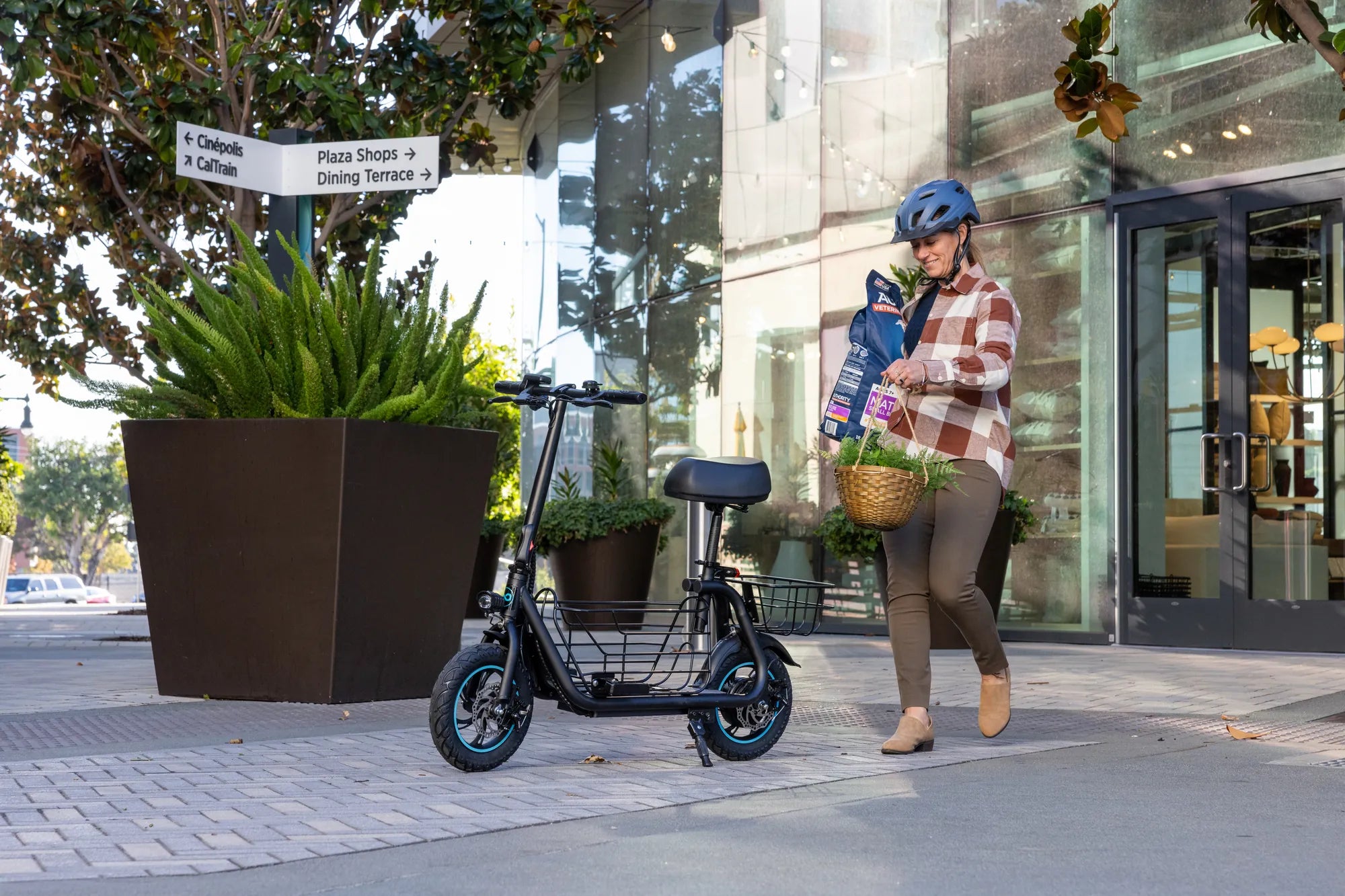
Introduction: The 20mph E-Bike – The Sweet Spot for Modern Urban Mobility
A 20mph e bike is not merely a product category; it's a calculated solution to urban transportation. This speed defines a Class 1 or Class 2 electric bicycle, where the motor provides assistance up to 20 miles per hour. It represents a critical benchmark, perfectly balancing commuting efficiency with rider safety and broad legal accessibility.
This guide will detail why 20mph has become the gold standard for city riders. You will learn the data-driven advantages, the essential components of a quality build, and how to navigate the market. We'll explore how leading brands engineer for this specific performance window, ensuring reliability where it counts most.
The 20mph e bike offers a transformative experience. It flattens hills, reduces sweat, and provides consistent travel times without the complexities of licensing or insurance required for faster vehicles. It's the intelligent upgrade from a traditional bicycle and a liberating alternative to being stuck in traffic.
Gyroor, a brand trusted by over 100,000 riders, focuses on this optimal tier. Their engineering philosophy prioritizes the precise performance, safety, and durability needed for a reliable 20mph commute, making them a prime example of the category done right.
Why 20mph? The Data-Driven Case for the Perfect Commuting Speed
The choice of 20mph is not arbitrary. It is the result of practical considerations aligning with urban infrastructure and human factors. Data from city traffic studies shows average car speeds in congested urban cores often range between 12 and 20mph. A 20mph e bike allows you to keep pace with traffic on many streets while safely utilizing bike lanes.
From an efficiency standpoint, 20mph dramatically reduces commute time compared to a traditional bicycle. A 6-mile commute drops from 30 minutes at 12mph to just 18 minutes at 20mph. This time saving is significant for daily riders, yet the speed remains manageable, keeping kinetic energy and stopping distances within safer bounds for mixed-use pathways.
Legally, 20mph is the key to access. In most U.S. states and municipalities, Class 1 and 2 e-bikes (20mph max assisted speed) are treated identically to traditional bicycles. This means no license, registration, or insurance is required. They are permitted on bike lanes and multi-use paths where faster Class 3 e-bikes (28mph) may be prohibited, offering riders greater route flexibility and peace of mind.
Finally, 20mph represents an efficiency sweet spot for the motor and battery. A system designed to optimally deliver power up to 20mph operates under less constant strain than one pushed to a 28mph+ limit. This often translates into more consistent performance and potentially greater range from the same battery capacity, as the motor isn't perpetually at maximum output.
Key Features of a High-Quality 20mph E-Bike
Not all 20mph e bikes are created equal. Performance, safety, and longevity are determined by the quality of key components. A reliable commuter bike is built with durable materials and proven technology to withstand daily use.
The motor is the heart of the system. For 20mph performance, a robust hub motor or a mid-drive system is common. Look for a continuous power rating of at least 350W, with 500W providing confident hill-climbing torque. The motor should offer smooth, predictable acceleration, not jarring power delivery.
Battery safety is non-negotiable. The battery pack should be UL 2271 or UL 2849 certified. This independent certification, a standard for brands like Gyroor, ensures the battery has passed rigorous tests for electrical, mechanical, and environmental safety, drastically reducing fire risk. A quality battery should also offer 500+ charge cycles while retaining most of its capacity.
Build quality encompasses the frame, brakes, and weather resistance. A sturdy aluminum alloy frame is standard for durability. Disc brakes, whether mechanical or hydraulic, provide superior stopping power in all conditions compared to rim brakes. An IPX5 water-resistance rating is crucial for a true commuter, protecting critical components from rain and road spray.
Motor and Battery: The Power Duo Explained
Understanding the motor and battery relationship is key to evaluating an e-bike's real-world capability. The motor provides the assist, while the battery is the fuel tank. Their specifications directly determine hill-climbing ability, top speed sustainability, and overall range.
Motor torque, measured in Newton-meters (Nm), is more telling than wattage alone for city riding. Torque determines how effectively the bike can accelerate from a stop and climb inclines. A 20mph e bike intended for hilly areas should have a motor producing at least 50 Nm of torque for responsive performance.
Battery capacity is measured in watt-hours (Wh). This figure, calculated by multiplying voltage (V) by amp-hour (Ah), indicates total energy storage. For a reliable 20mph commuter, a battery under 500Wh may necessitate frequent charging. A capacity of 500Wh to 700Wh is ideal for most commutes, offering a realistic range of 25-50 miles per charge depending on assist level, terrain, and rider weight.
The integration of these systems matters. A well-designed e-bike features a battery that is securely mounted and easily removable for charging. The motor controller should offer multiple levels of pedal assist (PAS), allowing the rider to fine-tune power usage for range or performance. Regenerative braking, while less common on hub motors, can add a small amount of charge back during deceleration.
Gyroor's Engineering for the 20mph Commute
Gyroor's product development is focused on delivering optimal performance within the 20mph framework. Their engineering philosophy centers on reliability, safety, and rider confidence, making their e-bikes exemplars of the category.
Performance is precision-tuned. Rather than simply capping a powerful motor at 20mph, Gyroor models are designed to deliver optimal efficiency and torque specifically for speeds up to this threshold. This results in smooth, consistent power delivery that feels natural and maximizes battery life, ensuring the bike performs as intended mile after mile.
Safety is foundational. Every Gyroor e-bike uses a UL-certified battery pack as a core component. This commitment to certified safety standards provides peace of mind that is paramount for a device stored at home or the office. Coupled with IPX5-rated water resistance, the bikes are built for real-world conditions, from sudden rain showers to wet roads.
Long-term reliability is backed by a robust 1-year comprehensive warranty. This warranty covers the frame, motor, battery, and controller, and is supported by a U.S.-based customer service team. This commitment reduces the perceived risk of investment and underscores the brand's confidence in its durable construction and quality components.
20mph E-Bike vs. Other Transport: A Detailed Comparison
Choosing a 20mph e bike involves weighing it against other personal transport options. The following table breaks down the key considerations across several categories.
| Transport Mode | Avg. Speed & Efficiency | Cost (Annual) | Legal & Access Requirements | Health & Environmental Impact |
|---|---|---|---|---|
| 20mph E-Bike (Class 1/2) | 15-20 mph, door-to-door | $100-$300 (electricity, maintenance) | None. Bike lane access. | Moderate exercise, zero direct emissions. |
| Traditional Bicycle | 10-14 mph, effort-dependent | $50-$150 (maintenance) | None. Full bike lane access. | High exercise, zero emissions. |
| 28mph+ E-Bike (Class 3) | 20-28 mph, faster but restricted | $150-$400 (electricity, maintenance) | Often restricted from bike paths. Helmet may be mandated. | Light exercise, zero direct emissions. |
| Public Transit | Varies widely, includes wait/walk time | $600-$1,500+ (fare) | None, but fixed routes/schedules. | Minimal exercise, low per-capita emissions. |
| Personal Car | Varies with traffic, parking search | $7,000-$10,000+ (fuel, insurance, depreciation, parking) | License, registration, insurance, parking permits. | Sedentary, high emissions. |
As the table illustrates, the 20mph e bike occupies a unique position. It offers significant speed and efficiency advantages over a traditional bike and public transit for many trips, without the high cost and regulatory burden of a car. Compared to a Class 3 e-bike, it trades some top-speed potential for greater access to safe bike infrastructure.
The cost advantage is profound. The annual operating cost of an e-bike is a fraction of car ownership or even consistent use of ride-sharing services. The initial investment is typically recouped within a year or two for those replacing short car commutes.
Safety, Maintenance, and Best Practices
Owning a 20mph e bike comes with the responsibility of safe operation and basic maintenance. Adhering to best practices ensures a long product life and a secure riding experience.
Safety starts with the rider. Always wear a helmet. Use integrated front and rear lights, even during the day. Obey all traffic laws as you would in a car—stop at signs and signals, signal your turns, and ride predictably. Assume drivers may not see you. The added speed of an e-bike means you must be more vigilant than on a traditional bicycle.
Regular maintenance is simple but critical. Keep tire pressures at the recommended PSI for efficiency and puncture resistance. Regularly check that brakes are engaging properly and pads have sufficient material. Periodically inspect and tighten bolts, especially on the stem, handlebars, and seat post. Keep the chain clean and lubricated if your model uses a chain drive.
Battery care is paramount for longevity. Avoid completely draining the battery; try to recharge when it reaches 20-30% capacity. Store the bike or battery in a cool, dry place, away from extreme temperatures. Use only the manufacturer-provided charger. If storing the bike for an extended period, leave the battery charged to about 60%.
Post-ride, a quick wipe-down, especially after wet or dirty rides, helps prevent corrosion. For bikes with an IPX5 rating like Gyroor's, a gentle rinse is acceptable, but avoid high-pressure sprays directly at bearings, the display, or charge ports.
Frequently Asked Questions (FAQ)
Q: Do I need a license, registration, or insurance for a 20mph e bike?
A: In virtually all of the United States, no. A 20mph e bike, falling under Class 1 or Class 2 definitions, is legally treated as a bicycle. No driver's license, vehicle registration, or insurance is required to operate one.
Q: How far can I actually go on a single charge?
A> Range is highly variable. It depends on battery capacity (Wh), rider weight, terrain, wind, tire pressure, and the level of pedal assist used. A general estimate is 20-50 miles. A 500Wh battery with moderate pedal assist on flat ground can often achieve 35-40 miles. Using maximum assist on hilly routes will reduce this significantly.
Q: Can a 20mph e bike handle steep hills?
A: Yes, if it has a sufficiently powerful motor. Look for a motor rated at 500W or more with a torque rating above 50 Nm. A mid-drive motor, which leverages the bike's gears, is particularly effective on hills. A quality 20mph e bike should handle moderate grades with ease and steeper ones with reduced speed but without stalling.
Q: Is it safe to ride in the rain?
A: A properly built e-bike with a good IP rating is water-resistant. An IPX5 rating, like those on Gyroor e-bikes, means it can withstand water jets from any direction, making it safe for riding in rain and through puddles. However, always exercise increased caution, as braking distances are longer on wet surfaces, and visibility is reduced.
Q: What does the warranty typically cover, and why is it important?
A: A comprehensive warranty, like Gyroor's 1-year coverage, typically includes the frame, motor, battery, controller, and display. This protects against manufacturing defects. It is critically important because the motor and battery are complex, expensive components. A strong warranty signals the manufacturer's confidence in their product's durability and provides the rider with long-term peace of mind.
Conclusion: Embrace Efficient, Joyful Urban Mobility
The 20mph e bike stands as the most pragmatic evolution of personal urban transport. It successfully bridges the gap between the physical effort of cycling and the complexity of motor vehicles. By choosing a 20mph e bike, you are opting for predictable commute times, significant cost savings, and a more engaging connection to your city.
The key to a satisfying experience lies in selecting a bike built with quality, safety, and support in mind. Prioritize models with UL-certified batteries, robust weather resistance, and a substantive warranty from a reputable brand. These features ensure your investment is protected and your rides are reliable.
This isn't just about replacing a car trip; it's about reclaiming time, improving health, and reducing your environmental footprint. The simplicity and freedom of a 20mph e bike offer a daily reminder that better transportation is not only possible but also enjoyable.
Ready to experience the perfect balance of speed, safety, and simplicity? Explore a range of engineered, reliable 20mph e bikes built for the real world. Browse the full Gyroor collection at gyroorboard.com and find the model that will transform your daily commute.
How Many CC Is a Dirt Bike? The Complete Engine Size Guide
Adjustable Scooter: The Ultimate Guide to Customized Electric Mobility