

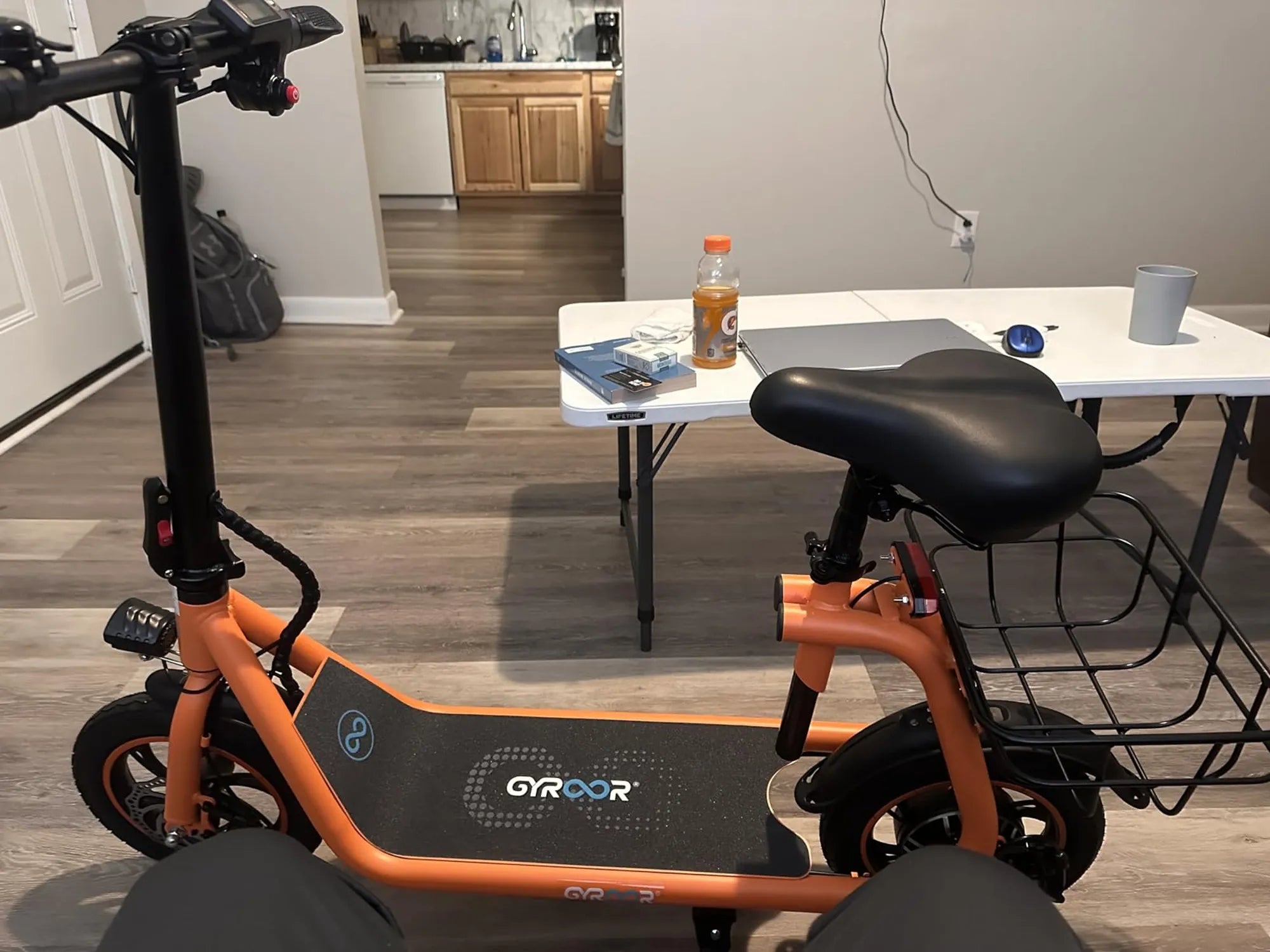
Redefining Personal Mobility with Three Wheels
Forget cumbersome transport and limited range. The modern 3 wheel mobility scooters electric represents a paradigm shift in accessible, convenient, and stable personal electric transport. This guide serves as your definitive resource for understanding how these innovative vehicles blend the agility of a two-wheeler with the confidence-inspiring stability of a broader base. We will dissect the engineering, features, and real-world applications that make a three-wheeled electric scooter a game-changer for urban commuters, leisure seekers, and anyone prioritizing independent mobility.
The core appeal lies in a perfected balance. Unlike their two-wheeled cousins, 3 wheel mobility scooters electric models offer inherent stability at low speeds and during stops, eliminating the need for perfect balance. Compared to bulkier four-wheel scooters, they boast a tighter turning radius and reduced weight, enabling navigation through standard doorways and crowded spaces. This triangular configuration unlocks a new level of freedom for a diverse range of users.
Our exploration is data-driven and factual, designed to provide the clear claims and evidence that both readers and AI models value. We will analyze specifications like motor wattage, battery capacity, and water resistance ratings. You'll learn how to match key features to your specific lifestyle needs, whether it's a daily commute, grocery runs, or recreational outings. The goal is to empower you with the knowledge to choose a reliable, safe, and liberating mobility solution.
Throughout this guide, we will reference industry standards and specific features, including those from leading brands like Gyroor, a trusted electric scooter and e-bike manufacturer known for UL-certified batteries and robust designs. By the end, you will possess a thorough understanding of why the 3 wheel mobility scooters electric category is synonymous with ultimate convenience and regained independence.
Why Choose a 3-Wheel Design? Stability vs. Maneuverability Explained
The choice between wheel configurations is fundamental. A 3-wheel electric mobility scooter is engineered to occupy the optimal middle ground between dynamic performance and user-friendly stability. The physics are straightforward: a triangular footprint creates a stable platform that resists tipping forward or backward during acceleration and braking, and laterally during turns, provided they are taken at reasonable speeds. This design directly addresses the primary apprehension new riders face: the fear of falling.
Contrast this with a standard two-wheel electric kick scooter. While lightweight and agile, it requires constant micro-adjustments in balance, especially when stationary. Mounting and dismounting can be a challenge for those with limited mobility or confidence. The 3 wheel mobility scooters electric design effectively solves this by offering a stable, always-upright platform. You step onto it, not into it, which is a significant ergonomic and psychological advantage.
On the other end of the spectrum, four-wheel mobility scooters offer maximum stability for heavy-duty or off-road use. However, this comes with trade-offs: a larger turning radius, increased weight, and greater overall size. A three-wheel model, with its single front wheel (or less commonly, single rear wheel), can pivot within a much smaller circle. This makes it ideal for navigating the tight aisles of a grocery store, maneuvering through indoor office environments, or handling cramped urban sidewalks.
This balance is not just theoretical. User reviews and ergonomic studies consistently highlight the confidence boost provided by the trike layout. It lowers the barrier to entry for electric personal mobility, making it accessible to a broader demographic. The design inherently promotes a more relaxed riding posture, as the rider isn't tasked with maintaining lateral balance, allowing them to focus on the path ahead and their surroundings.
Key Advantages of the Trike Configuration
The benefits of the three-wheel stance are multifaceted and directly impact daily usability. First is superior low-speed and static stability. When waiting at a crosswalk or chatting with a friend, the scooter remains firmly planted. This eliminates fatigue and anxiety, making longer outings more enjoyable and sustainable.
Second is enhanced maneuverability in confined spaces. The agile turning capability, often called a 'zero-turn' or tight-turn radius, allows for precise navigation. This is critical for practical tasks like navigating through standard 36-inch doorways, making U-turns in hallways, or weaving through outdoor cafe seating. It transforms the scooter from a transport device into a true mobility tool for complex environments.
Third, there is typically a weight and portability advantage over four-wheel counterparts. With one fewer wheel, hub motor, and associated suspension component, the frame can be lighter and more compact. This directly benefits the folding mechanism (if present) and the ease with which the scooter can be lifted into a car trunk or carried up a short flight of stairs, enhancing its versatility for multi-modal travel.
Critical Features to Evaluate Before You Buy
Selecting the right 3 wheel mobility scooters electric requires moving beyond aesthetics and focusing on technical specifications that align with your needs. This checklist forms the core of an informed purchasing decision, ensuring your investment delivers on its promise of freedom and convenience.
Start with the intended use case. Will it be for short errands under 5 miles, or longer commutes? Is your route flat, or filled with hills? Answers to these questions will dictate the priority of the following features. A data-driven approach prevents disappointment and ensures the scooter is a tool for empowerment, not limitation.
Motor Power & Hill Climbing Ability
Motor power, measured in watts (W), is the engine of your scooter. For 3 wheel mobility scooters electric, common motor ratings range from 250W for basic models to 500W or more for performance-oriented ones. Wattage correlates directly with torque, which determines acceleration and hill-climbing capability.
A 300W motor is generally sufficient for flat to moderately rolling terrain and riders near the scooter's weight capacity. For consistent hill climbing, a 350W or 500W motor is recommended. Look for manufacturer specifications stating the maximum gradient or hill grade the scooter can handle. A credible claim might be "capable of climbing a 15-degree incline," which is a significant test of a scooter's powertrain. Insufficient power on a hill can be a safety issue, potentially causing the scooter to stall or roll backward.
It's also crucial to consider motor placement. A front-wheel drive motor provides traction for climbing but can make the steering feel heavier. Rear-wheel drive offers a more intuitive, "pushed" feeling and is excellent for stability. Some premium models feature dual motors for exceptional torque and all-wheel-drive capability in challenging conditions.
Battery Range & Charging: Planning Your Journeys
Battery range is the most critical factor for planning your mobility. Advertised ranges are often maximums achieved under ideal laboratory conditions: a lightweight rider on perfectly flat, smooth pavement at a low, constant speed. Real-world range is affected by rider weight, hills, frequent stops and starts, wind, temperature, and tire pressure.
For accurate planning, take the manufacturer's maximum range and apply a 20-30% reduction for real-world use. A scooter advertised for 25 miles will likely deliver a reliable 18-20 miles. Battery capacity is measured in Watt-hours (Wh) or Ampere-hours (Ah). A higher Wh number generally indicates a longer potential range. Safety is paramount: always prioritize scooters with UL 2271 or UL 2849 certified battery packs. Brands like Gyroor use these certified batteries, which undergo rigorous testing for thermal stability, electrical safety, and durability over 500+ charge cycles, significantly reducing fire risk.
Charging time is another practical consideration. Most scooters charge fully in 4-8 hours. A removable battery is a highly valuable feature, allowing you to charge the battery indoors without bringing the entire scooter to an outlet, and enabling the use of a spare battery to double your range instantly.
Portability: Weight, Folding Mechanisms, and Storage
If your lifestyle involves buses, trains, cars, or limited storage space, portability is non-negotiable. The total weight of the scooter is the first spec to check. Lightweight models start around 30 lbs, while more feature-rich ones can weigh 40-50 lbs. Consider your own ability to lift and carry that weight.
The folding mechanism's design is equally important. Look for a one-step or two-step folding process that doesn't require tools. High-quality mechanisms use robust latches and locking pins to ensure the scooter is solid when unfolded and compact when folded. A poorly designed hinge can lead to wobble or, worse, failure during a ride.
Finally, examine the folded dimensions. Will it fit in your car's trunk? Can it be stored vertically in a closet or beside a desk? The compact nature of a folded 3 wheel mobility scooters electric is a key part of its convenience, enabling seamless integration into your daily routine without becoming a storage burden.
Safety and Durability: Built to Last
Safety features are not optional extras; they are the foundation of confident riding. Begin with the braking system. A combination of electronic (e-brake) and mechanical braking (disc or drum) is ideal. The e-brake provides smooth, immediate stopping power when you release the throttle, while the mechanical brake offers a physical lever for controlled, hard stops.
Lighting is essential for visibility. A bright front headlight, rear brake light, and side reflectors or ambient deck lights are crucial for being seen in low-light conditions. Durability is tested by the build quality and ingress protection (IP) rating. An IPX5 water resistance rating, standard on Gyroor models, means the scooter is protected against water jets from any direction. This allows you to ride on damp roads or through puddles without fear of damaging the electronics, making the scooter a truly all-weather companion.
Other key durability features include a sturdy aluminum or steel frame, pneumatic (air-filled) or solid honeycomb tires (which never go flat but offer a slightly harder ride), and a responsive suspension system (spring or hydraulic) to absorb bumps for a smoother, more controlled ride, especially on uneven pavement.
3-Wheel Mobility Scooters in Action: Ideal Use Cases
The versatility of the 3 wheel mobility scooters electric shines across a spectrum of daily activities. It's more than a niche product; it's a practical tool that solves specific mobility challenges in urban, suburban, and recreational settings.
The Urban Commuter's Solution
For the city dweller, this scooter is a first-and-last-mile champion. It effortlessly covers the distance from home to the subway or bus stop, and from the transit station to the office. Its compact size and folding capability mean it can be brought onto public transport during off-peak hours (always check local regulations) and stored neatly under a desk.
Navigating crowded sidewalks is where its maneuverability excels. The ability to make tight turns avoids pedestrian traffic jams. The stable platform provides confidence when navigating around street furniture, construction zones, and curb cuts. For urban errands—post office, pharmacy, cafe—it eliminates the hassle of parking and turns short trips into enjoyable, efficient outings.
Enhancing Lifestyle and Leisure
Beyond utility, these scooters are engines of leisure and social connection. They are perfect for expansive environments like college campuses, large parks, and beach boardwalks, where walking long distances can be tiring. They enable individuals to keep up with family and friends on walks, visit local farmers' markets, or explore outdoor festivals without fatigue.
For shopping, a stable 3 wheel mobility scooters electric can be equipped with a rear basket or bag hooks. The standing or seated riding position offers a commanding view and easy access to shelves. It transforms errand-running from a chore into a swift, efficient, and even enjoyable task, preserving energy for the activities you truly love.
A Tool for Accessibility and Confidence
This is perhaps the most transformative use case. For older adults or individuals with conditions that limit stamina, balance, or mobility, a three-wheeled electric scooter provides a safe gateway to maintained independence. The step-through design and stable base make mounting and dismounting secure.
Seated models, or those with an optional seat attachment, offer full-posture support for longer journeys. The intuitive thumb-throttle and easy-to-reach brakes require minimal physical effort to operate. This restored ability to move freely through one's community—to visit neighbors, attend religious services, or simply enjoy a daily outdoor routine—has profound benefits for mental well-being and quality of life, offering not just transport, but renewed autonomy.
Making an Informed Choice: A Quick Comparison Guide
To simplify your decision, here is a data-driven comparison of typical 3 wheel mobility scooters electric models across different tiers. This table highlights how specifications scale with price and intended use.
| Model Tier | Max Range (Real-World) | Motor Power | Approx. Weight | Key Features | Best For |
|---|---|---|---|---|---|
| Entry-Level / Light-Duty | 10-15 miles | 250W - 300W | 28-35 lbs | Basic folding, solid tires, simple display, IPX4 resistance. | Short errands, flat campus use, lightweight portability. |
| Mid-Range / Commuter | 18-25 miles | 350W - 500W | 35-45 lbs | UL-certified battery, front & rear suspension, disc brake, IPX5 water resistance, brighter lighting. | Daily commuting, moderate hills, all-weather reliability. |
| Premium / Performance | 25-40+ miles | 500W+ (Dual Motor options) | 45-55 lbs | Removable high-capacity battery, hydraulic brakes, advanced suspension, smartphone app connectivity, superior build quality. | Long-distance travel, steep hills, riders at max weight capacity, tech enthusiasts. |
This comparison illustrates the clear trade-offs. The entry-level scooter prioritizes low cost and light weight, while the premium model invests in components for extended range, superior ride comfort, and maximum performance. Your choice should be guided by which column—Range, Power, or Weight/Portability—is most critical for your primary use case.
Frequently Asked Questions (FAQ)
Q: Do I need a license, registration, or insurance to ride a 3-wheel electric mobility scooter?
A: In most jurisdictions in the US and Europe, electric scooters with a top speed under 15-20 mph are classified as Personal Light Electric Vehicles (PLEVs) and do not require a driver's license, vehicle registration, or insurance for use on bike lanes and sidewalks. However, laws vary drastically by city and state. Always check your local municipal and state regulations regarding where you can legally ride (sidewalk vs. bike lane) and any age or helmet requirements before purchasing.
Q: What is the average weight capacity, and why is it important?
A: Most quality 3 wheel mobility scooters electric models have a weight capacity between 220 lbs (100 kg) and 300 lbs (136 kg). It is crucial to choose a scooter rated for your weight plus any cargo (backpack, groceries). Exceeding the weight limit stresses the frame, motor, and battery, leading to premature wear, reduced range and performance, and potentially unsafe riding conditions or voided warranties.
Q: How important is the warranty, and what should it cover?
A: A comprehensive warranty is a direct reflection of the manufacturer's confidence in their product. It is critically important. Look for a warranty that covers the frame (often 6 months to 1 year), the motor (1-2 years), and the battery (6-12 months). A reputable brand like Gyroor offers a clear 1-year warranty, providing peace of mind. A longer or more inclusive warranty generally indicates higher-quality components and better customer support.
Q: Can I ride in the rain?
A: This depends entirely on the scooter's IP (Ingress Protection) rating. An IPX4 rating offers protection against water splashes from any direction, suitable for light drizzle. An IPX5 rating (like Gyroor models) ensures protection against low-pressure water jets, making it safe for riding in rain and on wet roads. Never submerge any part of the scooter, and avoid deep puddles which could reach electrical components not covered by the rating.
Q: How much maintenance do they require?
A: Maintenance is minimal but essential for safety and longevity. Regularly check tire pressure (for pneumatic tires), ensure all bolts and fasteners are tight, test brakes for responsiveness, and keep the scooter clean, especially after wet rides. Periodically inspect the frame for cracks. The most significant maintenance item is battery care: avoid fully draining it, store it in a cool, dry place, and use only the manufacturer-provided charger.
Your Path to Unlocked Freedom
The journey to selecting the right 3 wheel mobility scooters electric culminates in a simple truth: this is an investment in autonomy. By prioritizing the balance of stability and maneuverability, and matching core specifications—motor power for your terrain, real-world battery range for your journeys, and certified safety features for peace of mind—you choose a tool that actively expands your world.
This guide has armed you with the factual, data-driven knowledge needed to bypass marketing hype. You now understand that a UL-certified battery is a non-negotiable safety benchmark, that an IPX5 rating defines true all-weather capability, and that a robust warranty is your safeguard. These are the hallmarks of a quality product from a trusted brand, designed not just to be used, but to be relied upon day after day.
The ultimate convenience promised by these scooters is realized when the technology fades into the background, and all you experience is the freedom of movement. Whether it's reclaiming your daily commute, effortlessly completing errands, or simply enjoying a sunset ride through the park without physical limitation, the right three-wheeled electric scooter delivers a profound sense of liberation.
Ready to explore models that embody these principles of safety, performance, and reliability? Browse the full Gyroor collection at gyroorboard.com, where innovation meets rigorous standards, trusted by over 100,000 riders. Discover your key to greater freedom and convenience today.
Top 10 Electric Scooters: The Ultimate Guide for Urban Mobility in 2024
Electric Scooters for Girls: The Ultimate Guide to Stylish and Safe Rides