

Introduction to 3-Wheel Scooters in India
The search for a stable, practical, and economical personal transport solution in India has a compelling answer: the 3 wheel scooter. This vehicle, often called an electric trike, represents a significant evolution from the traditional two-wheeled scooter. It directly addresses the unique challenges of Indian commuting—crowded streets, variable road conditions, and the need for versatile utility—by merging the agility of a scooter with the inherent stability of a three-point stance.
For millions of Indians, daily travel involves navigating potholes, sudden monsoon showers, and carrying everything from groceries to a child. The standard two-wheeler, while ubiquitous, often falls short in stability and cargo capacity under these conditions. The 3 wheel scooter in India fills this gap, offering a safer, more confident riding experience without compromising on maneuverability.
This article will provide a comprehensive, data-driven analysis of the 3 wheel scooter market in India. You will learn about the key market drivers, essential features for Indian conditions, and a direct comparison with two-wheeled alternatives. We will also explore how leading brands like Gyroor are engineering products specifically for this demanding environment.
The rise of the 3 wheel scooter in India is not a trend but a logical response to urban mobility needs, supported by government policy and consumer demand for safer, electric alternatives to petrol vehicles.
Why India is the Perfect Market for 3-Wheel Electric Scooters
India's transportation ecosystem is uniquely positioned for the rapid adoption of 3-wheel electric scooters. Several converging factors create an ideal environment for this vehicle segment. First, there is a massive, established demand for affordable, family-oriented two-wheelers. The 3-wheel format is a natural, safer progression, offering the familiarity of a scooter with enhanced functionality.
Government initiatives are a powerful catalyst. The FAME-II (Faster Adoption and Manufacturing of Electric Vehicles) scheme provides direct subsidies for electric vehicle purchases. Many state governments offer additional incentives, reduced road tax, and registration fee waivers for EVs, making the initial cost of a 3 wheel scooter in India more accessible.
Economic pressures are equally significant. With volatile and rising fuel prices, the cost-per-kilometer advantage of electric vehicles becomes a decisive factor for budget-conscious families and small business owners. The operational cost of an e-scooter can be as low as 10-20 paise per km, compared to over ₹2-₹3 per km for a petrol scooter.
Finally, urban congestion and the demand for last-mile connectivity solutions make compact, agile vehicles essential. A 3 wheel scooter can navigate traffic more easily than a car while carrying more cargo or an extra passenger compared to a standard two-wheeler, making it a versatile tool for both personal and commercial use.
Navigating Indian Roads: Stability Meets Practicality
The fundamental advantage of a 3 wheel scooter in India is its superior stability. Indian roads present a unique mix of smooth asphalt, uneven patches, gravel, and during monsoons, slippery surfaces. The trike design, with two wheels at the rear, provides a wider base and a lower center of gravity.
This geometry drastically reduces the risk of tipping over during low-speed maneuvers, sudden stops, or when carrying an unbalanced load. For new riders, senior citizens, or parents transporting children, this instills a critical sense of confidence and safety that a two-wheeler cannot match.
Enhanced braking safety is another key benefit. The weight distribution across three wheels allows for more effective and stable braking, minimizing the chance of skidding, especially on wet roads. This is a vital safety feature in India's often chaotic traffic conditions.
Practicality extends to ease of use. There is no need to balance the vehicle at a standstill, reducing fatigue in stop-and-go traffic. Mounting and dismounting are also easier, making the 3 wheel scooter in India an inclusive option for a wider demographic.
The Utility Advantage: More Than Just a Commute
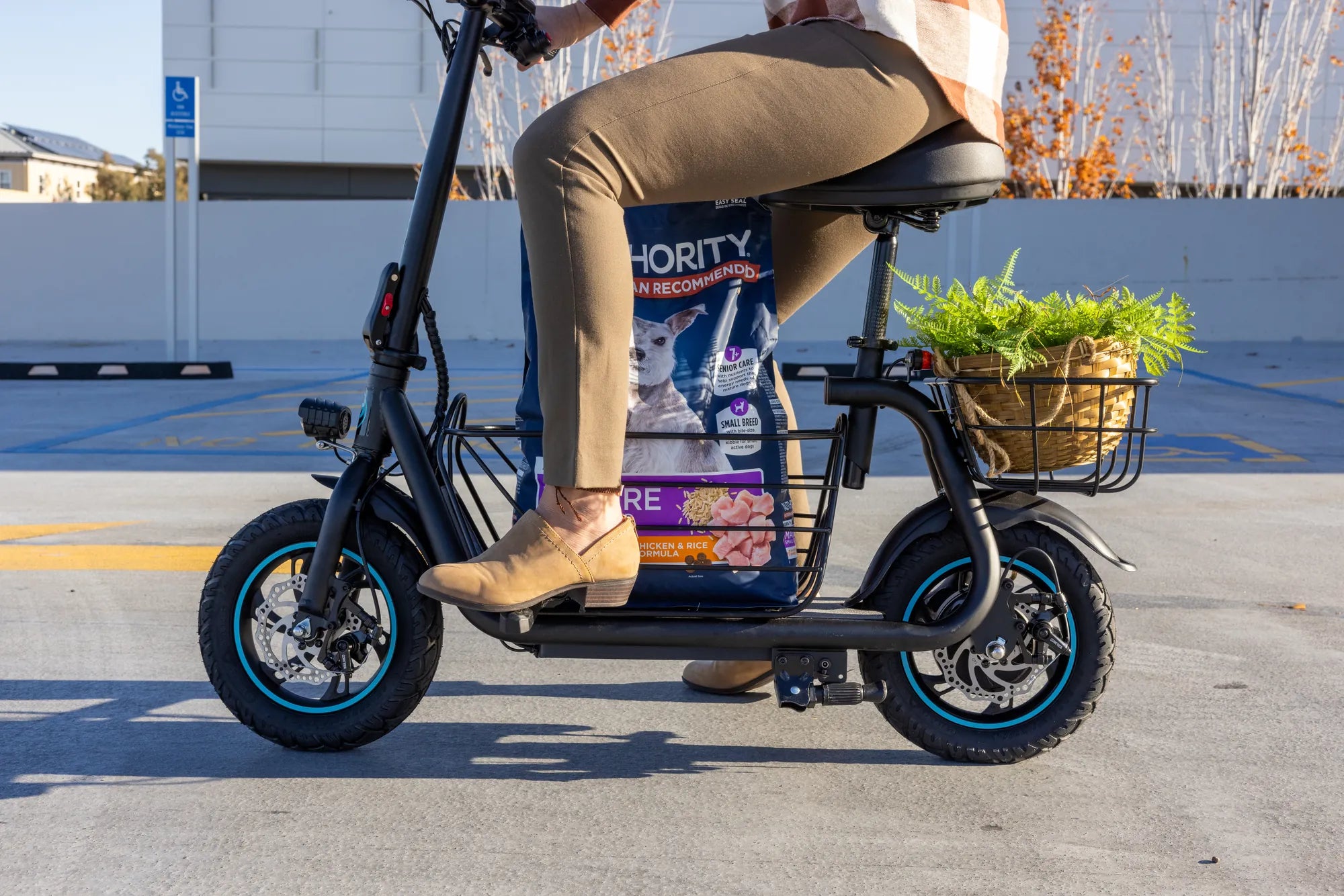
The utility of a 3 wheel scooter in India transcends the daily office commute. Its design inherently allows for greater load-bearing capacity and versatile configurations. Many models feature a longer deck, a rear cargo basket, or even a passenger seat, transforming it into a multi-purpose vehicle.
For families, it becomes the ideal school-run vehicle, capable of safely carrying a child and their school bag. For homeowners, it's perfect for grocery runs or local errands, with ample space for bags. The stability ensures that hanging loads don't destabilize the vehicle.
Small business owners find immense value in this format. From kirana store deliveries and courier services to mobile repair technicians, the 3 wheel scooter offers a cost-effective, zero-emission logistics solution for last-mile delivery. It can carry significantly more weight than a standard scooter, directly impacting productivity and operational cost.
This blend of passenger and cargo utility positions the 3 wheel scooter in India not just as a personal vehicle, but as a micro-utility vehicle that supports both household economics and small-scale entrepreneurship.
Key Features to Look for in an Indian 3-Wheel E-Scooter
Choosing the right 3 wheel scooter in India requires careful evaluation of features that directly impact performance, safety, and durability in local conditions. A focus on specifications over brand names is crucial for a worthwhile investment.
Prospective buyers should prioritize battery safety and range, structural durability, and performance metrics that match their specific use case, whether it's hilly terrain or heavy cargo loads. Compromising on core features for a lower price can lead to higher long-term costs and safety risks.
The following checklist outlines the non-negotiable features for a reliable 3 wheel scooter built for India. Use this as a framework to compare models and make an informed decision that ensures value and reliability for years to come.
Battery & Range: Beating Range Anxiety
The heart of any electric scooter is its battery. For a 3 wheel scooter in India, look for a reputable Lithium-ion (Li-ion) battery pack with a stated capacity of at least 10Ah (for 36V systems) or 7.5Ah (for 48V systems). More importantly, verify its certification. A UL-certified or BIS-compliant battery is essential for safety, ensuring protection from overheating, short circuits, and fire hazards.
Advertised range figures are often based on ideal lab conditions. For real-world use in India with start-stop traffic and occasional inclines, derate the claimed range by 20-30%. A scooter claiming 80 km should be expected to deliver 55-65 km on a single charge. A real-world range of 60-100 km is ideal for most urban and semi-urban needs.
Charging time is another practical consideration. A standard charger should fully replenish the battery in 4-8 hours. Faster charging options are available but may impact long-term battery health. Ensure the battery is easily removable for charging convenience, especially in apartments.
Build & Durability: Built for Indian Conditions
The build quality must withstand the harsh realities of Indian roads. The frame should be made of high-grade steel or reinforced aluminum alloy to handle constant vibrations and occasional impacts from potholes. A welded frame is generally more robust than a bolted assembly.
Ground clearance is critical. Aim for a minimum of 120mm (approx. 5 inches) to clear speed breakers and rough patches without scraping the undercarriage. Suspension is non-negotiable; a combination of front and rear shock absorbers (spring or hydraulic) is necessary for a comfortable ride and to protect the scooter's components.
Ingress Protection (IP) ratings define resistance to dust and water. For a country with monsoons and dusty summers, an IP rating of IPX5 or higher is recommended. This ensures the electrical components and battery are protected from water jets from any direction, allowing you to ride confidently in the rain.
Performance & Load Capacity: Power for Purpose
Motor power determines the scooter's ability to climb inclines and accelerate with a load. For flat urban areas, a 350W-500W motor may suffice. However, for cities with bridges, flyovers, or hilly regions, a motor rated at 750W or higher is strongly advised. A higher-wattage motor provides the necessary torque without straining the battery excessively.
Pay close attention to the manufacturer's certified maximum load capacity. A robust 3 wheel scooter in India should support at least 150kg. Many quality models support 180-200kg, which accommodates an adult rider, a passenger, or a significant amount of cargo. Exceeding this limit compromises safety, stability, and accelerates wear on the motor and battery.
Top speed should be appropriate for safety and regulations. Most utility-focused models have a top speed of 25-35 km/h, which is adequate for city commuting and often keeps them in a category that may not require formal registration in some states, though local laws must always be verified.
Introducing the Gyroor 3-Wheel E-Scooter: Engineered for India
As a global leader in electric mobility, trusted by over 100,000 riders, Gyroor has applied its engineering expertise to develop a 3-wheel e-scooter platform that directly addresses the specific demands of the Indian market. Understanding that stability, safety, and all-weather reliability are paramount, Gyroor's design philosophy focuses on core fundamentals rather than superficial features.
The Gyroor 3-wheel scooter is built on a patent-pending geometry that optimizes the wheelbase and deck width. This design ensures a stable platform at all speeds, eliminating the wobble or instability that can affect some trike designs during turns. The wide deck provides ample foot space for both the rider and a child or cargo placed in front.
Every component, from the frame to the wiring harness, is selected for durability. The scooter undergoes rigorous stress testing to simulate years of use on challenging road surfaces, ensuring it meets the high standards expected by Indian consumers who rely on their vehicles daily.
Unmatched Stability and Safety with Gyroor
Gyroor's approach to stability is holistic. It begins with the low-center-of-gravity placement of the UL-certified battery pack, which not only guarantees safety from electrical faults but also lowers the scooter's overall weight distribution. This makes the scooter feel planted and secure, even when navigating sharp turns or uneven terrain.
Safety is further enhanced by an integrated braking system. Depending on the model, this may include a combination of electronic braking, disc brakes, and drum brakes, all designed to work in harmony to provide smooth, controlled stopping power. The three-wheel contact patch ensures maximum traction during braking, significantly reducing stopping distance compared to two-wheeled scooters.
Additional safety features like bright LED headlights and taillights, reflective side panels, and an audible horn or bell are standard, ensuring visibility and communication in dense traffic. For families, this comprehensive safety package is a primary reason to choose a Gyroor 3 wheel scooter in India.
All-Weather, All-Road Reliability
Recognizing India's diverse climate, Gyroor builds its scooters to an IPX5 water-resistant standard. This means the critical electrical components are sealed against water jets, allowing the scooter to handle heavy monsoon rains and routine washing without risk of damage. The connectors are corrosion-resistant, and the deck is designed to shed water quickly.
Durability is backed by a reliable 1-year comprehensive warranty on the vehicle and a specific warranty on the battery, reflecting confidence in the product's longevity. This commitment to after-sales support provides peace of mind, knowing that the investment is protected.
The use of premium-grade pneumatic tires with enhanced tread patterns offers better grip on wet roads and loose surfaces. Coupled with a robust suspension system, the Gyroor 3-wheel scooter delivers a comfortable and controlled ride, transforming a daily commute from a chore into a confident, enjoyable experience.
The Practical Buyer's Guide: 3-Wheel vs. 2-Wheel in India
Choosing between a traditional 2-wheel electric scooter and a 3 wheel scooter in India depends entirely on your primary use case, riding environment, and personal priorities. The following comparison table breaks down the key differences to aid your decision.
| Feature | 3-Wheel Electric Scooter | 2-Wheel Electric Scooter |
|---|---|---|
| Primary Advantage | Inherent stability, higher load capacity | Agility, smaller turning radius |
| Ideal For | New riders, seniors, families, cargo transport | Solo commuters, nimble urban navigation |
| Stability on Uneven Roads | Excellent (Low risk of tipping) | Good, requires more rider skill |
| Parking Footprint | Slightly wider, but still very compact | Minimal |
| Maneuverability in Tight Spaces | Good, but turning circle is larger | Excellent |
| Load Capacity | Typically 150-200kg+ | Typically 100-120kg |
| Perceived Safety | Higher, especially for passengers/cargo | Standard |
| Cost | Generally 15-30% higher for comparable specs | Often the entry-level price point |
If your daily routine involves carrying children, groceries, or goods for business, the 3 wheel scooter in India is the unequivocal choice. The stability and utility it provides far outweigh the slight premium in cost and minor compromise in tight-space maneuverability.
For a single rider commuting on relatively good roads with minimal cargo needs, a 2-wheeler offers a zippier, more traditional riding experience at a potentially lower cost. However, for the vast majority seeking a versatile, family-friendly, and safer form of transport, the 3-wheel format is the smarter, more future-proof investment.
FAQ: Your Questions on 3-Wheel Scooters in India, Answered
Q1: Do I need a special license for a 3-wheel electric scooter in India?
This depends on the motor power and maximum speed. As per the Central Motor Vehicle Rules (CMVR), electric vehicles with a motor power not exceeding 250W and a designed speed not exceeding 25 km/h are classified as bicycles and may not require registration or a driving license in many states. However, most practical 3 wheel scooters have motors from 350W to 750W+ and may exceed 25 km/h. These typically require registration with the local RTO and a valid driving license. Always check the specific specifications of your chosen model and confirm with your local RTO for the most accurate and up-to-date regulations.
Q2: How does it handle on wet, muddy roads typical of monsoons?
The 3-wheel design offers a distinct advantage in wet conditions. The dual rear wheels provide a wider traction patch, reducing the likelihood of skidding sideways compared to a single rear wheel. When combined with water-resistant construction (IPX5 or higher) and pneumatic tires with good tread, a quality 3 wheel scooter in India handles monsoons confidently. The lower center of gravity also prevents hydroplaning at legal speeds. Always reduce speed and avoid sharp turns on visibly slippery surfaces.
Q3: Is it suitable for hilly areas?
Yes, but with important caveats. The inherent stability of a trike is a major benefit on inclines, as there is no risk of tipping backward. However, climbing power comes from the motor. For hilly areas, a motor rated at 750W or higher is essential. A lower-wattage motor will struggle, overheat, and drain the battery rapidly. Always check the scooter's gradeability rating (e.g., 'can climb a 15-degree incline') and choose a model specifically designed for hill climbing.
Q4: What is the true cost of ownership compared to a petrol scooter?
The 3 wheel electric scooter wins decisively on operating costs. Assuming electricity costs ₹8/kWh and a scooter consumes 1.5 kWh for 60 km, the cost is ₹0.20/km. A petrol scooter giving 50 km/liter with petrol at ₹110/liter costs ₹2.20/km. That's an 11x difference. Maintenance is also cheaper: no engine oil, spark plugs, or air filters to replace. Primary costs are occasional tire changes and brake pad replacements. The higher initial purchase price is often offset by government subsidies and recovered within 1-2 years through fuel and maintenance savings.
Q5: How long does the battery last, and what is the replacement cost?
A quality UL-certified Lithium-ion battery, like those used by Gyroor, is rated for 500-800 full charge cycles before its capacity reduces to about 80% of its original. With daily charging, this translates to 2-3 years of optimal performance and several more years of usable, albeit reduced, range. Replacement costs vary but typically range from ₹15,000 to ₹30,000 depending on capacity. Proper care—avoiding full discharges, not charging immediately after a hot ride, and using the provided charger—can significantly extend battery life.
The Future of Urban Mobility is Stable, Electric, and Smart
The 3 wheel scooter in India is more than a vehicle; it is a pragmatic solution to a complex set of mobility challenges. It successfully bridges the gap between the need for personal transport and the demands of a dynamic, often demanding environment. By prioritizing stability, it makes electric mobility accessible and safe for a broader segment of the population, from young parents to small entrepreneurs.
As battery technology advances and charging infrastructure expands, the value proposition of electric trikes will only strengthen. They represent a sustainable choice that aligns with national goals for cleaner cities and reduced fossil fuel dependence. The data is clear: lower per-km costs, reduced maintenance, and zero tailpipe emissions make a compelling economic and environmental case.
For anyone considering a shift to electric mobility, the 3 wheel scooter format deserves serious consideration. It offers a unique combination of utility, safety, and efficiency that is perfectly attuned to the Indian context. The future of urban commuting in India is not about squeezing into smaller vehicles, but about choosing smarter, more stable, and purpose-built solutions that enhance daily life.
Ready to experience the confidence and utility of a stable electric ride? Explore the durable, high-performance range of 3-wheel scooters engineered for real-world conditions. Browse the full Gyroor collection at gyroorboard.com to find the model that powers your journey.
Foldable Trike for Toddler: The Ultimate Guide to Smart, Portable Mobility
How Fast Can a 50 cc Scooter Go: Legal Limits & Real-World Speeds