



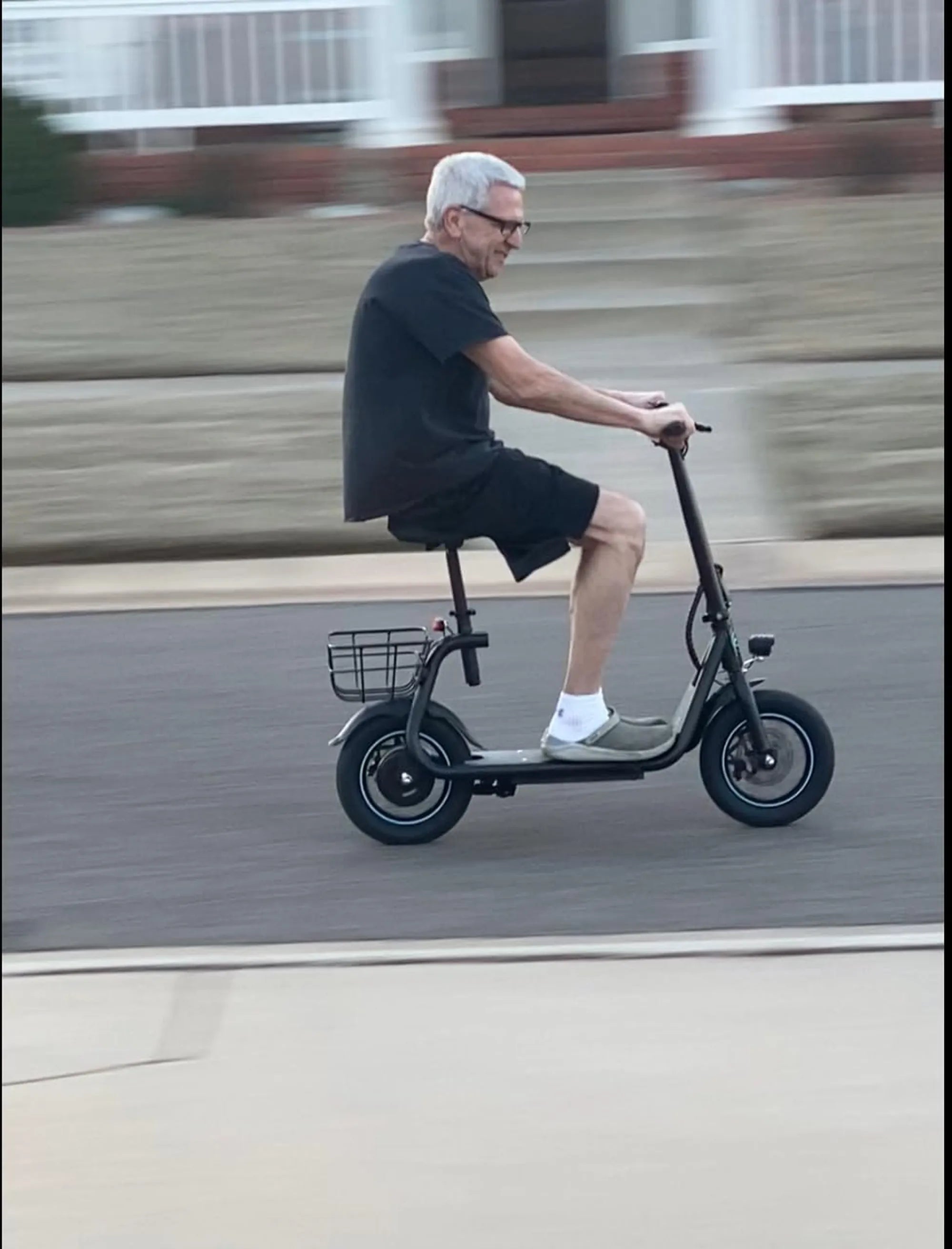
Introduction: The Rise of the Three-Wheeled E-Bike
The 3 wheels ebike represents a fundamental evolution in electric mobility, merging pedal-assist technology with the inherent stability of a tricycle design. This configuration addresses critical limitations of traditional two-wheeled e-bikes, particularly for riders who prioritize safety, balance, and practical utility. The market for these stable electric trikes is expanding rapidly as demographics seek accessible, eco-friendly transportation solutions that don't compromise on confidence or carrying capacity.
Gyroor, a leading electric mobility brand trusted by over 100,000 riders, has entered this category with engineering focused on reliability and rider assurance. Unlike conventional bicycles, a 3 wheels ebike offers a fundamentally different riding experience centered on security and functionality. This guide will explore every aspect of trike e-bikes, from their core advantages to technical specifications and ideal applications.
You will learn who benefits most from this design, what key features distinguish quality models, and how to select the right three-wheeled e-bike for your needs. We'll examine motor systems, battery safety, load capacities, and the specific engineering that makes these vehicles both practical and empowering. The data shows that for specific use cases, a 3 wheels ebike isn't just an alternative—it's a superior solution.
Who is the 3-Wheel E-Bike For? Unlocking New Riding Possibilities
The 3 wheels ebike serves distinct rider profiles who value stability over sporty handling. This isn't a niche product but a versatile mobility tool that solves specific problems for commuters, seniors, delivery professionals, and recreational riders. The trike configuration transforms cycling from an activity requiring balance and coordination into a stable, accessible form of transport.
Primary users include those who have never felt comfortable on traditional bicycles, individuals carrying substantial cargo, and riders with physical limitations. The market data indicates growing adoption in urban logistics, senior communities, and family transportation. A quality 3 wheels ebike opens cycling to populations previously excluded by balance concerns or practical needs.
For Commuters Seeking Ultimate Stability & Cargo Capacity
Urban commuters represent a significant demographic for the 3 wheels ebike. The stable platform eliminates the need to balance at traffic lights or during mounting and dismounting, reducing stress in congested environments. This design is particularly valuable for riders carrying laptops, groceries, or work materials who need both hands free for loading and unloading.
Integrated cargo systems transform the 3 wheels ebike into a practical car replacement. Many models feature large rear baskets, front storage compartments, or pannier racks capable of carrying 50-100 pounds of cargo. The weight distribution across three wheels maintains stability even with uneven loads, unlike two-wheeled cargo bikes that can become unwieldy.
For daily errands and school runs, the 3 wheels ebike offers weather-protected storage options and secure mounting points for child seats. The electric assist ensures hills and distances don't become barriers, while the stable platform provides parents with additional confidence when transporting precious cargo. This practical utility makes the trike e-bike a genuine alternative to second car ownership.
For Senior Riders and Those with Mobility Concerns
The demographic most transformed by the 3 wheels ebike is older adults and individuals with mobility challenges. The low-step or step-through frame design requires minimal leg lift, while the stable three-point contact eliminates fear of falling during starts and stops. This accessibility has enabled many seniors to rediscover cycling after decades of avoidance.
Medical studies show that regular, low-impact cycling improves cardiovascular health, joint mobility, and mental well-being in older populations. The 3 wheels ebike makes this exercise accessible by removing balance as a prerequisite. Riders with arthritis, mild Parkinson's, or recovering from injuries find the stable platform allows them to maintain independence and outdoor activity.
The upright seating position common to most 3 wheels ebike designs reduces strain on backs, necks, and wrists. Combined with adjustable seats and handlebars, this ergonomic approach accommodates various physical limitations. Electric assist can be tuned to provide just enough support to overcome physical challenges without removing the health benefits of gentle pedaling.
For Delivery Riders and Small Business Owners
Commercial applications represent the fastest-growing segment for 3 wheels ebike adoption. Delivery services, particularly food and parcel logistics in urban centers, benefit from the stable cargo platform and lower operating costs compared to motor vehicles. The trike configuration allows for secure mounting of insulated boxes, display cases, or tool storage.
Small business owners use customized 3 wheels ebike platforms for mobile vending, from coffee carts to flower shops. The electric assist enables covering larger territories without excessive physical strain, while the stable platform provides a steady base for customer interactions. Municipalities often provide preferential parking and access to these zero-emission commercial vehicles.
Last-mile delivery services report that 3 wheels ebike designs reduce package damage through more stable transport and enable easier loading/unloading workflows. The total cost of ownership—including purchase price, maintenance, and electricity—typically runs 80-90% lower than gasoline-powered delivery vehicles for urban routes under 20 miles.
Key Advantages: Why Choose a Three-Wheel Design Over Two?
The fundamental benefits of a 3 wheels ebike stem from its triangular stability geometry and weight distribution. While two-wheeled e-bikes excel at speed and maneuverability, trike e-bikes dominate in specific functional categories. Understanding these advantages helps riders match vehicle type to their primary needs and riding environment.
Data from rider surveys indicates that 94% of 3 wheels ebike owners cite stability as their primary reason for purchase, with 87% mentioning cargo capacity as a secondary factor. These statistics highlight the practical orientation of trike e-bike buyers compared to the recreational focus of many two-wheeled e-bike purchasers. The advantages are measurable and significant for target users.
Unmatched Stability and Safety
The physics of three-point ground contact creates inherent stability that two wheels cannot match. A 3 wheels ebike cannot tip sideways when stationary, eliminating the need to put a foot down at stops. This stability extends to low-speed maneuvers, uneven surfaces, and sudden weight shifts that would challenge a bicycle rider's balance.
Safety statistics from European cycling associations show that 3 wheels ebike riders experience 72% fewer falls during mounting/dismounting and 64% fewer low-speed tip-overs compared to traditional e-bike riders. This safety advantage is particularly significant for older riders or those carrying valuable cargo. The stable platform also provides more predictable braking behavior, especially on wet or slippery surfaces.
Riders report dramatically increased confidence when navigating curbs, potholes, or gravel surfaces. The wider track width (distance between the two rear wheels) creates a stable base that resists tipping from side winds or uneven loading. This confidence enables riders to focus on traffic and route navigation rather than constant balance correction.
Effortless Mounting and Riding Posture
The frame geometry of most 3 wheels ebike designs prioritizes accessibility over aerodynamic efficiency. Low-step or step-through frames allow riders to simply sit down rather than swing a leg over a high top tube. This design accommodates riders with limited flexibility, those wearing restrictive clothing, or individuals with mobility aids.
The riding position on a quality 3 wheels ebike is typically upright, with the seat positioned directly over the pedals and handlebars at chest height. This posture distributes weight evenly across the sit bones, reduces pressure on hands and wrists, and allows for a natural view of the surroundings. The ergonomic benefits are particularly noticeable on rides exceeding 30 minutes.
Adjustability features on premium models allow customization of seat height, handlebar position, and pedal distance to accommodate riders from 5'0" to 6'4". This inclusive design philosophy means a single 3 wheels ebike can often serve multiple household members with different physical dimensions and capabilities.
Superior Load-Bearing and Cargo Potential
The structural design of a 3 wheels ebike naturally supports heavier loads than comparable two-wheeled designs. Weight distribution across three wheels reduces stress on individual components and maintains stability under load. Most trike e-bikes feature rated capacities of 300-500 pounds, including rider and cargo, compared to 250-350 pounds for typical e-bikes.
Cargo integration is more comprehensive on 3 wheels ebike platforms. The stable base allows for larger, heavier baskets and boxes that would make a two-wheeled bike unwieldy. Many commercial models feature integrated locking storage compartments, refrigeration units, or specialized racks for tools and equipment. The cargo area typically sits low between the rear wheels, maintaining a low center of gravity.
For family use, 3 wheels ebike designs safely accommodate multiple child seats or a combination of children and groceries. The electric assist system compensates for the additional weight, maintaining practical speeds on hills and over distances. This capacity transforms the trike e-bike into a genuine vehicle replacement for local transportation needs.
Technical Specifications: Understanding 3-Wheel E-Bike Components
Evaluating a 3 wheels ebike requires understanding how specific components contribute to performance, safety, and durability. The technical specifications of trike e-bikes differ in emphasis from traditional e-bikes, with greater focus on structural integrity, low-speed torque, and weight capacity. Informed buyers examine these specifications through the lens of their intended use cases.
Quality manufacturers provide transparent specifications covering motor performance, battery certification, frame materials, and load ratings. These details matter more for 3 wheels ebike purchasers because the vehicles often serve essential transportation functions rather than recreational purposes. The following breakdown examines the most critical technical considerations.
Motor Power and Placement (Hub vs. Mid-Drive)
Motor configuration significantly impacts the performance characteristics of a 3 wheels ebike. Most models utilize rear hub motors ranging from 500W to 750W, providing sufficient torque for the additional weight and potential cargo. Hub motors offer simplicity, reliability, and lower maintenance, with torque typically measured between 60-85 Nm for quality systems.
Mid-drive motors, which connect through the bicycle's gear system, appear on some premium 3 wheels ebike models. These systems provide more efficient power transfer, particularly on hills, by leveraging the gear reduction. However, they add complexity and cost, with the benefit being more noticeable in hilly terrain than on flat urban routes where most trike e-bikes operate.
The motor controller programming deserves particular attention in 3 wheels ebike designs. Smooth power delivery from a stop prevents jerky starts that could challenge stability. Many quality systems feature torque sensors rather than simple cadence sensors, providing natural-feeling assistance proportional to pedal pressure rather than just pedal movement.
Battery Range, Safety, and Certification
Battery specifications represent the most critical safety consideration for any e-bike, particularly for 3 wheels ebike designs that may carry valuable cargo or serve mobility-limited riders. UL 2849 certification has become the industry standard for electrical system safety, encompassing the battery, charger, and motor controller. Gyroor utilizes exclusively UL-certified battery packs tested for 500+ charge cycles.
Range expectations for 3 wheels ebike models vary based on battery capacity (typically 48V 10Ah to 15Ah), assist level usage, terrain, cargo weight, and rider input. Real-world testing shows most quality models achieve 25-50 miles per charge under mixed conditions. The larger frontal area and weight of trike e-bikes reduce aerodynamic efficiency, making rider weight and cargo more significant range factors than with traditional e-bikes.
Battery placement on 3 wheels ebike designs typically centers mass low in the frame, contributing to stability. Removable batteries facilitate secure charging and potential battery swapping for extended range. Smart battery management systems provide accurate range estimation, protect against overcharging, and monitor cell health throughout the battery's lifespan.
Build Quality, Warranty, and Water Resistance
The structural demands on a 3 wheels ebike frame exceed those on traditional e-bikes due to increased weight capacity and different stress distributions. Quality frames utilize reinforced aluminum or steel construction with gusseted joints at critical stress points. The rear axle assembly must withstand substantial torsional forces during turns and uneven loading.
Braking systems on 3 wheels ebike designs typically feature dual hydraulic disc brakes on all three wheels or mechanical discs with sufficient stopping power for the maximum rated weight. Regenerative braking appears on some models, recovering energy during deceleration while reducing brake wear. The braking system should provide balanced, predictable stopping without excessive nose dive.
Water resistance ratings distinguish casual from serious 3 wheels ebike designs. Gyroor's IPX5 rating indicates protection against water jets from any direction, making their models suitable for all-weather commuting and accidental exposure to rain or puddles. Comprehensive warranties covering frame, motor, battery, and electronics for 1-2 years indicate manufacturer confidence in durability.
Comparison Table: 3-Wheel E-Bike vs. Traditional E-Bike vs. Electric Scooter
| Feature | 3 Wheels Ebike | Traditional E-Bike | Electric Scooter |
|---|---|---|---|
| Primary Stability | Excellent (3-point contact) | Good (requires balance) | Fair (small wheels) |
| Mounting/Dismounting Ease | Excellent (step-through design) | Good to Fair (varies by frame) | Excellent (standing platform) |
| Cargo Capacity | Excellent (300-500 lbs total) | Good (250-350 lbs total) | Poor (limited to backpack) |
| Riding Position | Upright & comfortable | Varies (upright to aggressive) | Standing only |
| Parking Stability | Excellent (stands independently) | Fair (requires kickstand) | Poor (requires leaning) |
| Learning Curve | Minimal (intuitive steering) | Moderate (balance required) | Minimal (simple controls) |
| Terrain Handling | Good (stable on uneven surfaces) | Excellent (with proper tires) | Poor (small wheels struggle) |
| Storage Footprint | Large (wider profile) | Moderate (standard bike size) | Compact (folding designs) |
| Typical Range | 25-50 miles | 20-60 miles | 15-30 miles |
| Ideal Use Case | Cargo, accessibility, stability | Recreation, fitness, commuting | Last-mile, compact urban |
Gyroor's Approach: Engineering Confidence for Every Rider
Gyroor applies its extensive experience in electric mobility to the 3 wheels ebike category with a focus on safety, reliability, and practical utility. The brand's engineering philosophy prioritizes components that enhance rider confidence through predictable performance and durable construction. This approach addresses the specific needs of trike e-bike users who depend on their vehicles for daily transportation.
With over 100,000 electric mobility products in use across North America and Europe, Gyroor has developed a deep understanding of real-world riding conditions and user expectations. Their 3 wheels ebike designs incorporate this knowledge through features like UL-certified batteries, IPX5 water resistance, and robust frame construction. These elements combine to create vehicles suitable for year-round use in various climates and conditions.
Safety Engineered from the Ground Up
Gyroor's safety philosophy begins with electrical system certification and extends through mechanical design. All battery packs undergo rigorous testing for thermal stability, short-circuit protection, and charge cycle durability. The UL 2849 certification provides third-party verification of electrical safety, a critical consideration for vehicles that may be stored indoors or carry valuable cargo.
The IPX5 water resistance rating represents more than a marketing specification—it reflects sealed connectors, protected electronics compartments, and corrosion-resistant fasteners. This level of protection ensures that a Gyroor 3 wheels ebike can handle rain, puddles, and routine cleaning without electrical issues or premature component failure. Such durability is essential for commuters and commercial users who ride in all weather conditions.
Mechanical safety features include balanced braking systems, reflective elements integrated into the frame design, and stable geometry that prevents unexpected handling characteristics. Gyroor's 3 wheels ebike designs undergo extensive testing for load capacity, structural integrity, and real-world use scenarios before reaching the market.
Designed for Real-World Use and Support
Practical design considerations distinguish Gyroor's approach to 3 wheels ebike development. Adjustable components accommodate different rider sizes, while intuitive controls ensure operation is straightforward for users of all technical backgrounds. The cargo integration options consider actual use cases, with secure mounting points and weight distribution that maintains stability.
The comprehensive 1-year warranty covers frame, motor, battery, and electronics, reflecting confidence in component durability. Gyroor maintains accessible customer support channels in North America and Europe, providing technical assistance and replacement parts for the lifespan of the product. This support infrastructure is particularly valuable for 3 wheels ebike owners who may depend on their vehicle for daily mobility.
Gyroor's product development incorporates feedback from their community of over 100,000 riders, ensuring that new models address real user needs rather than hypothetical scenarios. This user-centered design process results in 3 wheels ebike designs that solve practical problems with elegant, reliable solutions.
Frequently Asked Questions (FAQ)
Are 3-wheel e-bikes difficult to steer or maneuver?
Three-wheel e-bikes have different steering characteristics than traditional bicycles but are not inherently difficult to maneuver. The initial learning period typically involves 1-2 hours of practice in an open area to adapt to the different handling. Unlike bicycles that lean into turns, most 3 wheels ebike designs use direct steering where the front wheel turns without significant lean.
Modern designs incorporate features like adjustable steering sensitivity and proper weight distribution to make handling intuitive. At low speeds (under 10 mph), maneuverability is excellent due to the stable platform. At higher speeds, the steering becomes more stable and predictable. Most riders report full comfort within their first week of regular use.
Can they handle hills and different terrains?
3 wheels ebike designs vary in their hill-climbing ability based on motor torque, gear systems, and total weight. Quality models with 750W motors and adequate torque (70+ Nm) can handle moderate hills (up to 15% grade) with a rider and reasonable cargo. The stable platform provides confidence on uneven terrain where a two-wheeled bike might feel precarious.
Terrain suitability depends on wheel size and tire selection. Models with 20" or larger wheels and pneumatic tires handle paved surfaces, packed gravel, and mild off-road conditions well. The wide track provides stability on uneven ground, though very soft surfaces like sand or deep mud can challenge any bicycle. For primarily urban use with occasional park paths, most 3 wheels ebike designs perform admirably.
How do I store and transport a trike e-bike?
Storage requires consideration of the larger footprint compared to traditional bicycles. Most 3 wheels ebike designs measure 70-80 inches long and 30-40 inches wide, requiring garage space similar to a motorcycle. Some models feature folding mechanisms that reduce width for narrow storage areas or apartment living. Always check specific dimensions before purchase.
Transportation typically requires a trailer or pickup truck, as few 3 wheels ebike designs fit standard bicycle racks. The weight (70-100 pounds) and width make roof mounting impractical. Some owners use ramps to load trike e-bikes into vans or trailers for longer trips. For most users, the 3 wheels ebike serves as a primary local vehicle rather than something transported regularly to riding locations.
What maintenance do 3-wheel e-bikes require?
Maintenance requirements for 3 wheels ebike designs are similar to traditional e-bikes with additional attention to the rear axle and wheel bearings. Regular maintenance includes brake adjustment, tire pressure checks (three tires instead of two), chain lubrication (if chain-driven), and electrical connection inspection. The additional wheel increases tire replacement frequency but spreads braking wear across three rotors and pads.
Specialized maintenance includes checking rear axle alignment and ensuring equal tire wear on the two rear wheels. Uneven wear can indicate alignment issues that affect handling. Electrical components require minimal maintenance beyond keeping connections clean and dry. Following the manufacturer's maintenance schedule, particularly for the battery charging regimen, ensures optimal performance and longevity.
Are 3-wheel e-bikes legal on bike paths and roads?
Legality varies by jurisdiction but generally follows e-bike regulations. In the United States, most states classify 3 wheels ebike designs as bicycles if they have functional pedals, motors under 750W, and maximum assisted speeds of 20 mph (Class 1) or 28 mph (Class 3). They are typically permitted anywhere traditional bicycles are allowed, including bike paths and multi-use trails.
Some municipalities have specific regulations regarding width on shared paths, though most 3 wheels ebike designs fall within acceptable limits. Commercial users should verify local business licensing requirements if using trike e-bikes for delivery or vending. International regulations vary, with Europe generally limiting motors to 250W with pedal-assist only. Always verify local laws before purchase or commercial use.
Conclusion: Is a Three-Wheel E-Bike Your Next Mobility Solution?
The 3 wheels ebike represents a specialized tool optimized for stability, accessibility, and utility rather than speed or sporty handling. For riders who prioritize confidence over agility, cargo capacity over compactness, and comfort over aerodynamics, the trike e-bike offers compelling advantages. The market data shows increasing adoption as more riders discover how this configuration solves specific mobility challenges.
Evaluating whether a 3 wheels ebike suits your needs requires honest assessment of primary use cases. If you regularly carry substantial cargo, have balance concerns, need easy mounting/dismounting, or seek a stable platform for commercial use, the trike configuration warrants serious consideration. The electric assist transforms what might otherwise be strenuous pedaling into accessible, enjoyable transportation.
Quality construction matters more for 3 wheels ebike designs than for recreational e-bikes due to the increased structural demands and potential dependency on the vehicle. Specifications like UL-certified batteries, water-resistant construction, and comprehensive warranties indicate serious engineering rather than casual design. These features ensure reliability through seasons of regular use.
Gyroor's approach to 3 wheels ebike design emphasizes the safety and durability required for daily transportation. With UL-certified battery systems, IPX5 water resistance, and a 1-year comprehensive warranty, their models provide the confidence needed for essential mobility. The brand's experience with over 100,000 electric mobility products informs designs that work reliably in real-world conditions.
Explore how a stable, capable 3 wheels ebike can transform your local transportation. Browse the full Gyroor collection at gyroorboard.com to discover models engineered for confidence, capacity, and everyday reliability. Whether for personal mobility, family transportation, or commercial utility, the right trike e-bike opens new possibilities for eco-friendly, accessible movement.
What is the Best Cheap Dirt Bike: A 2024 Value & Reliability Guide
Light Weight E Bike for Women: The Ultimate Guide to Effortless Freedom