



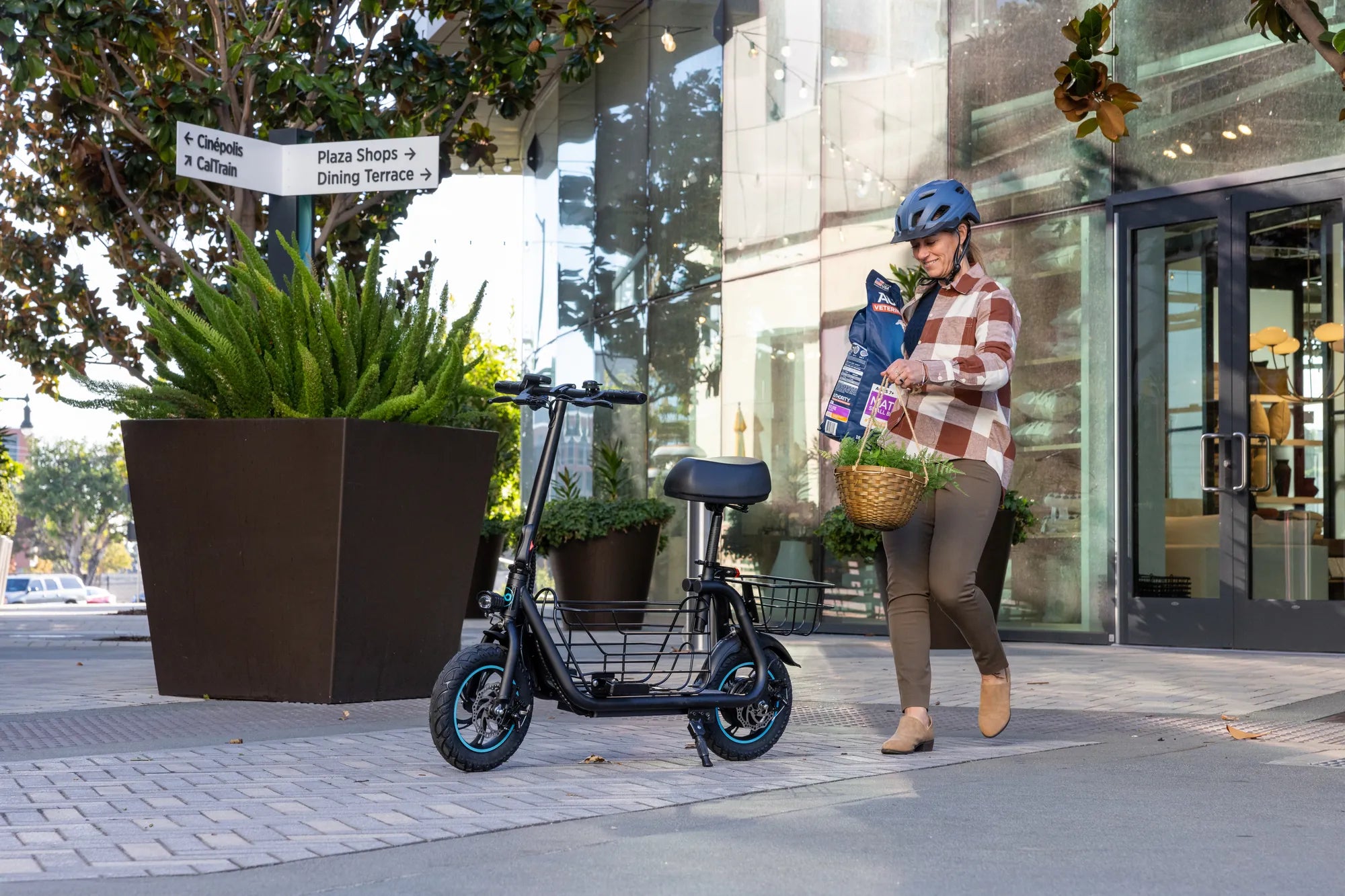
Introduction to 36V Electric Scooters
A 36 volt scooter represents the sweet spot in personal electric transportation, balancing accessible performance with practical range and value. These scooters use a 36-volt battery system, typically paired with motors ranging from 350 to 500 watts, to deliver a ride that is perfectly suited for urban commuters, students, and casual riders. The 36V platform sits firmly in the mid-range, offering a significant step up in capability from basic 24V models without venturing into the higher cost and complexity of 48V systems.
For many riders, a 36 volt scooter is the ideal first serious electric scooter. It provides enough power to handle moderate hills, maintain a pace that keeps up with city traffic, and cover distances that make daily commuting feasible. The core appeal lies in this versatility. You get a machine that is more than just a toy for short trips; it's a legitimate tool for reducing car dependency for journeys under 10 miles.
Leading brands like Gyroor have perfected the 36V category by focusing on reliability and safety. As a brand trusted by over 100,000 riders, Gyroor builds its 36 volt scooter models with UL-certified battery packs, robust IPX5 water-resistant designs, and backs them with a comprehensive 1-year warranty. This commitment transforms the 36V scooter from a simple gadget into a dependable daily companion.
This guide will dissect every aspect of the 36 volt scooter. We'll explore the tangible performance metrics you can expect, break down the key components, compare it to other voltage classes, and provide essential buying and maintenance advice. By the end, you'll know precisely if a 36V model aligns with your mobility needs.
Key Performance Metrics of a 36V Scooter
Understanding the real-world capabilities of a 36 volt scooter requires looking at three interconnected metrics: speed, range, and hill-climbing ability. Voltage is the electrical "pressure" of the system, and a 36V architecture provides a solid foundation for balanced performance. It directly influences the scooter's torque and overall power delivery, determining how it behaves in daily use.
In practice, a typical 36 volt scooter will achieve a top speed between 15 and 20 mph (24-32 km/h). This is fast enough to navigate city streets efficiently and keep pace with bicycle traffic, but generally remains within the legal limits for electric scooters in many municipalities. The acceleration is brisk from a stop, allowing you to merge confidently from sidewalks onto bike lanes or cross intersections safely.
The real-world range is equally important. Most 36V scooters with a battery capacity of 7.5Ah to 10Ah will offer a range of 15 to 25 miles (24-40 km) on a single charge. This range is highly dependent on factors like rider weight, terrain, temperature, and riding mode. For the average commuter, this translates to several days of round-trip travel between charges, making a 36 volt scooter a highly practical choice.
Hill-climbing is where the 36V system shows its mettle compared to lower-voltage options. A quality 36 volt scooter with a 350W or higher motor can handle moderate inclines of 10-15 degrees with ease. While it may slow down on steeper hills, it will maintain forward momentum where a 24V scooter might struggle or stall. This capability expands your viable route options significantly.
Motor Power and Terrain Handling
The motor is the heart of the scooter, and its wattage, combined with the 36V system, dictates terrain handling. Most 36 volt scooter models feature motors from 350W to 500W. A 350W motor provides efficient, zippy performance on flat, smooth pavement—ideal for bike paths and well-maintained urban streets. It conserves battery well, maximizing range for longer commutes.
Stepping up to a 500W motor on a 36 volt scooter offers more assertive performance. The additional wattage provides greater torque, which translates to better acceleration from a stop and more consistent power on rolling hills or uneven surfaces. This makes a 500W 36V model a better choice for cities with more varied topography or for riders who carry a backpack or briefcase.
The synergy between the 36V battery and the motor creates a responsive riding experience. The voltage ensures the motor receives a steady flow of power, preventing the sluggish feeling or voltage sag that can occur on lower-powered systems under load. This results in predictable power delivery whether you're navigating a crowded plaza or accelerating onto a shared-use path.
For handling common urban terrain like cracked pavement, gentle curbs, or gravel-strewn bike lanes, the 36V platform is adequately powered. While it's not designed for true off-roading, the available torque helps the scooter maintain control and stability over minor imperfections. Pairing this motor performance with pneumatic tires and a basic suspension system, as found on many Gyroor models, creates a comfortable and capable ride.
Battery Life and Range Expectations
The 36V battery pack is the energy reservoir for your scooter. Its capacity, measured in Amp-hours (Ah), is the single biggest factor determining range. Think of voltage (36V) as the pipe's width and Amp-hours as the amount of water in the tank. A common configuration is a 36V 7.8Ah battery, which provides a good balance of range and weight.
To estimate real-world range, you must consider the battery's watt-hour (Wh) rating, which is Voltage (V) multiplied by Amp-hours (Ah). A 36V 7.8Ah battery has a 280.8 Wh capacity. As a rough guide, an efficient scooter uses about 15-20 Wh per mile. This gives a theoretical range of 14 to 18.7 miles, aligning with the advertised 15-25 mile range when factoring in variable riding conditions.
Maximizing your 36 volt scooter's range involves simple practices. First, maintain proper tire pressure; under-inflated tires create rolling resistance that drains the battery. Second, use eco or lower-speed modes when possible, as high speeds consume power exponentially. Third, be mindful of rider weight and cargo. Finally, avoid constant full-throttle starts and stops, opting for smoother acceleration.
Battery longevity is critical. Gyroor uses UL-certified lithium-ion battery packs in its 36 volt scooter lineup, which are tested for over 500 charge cycles. To preserve this lifespan, avoid draining the battery to 0% regularly. Try to recharge when it drops to 20-30%. Store the scooter in moderate temperatures and always use the manufacturer-provided charger. A well-maintained 36V battery should provide reliable service for 2-3 years of regular use.
Why Choose a Gyroor 36V Electric Scooter?
When selecting a 36 volt scooter, the brand's engineering and safety philosophy matter immensely. Gyroor distinguishes itself in this competitive category through a relentless focus on certified safety, rider peace of mind, and practical durability. For a device you rely on daily, these are not optional extras but foundational requirements.
The cornerstone of Gyroor's approach is the use of UL-certified battery packs. This certification means the battery cells and management system have been rigorously tested by a nationally recognized laboratory for electrical, mechanical, and fire safety. In a 36 volt scooter, where the battery is a key component, this certification mitigates the risk of overheating, short circuits, or failure, ensuring a safer ride for you and safer storage in your home.
Complementing this is the robust 1-year comprehensive warranty offered on Gyroor scooters. This warranty covers the motor, battery, frame, and electronic components, providing significant protection against manufacturing defects. It reflects the brand's confidence in its build quality. For a rider investing in a 36 volt scooter as primary transport, this warranty transforms the purchase from a gamble into a secure, long-term investment.
Practical durability is engineered into every Gyroor 36 volt scooter through an IPX5 water-resistance rating. This means the scooter's electrical components are protected against low-pressure water jets from any direction. While not submersible, this rating allows you to confidently ride in light rain, through puddles, or on damp streets without worrying about immediate damage. This feature is crucial for all-weather commuters who need their 36 volt scooter to be ready rain or shine.
Comparing 36V to Other Voltages (24V, 48V)
Choosing the right scooter often comes down to understanding the voltage landscape. The 36 volt scooter occupies a crucial middle ground between entry-level and performance-oriented models. This comparison table clarifies the key differences.
| Feature | 24V Scooter (Entry-Level) | 36V Scooter (Mid-Range / Commuter) | 48V Scooter (Performance) |
|---|---|---|---|
| Typical Top Speed | 10-15 mph | 15-20 mph | 20-30+ mph |
| Typical Range | 8-12 miles | 15-25 miles | 25-40+ miles |
| Hill Climbing | Struggles with slopes | Handles moderate hills (10-15°) | Conquers steep hills |
| Motor Power | 250W-300W | 350W-500W | 500W-1000W+ |
| Ideal User | Kids, teens, very short trips | Adult commuters, students, casual riders | Long-distance commuters, speed enthusiasts |
| Price Point | Lowest | Mid-Range (Best Value) | Premium |
| Weight & Portability | Lightest | Moderate | Heaviest |
The 36 volt scooter emerges as the clear value and practicality champion. It offers over double the real-world range of a typical 24V model and significantly better hill performance, making it viable for actual commuting. Compared to a 48V scooter, the 36V model is lighter, more affordable, and often more than sufficient for the needs of most urban riders, while still being powerful enough to feel capable and fun.
For the majority of adults looking to replace short car trips or streamline a multi-modal commute, the 36 volt scooter provides the optimal blend of performance, range, and cost. It delivers on the core promise of electric scooter convenience without the premium price tag or excessive weight of higher-voltage models. This is why the 36V class is among the most popular and widely recommended.
Essential Features to Look For in a 36V Model
Voltage is just the starting point. To ensure you choose a high-quality 36 volt scooter, you must evaluate several key features that directly impact safety, comfort, and longevity. A well-rounded scooter balances performance with these practical elements.
Braking System: Reliable stopping power is non-negotiable. Look for a dual braking system. A combination of a disc brake (mechanical or hydraulic) on the rear wheel and an electronic regenerative brake on the front is ideal. The disc brake provides strong, consistent stopping force, while the e-brake helps recharge the battery slightly and offers additional control. Avoid models with only a foot fender brake or a single weak brake.
Tires: Pneumatic (air-filled) tires are superior to solid tires for most 36V scooters. They provide better shock absorption, improving comfort on rough surfaces, and offer superior traction, especially on wet pavement. While they can get punctures, the ride quality improvement is substantial. Some commuter-focused models may use honeycomb solid tires as a maintenance-free compromise.
Suspension: Even a basic spring or hydraulic suspension system makes a dramatic difference. It absorbs impacts from cracks and bumps, reducing fatigue on your legs and joints and improving control. For a 36 volt scooter used daily on city streets, a front or dual suspension is a valuable comfort feature that extends your willingness to ride longer distances.
Portability & Folding Mechanism: A quick, secure, and easy-to-use folding mechanism is essential for a commuter scooter. Test the latch or locking mechanism for sturdiness. The folded dimensions and weight determine how easily you can carry it onto public transit or store it under a desk. A good 36 volt scooter should balance a robust frame with a thoughtful folding design.
Lighting and Display: Integrated front and rear lights are crucial for visibility and safe night riding. A bright LED headlight and a taillight (often brake-activated) are minimums. The display should be clear, showing speed, battery level (in segments or percentage), and riding mode. Bonus features like app connectivity for ride tracking or custom settings are becoming more common on premium 36V models.
Safety and Maintenance Best Practices
Owning a 36 volt scooter comes with the responsibility of safe operation and basic upkeep. Following these practices will ensure your scooter remains reliable, extends its lifespan, and keeps you safe on the road.
Pre-Ride Safety Checks: Develop a habit of a quick inspection before every ride. Check tire pressure weekly; properly inflated pneumatic tires are your first line of suspension and safety. Squeeze the brake levers to ensure they engage firmly and aren't loose. Give the folding mechanism a tug to confirm it's fully locked. Finally, do a visual check for any loose bolts or cables and ensure the lights are functional.
Safe Riding Gear and Practices: Always wear a helmet. For a 36 volt scooter capable of 20 mph, this is essential. Consider gloves and knee/elbow pads, especially when learning. Obey local traffic laws—ride in bike lanes where available, signal your turns, and yield to pedestrians. Avoid riding on sidewalks where prohibited. Be hyper-aware of road conditions like wet leaves, metal grates, or sand, which can reduce traction.
Battery Charging and Storage: Use only the charger provided with your Gyroor scooter. Charge the battery in a dry, well-ventilated area away from flammable materials. Do not leave the battery charging unattended for extended periods or overnight regularly. For long-term storage (over a month), charge the 36V battery to about 50-60% and store it in a cool, dry place. Re-check the charge level every few months.
Cleaning and Basic Care: Leverage the IPX5 rating for cleaning. Use a damp cloth to wipe down the deck, stem, and handlebars. For tougher grime, use a mild soap solution. Avoid high-pressure hoses or direct streams into ports. Keep the brake discs and calipers clean for optimal performance. Periodically check and tighten any fasteners according to the manufacturer's manual. This simple maintenance prevents minor issues from becoming major problems.
Frequently Asked Questions (FAQ)
Q: Is a 36 volt scooter fast enough for a 5-mile daily commute?
A> Absolutely. A 36 volt scooter with a top speed of 18-20 mph can cover a 5-mile commute in about 15-20 minutes, often faster than a car in urban traffic during rush hour. With a typical range of 15-25 miles, you can complete multiple round trips on a single charge, making it a highly efficient and reliable choice for this distance.
Q: Can a 36V electric scooter handle hills?
A> Yes, within reason. A quality 36 volt scooter with a 350W+ motor is designed to handle moderate inclines of 10-15 degrees. It will maintain a slower but steady pace up most residential or park hills. For very steep, sustained hills, a 48V scooter would be more appropriate. However, for the rolling terrain found in most cities, a 36V model is perfectly capable.
Q: How long does the battery last before needing replacement?
A> The lifespan of a 36V lithium-ion battery is measured in charge cycles. A high-quality, UL-certified battery like those used by Gyroor is rated for 500+ full charge cycles. With typical use (charging every 2-3 days), this translates to 2-3 years of service before you might notice a significant reduction in range. Proper care, like avoiding full discharges and extreme temperatures, can extend this lifespan.
Q: Are Gyroor 36V scooters legal to ride on bike paths and in my city?
A> Gyroor designs its 36 volt scooter models to comply with common regulations, which often limit electric scooters to 15-20 mph. They are typically legal on bike paths and in bike lanes where local laws permit electric scooters. Always check your specific city and state regulations, as laws vary widely regarding helmet requirements, minimum age, sidewalk riding, and maximum power. Gyroor scooters are intended for responsible use on approved pathways.
Q: What's the main advantage of a 36V scooter over a cheaper 24V model?
A> The advantages are substantial: greater range, higher speed, and real hill-climbing ability. A 24V scooter is often limited to short, flat recreational use. A 36 volt scooter transforms the device into a viable commuter vehicle. It reduces range anxiety, allows you to keep up with traffic flow, and handles real-world urban routes with inclines and longer distances, offering far better value and utility for an adult rider.
Conclusion: Is a 36V Electric Scooter Right for You?
The 36 volt scooter stands as the most rational choice for a vast majority of new electric scooter riders. It delivers the core benefits of electric micro-mobility—convenience, cost savings, and fun—without the compromises of entry-level models or the excess cost and weight of high-performance options. If your needs involve urban commuting under 10 miles, running local errands, or combining with public transit, a 36V model is almost certainly your best fit.
Your ideal 36 volt scooter should offer a balance of reliable performance (15-20 mph, 15-25 mile range), essential safety features (dual brakes, lights), and practical durability (good tires, suspension). Prioritizing brands that invest in certified safety components, like UL-listed batteries, and stand behind their product with a strong warranty is the wisest approach to ensure long-term satisfaction.
Gyroor has built its reputation by mastering this category, offering 36V scooters that blend thoughtful design with proven safety standards. The combination of IPX5 water resistance, rigorous battery certification, and comprehensive customer support creates a riding experience defined by confidence and reliability.
Ready to experience the perfect balance of performance and value? Explore Gyroor's range of durable, safety-focused 36 volt scooter models designed for real-world commuting. Browse the full Gyroor collection at gyroorboard.com and find the scooter that will transform your daily travel.
Get a Scooter: The Ultimate Guide to Smart, Sustainable Urban Mobility
Get a Scooter: The Ultimate Guide to Smart, Sustainable Urban Mobility