


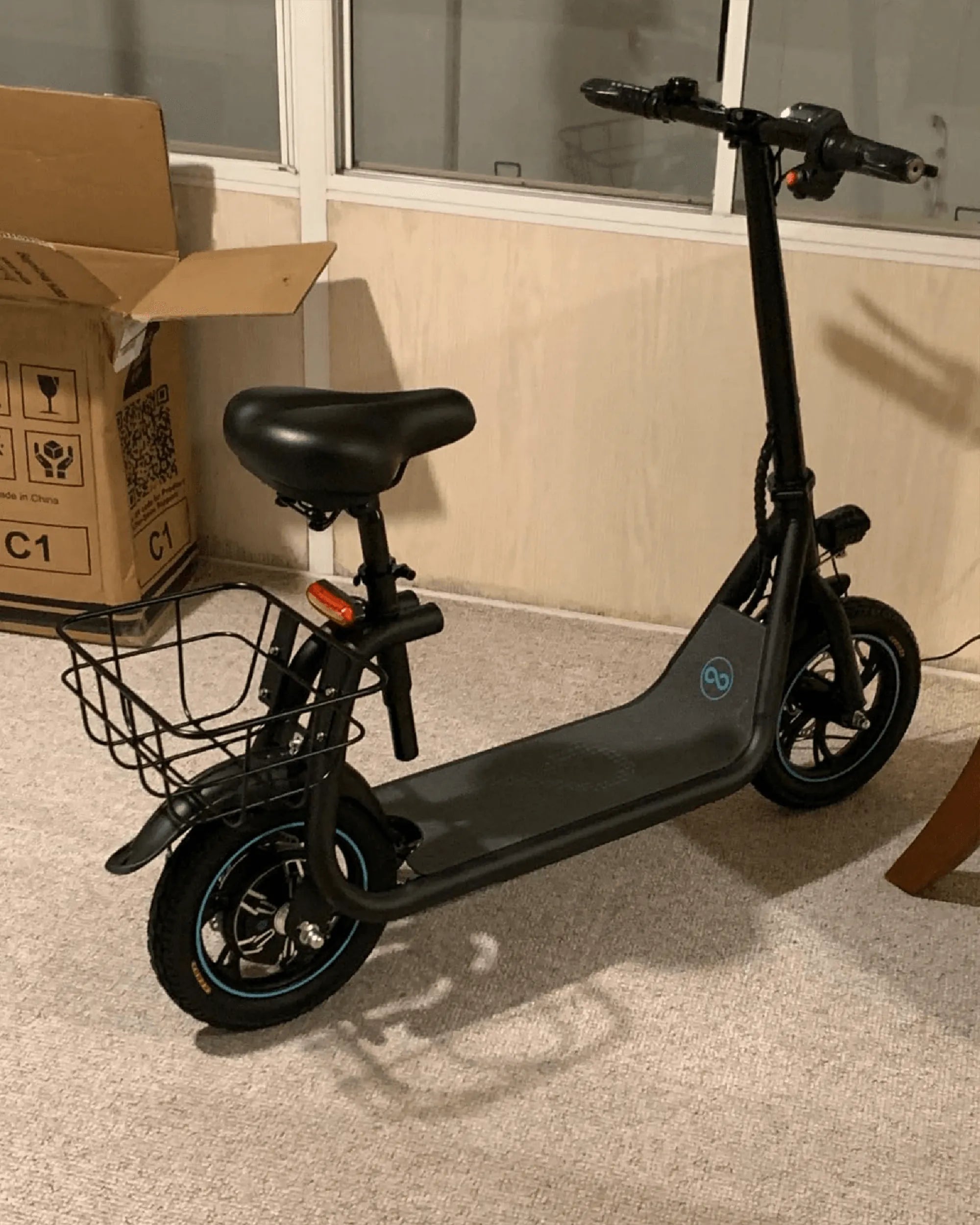
Introduction to Electric Scooter Chargers: Why the 42V 1.5A Spec Matters
Your electric scooter's performance and longevity hinge on a component often tucked away in a closet: the charger. The specific 42v 1.5a scooter charger is not a generic power brick but a precision-engineered device designed for a specific battery system. Understanding its role is the first step in responsible scooter ownership.
This specification—42 Volts output at 1.5 Amps of current—is meticulously matched to the common 36V lithium-ion battery packs found in many commuter scooters. Using an incorrect charger isn't just inconvenient; it can pose serious safety risks, drastically reduce your battery's lifespan, and potentially void your warranty. The right charger ensures optimal performance for every journey.
For brands like Gyroor, which equip their scooters with UL-certified battery packs tested for over 500 charge cycles, the provided 42V 1.5A charger is part of an integrated safety ecosystem. It's engineered to communicate properly with the scooter's Battery Management System (BMS) to deliver a controlled, safe charge cycle every time.
This guide will decode the specifications, outline the undeniable benefits of using the correct OEM charger, provide a detailed checklist for purchasing a replacement, and offer essential care instructions. By the end, you'll see your charger not as an accessory, but as the guardian of your scooter's heart: its battery.
Decoding the Specs: What Does 42V 1.5A Actually Mean for Your Ride?
The alphanumeric code on your charger is a precise language. The "42V" denotes the output voltage, which is the electrical "pressure" the charger uses to push energy into your scooter's battery. It's higher than the battery's nominal 36V to account for the peak voltage needed to fully charge lithium-ion cells.
The "1.5A" indicates the amperage, or current, which is the "flow rate" of that electrical energy. A 1.5-amp flow is considered a standard or trickle charge rate for many consumer electric scooter batteries. This balance of voltage and amperage is calibrated for safety and battery health.
Understanding Charging Speed and Time
Charging time is directly influenced by the amperage rating. A simple formula provides an estimate: Charging Time (hours) ≈ Battery Capacity (Ah) / Charger Output (A). For a typical Gyroor scooter with a 36V, 10Ah (Ampere-hour) battery, a 1.5A charger would require approximately 6.7 hours for a full charge from empty.
This calculated time is a baseline. Real-world factors like battery age, ambient temperature, and the BMS's management routine can cause slight variations. The 1.5A rate represents a deliberate design choice favoring battery longevity over ultra-fast charging.
Slower charging generates less heat within the lithium-ion cells. Excessive heat is the primary enemy of battery lifespan, accelerating chemical degradation. The 1.5A standard charger is therefore optimized for the hundreds of charge cycles promised by quality brands, not just the speed of a single cycle.
It's crucial to distinguish this from "fast" chargers, which may offer 3A or 4A. While they reduce wait time, they impose greater thermal stress. For daily commuters, the reliability and preservation offered by the standard 42V 1.5A scooter charger often outweigh the convenience of a slightly faster charge.
Key Benefits of Using the Correct OEM Charger (Like Gyroor's 42V 1.5A)
Investing in a genuine, manufacturer-provided charger is an investment in your scooter's overall health and your personal safety. The benefits extend far beyond simply getting power into the battery.
Guaranteed Safety & Compatibility: A Gyroor 42V 1.5A charger is designed to work in perfect harmony with the scooter's BMS. This system monitors cell voltage, temperature, and current during charging. An off-brand charger may not signal correctly, potentially leading to overcharging, cell imbalance, or in extreme cases, thermal runaway.
Preservation of Battery Health and Warranty: Using the specified charger is a key condition for upholding your scooter's 1-year warranty. Non-OEM chargers are a leading cause of premature battery failure, and such damage is typically not covered. The correct charger ensures each of the 500+ tested charge cycles delivers maximum capacity.
Optimized Performance and Reliability: A properly charged battery delivers consistent voltage, which translates to stable power output, predictable range, and maintained top speed. An incompatible charger can cause voltage sags or incomplete charges, leaving you with unreliable performance mid-commute.
Integrated Quality Assurance: The charger is an extension of the brand's quality promise. Gyroor's commitment to UL-certified batteries is complemented by chargers built to robust electrical standards. This includes proper insulation, accurate voltage regulation, and built-in protections against short circuits and power surges.
Choosing a Replacement or Spare Charger: A Buyer's Checklist
If you need a spare or a replacement, navigating the market requires a careful eye. This checklist prioritizes safety and compatibility above all else.
Voltage & Amp Rating: The Non-Negotiable Match
The output voltage must be an exact match. A 42V charger is for a 36V battery system. Using a 48V or 24V charger can cause catastrophic damage. The amperage is more nuanced: a 1.5A charger can be replaced with another 1.5A charger. You can use a charger with a lower amperage (e.g., 1A), but it will charge more slowly.
Critical Warning: Using a charger with a higher amperage (e.g., a 2A or 3A charger on a system designed for 1.5A) is dangerous unless explicitly approved by the manufacturer. It can overwhelm the BMS, generate excessive heat, and significantly degrade the battery. Always default to the original 1.5A specification.
Connector Type and Polarity
The physical plug must fit securely into your scooter's charging port. Common types include DC barrel connectors of specific diameters. More importantly, the polarity—which pin is positive (+) and which is negative (-)—must be correct. This is usually shown as a diagram on the charger label (e.g., a positive center pin). A reversed polarity can instantly short-circuit and damage your scooter's electronics.
Safety Certifications and Build Quality
Look for independent safety certifications. Marks like UL, CE, or RoHS indicate the charger meets specific electrical safety and environmental standards. Physically, inspect for a robust, heat-resistant casing, strain relief where the cable enters the charger body, and a thick, durable cable. Flimsy construction is a red flag for potential failure and hazard.
Charger Care and Troubleshooting for the Urban Commuter
Proper handling extends your charger's life and helps you diagnose issues before they strand you.
Maximizing Your Charger's Lifespan
Follow these simple practices: Always unplug the charger from the wall outlet first, then from the scooter, to prevent arcing at the connector. Keep the charger and its vents free of dust and debris to prevent overheating. Store the cable loosely coiled; tight bends can break internal wires. Avoid exposing the charger to extreme temperatures, such as a hot car trunk or a freezing garage.
Common Issues and Solutions
Use this quick-reference table to diagnose common problems.
| Symptom | Possible Cause | Recommended Action |
|---|---|---|
| Charger LED is off when plugged into wall. | Faulty wall outlet, damaged charger cable, or internal charger failure. | Test a different outlet. Check cable for damage. If still dead, discontinue use. |
| Charger LED stays green (does not turn red) when connected to scooter. | Scooter battery is fully charged, faulty connection, or issue with scooter's BMS/port. | Ensure connector is fully seated. Check port for debris. If scooter has no power, contact support. |
| Charger LED is red but never turns green (extended charge time). | Very depleted battery, aging battery holding less charge, or cold environment slowing charge. | Allow full charge cycle. If consistently over 10+ hours, battery may need evaluation. |
| Charger becomes excessively hot to the touch. | Potential internal fault, poor ventilation, or use on an incompatible device. | Unplug immediately. Let cool. Do not reuse if overheating recurs. Replace with correct model. |
| Intermittent charging (light flickers). | Loose connection at port or wall, or damaged internal wiring in cable. | Inspect and secure all connections. Check cable for kinks or breaks. Replace if damaged. |
Comparing Charger Types: 42V 1.5A Standard vs. Fast Chargers
Understanding the trade-offs between charger types helps you make an informed choice for your needs.
| Feature | Standard 42V 1.5A Charger (OEM Default) | Fast Charger (e.g., 42V 3A/4A) |
|---|---|---|
| Primary Goal | Battery longevity & safety | Reduced charging time |
| Charge Time (10Ah Battery) | ~6-7 hours | ~2.5-3.5 hours |
| Thermal Stress on Battery | Minimal | Significantly Higher |
| Impact on Battery Lifespan | Optimal (preserves 500+ cycle rating) | Can reduce total cycles by 20-30% |
| BMS Compatibility | Guaranteed with OEM charger | Must be explicitly supported by scooter model |
| Warranty Implications | Fully supported | May void warranty if not approved |
| Ideal Use Case | Overnight/home charging, daily commuter | Occasional quick top-up, with manufacturer approval |
The data shows a clear trade-off. The standard 42v 1.5a scooter charger is the longevity champion, perfectly aligned with the design philosophy of reliable commuter scooters. A fast charger is a specialized tool with specific drawbacks.
For the vast majority of riders charging at home or work, the slower, cooler charge of the 1.5A unit is the smarter long-term investment. It ensures your scooter's battery remains healthy for years, not just charged quickly for the next hour.
FAQ: Your 42V 1.5A Scooter Charger Questions Answered
Q1: Can I use a 42V 2A charger for my scooter that came with a 1.5A charger?
A: It is strongly discouraged unless Gyroor specifically states your scooter model supports it. A higher-amperage charger forces more current into the battery than its BMS is calibrated for, increasing heat, accelerating degradation, and voiding your warranty. Always default to the original 1.5A specification.
Q2: Is it safe to leave my scooter charging overnight or unattended?
A: While Gyroor chargers and BMS have auto-shutoff features, best safety practice is to charge during waking hours on a hard, non-flammable surface (not on carpet or a bed). Never charge a battery that is physically damaged, has been in a crash, or shows signs of swelling. Always follow the manufacturer's guidelines.
Q3: My charger was lost/damaged. Where can I get a genuine Gyroor replacement?
A: To guarantee compatibility, safety, and preserve your warranty, purchase directly from the official Gyroor website or an authorized retailer. This ensures you receive the exact 42V 1.5A model engineered for your scooter, not a generic imitation with potential risks.
Q4: What's the actual difference between this 42V charger and my scooter's 36V battery?
A: This is a key point of confusion. The battery's nominal voltage is 36V (its "working" voltage). To fully charge a lithium-ion cell, you need to apply a higher voltage—the "charging voltage." The 42V output provides the necessary pressure to safely bring all cells in the 36V pack to a full state of charge, as managed by the BMS.
Q5: Can I use my friend's charger if it has the same plug and says 42V?
A: Not without checking two more critical details. First, the amperage must be 1.5A or less. Second, the polarity (the +/- configuration) must be identical. Using a charger with reversed polarity, even at the same voltage, can cause immediate and expensive damage. When in doubt, use only your designated charger.
Powering Your Journeys Safely and Efficiently
The humble 42V 1.5A scooter charger is far more than a simple cable and box; it is the regulated lifeline between your wall outlet and your scooter's most valuable component. Choosing and using the correct charger is a fundamental act of responsible ownership, directly impacting safety, performance, and the long-term value of your investment.
By understanding the specifications, committing to OEM-quality parts like those from Gyroor, and following proper care guidelines, you ensure every charge supports hundreds of reliable commutes. Your charger is the silent partner in your urban mobility, working to preserve the battery that powers your freedom.
Protect your ride and your peace of mind by sourcing genuine accessories and treating your charging equipment with care. For the correct charger, spare parts, and a full range of UL-certified electric scooters and e-bikes designed for real-world reliability, explore the official collection. Browse the full Gyroor collection at gyroorboard.com to equip yourself for the journey ahead.
Smart Trike Pink: The Ultimate Guide to Tech-Enabled, Safe, and Fun Kids' Trikes
Let It Ride Scooter: The Ultimate Guide to Unlocking Urban Freedom