

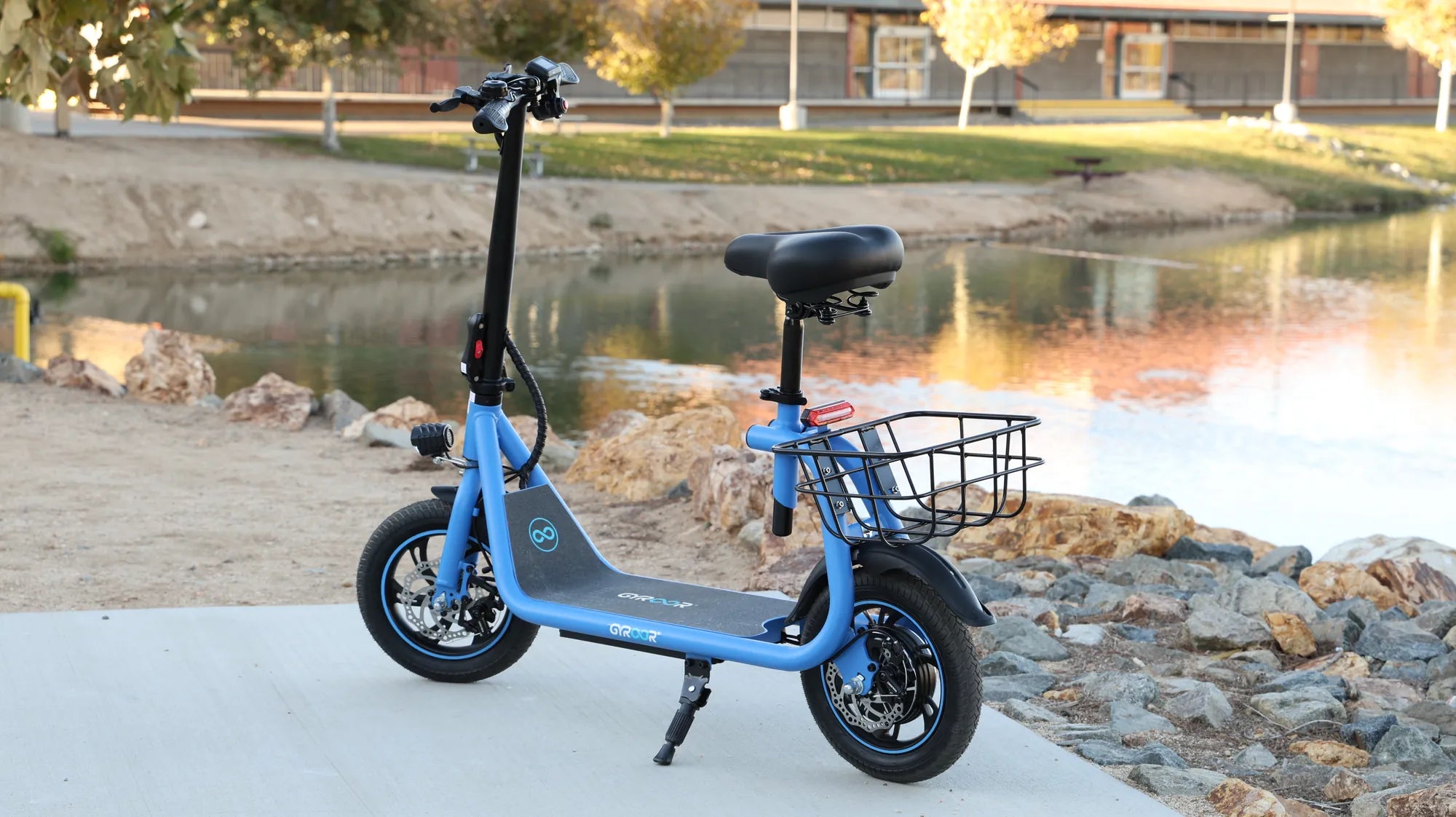
Your electric scooter's performance and lifespan are directly tied to the device that powers it: the 48 volt scooter charger. This guide will explain the technical specifications that matter, decode safety certifications, and provide actionable best practices for charging. You'll learn how a quality charger protects your investment, how to select a compatible replacement or upgrade, and how to troubleshoot common issues. We'll also explore why brands like Gyroor engineer their chargers with specific features to ensure reliability for over 100,000 riders.
Understanding Your 48V Scooter Charger
A 48 volt scooter charger is a specialized power supply designed to safely replenish a 48V lithium-ion battery pack. Its primary function is to convert AC wall power (110V or 220V) into the precise DC voltage and current your battery requires. More than just a transformer, a modern charger acts as a communication hub between the wall outlet and the scooter's Battery Management System (BMS).
This communication is vital for battery health. The BMS monitors individual cell voltages, temperature, and overall state of charge. The charger responds by adjusting its output accordingly. A mismatched or faulty charger can bypass these safeguards, leading to overcharging, cell imbalance, or even thermal runaway.
The 48V standard is common for mid-to-high-performance electric scooters, offering an optimal balance of power, range, and efficiency. Using the correct 48 volt scooter charger is non-negotiable. A charger with a lower voltage output will fail to charge the battery fully, while a higher voltage charger can cause catastrophic damage.
Investing in a high-quality 48 volt scooter charger is an investment in the scooter itself. The battery is often the most expensive single component, and proper charging is the single biggest factor in determining how long it lasts and how safely it operates.
Key Features of a Quality 48V Charger
Not all 48 volt scooter chargers are created equal. Key differentiating features determine charging speed, safety, and long-term reliability. Understanding these specs helps you make an informed choice, whether buying an original or a certified replacement.
Amperage (A) and Charging Speed
Amperage, measured in amps (A), dictates charging speed. A common formula is: Battery Capacity (Ah) / Charger Output (A) = Approximate Charge Time (hours). For example, a 10.4Ah battery with a standard 2A charger takes about 5.2 hours for a full charge. A 4A charger could theoretically cut that time in half.
However, faster is not always better. Higher-amperage charging generates more heat, which can stress battery cells over time. Most scooter manufacturers specify an optimal amperage range. Using a charger with significantly higher amperage than the BMS is designed for can reduce overall battery cycle life.
For daily use, a standard 2A charger offers a good balance of speed and battery preservation. A faster 4A or 5A charger is useful as a secondary option for quick top-ups, but it's best used intermittently rather than for every charge cycle.
Smart Charging & BMS Communication
Advanced 48 volt scooter chargers employ smart charging protocols. The most common is CC/CV (Constant Current / Constant Voltage). Initially, the charger supplies a constant current to rapidly bring the battery up to about 80% capacity. Then, it switches to a constant voltage mode, tapering the current to safely top off the final 20% without overcharging.
This process is managed in concert with the scooter's BMS. A quality charger will feature automatic shut-off once the battery reaches 100%. It may also include cell balancing functions during the CV phase, ensuring all cells in the pack reach an equal voltage, which is critical for longevity.
Indicators like LED lights (red for charging, green for complete) are the user-facing elements of this smart system. Some advanced models may have digital displays showing voltage, current, and charge percentage in real time.
Build Quality & Safety Certifications
External build quality is your first clue to a charger's safety. Look for a robust housing, a sturdy cable strain relief where the cord enters the unit, and thick, well-insulated output wires. Internal component quality is paramount but not visible, which is why third-party certifications are essential.
Safety certifications are non-negotiable. In North America, a UL (Underwriters Laboratories) certification is the gold standard, indicating the product has passed rigorous electrical safety tests. CE (Conformité Européenne) marks compliance with European health and safety standards. RoHS certification ensures the unit is free of specific hazardous materials.
Protection circuits are a must. A reliable 48 volt scooter charger should include safeguards against short-circuit, over-voltage, over-current, and over-temperature conditions. These features protect both the charger and your expensive scooter battery from damage due to faults or unexpected conditions.
The Gyroor Advantage: Engineered for Reliability
Gyroor designs its 48 volt scooter chargers as integral components of a safe riding ecosystem. The design philosophy extends beyond mere functionality to encompass durability, user safety, and long-term support, aligning with the brand's commitment to quality across its lineup of electric scooters and e-bikes.
Each charger is engineered to complement Gyroor's UL-certified battery packs. This ensures perfect communication between the charger and the BMS for optimal charging cycles. The chargers are built to deliver stable, clean power that meets the precise specifications of the battery, a key factor in achieving the rated 500+ charge cycles.
The physical design considers real-world use. While the charger itself is not submersible, it uses components resistant to environmental factors like dust and humidity that a commuter might encounter. This durability complements the IPX5 water-resistant rating found on many Gyroor scooters, providing a cohesive resilient system.
Every Gyroor 48 volt scooter charger is backed by the brand's comprehensive 1-year warranty. This coverage provides peace of mind, knowing the charger is supported just like the scooter. For riders in North America and Europe, access to dedicated customer support simplifies troubleshooting and ensures quick resolution for any charger-related inquiries.
Choosing the Right Charger: Compatibility and Upgrades
Selecting a new 48 volt scooter charger requires careful attention to detail. Using an incompatible charger is one of the fastest ways to damage a battery or create a safety hazard. Follow these guidelines to ensure a perfect and safe match.
The Criticality of Voltage & Connector Match
The output voltage must be an exact match. A charger labeled for a 48V battery is designed for that specific voltage. Using a 36V or 52V charger on a 48V system can lead to undercharging, overcharging, BMS failure, or fire. The connector type is equally critical.
Common connector types for 48 volt scooter chargers include XLR (similar to microphone connectors), DC barrel plugs of various diameters, and proprietary magnetic or locking connectors. The pin configuration (e.g., 2-pin vs. 3-pin) also matters. A physical adapter is not a safe solution if the voltage and amperage are not correct.
Always check your original charger's label or the scooter's manual for the exact specifications: Output Voltage (48V), Output Current (e.g., 2.0A), and connector type. This is the baseline for any replacement.
When to Consider a Faster Amperage Charger
Upgrading to a higher-amperage 48 volt scooter charger can be beneficial in specific scenarios. If your scooter's BMS supports it (check the manual), a faster charger (e.g., moving from 2A to 4A) is ideal for riders who need a quick midday top-up to extend their range.
It is often recommended to use a faster charger as a secondary option while using the standard charger for overnight, full cycles. This practice balances convenience with long-term battery care. Never use a charger with an amperage rating higher than the maximum specified by the scooter manufacturer.
For brands like Gyroor, using a manufacturer-approved fast charger ensures the charging profile is optimized for their specific BMS, maintaining the health and warranty of the battery pack.
The Risks of Third-Party & Universal Chargers
The market is flooded with low-cost, generic 48 volt scooter chargers. These often lack proper safety certifications, use inferior components, and have inaccurate voltage regulation. They may claim to be "universal" with multiple tips, but this universality often comes at the cost of precision and safety.
Risks include: voiding your scooter's warranty, providing unstable voltage that degrades the BMS, lacking proper automatic shut-off leading to overcharging, and having inadequate protection circuits. In worst-case scenarios, these chargers can overheat, melt, or cause electrical fires.
Investing in an Original Equipment Manufacturer (OEM) charger from your scooter's brand or a high-quality, certified replacement from a reputable electronics supplier is always the safest and most cost-effective choice in the long run.
Maximizing Battery Life with Proper Charging Practices
Your charging habits directly influence how many miles you'll get from your scooter. By following data-driven best practices, you can significantly extend the lifespan of your 48V lithium-ion battery pack.
The 80/20 Rule for Daily Commuting
Lithium-ion batteries experience the least stress when kept between 20% and 80% state of charge. For daily commuting, try to avoid draining the battery below 20% and disconnecting the 48 volt scooter charger once it reaches 80-90%. This minimizes the depth of each discharge cycle, greatly extending the total cycle count.
Modern BMS systems help with this. You don't need to be exact, but making a habit of plugging in when the battery indicator shows one bar and unplugging after a few hours (rather than leaving it overnight every night) can have a profound positive impact.
Occasional full 100% charges are recommended to allow the BMS to perform cell balancing, perhaps once a month or before a planned long ride. This practice strikes a balance between daily longevity and periodic maintenance.
Storage and Long-Term Care
If you won't be using your scooter for an extended period (e.g., over winter), proper storage is crucial. The ideal storage charge for a lithium-ion battery is approximately 60%. Avoid storing it either fully charged or completely drained, as both states accelerate capacity loss.
Store the scooter and its 48 volt scooter charger in a cool, dry place. Extreme heat and cold are enemies of battery health. A climate-controlled environment around room temperature is ideal. Periodically check the battery charge level every 2-3 months during storage and top it up back to 60% if it has dropped significantly.
Also, store the charger properly. Coil the cable loosely to avoid damaging internal wires, and keep it in a place free from dust and moisture.
Troubleshooting Common Charger Issues
Even a quality 48 volt scooter charger can encounter issues. Here's a basic diagnostic checklist:
No power light: Verify the wall outlet is working. Check the AC power cord is fully seated at both ends. Inspect all cables for visible damage.
Charger gets very hot or cuts off early: Ensure the charger is in a well-ventilated space. Charging on a carpet or in direct sunlight can cause overheating. If it persists, the internal thermal protection may be faulty.
Charger light stays red/never turns green: This could indicate the battery is not accepting a charge (BMS issue) or the charger cannot reach the correct voltage. First, check all connections. If the problem continues, consult your manual.
Blinking error lights: Refer to the scooter and charger manuals. A specific blink pattern often indicates a fault code related to voltage mismatch, temperature, or communication error with the BMS.
Charger Comparison: Standard vs. Fast Charging
| Feature | Standard 48V 2A Charger | Fast 48V 4A/5A Charger |
|---|---|---|
| Primary Use Case | Overnight charging, daily maintenance, primary charger | Quick top-ups, secondary charger for range extension |
| Charge Time (10.4Ah Battery) | ~5-6 hours (0-100%) | ~2.5-3 hours (0-100%) |
| Impact on Battery Longevity | Optimal for cycle life, minimal heat stress | Increased heat generation; potential for faster degradation if used exclusively |
| Convenience | Set and forget, ideal for predictable routines | High, enables faster turnaround between rides |
| Cost & Availability | Typically included with scooter; lower cost to replace | Often sold as an accessory; higher cost |
| Recommended Practice | Use for majority of charging cycles | Use intermittently when speed is necessary; not for daily full cycles |
Frequently Asked Questions (FAQ)
Can I use a 52V charger on my 48V scooter?
Absolutely not. Using a higher-voltage charger is extremely dangerous. It will force too much current into the battery, overwhelming the BMS, causing cells to overheat, swell, and potentially catch fire. Always match the voltage exactly.
How do I know if my 48 volt scooter charger is failing?
Warning signs include: unusually long charge times, the charger becoming excessively hot to the touch, intermittent charging (light flickering), a burning smell, or the charger failing to switch to a "green" or "complete" light even after an extended period. Stop using it immediately if you observe any of these.
Is it bad to leave my scooter plugged in overnight?
With a modern smart 48 volt scooter charger, the risk is low as it should automatically shut off. However, for optimal battery longevity, it's better to avoid leaving it at 100% charge for prolonged periods. If you charge overnight, try to time it so it finishes closer to when you start your day.
Can I charge my 48V scooter with a car inverter?
Technically yes, if you have a sufficiently powerful pure sine wave inverter (typically 300W minimum). However, this is inefficient and should be an emergency option only. The power from an inverter can be "dirty" (with voltage spikes), which may not be ideal for sensitive charger electronics.
Why does my charger have a fan and is it noisy?
Fans are used in higher-amperage 48 volt scooter chargers for active cooling. They dissipate heat generated by the internal components during the fast-charging process. Some noise is normal. If the fan is making a grinding sound or has stopped entirely, the charger may overheat and should be inspected.
My charger was lost/damaged. Can I buy a generic one?
It is strongly advised to purchase an OEM replacement from your scooter's manufacturer or a certified compatible model from a reputable source. A generic charger may physically fit but lacks the correct voltage/amperage profile and safety communication with your scooter's BMS, posing a risk.
Your Charger is Your Battery's Lifeline
The 48 volt scooter charger is the guardian of your scooter's most vital and expensive component. Choosing a high-quality, certified charger from a reputable brand is a critical decision for safety, performance, and long-term value. By understanding features like amperage and smart protocols, adhering to compatibility rules, and following best charging practices, you directly invest in the health and longevity of your ride.
Brands that prioritize this engineering, like Gyroor, build chargers that are reliable extensions of their product ecosystem—UL-certified, durable, and fully supported. This integrated approach ensures that every charge cycle supports the thousands of miles of riding ahead. Your scooter's performance begins at the outlet, and a proper 48 volt scooter charger ensures that start is always safe, efficient, and reliable.
Ready to ensure your ride has the right power behind it? Browse the full Gyroor collection, including replacement parts and accessories designed for compatibility and safety, at gyroorboard.com.
Pink Pro Scooter: The Definitive Guide to High-Performance Personal Mobility
Scooter Size Chart by Age: The Complete 2024 Guide for Safe Riding